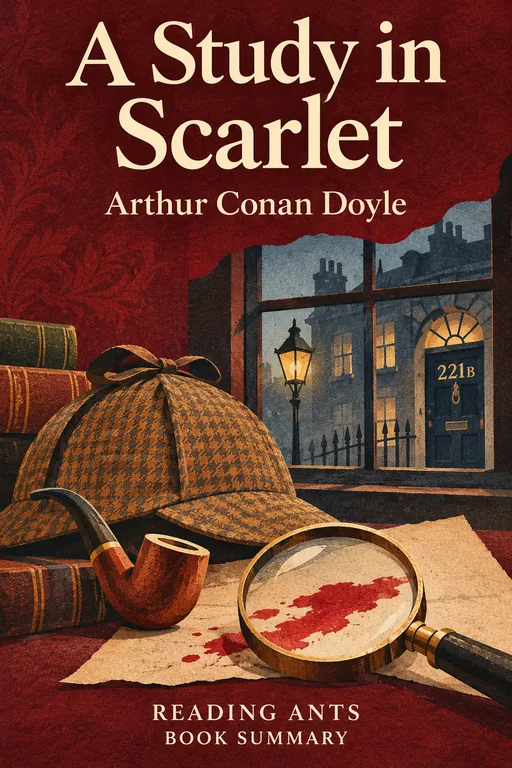
A Study in Scarlet
Dr. John Watson meets the eccentric consulting detective Sherlock Holmes and shares his rooms at 221B Baker Street, and together they investigate a mysterious murder in an empty London house, in the first Sherlock Holmes story.
Overview
A Study in Scarlet is a short novel by Arthur Conan Doyle, published in 1887 in Beeton’s Christmas Annual. It introduced Sherlock Holmes and Dr. Watson to the world, and began a series of four novels and fifty-six short stories that would make Holmes the most famous detective in fiction. The story is narrated by Watson, a doctor recently invalided home from the war in Afghanistan, who is looking for lodgings. It is divided into two parts: the first, Watson’s reminiscences, describes the investigation in London, and the second, “The Country of the Saints,” tells the backstory of the murderer, set in the American West.
Main Characters
- Sherlock Holmes: a brilliant, eccentric consulting detective who uses observation and logic.
- Dr. John Watson: a retired army surgeon, loyal and decent, who narrates.
- Inspector Lestrade and Inspector Gregson: Scotland Yard detectives who rely on Holmes.
- Enoch Drebber and Joseph Stangerson: the two murdered men.
- Jefferson Hope: a cab driver with a secret purpose.
- John Ferrier and Lucy Ferrier: a father and daughter in the story of the past.
Full Summary
Meeting Holmes
Dr. Watson, wounded in Afghanistan, returns to London in poor health and with little money. An old friend introduces him to a man who is looking for someone to share rooms: Sherlock Holmes. When they meet, Holmes tells him, after a glance, that he has come from Afghanistan. Watson moves into 221B Baker Street, and begins to observe his strange new friend. Holmes has odd habits and a remarkable ability to draw conclusions from small details, which fascinate Watson, and he asks what Holmes does for a living.
The Science of Deduction
Holmes explains that he is the world’s only “consulting detective,” whom the police and private clients consult when they are stumped. He demonstrates his method, which he calls the science of deduction, observing a man in the street and correctly stating that he is a retired Marine sergeant. Watson, impressed, gradually becomes his assistant. Soon, a message arrives from Inspector Gregson, who asks for Holmes’s help with a case.
Lauriston Gardens
At an empty house in Lauriston Gardens, a well-dressed man has been found dead, with no wounds, and with the word RACHE written in blood on the wall. The police think that this is an unfinished attempt to write “Rachel,” but Holmes, after examining the room, the floor and the footprints, declares that “rache” is the German word for revenge, and that the killer wants the police to follow a false lead. He also draws a picture of the murderer, saying that he is tall, red-faced and smokes a certain kind of cigar.
A Second Murder
The dead man, identified from letters in his pocket as Enoch Drebber, an American, was visiting London with his secretary, Joseph Stangerson. Soon Stangerson is also found dead, stabbed in his hotel room. Two small pills, one harmless and one poisonous, are recovered from Stangerson’s room, and Holmes tests them on a dying dog to confirm his theory. The case seems a puzzle of revenge. Earlier, Holmes had laid a trap by advertising a ring found at the scene, which brought an old woman to his door.
The Arrest
The “old woman” was really a young accomplice of Hope in disguise, who slipped away with the duplicate ring Holmes had handed over. Holmes then calls a cab, and Jefferson Hope himself arrives to carry the luggage and is caught. Hope is handcuffed, and he confesses, calmly, to the two murders. He tells Holmes and Watson that he has an aneurysm, and that he does not expect to live long, and that he wants to explain why he killed. He gives his account in the night, to the detectives.
The Country of the Saints
The second part, told in the third person rather than by Watson, moves to the American West, in the 1840s. John Ferrier and a little girl, Lucy, are the only survivors of a party that is rescued in the desert by a group of Mormons, who take them into their community in Utah. Ferrier agrees to their rules, and raises Lucy. Years later, Lucy falls in love with Jefferson Hope, a young hunter, but is forced to marry Drebber, the son of an elder, and Ferrier is killed. Lucy dies of grief within a month of the marriage. Hope vows to avenge them and pursues Drebber and Stangerson across continents, which leads to London.
Resolution
Hope dies of his aneurysm in custody, before he can be tried, and the case is closed. Watson writes up the story, and Holmes is not given credit by the newspapers, but he shrugs it off. Watson, who feels that Holmes’s accomplishments should be recorded, promises to publish the story himself, as he does. The final scene shows the beginning of their long partnership.
Why It Matters
A Study in Scarlet is the origin of the world’s most famous detective duo, and its methods, of observation, deduction and the use of forensic details, shaped the genre of detective fiction. Holmes has become a global icon, appearing in hundreds of films, plays and television shows, and his name is shorthand for sharp intelligence.
The novel is also historically interesting for its early use of chemistry and close observation, and for the way it establishes the Watson narration, which later authors imitated.
The story also gave the language a number of phrases and images that readers now take for granted, such as the deerstalker and the pipe, though those details came later from illustrators and actors. Doyle, who was a doctor, modeled Holmes in part on his professor Joseph Bell, who could diagnose patients from small clues.
Key Takeaways
- Observation is a skill. Holmes notices what others overlook.
- Logic can solve puzzles. Deduction follows evidence step by step.
- Revenge has long roots. Hope’s motive lies in the past.
- A partner helps. Watson’s friendship matters.
- Appearances can mislead. The disguised old woman is the killer’s accomplice.
What We Can Learn
The story encourages us to look carefully at the details around us, and to make inferences from evidence, instead of jumping to conclusions. Holmes’s method is a model of thinking.
It also shows that every crime has a story behind it, and that understanding motives is part of justice.
Finally, it demonstrates that good teamwork, even between very different people, can lead to success.
It also reminds us that expertise often comes from patient practice, and that a curious mind can learn to see more by training itself to notice.
Criticism and Counterpoints
Modern readers criticize the second part of the book, which presents a hostile and inaccurate picture of Mormons, and which has been disliked since its first publication. Others find the sudden change of setting and the long flashback jarring. The plot depends on coincidences, such as Hope’s finding his two enemies again in London, and the shortness of the novel makes the characterization thin.
Some readers prefer the later short stories. Still, the first part is a good beginning of the famous partnership.
Who Should Read It
This book suits readers from about ten, though the language is Victorian. It is short and entertaining, with some violence. It is a good first Sherlock Holmes story, but readers may prefer to follow it with the short stories.
Want the whole book?
A summary is a taste, not the meal. Here is where to find the full book.
You reached the end 🎉
Nicely done. Mark this one as read, and we will suggest what to read next.
Read this next
The Hound of the Baskervilles
Arthur Conan Doyle
Sherlock Holmes and Dr. Watson investigate a family curse involving a monstrous spectral dog on the dark, foggy moors of Devon, and discover that the legend is being used to cover a very human crime.
🔍 Mystery & Thriller
The Adventures of Sherlock Holmes
Arthur Conan Doyle
A collection of twelve short stories in which the brilliant London detective Sherlock Holmes uses observation and logic to solve puzzling cases, narrated by his friend and companion, Dr. John Watson.
🔍 Mystery & Thriller
The Murder of Roger Ackroyd
Agatha Christie
In the English village of King's Abbot, a wealthy man is found stabbed in his study, and the Belgian detective Hercule Poirot, who has retired to grow vegetable marrows, is persuaded to investigate, with a surprise ending that changed detective fiction.
🔍 Mystery & Thriller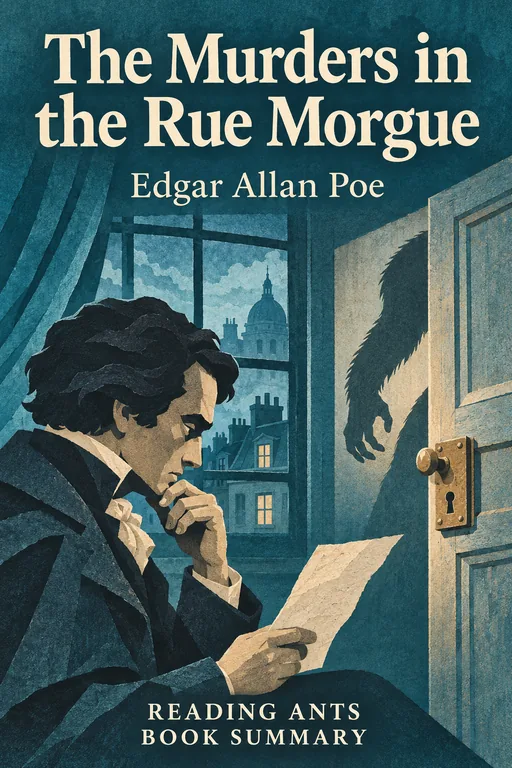
The Murders in the Rue Morgue
Edgar Allan Poe
In Paris, a brilliant amateur detective, C. Auguste Dupin, solves the baffling murder of a mother and daughter in a locked room by thinking carefully about what the evidence really shows, and reaches a startling conclusion.
🔍 Mystery & Thriller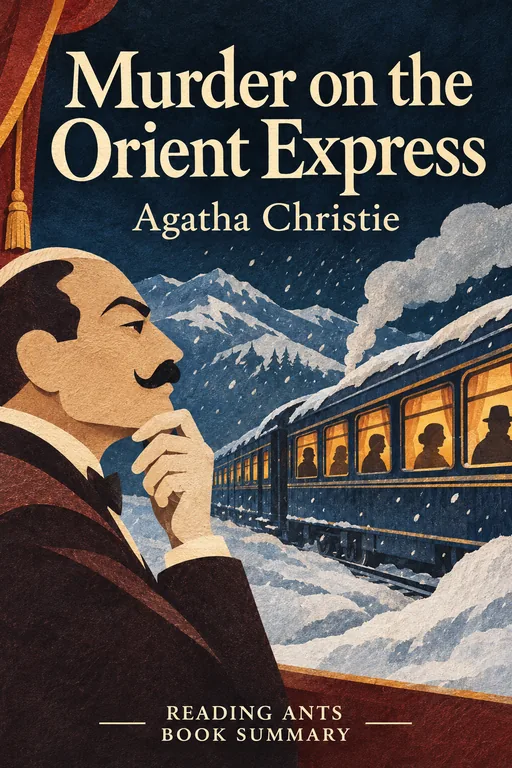
Murder on the Orient Express
Agatha Christie
When a wealthy American is murdered on a snowbound train, the Belgian detective Hercule Poirot must work out which of the passengers is the killer, and discovers a shocking truth about many of them.
🔍 Mystery & Thriller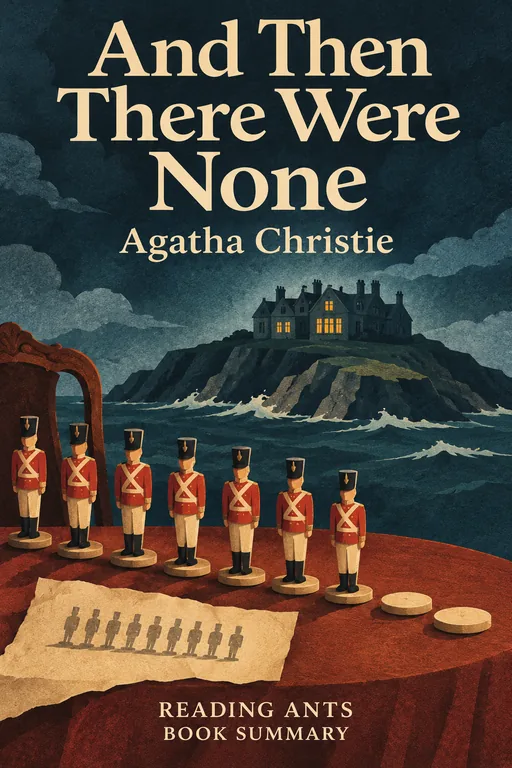
And Then There Were None
Agatha Christie
Ten people lured to an isolated island are accused of past crimes and killed one by one, following the lines of a nursery rhyme, until no one is left.
🔍 Mystery & ThrillerWant something different?
Pick another topic and we will show you three books to start with.