 Reading Ants
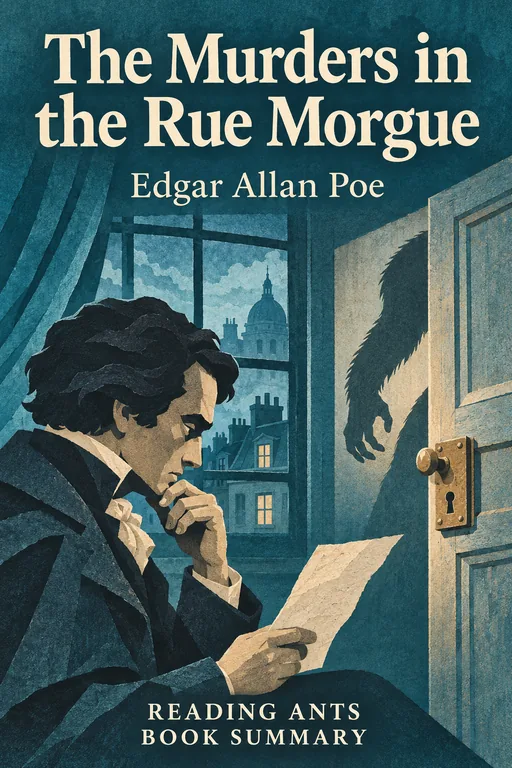
The Murders in the Rue Morgue
In Paris, a brilliant amateur detective, C. Auguste Dupin, solves the baffling murder of a mother and daughter in a locked room by thinking carefully about what the evidence really shows, and reaches a startling conclusion.
Overview
The Murders in the Rue Morgue is a short story by Edgar Allan Poe, first published in 1841, and it is generally regarded as the first modern detective story. Poe called it a “tale of ratiocination,” meaning that it relies on reasoning. It introduces the figure of the brilliant, eccentric investigator, with a friend as narrator, which was later developed by Arthur Conan Doyle in the Sherlock Holmes stories. The story is a locked-room puzzle, with a surprising solution, and it set many patterns that detective fiction has followed ever since.
Main Characters
- C. Auguste Dupin: a brilliant, reclusive young Parisian, who solves crimes by analysis.
- The narrator: Dupin’s unnamed friend, who shares his rooms and tells the story.
- Madame L’Espanaye: an elderly woman, who lives with her daughter.
- Camille L’Espanaye: her daughter, who is also killed.
- Adolphe Le Bon: a clerk who is arrested for the crime.
- The Prefect of Police: the head of the Paris police, a cunning but unimaginative official, who cannot solve the case.
- The sailor: a man who owns an orangutan.
Full Summary
Analysis and Dupin
The story begins with a discussion of the nature of analysis, and the way that a mind can see patterns that others miss, using the game of draughts, chess and whist as examples. The narrator then introduces Dupin, a young man from a good family who has lost his fortune and cares for little but books. They meet in a Paris library, where both are hunting for the same rare volume, and they decide to live together. They share an old, gloomy house, closing the shutters by day, and going out at night. One evening, as they walk in silence, Dupin astonishes his friend by speaking aloud the very thing he was thinking about, a cobbler turned stage actor named Chantilly. He then explains how he reached it by a chain of small clues, beginning with a fruit seller who had jostled the narrator in the street.
The crime
Not long afterward, the friends read in an evening newspaper about a horrible crime on the Rue Morgue. At about three in the morning, neighbors heard dreadful screams from a fourth-floor apartment, and broke into the house. They found the locked back room in disorder, with a bloody razor, and thick tufts of gray hair torn out by the roots. The body of the daughter, Camille, was found stuffed head down in the chimney, and the mother’s body was in the yard, with her throat cut so severely that her head fell off when the body was moved.
The witnesses
The newspapers print the testimony of many witnesses, who had heard two voices on the stairs. All agreed that the gruff one was French. The shrill one was a puzzle: each witness took it for the voice of a foreigner, naming Spanish, Italian, German, English, Russian or even French, and in every case the witness did not actually speak that language. Nobody could make out any words. The doors had been locked from the inside, and the windows were fastened. Thousands of francs in gold were left lying on the floor, so robbery did not seem to be the motive. Adolphe Le Bon, a bank clerk who had carried a large sum of gold to the women’s home three days before the crime, was arrested. The police were baffled.
Dupin investigates
Dupin, interested, obtains permission from the Prefect to examine the scene. He and the narrator study the room and the neighboring buildings. Dupin notes that the police had failed to look for what was unusual. He shows that the windows only appear fastened, since there is a broken nail, and a spring that can be pressed, and he explains that the murderer must have entered through the window. He points out that the strength and agility needed are beyond those of any ordinary man, and he shows that a tuft of tawny hair, pulled from the clutching fingers of the old woman, is not human hair. The marks of fingers on Camille’s throat also do not fit a human hand.
The solution
Dupin concludes that the culprit is an orangutan, which has escaped from its owner, a sailor. The voice that none could identify was the animal’s, and the gruff voice was the sailor’s. Dupin places an advertisement in a newspaper, saying that he has found an orangutan, to see if the owner will come forward. The sailor appears, and Dupin locks the door and shows a pistol, though he promises that he means no harm. The frightened sailor tells his story: he had brought the ape home from Borneo, and it got loose and took his razor, imitating his shaving. When he tried to scare it with a whip, it fled into the street, and he chased it. It climbed up a lightning rod into the women’s open window, and the sailor followed as far as he could, and saw the horror through the window. The ape attacked Madame L’Espanaye with the razor, in rage, then killed Camille, and then, afraid of punishment, tried to hide the bodies before escaping the way it came.
The end
The sailor later recaptures the orangutan himself and sells it for a large sum to the Jardin des Plantes, the Paris garden and zoo. Le Bon is freed as soon as the facts are told to the Prefect of Police. The Prefect cannot hide his annoyance, and makes a sarcastic remark or two about people minding their own business. Dupin, a little smugly, says that the Prefect is too cunning to be profound. The story ends with the sense that the true detective is one who reasons about the unusual, and that the answer was in the clues all along.
Why It Matters
The Murders in the Rue Morgue is a landmark in literary history, and the beginning of the detective genre. Poe invented the formula of the brilliant detective, the admiring friend who narrates, the baffled police, and the surprising but logical solution. The locked-room mystery has been a favorite of authors and readers ever since. Dupin became a model for later fictional detectives, including Conan Doyle’s Sherlock Holmes and Agatha Christie’s Hercule Poirot. The story also showed that popular fiction could combine puzzles with literary skill, and it gave readers the pleasure of trying to solve a problem alongside the detective. Its influence is visible in nearly every mystery, from classic whodunits to modern crime television.
Key Takeaways
- Reasoning solves mysteries. Dupin uses logic, not luck.
- Look at what is unusual. The strange clues point to the truth.
- Official methods can fail. The police overlook the obvious.
- Observation matters. Small details reveal larger patterns.
- A good story hides its solution in plain sight. The answer is fair to the reader.
What We Can Learn
You can learn from Dupin to observe carefully, to question assumptions, and to think about the unusual features of a problem, instead of ignoring them. The story encourages us to see that apparent impossibilities may have simple explanations, if we consider all the evidence. If you read it, try to solve the mystery before Dupin does, and notice how Poe plays fair with his clues. It can inspire readers to be curious and to think logically in daily life, and to value patience when a problem seems impossible.
Criticism and Counterpoints
Some modern readers find the long opening discussion of analysis slow, and the story’s solution, an orangutan, implausible or even a cheat, since the reader could hardly have guessed it. Others feel that Dupin is arrogant, and that the narrator is a dull figure, with the plot relying on convenience. A few critics point out that the description of the violent crime is gruesome. Some also find that the language is dated. Nonetheless, the story is a landmark of invention.
Who Should Read It
This book is for readers from about thirteen who enjoy mysteries and classic stories, and for anyone interested in the history of detective fiction. It is a short read, taking about an hour. Readers who like it may go on to Poe’s other tales, and then to Sherlock Holmes.
Want the whole book?
A summary is a taste, not the meal. Here is where to find the full book.
You reached the end 🎉
Nicely done. Mark this one as read, and we will suggest what to read next.
Read this next
The Adventures of Sherlock Holmes
Arthur Conan Doyle
A collection of twelve short stories in which the brilliant London detective Sherlock Holmes uses observation and logic to solve puzzling cases, narrated by his friend and companion, Dr. John Watson.
🔍 Mystery & Thriller
A Study in Scarlet
Arthur Conan Doyle
Dr. John Watson meets the eccentric consulting detective Sherlock Holmes and shares his rooms at 221B Baker Street, and together they investigate a mysterious murder in an empty London house, in the first Sherlock Holmes story.
🔍 Mystery & Thriller
The Hound of the Baskervilles
Arthur Conan Doyle
Sherlock Holmes and Dr. Watson investigate a family curse involving a monstrous spectral dog on the dark, foggy moors of Devon, and discover that the legend is being used to cover a very human crime.
🔍 Mystery & Thriller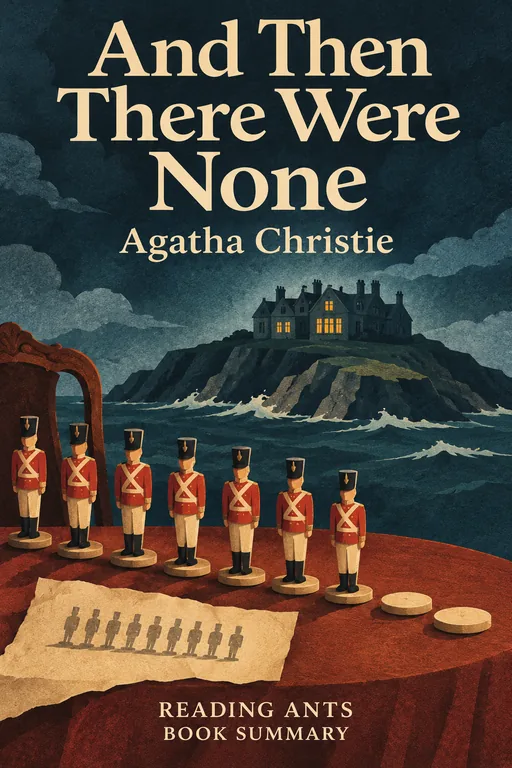
And Then There Were None
Agatha Christie
Ten people lured to an isolated island are accused of past crimes and killed one by one, following the lines of a nursery rhyme, until no one is left.
🔍 Mystery & Thriller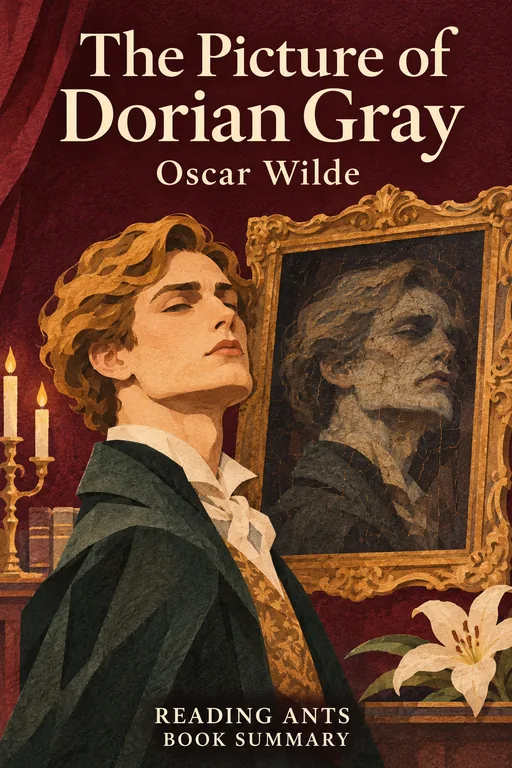
The Picture of Dorian Gray
Oscar Wilde
A beautiful young man wishes that his portrait would grow old instead of him, and as he lives a life of selfish pleasure and cruelty, his face stays perfect while the painting reveals the ugliness of his soul.
📜 Classics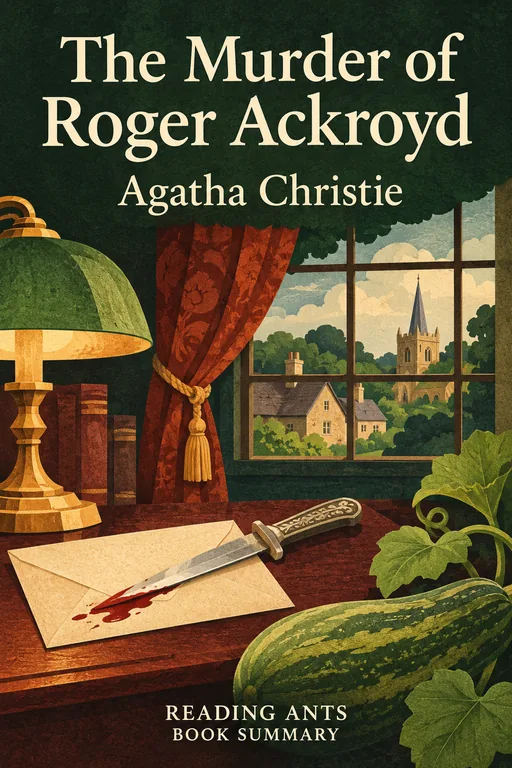
The Murder of Roger Ackroyd
Agatha Christie
In the English village of King's Abbot, a wealthy man is found stabbed in his study, and the Belgian detective Hercule Poirot, who has retired to grow vegetable marrows, is persuaded to investigate, with a surprise ending that changed detective fiction.
🔍 Mystery & ThrillerWant something different?
Pick another topic and we will show you three books to start with.