 Reading Ants
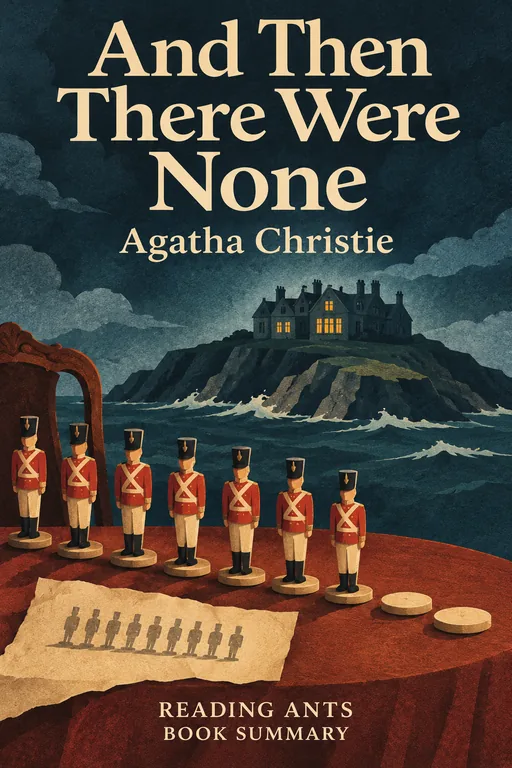
And Then There Were None
Ten people lured to an isolated island are accused of past crimes and killed one by one, following the lines of a nursery rhyme, until no one is left.
Overview
And Then There Were None, by Agatha Christie, was first published in 1939 and is the best-selling mystery novel of all time, with more than one hundred million copies sold. Ten people, brought together by mysterious invitations, travel to Soldier Island, off the coast of Devon, England. After they arrive, a recorded voice accuses each of them of having caused a death that the law could not punish. A framed nursery rhyme hangs in every room, and ten china soldier figures stand on the dining table. As each guest dies, one soldier disappears. With no way off the island, the survivors realize that the killer must be among them.
Main Characters
- Vera Claythorne: a young governess.
- Philip Lombard: an adventurer and mercenary.
- Dr. Armstrong: a nervous physician.
- Justice Wargrave: a retired judge known for harsh sentences.
- William Blore: a former police inspector.
- General Macarthur: a retired army general.
- Emily Brent: a stern, religious spinster.
- Anthony Marston: a wealthy, careless young man.
- Thomas and Ethel Rogers: the butler and housekeeper.
Full Summary
The Invitations
Ten people travel to Soldier Island, each lured by a different invitation: a job offer, an old friend’s invitation or a vacation. They are greeted by Mr. and Mrs. Rogers, who say their host, Mr. U. N. Owen, has not yet arrived. In each bedroom hangs a framed rhyme, “Ten Little Soldiers,” describing ten soldiers who die one by one. At dinner, a gramophone record accuses each person of murder. The guests, shocked, deny or explain what they did.
The accusations are specific. Marston is accused of killing two children with his car. Mr. and Mrs. Rogers are accused together of letting an elderly employer die by withholding her medicine. General Macarthur, of sending a man to certain death in battle. Miss Brent, of driving a pregnant maid to suicide. Armstrong, of operating while drunk. Lombard, of abandoning African tribesmen to starve. Blore, of lying in court to send an innocent man to prison. Judge Wargrave, of sentencing a man to death. And Vera, of letting a child drown. Each person insists they are innocent, or that it wasn’t really a crime.
The Deaths Begin
That night, Anthony Marston chokes on a drink laced with cyanide. Next morning, Mrs. Rogers is found dead in bed after an overdose of a sleeping drug. Two of the ten china soldiers have vanished from the table. General Macarthur, who has accepted his fate quietly, is found with his skull crushed.
The remaining guests realize they have been brought here to be punished, and they search the island. They find no one else. A storm rises, making rescue impossible, and the boat that supplies the island doesn’t come.
The Island Searched
With the rest of the group, Justice Wargrave leads a meeting. Everyone agrees that the killer must be one of them. Rogers, the butler, is killed with an axe while chopping wood. Miss Brent is found injected with poison. Wargrave is found dead, in the drawing room, shot in the forehead, wearing a judge’s wig. The guests grow more paranoid, locking up weapons and drugs.
Doctor Armstrong disappears at night. Blore and Vera, the survivors with Lombard, suspect each other. Blore is killed when a heavy clock falls on him from a window. Afterward, Vera and Lombard find Armstrong’s body washed up on the shore.
The End
Only Vera and Lombard remain. Vera, who had, years ago, let a child in her care drown in the sea so that she could marry the child’s uncle, believes that Lombard is the killer. When Lombard is bending over Armstrong’s body on the shore, she seizes his revolver and shoots him dead. Alone, she returns to the house, where she finds a noose hanging from the ceiling, with a chair beneath it. Unable to stop herself, she puts the noose around her neck, haunted by guilt, and kicks the chair away.
The Confession
When the police arrive, they find ten dead and are baffled. A confession arrives, in a bottle thrown into the sea by the judge, Wargrave. He explains his plan. He had spent his whole life as a judge, secretly enjoying the idea of punishing the guilty, and when he fell terminally ill, he decided to carry out a perfect crime: to punish nine people whom the law had not touched, with himself as the tenth to die. He explains that Edward Seton, the man he had sentenced to death, was in fact guilty. He staged his own death with Dr. Armstrong’s help, and killed Armstrong afterward. His final act was to shoot himself, to leave an unsolved mystery.
Why It Matters
And Then There Were None is the best-selling crime novel of all time and one of the best-selling books in history. Its original British title used a racial slur, which was rightly dropped; the title was changed, first for the American edition, to And Then There Were None, the title used everywhere today, and the nursery rhyme in the story was also changed in later editions.
Christie herself considered it her most difficult book to write, and many critics regard it as her masterpiece. It has been adapted into numerous plays, films and a 2015 BBC television series. Its structure, people trapped together and killed off one by one, became a model for countless thrillers and horror films.
Key Takeaways
- Guilt can destroy. The guests are haunted by their past actions.
- Justice and revenge can blur. Wargrave’s “justice” is really murder.
- Trust is fragile. Fear makes everyone suspect each other.
- Appearances can deceive. The killer is someone least suspected.
- Isolation raises tension. Being cut off intensifies fear.
What We Can Learn
The novel is a reminder that guilt can be a powerful force. Whether or not they deserved punishment, the characters cannot escape their consciences.
It also raises questions about justice and morality. Wargrave believes he is punishing the guilty, but he is committing murder himself. Thinking carefully about the difference between justice and vengeance is important.
Finally, the story shows how fear and suspicion can break down trust. In a crisis, people may turn against each other, so staying calm and cooperating is essential.
Criticism and Counterpoints
Some critics argue that the characters are thinly drawn and that the cases of their alleged crimes are somewhat artificial. Others find the plot’s coincidences, such as everyone being persuaded to travel to the island, hard to believe.
The novel’s original title and nursery rhyme were racist, and they were rightly changed. Readers have also pointed out that it treats some crimes, such as medical negligence or reckless driving, as equal to murder, which makes the moral logic questionable. Many readers nevertheless admire its tight construction.
Who Should Read It
This novel suits teens and adults who enjoy mysteries and suspense. It is a good starting point for Christie’s work. It contains many deaths, but little graphic violence, and many readers say it is best read quickly, in one or two sittings.
Want the whole book?
A summary is a taste, not the meal. Here is where to find the full book.
You reached the end 🎉
Nicely done. Mark this one as read, and we will suggest what to read next.
Read this next
Murder on the Orient Express
Agatha Christie
When a wealthy American is murdered on a snowbound train, the Belgian detective Hercule Poirot must work out which of the passengers is the killer, and discovers a shocking truth about many of them.
🔍 Mystery & Thriller
The Murder of Roger Ackroyd
Agatha Christie
In the English village of King's Abbot, a wealthy man is found stabbed in his study, and the Belgian detective Hercule Poirot, who has retired to grow vegetable marrows, is persuaded to investigate, with a surprise ending that changed detective fiction.
🔍 Mystery & Thriller
Death on the Nile
Agatha Christie
On a luxury steamer cruising the Nile, a rich young bride, Linnet Doyle, is shot dead in her cabin, and Hercule Poirot must discover which of the passengers, many of whom had reason to hate her, is the killer.
🔍 Mystery & Thriller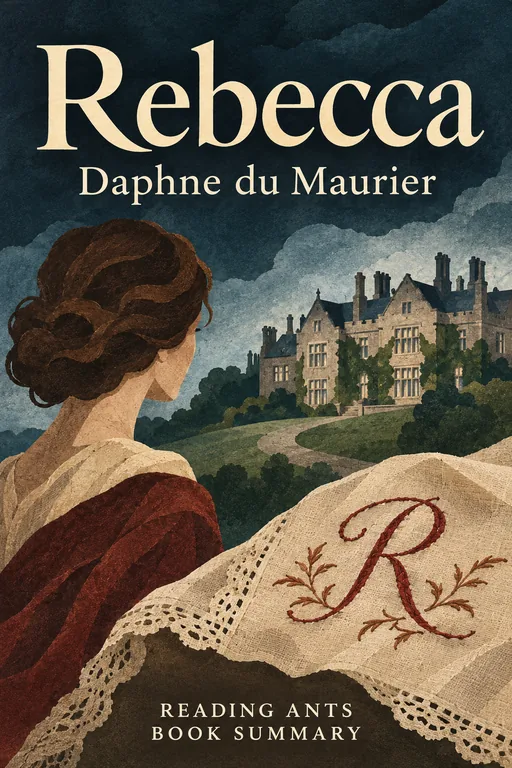
Rebecca
Daphne du Maurier
A shy young woman marries a wealthy widower and moves to his great estate, Manderley, where she is haunted by the memory of his first wife, Rebecca, and slowly learns the truth about her death.
📜 Classics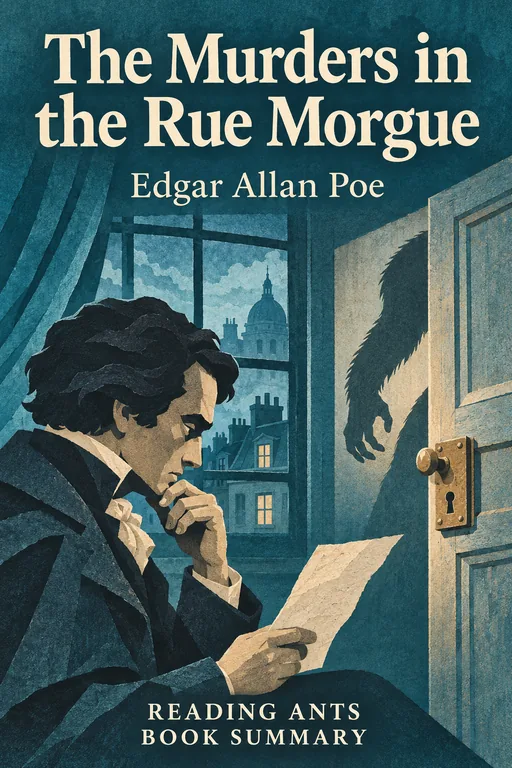
The Murders in the Rue Morgue
Edgar Allan Poe
In Paris, a brilliant amateur detective, C. Auguste Dupin, solves the baffling murder of a mother and daughter in a locked room by thinking carefully about what the evidence really shows, and reaches a startling conclusion.
🔍 Mystery & Thriller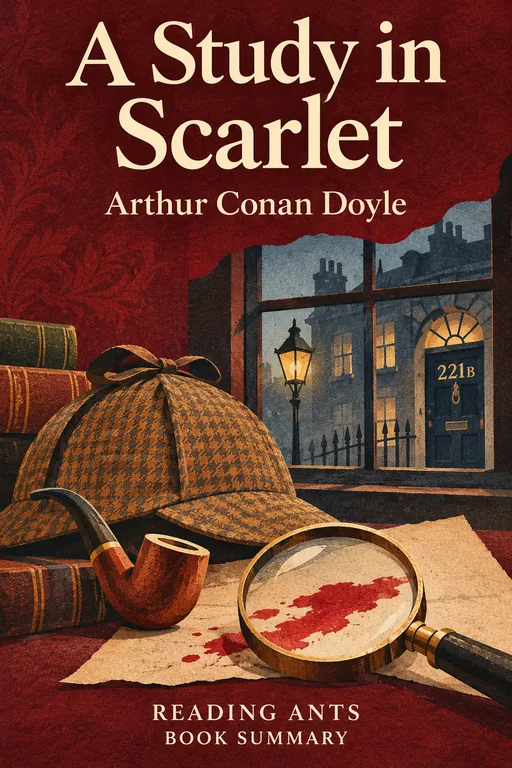
A Study in Scarlet
Arthur Conan Doyle
Dr. John Watson meets the eccentric consulting detective Sherlock Holmes and shares his rooms at 221B Baker Street, and together they investigate a mysterious murder in an empty London house, in the first Sherlock Holmes story.
🔍 Mystery & ThrillerWant something different?
Pick another topic and we will show you three books to start with.