 Reading Ants
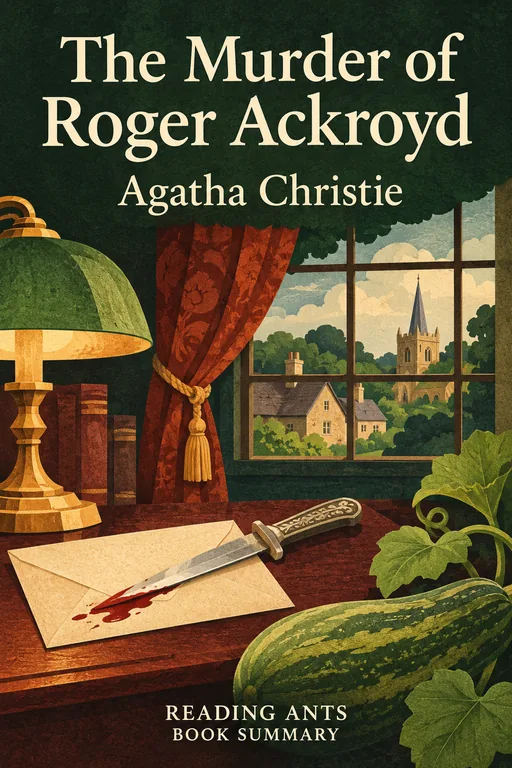
The Murder of Roger Ackroyd
In the English village of King's Abbot, a wealthy man is found stabbed in his study, and the Belgian detective Hercule Poirot, who has retired to grow vegetable marrows, is persuaded to investigate, with a surprise ending that changed detective fiction.
Overview
The Murder of Roger Ackroyd is a detective novel by Agatha Christie, published in 1926, and it is one of her most famous and controversial books. It features Hercule Poirot, her Belgian detective, and is narrated by Dr. James Sheppard, a village physician who assists Poirot. The book was Christie’s breakthrough and made her a star of the “Golden Age” of detective fiction. Its ending, which breaks an unwritten rule about how a narrator may behave, caused a sensation, and the book is still debated by lovers of mysteries.
Main Characters
- Hercule Poirot: the retired Belgian detective, fussy, vain and brilliant.
- Dr. James Sheppard: the narrator, a village doctor who lives with his sister.
- Roger Ackroyd: a wealthy, bluff businessman, the victim.
- Caroline Sheppard: the doctor’s sharp-tongued, gossipy sister.
- Flora Ackroyd: Roger’s niece, who is engaged to Ralph Paton.
- Ralph Paton: Roger’s stepson, handsome and in debt.
- Mrs. Ferrars: a rich widow whose death starts the story.
- Major Blunt and Parker: a guest and the butler.
Full Summary
A Widow’s Death
The story begins with the death of Mrs. Ferrars, a widow, who dies of an overdose of a sleeping drug, which many suspect was suicide. She was rumored to have poisoned her husband, and was being blackmailed by someone. Dr. Sheppard, the narrator, who was her physician, is invited to dinner by Roger Ackroyd, who had been engaged to her for several months and who wants to talk to the doctor urgently.
The village of King’s Abbot is full of gossip, and Dr. Sheppard’s sister Caroline is the center of it. She notices everything and shares it, and her sharp comments provide both humor and clues. Christie uses the small-town setting to show how people can conceal and reveal at the same time.
The Letter
After dinner, Ackroyd, who is troubled, tells Sheppard that Mrs. Ferrars confessed to him that she had been blackmailed, and that she had killed her husband. A letter from her, written before her death and expected to name the blackmailer, is brought in, and he asks Sheppard to leave so that he can read it alone. Sheppard leaves the house at about ten minutes to nine, after the butler has been told that no one is to disturb his master. Later that night, Ackroyd is found dead in his study, stabbed with a dagger from his own collection.
Poirot Arrives
Poirot, who has moved to King’s Abbot and lives next door to Sheppard, is asked by Flora Ackroyd to find the truth, as suspicion falls on her fiancé, Ralph Paton, who has vanished. Poirot, who is meticulous, begins to interview the household, with Sheppard as his Watson. He questions the servants, the guests and the family, and discovers that each has secrets. The butler has an old secret about blackmailing a former employer, the housekeeper has a hidden secret, and the niece, who has stolen money, is lying about something.
The Clues
The investigation is full of small clues: a missing letter, a mysterious phone call, a chair moved from the wall and a pair of men’s shoes. Poirot uses his “little grey cells,” and puts the pieces together in unexpected ways. He learns that several members of the household had reason to want Ackroyd dead, and that someone who was in the study that night is hiding something. Suspicion shifts from one person to another.
Poirot is not bothered by the lack of proof. He explains that all the pieces must fit, and that a detail that does not fit is the most important. His method shows the reader how to think about a puzzle, and how to read people.
The Revelation
After a gathering, Poirot privately tells Dr. Sheppard that he knows the murderer, who turns out to be the person who has been telling the story, Sheppard himself. The doctor had been blackmailing Mrs. Ferrars, and killed Ackroyd to prevent him from learning the truth from her letter. He had used a Dictaphone to create a false time of death, and had omitted key details from his account without telling any outright lies.
The End
Poirot gives Sheppard a choice: take his own life, to spare his sister the shame, or face arrest. Sheppard seems to choose to take an overdose; he has been writing the manuscript that we have been reading during the case, and adds a final confession to it.
Why It Matters
The Murder of Roger Ackroyd is often cited as one of the greatest mystery novels of all time, and its twist is regarded as a landmark in the history of detective fiction. It was voted the best crime novel ever by the Crime Writers’ Association in 2013. It broke the conventions of the form, and has been imitated and discussed ever since.
The book also established Christie as a master of misdirection and made Poirot a household name.
The book has been adapted many times, including a television version with David Suchet, and a stage play. It has also been the subject of essays on narrative theory, since the question of what a narrator may withhold is of interest to literary critics as well as fans.
Key Takeaways
- Appearances deceive. The most helpful person can be the culprit.
- Fair-play mysteries rely on careful clues. The truth is hidden in plain sight.
- Secrets can lead to murder. Many characters hide something.
- A narrator’s words must be read carefully. What is left out matters.
- Justice can take unconventional forms. Poirot lets the murderer choose.
What We Can Learn
The novel invites us to read attentively, and to ask what we are not being told. This is a useful habit for reading the news or evaluating claims.
It also shows how people with something to hide can appear helpful and trustworthy, and encourages us to look at actions as well as words.
Finally, it reminds us that logic, patience and attention to detail are powerful tools.
It also shows that confidence and helpfulness are not proof of honesty, and that we should ask whether a story is complete.
Criticism and Counterpoints
When it was published, some critics accused Christie of cheating, since the narrator, who is a murderer, does not reveal his guilt, and they argued that it breaks the rules of fair play. Others defended it, saying that every statement in the narrative is true. Modern readers sometimes find the characters stereotyped and the village setting quaint.
Some feel that the clue puzzle is complicated, and that the solution is hard to guess. Because the twist is so famous, those who know it in advance may find it less surprising. Still, it remains a classic.
Who Should Read It
This book suits readers from about ten, though it is best for older readers who can follow a puzzle. It is a clever, entertaining read, but the twist is its main point, so readers should avoid spoilers.
Want the whole book?
A summary is a taste, not the meal. Here is where to find the full book.
You reached the end 🎉
Nicely done. Mark this one as read, and we will suggest what to read next.
Read this next
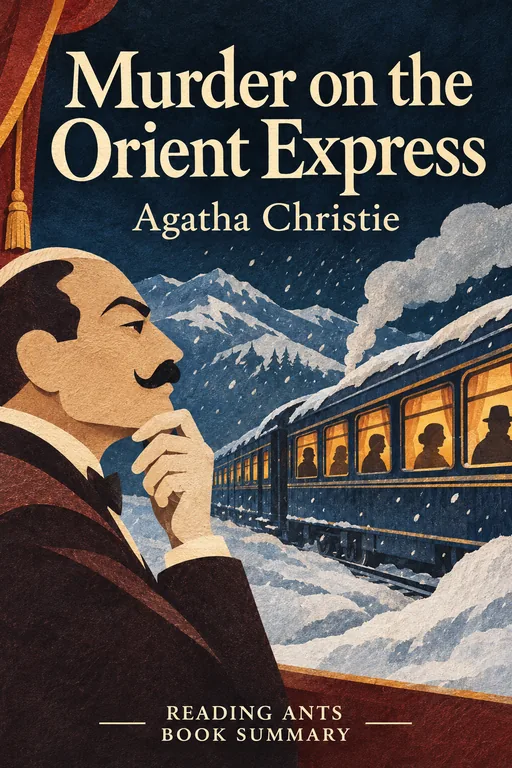
Murder on the Orient Express
Agatha Christie
When a wealthy American is murdered on a snowbound train, the Belgian detective Hercule Poirot must work out which of the passengers is the killer, and discovers a shocking truth about many of them.
🔍 Mystery & Thriller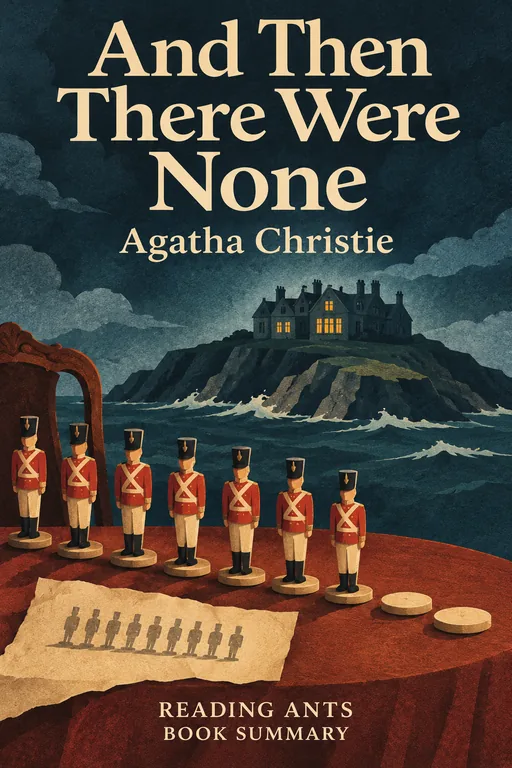
And Then There Were None
Agatha Christie
Ten people lured to an isolated island are accused of past crimes and killed one by one, following the lines of a nursery rhyme, until no one is left.
🔍 Mystery & Thriller
Death on the Nile
Agatha Christie
On a luxury steamer cruising the Nile, a rich young bride, Linnet Doyle, is shot dead in her cabin, and Hercule Poirot must discover which of the passengers, many of whom had reason to hate her, is the killer.
🔍 Mystery & Thriller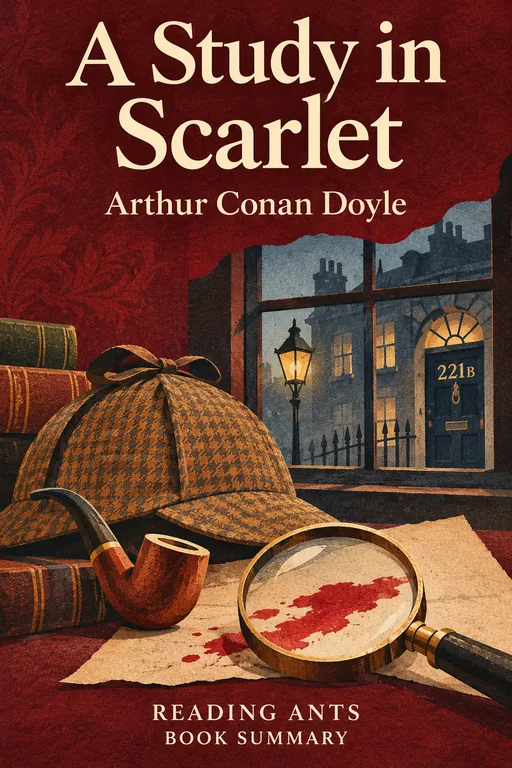
A Study in Scarlet
Arthur Conan Doyle
Dr. John Watson meets the eccentric consulting detective Sherlock Holmes and shares his rooms at 221B Baker Street, and together they investigate a mysterious murder in an empty London house, in the first Sherlock Holmes story.
🔍 Mystery & Thriller
The Murders in the Rue Morgue
Edgar Allan Poe
In Paris, a brilliant amateur detective, C. Auguste Dupin, solves the baffling murder of a mother and daughter in a locked room by thinking carefully about what the evidence really shows, and reaches a startling conclusion.
🔍 Mystery & Thriller
The Hound of the Baskervilles
Arthur Conan Doyle
Sherlock Holmes and Dr. Watson investigate a family curse involving a monstrous spectral dog on the dark, foggy moors of Devon, and discover that the legend is being used to cover a very human crime.
🔍 Mystery & ThrillerWant something different?
Pick another topic and we will show you three books to start with.