 Reading Ants
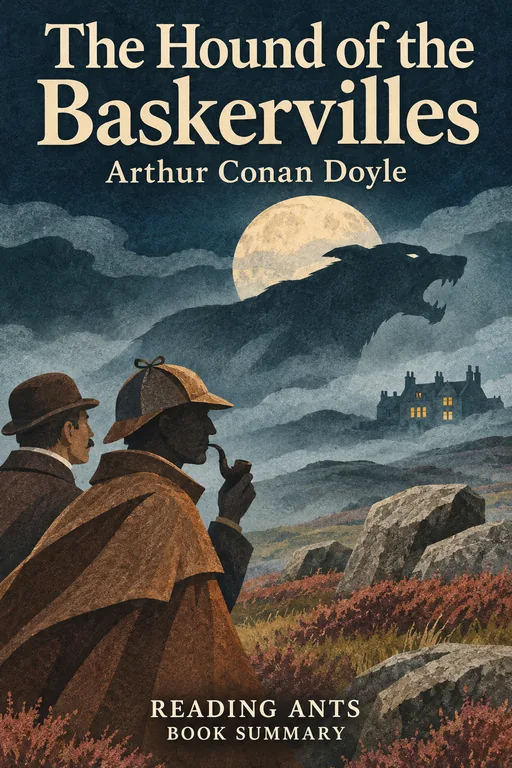
The Hound of the Baskervilles
Sherlock Holmes and Dr. Watson investigate a family curse involving a monstrous spectral dog on the dark, foggy moors of Devon, and discover that the legend is being used to cover a very human crime.
Overview
The Hound of the Baskervilles is the third of four novels featuring Sherlock Holmes, the famous detective created by Arthur Conan Doyle. It was published in 1901 and 1902 as a magazine serial and is often considered the best of all Holmes stories. A country doctor asks Holmes to look into the mysterious death of Sir Charles Baskerville, whose body was found on the moor with a look of terror on his face, beside enormous paw prints. According to an old legend, the Baskerville family has been haunted by a giant hound ever since an ancestor’s wickedness. Now the heir, Sir Henry, has arrived from Canada, and he may be next. Dr. Watson goes to Devon to protect him, while Holmes seems to stay in London.
Main Characters
- Sherlock Holmes: the brilliant, observant London detective.
- Dr. John Watson: Holmes’s loyal friend and the story’s narrator.
- Sir Henry Baskerville: the young heir, newly arrived from Canada.
- Dr. James Mortimer: the country doctor who brings the case to Holmes.
- Mr. Stapleton: a neighboring naturalist who collects butterflies.
- Miss Stapleton: his quiet, nervous companion, said to be his sister (she is in fact his wife).
- Barrymore and Mrs. Barrymore: the Baskerville Hall butler and housekeeper.
- The convict Selden: a dangerous escaped prisoner hiding on the moor.
Full Summary
The Curse
Dr. Mortimer visits 221B Baker Street with an old manuscript describing the legend of the Baskerville hound. In the seventeenth century, a cruel nobleman, Hugo Baskerville, kidnapped a farmer’s daughter and was killed on the moor by a huge, glowing hound. Since then, the family has been said to suffer from the curse. Dr. Mortimer explains that Sir Charles Baskerville died recently on the moor, and that he himself saw enormous paw prints near the body.
The doctor is worried about the heir, Sir Henry Baskerville, who arrives from Canada and is to take up residence at Baskerville Hall. In London, Sir Henry receives a threatening letter made of words cut from a newspaper, and one of his boots is mysteriously stolen. Holmes realizes that someone is watching him.
Watson on the Moor
Holmes tells Watson he is too busy to go, and sends Watson with Sir Henry to Devon, asking him to report everything in detail. Baskerville Hall is a gloomy old mansion at the edge of the Grimpen Mire, a dangerous marsh. Watson discovers that the butler, Barrymore, behaves strangely at night, and that someone is hiding on the moor. He hears the terrible baying of a hound, and meets the Stapletons, a naturalist and his sister, who tries to warn Sir Henry to leave, and then takes back her words.
Barrymore’s secret turns out to be that his wife’s brother, the escaped convict Selden, is hiding on the moor. Barrymore and his wife are sending him food. Watson also finds the camp of a mysterious figure who has been watching him from the moor.
Soon afterward, Watson discovers that the mysterious figure is Holmes himself, and the two of them find a man’s body at the bottom of a rocky slope, killed in a fall, wearing Sir Henry’s old clothes, which Barrymore had given to Selden. For a moment, they fear it is Sir Henry. It is Selden, apparently chased by the hound.
Holmes Appears
Holmes explains that he has been in Devon all along, living in a stone hut and observing from a distance. He shares what he has learned: the Stapletons are not brother and sister but husband and wife. Stapleton is secretly a Baskerville relative, next in line for the inheritance after Sir Henry, and he has planned to eliminate the heirs using a huge dog that he has trained, painted with phosphorus to make it glow.
The Plan
Holmes and Watson, with Inspector Lestrade, arrange a trap. Sir Henry will walk home alone across the moor at night after dining with the Stapletons, to lure Stapleton into releasing the hound. Holmes calls it a risky plan, but it is the only way to catch Stapleton in the act.
The Hound
On the foggy night of the trap, Holmes, Watson and Lestrade wait in the dark. The huge beast, with glowing jaws, leaps toward Sir Henry. Holmes and Watson shoot it dead. Stapleton, seeing his plan fail, runs into the Grimpen Mire and is presumed to have been swallowed by the marsh. Holmes finds Mrs. Stapleton tied up in a room at the Stapleton house, punished for refusing to help her husband any longer.
Explanation
Back in London, Holmes explains the details: Stapleton, who lived under a false name, had first tried to claim the estate by killing Sir Charles with fear, using the hound to frighten the old man, who had a weak heart. He had manipulated a woman, Laura Lyons, into asking Sir Charles to meet her at the moor gate that night, which lured him out to his death. Holmes also reveals that the hound’s phosphorus gave it its terrible appearance. Sir Henry recovers and takes a long journey with Dr. Mortimer to restore his nerves.
Why It Matters
The Hound of the Baskervilles is the most famous Sherlock Holmes novel and one of the most popular detective stories ever written. Doyle had killed off Holmes in 1893 in “The Final Problem,” and this novel is set earlier, in 1889, before that apparent death, though public demand later forced him to bring the detective back.
The book blends the detective story with gothic horror, creating one of the great atmospheric mysteries, and it has been adapted for film, radio, television and stage more than almost any other detective story. It established ideas that became standard in crime fiction, such as the faithful sidekick narrator and the mystery in which an apparently supernatural crime has a rational solution.
Key Takeaways
- Reason defeats superstition. The supernatural legend has a logical explanation.
- Careful observation reveals truth. Holmes notices small details others miss.
- Appearances can deceive. The friendly naturalist is the villain.
- Teamwork matters. Holmes and Watson solve the case together.
- Greed can drive crime. Stapleton kills for an inheritance.
What We Can Learn
The story encourages us to think carefully before accepting frightening explanations. When something seems supernatural, looking for evidence and logical reasons often reveals a simpler cause.
It also shows the value of paying attention to details. Holmes solves the case by noticing small things, such as a missing boot, the footprints and a forgotten letter. Practicing careful observation can improve our everyday thinking.
Finally, the story reminds us that charming people may hide bad intentions. Judging others by their actions over time, rather than first impressions, is wise.
Criticism and Counterpoints
Some readers find that Holmes is absent for a long part of the book, with Watson narrating most of the action, which can feel slow compared with the short stories. Others note that Stapleton’s scheme is complicated and depends on many coincidences.
Modern readers may also object to the way the story treats the moor’s locals and the convict, or to the fate of Mrs. Stapleton, who is a victim of her husband’s control. Despite these criticisms, the novel’s atmosphere remains a favorite.
Who Should Read It
This novel suits readers from about 10 upward who enjoy mysteries and suspense. It is a good introduction to Sherlock Holmes, and its atmospheric setting appeals to fans of gothic stories. Younger readers may find the hound scary.
Want the whole book?
A summary is a taste, not the meal. Here is where to find the full book.
You reached the end 🎉
Nicely done. Mark this one as read, and we will suggest what to read next.
Read this next
The Adventures of Sherlock Holmes
Arthur Conan Doyle
A collection of twelve short stories in which the brilliant London detective Sherlock Holmes uses observation and logic to solve puzzling cases, narrated by his friend and companion, Dr. John Watson.
🔍 Mystery & Thriller
A Study in Scarlet
Arthur Conan Doyle
Dr. John Watson meets the eccentric consulting detective Sherlock Holmes and shares his rooms at 221B Baker Street, and together they investigate a mysterious murder in an empty London house, in the first Sherlock Holmes story.
🔍 Mystery & Thriller
Rebecca
Daphne du Maurier
A shy young woman marries a wealthy widower and moves to his great estate, Manderley, where she is haunted by the memory of his first wife, Rebecca, and slowly learns the truth about her death.
📜 Classics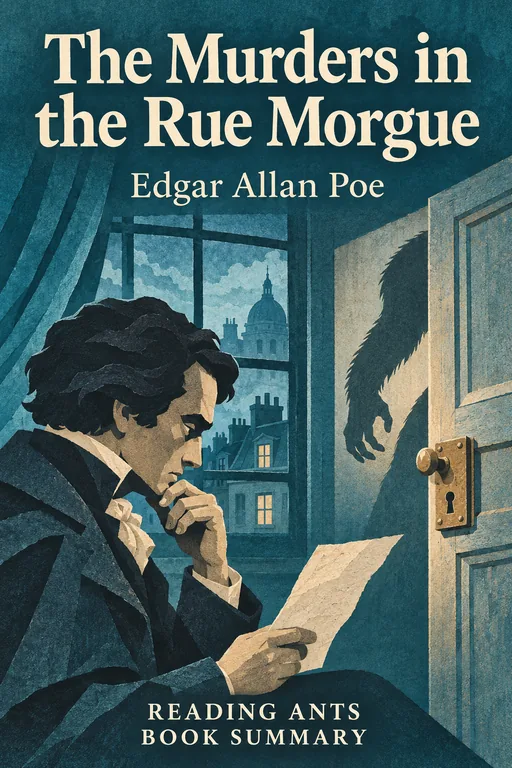
The Murders in the Rue Morgue
Edgar Allan Poe
In Paris, a brilliant amateur detective, C. Auguste Dupin, solves the baffling murder of a mother and daughter in a locked room by thinking carefully about what the evidence really shows, and reaches a startling conclusion.
🔍 Mystery & Thriller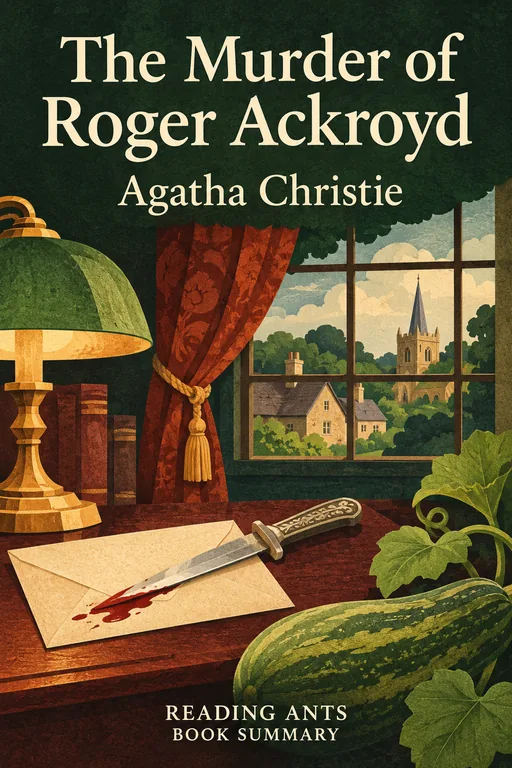
The Murder of Roger Ackroyd
Agatha Christie
In the English village of King's Abbot, a wealthy man is found stabbed in his study, and the Belgian detective Hercule Poirot, who has retired to grow vegetable marrows, is persuaded to investigate, with a surprise ending that changed detective fiction.
🔍 Mystery & Thriller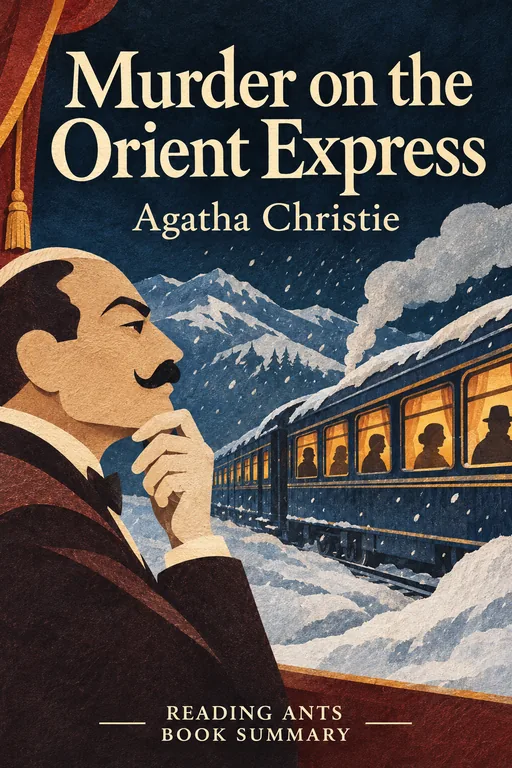
Murder on the Orient Express
Agatha Christie
When a wealthy American is murdered on a snowbound train, the Belgian detective Hercule Poirot must work out which of the passengers is the killer, and discovers a shocking truth about many of them.
🔍 Mystery & ThrillerWant something different?
Pick another topic and we will show you three books to start with.