 Reading Ants
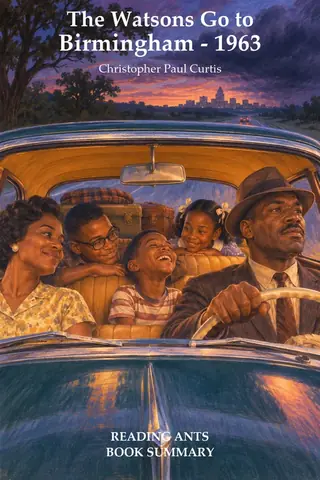
The Watsons Go to Birmingham - 1963
A funny family from Flint, Michigan, drives south to Alabama in the summer of 1963 to straighten out their troublemaking oldest son, and finds themselves close to one of the worst crimes of the civil rights era.
Overview
The Watsons Go to Birmingham - 1963 is a 1995 novel by Christopher Paul Curtis, and it was a Newbery Honor and Coretta Scott King Honor book in 1996. It is narrated by ten-year-old Kenny Watson, who lives in Flint, Michigan, with his parents, his older brother Byron, who has just turned thirteen when the story opens, and his little sister Joey. For most of the book it is a comic story about a loving, noisy family that the neighbors call the Weird Watsons. Then the family drives to Birmingham, Alabama, to leave Byron with his grandmother, and the story changes. The bombing of the Sixteenth Street Baptist Church on September 15, 1963, actually took place, but the Watsons are fictional.
Main Characters
- Kenny Watson: the ten-year-old narrator, a good reader with a lazy eye, who is teased at school.
- Byron: his older brother, a bully and a self-styled tough guy who also looks out for Kenny.
- Joetta (Joey): the youngest, a sweet, tidy kindergartner who always sticks up for Byron.
- Buphead: Byron’s best friend and running buddy, as much of a troublemaker as he is.
- Momma (Wilona): grew up in Birmingham, hates Flint’s cold, and plans everything in a notebook.
- Daddy (Daniel): a joker who loves music and the family’s old car, the Brown Bomber.
- Grandma Sands: Momma’s tiny, strict, loving mother.
- Rufus Fry: a poor new boy from Arkansas who becomes Kenny’s best friend, and his little brother Cody.
- Larry Dunn: the school bully.
- Mr. Robert: Grandma Sands’s dearest friend, who has an old coon dog named Toddy.
Full Summary
The Weird Watsons
On a freezing Saturday in Flint, the Watsons huddle under blankets while Momma complains that Daddy dragged her from Alabama to a giant icebox. Outside, Byron admires himself in the side mirror of the Brown Bomber, the family’s old Plymouth, and his lips freeze to the glass. Hot water only makes it worse, and in the end Momma yanks his head free. At school Kenny is teased for reading well and for his lazy eye, and Byron’s one piece of good advice is to look at people sideways so the eye does not show. Larry Dunn, the school bully, mocks two new boys on the bus, Rufus and his little brother Cody, who wear ragged clothes and speak with Arkansas accents. Kenny and Rufus become friends. Then Kenny laughs along when Larry jokes about the brothers sharing one pair of jeans, and Rufus stops speaking to him. With a little help from Momma, Kenny apologizes and is forgiven.
Byron in Trouble
Byron gets into trouble over and over. He lights matches and sets fire to toilet-paper parachutes in the bathroom, and Momma catches him and holds a lit match near his finger to scare him, until little Joey keeps blowing it out. He charges Swedish Creme cookies to the family’s grocery tab without permission, shares them with Kenny, knocks a mourning dove off a wire with one cookie by accident, and then throws up and buries the bird. He gets his hair straightened into a conk, and his father cuts it off and shaves his head in the bathroom. Meanwhile Dad and the kids fix up the Brown Bomber, and Dad installs a record player in it. Finally Momma announces that the family will drive to Alabama, and that Byron will stay with Grandma Sands for the summer, and perhaps for the next school year too.
The Road to Birmingham
The Watsons set out on a long drive down the highway to the South. Momma has planned every stop in her notebook, but Dad secretly decides to drive straight through, about eighteen hours, and when the family gets restless he buzzes like a vacuum cleaner to put them to sleep. In the middle of the night they stop at a pitch-black rest stop in the Tennessee mountains where everyone is frightened, and then they drive on and tickle God’s beard, as Dad puts it, with their fingers out of the car windows. In Birmingham, Grandma Sands turns out to be a tiny old woman with a cane. Kenny had expected a troll, and Byron is suddenly polite to her. Her dearest friend, Mr. Robert, and his old coon dog, Toddy, soon become part of the family’s days.
Collier’s Landing
Grandma Sands warns the children to stay away from Collier’s Landing, where a boy drowned. Byron tells Kenny about the Wool Pooh, the evil twin of Winnie-the-Pooh, who pulls kids under, and Kenny decides it is a lie. He goes in alone anyway and slips off a drop-off. He goes under, sees a faceless gray figure pulling him down, and sees a vision of Joey as an angel, pointing up. Byron dives in, fights the figure, and drags him out. Byron cries and kisses the top of his head, and makes Kenny promise not to tell.
The Church
A few days later, on a hot Sunday morning, Joey goes to Sunday school in white gloves and a lace hat. Kenny rests under a magnolia tree. A huge sound shakes the ground, and then Momma screams. Byron says a man has told him that a bomb has hit Joey’s church. Kenny follows the crowd and sees smoke, Bibles and coloring books, and two little girls laid on the grass. He pulls a shoe from the rubble and thinks the Wool Pooh is pulling on the other end. He runs back to Grandma Sands’s house, where Joey is alive. She tells him that she went out onto the church porch because it was too hot inside, saw him across the street, and chased him down the street while he laughed and ran ahead of her. Kenny was not there, and Joey adds that the boy she chased wore different clothes.
Behind the Couch
The Watsons leave Birmingham that night, without telling Joey what happened. Back in Flint, Kenny hides behind the couch, a place Byron has named the World-Famous Watson Pet Hospital, where sick pets recover. He withdraws from friends and from school. Byron starts sleeping on the couch and wakes him gently. Finally Kenny admits he is ashamed because he ran and saved only a shoe. Byron tells him that the Wool Pooh is made up, that there is no magic behind the couch, and that the world is not fair, so you just keep on stepping. Kenny comes out of hiding, and Joey is outside the bathroom door waiting. He decides that the real magic is in the love of his family.
Why It Matters
The Watsons Go to Birmingham - 1963 was Christopher Paul Curtis’s first novel, and it earned a Newbery Honor and a Coretta Scott King Honor. It is widely read in schools as an introduction to the civil rights movement. It works because it makes readers love a family first, with jokes and quarrels, and only then shows how the national event touches them.
It also approaches a very hard subject carefully. The attack is told through a ten-year-old’s confusion, and the book ends with comfort and love, not a lecture. An epilogue at the end explains the history and names the four girls who died: Addie Mae Collins, Denise McNair, Carole Robertson and Cynthia Wesley.
Key Takeaways
- Humor and love help families survive. The Watsons laugh together, and that gives them strength.
- Brothers can surprise you. Byron, who torments Kenny, risks his life for him and comforts him.
- Hatred causes real harm. The bombing shows what prejudice can do to children.
- Grief needs time and company. Kenny cannot get better on his own.
- Life is not fair, but you go on. Byron’s advice is hard and honest.
What We Can Learn
Kenny’s story shows that it is normal to feel frightened, sad or ashamed after seeing something terrible, and that talking to someone you trust helps. If you or a friend has seen something upsetting, it is good to tell a parent or teacher.
The book also teaches the value of speaking up against meanness, even small meanness. Kenny at first laughs along when a bully mocks his friend, and then he learns to apologize and stand by him.
Finally, it encourages us to learn the real history of the events behind the story and to remember the four girls who died.
Criticism and Counterpoints
Some readers feel that the book changes tone too abruptly, from slapstick comedy to tragedy, which can be jarring. Some adults may want to talk about the mild swearing and the family’s rough discipline, such as the match scene. The Watsons are invented, so the book is best paired with a true account of the 1963 events. The book also never explains who led Joey out of the church, which some readers find eerie and others find touching. Many critics, however, praise the contrast between the humor and the tragedy as the very thing that makes the book powerful.
Who Should Read It
This book suits readers from about ten to fourteen, and families who want to talk about civil rights history. It is a good companion for a school unit on the 1960s. Because the bombing and its aftermath are emotional, it is best read with an adult nearby for younger children.
Want the whole book?
A summary is a taste, not the meal. Here is where to find the full book.
You reached the end 🎉
Nicely done. Mark this one as read, and we will suggest what to read next.
Read this next
Roll of Thunder, Hear My Cry
Mildred D. Taylor
A Black family in 1930s Mississippi fights to keep their land and their dignity in the face of racism, and a young girl learns what it means to stand up.
🎒 Young Adult
Brown Girl Dreaming
Jacqueline Woodson
A poet tells the story of her childhood in the 1960s and 1970s, moving between South Carolina and New York, and discovering her love of words.
🎒 Young Adult
Number the Stars
Lois Lowry
In 1943, a ten-year-old Danish girl named Annemarie helps her Jewish best friend Ellen escape from Nazi-occupied Copenhagen by pretending that Ellen is her sister and by helping with a daring rescue.
🧸 Children's Books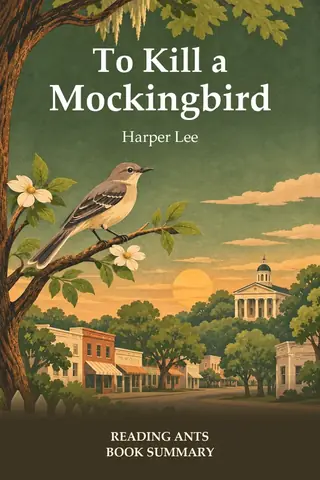
To Kill a Mockingbird
Harper Lee
In a small Alabama town in the 1930s, young Scout Finch watches her father, a lawyer, defend a Black man falsely accused of a crime, and learns hard lessons about prejudice, courage and seeing the world through other people's eyes.
📜 Classics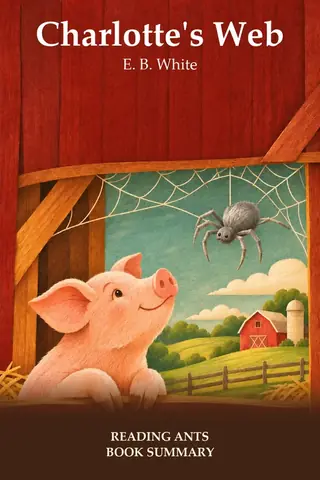
Charlotte's Web
E. B. White
A lonely pig named Wilbur learns he is going to be killed, and his clever friend Charlotte, a spider, comes up with an amazing plan to save his life.
🧸 Children's Books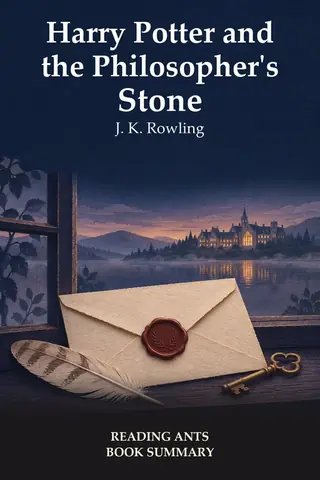
Harry Potter and the Philosopher's Stone
J. K. Rowling
An unloved orphan boy discovers on his eleventh birthday that he is a famous wizard, and during his first year at a magical school he makes true friends and faces the dark wizard who killed his parents.
🧸 Children's BooksWant something different?
Pick another topic and we will show you three books to start with.