 Reading Ants
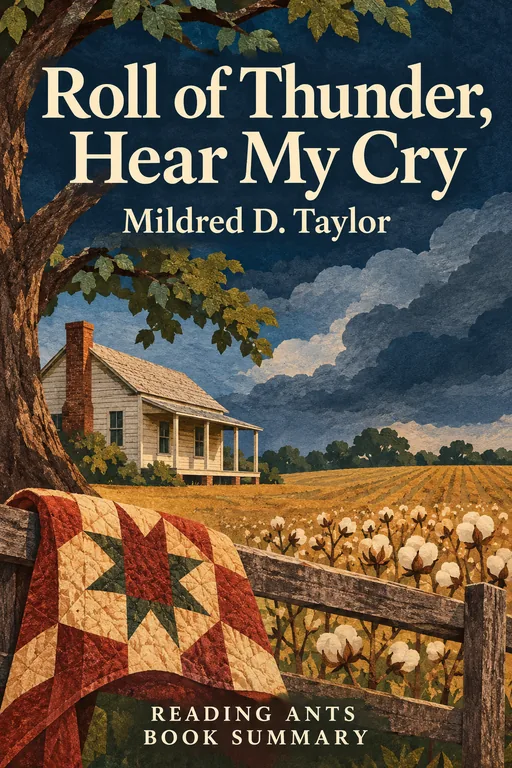
Roll of Thunder, Hear My Cry
A Black family in 1930s Mississippi fights to keep their land and their dignity in the face of racism, and a young girl learns what it means to stand up.
Overview
Roll of Thunder, Hear My Cry is a novel by Mildred D. Taylor, published in 1976. It is set in rural Mississippi in 1933, during the Great Depression, and is narrated by Cassie Logan, a nine-year-old girl. The Logan family owns four hundred acres of land, a rare thing for Black people at that time, and this makes them proud, and also makes them a target. The book is the story of one year, and it gives a child’s view of racism and injustice. It won the Newbery Medal in 1977.
Main Characters
- Cassie Logan: the narrator, a spirited, outspoken nine-year-old girl.
- Stacey Logan: her older brother, who is twelve, and who is responsible.
- Little Man and Christopher-John: her younger brothers.
- Mama (Mary Logan): a teacher, who stands up to injustice.
- Papa (David Logan): the father, who works on the railroad and is determined to keep the land.
- Big Ma: Cassie’s grandmother, who has deep roots in the land.
- Uncle Hammer: Papa’s brother, who lives in Chicago and is hot-tempered.
- T. J. Avery: a boy who is led astray by the white Simms brothers.
Full Summary
A Family and Its Land
Cassie and her brothers walk to school each day, and a school bus that carries white children to their own school drives past them. The driver splashes them with mud and dust. The Logan children’s schoolbooks are old ones that were first used at the white school, and a list inside the cover records them as passed on to Black students in very poor condition. Cassie and Little Man protest, and they get into trouble with their teacher. Mama, who teaches at the school, pastes paper over the inside covers to hide the list.
Stacey leads his brothers and sister in digging a trench across the road, so that the bus drives into it, breaks its axle, and is out of use for about two weeks.
The children’s father is away working on the railroad for part of each year, as the family needs money to pay for the land, which is half mortgaged. Their mother teaches at the Black school, and their grandmother is a strong presence at home.
The Night Men
In the area, there are stories of “night men,” white men who attack Black families. The Berry family has been burned by the white Wallace brothers, and the Logan children are frightened. Harlan Granger, a wealthy white landowner, whose family once owned the Logan land, wants to buy it back.
Mama begins to organize a boycott of the store of the Wallaces, a white family who are known for racism. A very big, strong man named Mr. Morrison comes to stay with the family after he loses his railroad job in a fight with some white men.
The Hard Lessons
Cassie, who is stubborn, is thrown out of a store in the town of Strawberry by the owner, Mr. Barnett, who refuses to serve her fairly. Outside, she bumps into a white girl, Lillian Jean Simms, and Lillian Jean’s father forces her to say that she is sorry, while Big Ma watches. Cassie decides to get revenge, and she plans it slowly. She pretends to be friendly, learns the girl’s secrets, and then, in the woods, she fights with Lillian Jean until the girl apologizes. She threatens to tell the girl’s secrets if she says anything.
Meanwhile, Mama fails T. J. for cheating on a test, and in revenge, T. J. tells the Wallaces that she has covered the inside of the books. The Wallaces, Harlan Granger and a man from the school board come to her class while she is teaching a lesson about the injustices of slavery, and they fire her.
The family also sees how a friend, T. J., gets into trouble. He turns away from Stacey and falls in with two older white brothers, R.W. and Melvin Simms, who encourage him to help them with a robbery of Barnett’s store. During the robbery, the store owner is killed by R.W., and the Simms brothers set T. J. up to take the blame.
The Boycott
Papa agrees to shop in the town of Vicksburg for the Black families who join the boycott, and Mr. Jamison, a friendly white lawyer, agrees to provide them with credit. The landowners Harlan Granger and Mr. Montier threaten the sharecroppers who continue to boycott, and some of the farmers stop, because they are afraid and cannot pay their debts without credit.
On the way back from Vicksburg, Papa, Mr. Morrison and Stacey are stopped when the wheels of their wagon come loose. The Wallaces shoot at Papa, and a wagon wheel rolls over his leg and breaks it. Mr. Morrison fights off the Wallaces. Papa can no longer work on the railroad. Soon afterward, the bank calls in the mortgage on the land, and Uncle Hammer sells his new car to pay it.
Trouble
One night, T. J. comes to Cassie and Stacey, badly beaten, and tells them about the robbery. The Simms brothers beat him when he threatened to tell. The Logan children help him home. Then a white mob, including the Wallaces and the Simms brothers, breaks into the Avery house, drags T. J. out, and threatens to lynch him. Cassie and her brothers watch from the woods, and Mr. Jamison tries to stop the mob.
Cassie runs home to tell the adults, and Papa sets off with Mr. Morrison. Soon the Logans’ cotton field is burning, and the white men leave T. J. to help fight the fire. People from both communities work together to put it out, and a heavy rain helps. T. J. is saved for the moment, but Papa tells the children that he will probably be convicted of the murder, and that he might die. Stacey bursts into tears.
Cassie’s Understanding
Cassie realizes that her father started the fire, to save T. J., and she understands that the land is the family’s whole life, and that Papa was willing to risk it for another person’s life. She also understands that the world is unfair, and that she must be strong. Although she never liked T. J., she grieves for him.
The book ends with Cassie crying in her bed, for T. J. and for the land.
Why It Matters
The book won the Newbery Medal in 1977, was a National Book Award finalist, and was a Coretta Scott King Award honoree. It is considered a major work of children’s literature about racism. Taylor based her books on the oral history told to her by her father, uncles and aunt. It is widely taught in schools, and has sequels that follow the Logan family. It shows the dignity and courage of a Black family in a hostile society, and it has been praised for treating its young readers with honesty. It has also been challenged in some schools.
Key Takeaways
- Land means freedom. The Logans’ land gives them independence.
- Dignity must be defended. The family refuses to accept humiliation.
- Racism is organized. The book shows how laws and customs support injustice.
- Courage takes many forms. Mama’s teaching, Papa’s sacrifice and Cassie’s anger all count.
- Family gives strength. The Logans stay together.
What We Can Learn
The book helps readers to understand some of the history of racism in the United States, and the courage it took to resist. It reminds us to treat all people with respect, and to speak up when we see unfair treatment.
It also shows the value of education and truth, as Mama risks her job to tell the children the truth. Finally, it teaches us that standing up for what is right sometimes has a cost, but that dignity and unity can carry a family through.
Criticism and Counterpoints
Some readers find the book’s scenes of racist violence upsetting, and the language is offensive, though it is used to show the reality of the time. Others say that the plot is episodic, made up of several separate episodes rather than a single storyline. Early reviewers also noted that the strong, clear-headed Logan family is something of an idealization. It has been challenged in some schools, but defenders say that it is an honest and important book.
Who Should Read It
This book is for readers from about ten and up, and is a good book to read with an adult. It is a strong choice for classroom study. It includes upsetting scenes, but they are treated carefully.
Want the whole book?
A summary is a taste, not the meal. Here is where to find the full book.
You reached the end 🎉
Nicely done. Mark this one as read, and we will suggest what to read next.
Read this next
To Kill a Mockingbird
Harper Lee
In a small Alabama town in the 1930s, young Scout Finch watches her father, a lawyer, defend a Black man falsely accused of a crime, and learns hard lessons about prejudice, courage and seeing the world through other people's eyes.
📜 Classics
The Hate U Give
Angie Thomas
After witnessing a police officer kill her unarmed friend, a Black teenager finds her public voice while navigating grief, racism and the different expectations of her neighborhood and private school.
🎒 Young Adult
The Color Purple
Alice Walker
Told in letters, the story follows Celie, a poor Black woman in rural Georgia who survives abuse and loss, and through the love of other women finds her voice, her independence and joy.
✨ Modern Fiction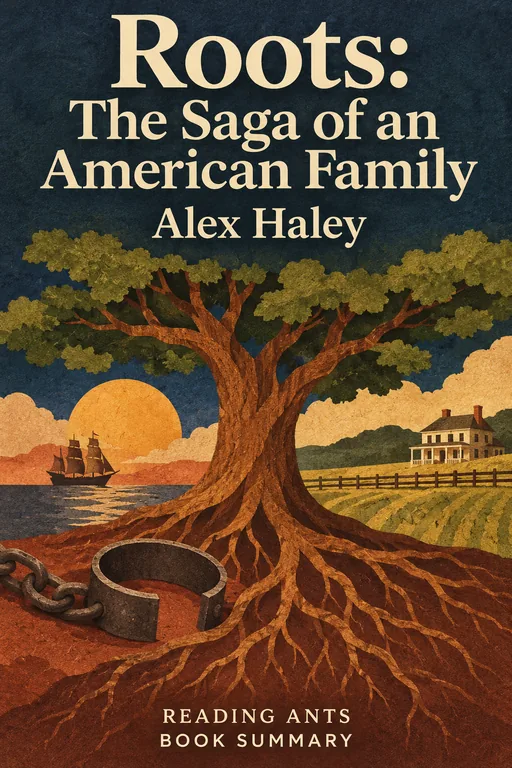
Roots: The Saga of an American Family
Alex Haley
Beginning with Kunta Kinte, a young man seized from his village in the Gambia in 1767, this family saga follows seven generations of his descendants through slavery, the Civil War and freedom in America.
✨ Modern Fiction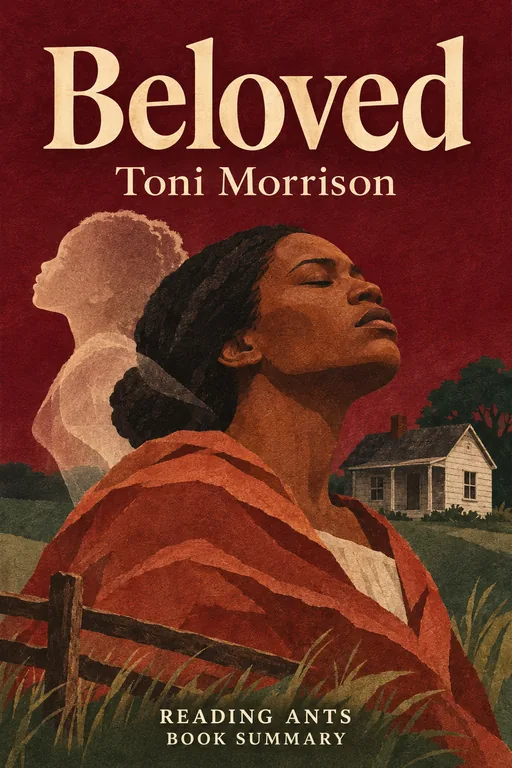
Beloved
Toni Morrison
A formerly enslaved woman living in Ohio after the Civil War is haunted by the ghost of the daughter she killed to save her from slavery, and by the painful memories she has tried to bury.
✨ Modern Fiction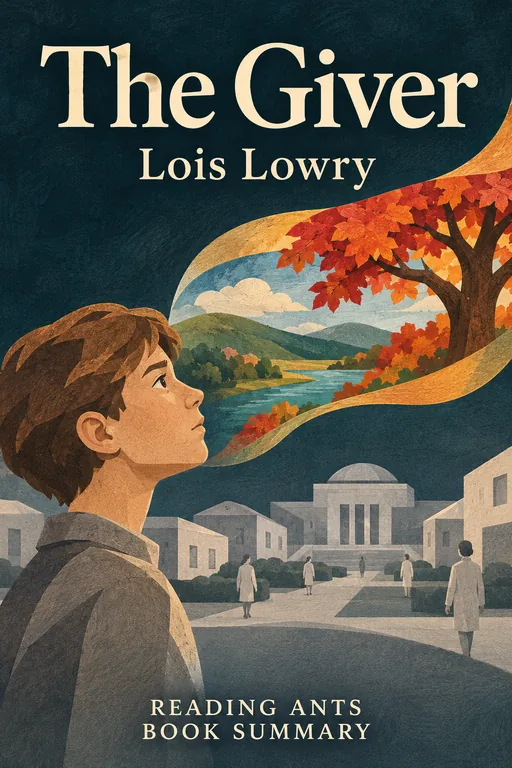
The Giver
Lois Lowry
In a perfectly controlled community with no pain, choice or color, a boy about to turn twelve is chosen to hold the memories of the past, and discovers the terrible price his people pay for their safety.
🎒 Young AdultWant something different?
Pick another topic and we will show you three books to start with.