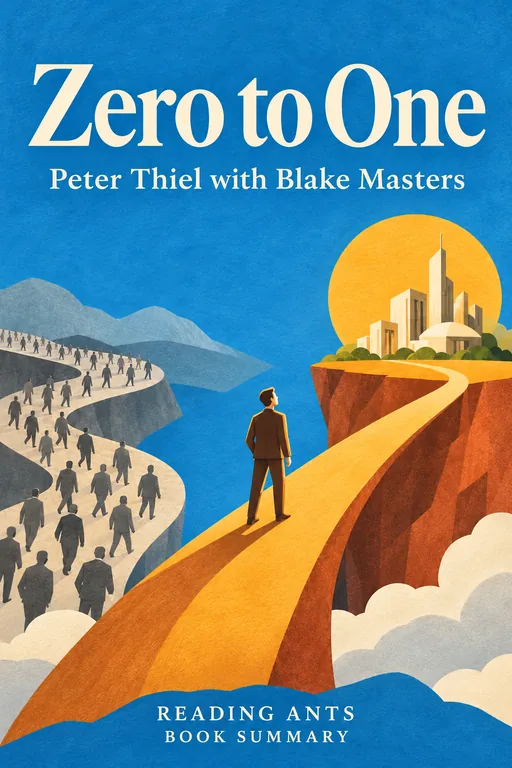
The most valuable companies create something new from nothing, and Peter Thiel argues that this means aiming for a monopoly in a small, specific market rather than competing with everyone in a crowded one.
Overview
Zero to One was published in 2014 by Peter Thiel, who co-founded PayPal and was the first outside investor in Facebook. It grew out of a Stanford course on startups, with class notes written up by his former student Blake Masters. The book is short and opinionated. Thiel’s central idea is that going from zero to one, creating something genuinely new, is far more valuable than going from one to many, copying what already works. He offers bold, sometimes controversial views on competition, monopoly, secrets, luck and the future, and he asks readers to think for themselves instead of following the crowd.
Full Summary
1. The contrarian question
The idea: Thiel starts with a question he uses in job interviews: what important truth do very few people agree with you on? A good answer is a belief that is unconventional but true. He argues that it is hard to find, because most people think what everyone around them thinks. Companies that change the world usually start from a truth that was invisible to others at the time.
In real life: Years ago, most people thought strangers would never sleep in each other’s homes. The people who started home-sharing believed the opposite and were proved right.
2. Vertical and horizontal progress
The idea: Thiel separates two kinds of progress. Horizontal progress means copying things that work, going from one to many, as when a successful product is sold in more places. Vertical progress means doing something new, going from zero to one, as when someone invents a new technology. Globalization is horizontal; technology is vertical. He worries that the world is much better at the first than the second, and that we assume the future will be better without actually building it.
In real life: Opening ten more branches of the same coffee shop is horizontal. Inventing a new way to make coffee is vertical.
3. Monopoly versus competition
The idea: The most controversial claim in the book is that competition is overrated. In perfect competition, nobody makes lasting profits, because prices are driven down to cost. A monopoly, in Thiel’s sense, is a company so good at something that it has no close rival, and it can therefore afford to care about its workers, products and the long term. He says every successful company is unique, and that the two kinds of firm lie about their market in opposite ways: monopolists play down their dominance by exaggerating their competition, while struggling firms define their market narrowly to claim they are unique.
From the book: Thiel contrasts Google, which dominates search, with restaurants in a big city, which compete fiercely and often struggle to make money.
In real life: A tiny shop that is the only bakery in a neighborhood can do very well, while ten bakeries on the same street fight over customers.
4. What makes a monopoly last
The idea: Thiel lists characteristics of businesses that can maintain a lead: proprietary technology that is much better than the alternatives; network effects, where a product becomes more valuable as more people use it; economies of scale, where bigger means cheaper; and a strong brand. He also advises building these from the start, since they are hard to add later.
In real life: A messaging app is useless if none of your friends use it, but valuable if all of them do. That is a network effect.
5. Start small
The idea: Thiel suggests that every startup should begin by dominating a very small market. It is easier to take over a small market than a large one, and from there a company can expand into nearby areas. He gives the example of PayPal’s early growth, which began with a narrow group of customers, and of Amazon, which began with books before selling everything else.
In real life: A new social network could first aim for one university, becoming the place where every student is, before reaching beyond it.
6. Secrets, founders and luck
The idea: Thiel argues that great companies are built on secrets: truths about the world that few people know and that can be discovered with effort. He also says the founding team matters enormously and that early decisions have effects that can last for decades. Against the belief that success is mostly luck, he argues for definite optimism: having a specific plan and working to make the future you want, instead of drifting along or hoping that things will work out on their own.
In real life: A student who says “I’ll try a bunch of things and see” is indefinite. One who picks a goal and builds a plan to reach it is definite.
7. The seven questions
The idea: Thiel offers seven demanding questions that every business must answer, and he argues that distribution, meaning sales, matters as much as the product: Can you create new technology that is much better, not just slightly better? Is this the right time to start? Are you starting with a big share of a small market? Do you have the right people? Can you deliver the product, not just make it? Will your position last for years? And have you found a unique opportunity that others haven’t seen? He says a strong company needs good answers to all seven.
In real life: A group planning a school business can use these questions as a checklist before spending money.
Why It Matters
Zero to One was a bestseller and became required reading in many startup circles. Its blunt, memorable style gave the startup community a vocabulary, with terms like “zero to one,” “monopoly,” “contrarian” and “definite optimism.” It encouraged founders to think about big, lasting companies instead of quick profits.
The book also reflects Thiel’s influence as an investor, through his Founders Fund, and as a public figure. Its ideas on competition and monopoly have sparked arguments among economists and entrepreneurs, and it remains one of the most discussed business books of the 2010s.
Key Takeaways
- Build something new. Real value comes from creating, not copying.
- Think for yourself. Ask what true thing you believe that others do not.
- Aim for a niche you can own. Start with a small market and grow from there.
- Plan for the long term. Definite plans beat hoping for the best.
- Choose the team carefully. Founding choices last for years.
What We Can Learn
The book encourages us to look for original thinking in our own lives. Before following the crowd, whether in choosing a subject, a career or a project, it helps to ask what we believe that others don’t, and whether the evidence supports us.
It also shows the value of focus. Many people spread themselves too thin, trying to do ten things a little. Choosing one thing and doing it better than anyone else, at least in a small area, can be a more powerful starting point.
Finally, it reminds us that the future isn’t automatic. It is something people build, through plans and effort, and we each have some part in it.
Criticism and Counterpoints
Critics say that Thiel’s praise of monopolies ignores the harm they can do to customers, workers and smaller firms, and that real-world monopolies often stay on top through lobbying and acquisitions, not just better products. Economists note that his claim that competition is bad is a simplification, since competition drives innovation in many industries.
Others find the book’s advice overconfident or built from a few famous successes, and point out survivorship bias: for every startup that follows these rules and wins, many fail. Some readers also dislike the way the book values founders over everyone else. Thiel’s politics and investments, including support for controversial figures and companies, add to the debate.
Who Should Read It
This book suits aspiring entrepreneurs, students and anyone curious about technology and business. It is short and easy to read. Readers should treat it as a collection of provocative opinions and test each idea against other sources.
Want the whole book?
A summary is a taste, not the meal. Here is where to find the full book.
You reached the end 🎉
Nicely done. Mark this one as read, and we will suggest what to read next.
Read this next
The Lean Startup
Eric Ries
Startups succeed not by following a detailed plan but by quickly testing their ideas with real customers, learning from the results and changing direction when needed.
💼 Business
The Innovator's Dilemma
Clayton M. Christensen
Great companies often fail not because they manage badly, but because they do everything right: they listen to their best customers and invest in the best products, and so they miss the cheaper, simpler technology that eventually replaces them.
💼 Business
The Hard Thing About Hard Things: Building a Business When There Are No Easy Answers
Ben Horowitz
A veteran Silicon Valley entrepreneur shares honest lessons from the worst times of building and running a technology company, when there are no easy answers.
💼 Business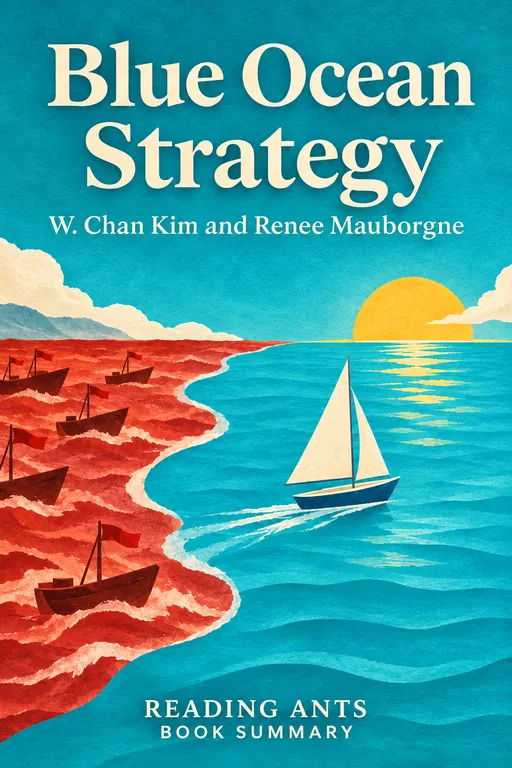
Blue Ocean Strategy
W. Chan Kim and Renee Mauborgne
Instead of fighting rivals in a crowded market, companies can create a new, uncontested space where competition does not matter, by offering buyers something much more valuable at a lower cost.
💼 Business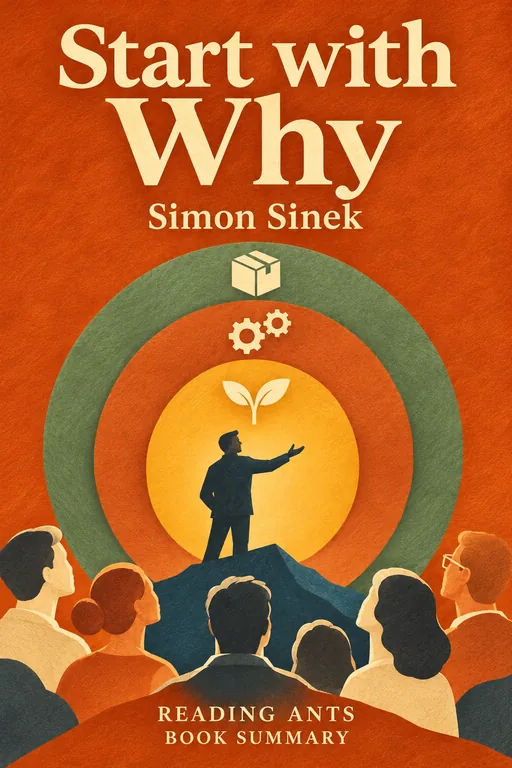
Start with Why
Simon Sinek
The leaders and companies that inspire people begin by explaining why they exist, their purpose or belief, and only then talk about how and what they do.
💼 Business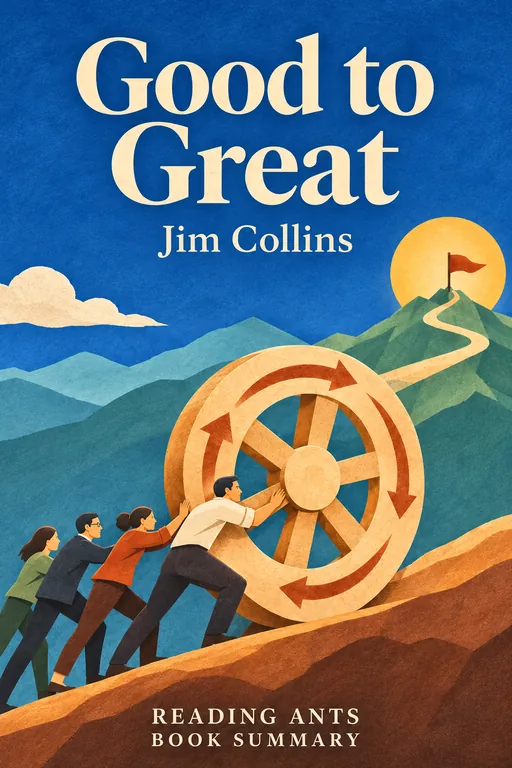
Good to Great
Jim Collins
Collins argues that sustained corporate improvement comes from disciplined leaders, carefully chosen people, a focused economic concept and cumulative execution rather than dramatic transformation programs.
💼 BusinessWant something different?
Pick another topic and we will show you three books to start with.