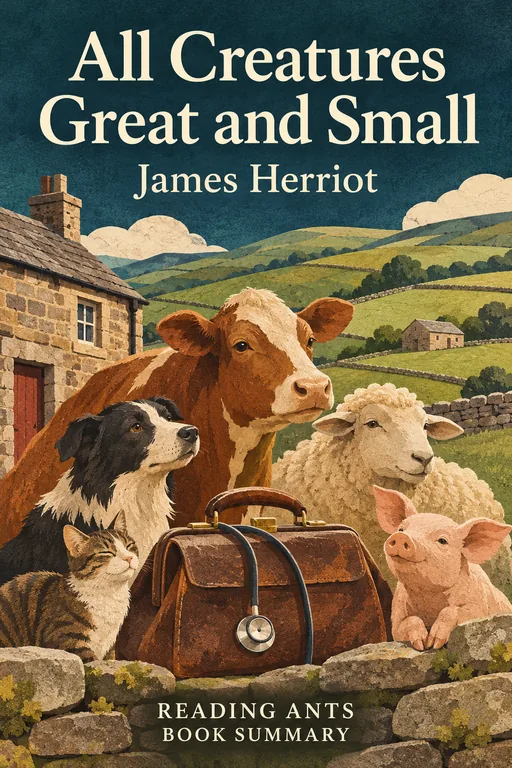
All Creatures Great and Small
Country vet James Herriot tells funny and warm stories of his first years as a young veterinary surgeon in the Yorkshire Dales in the 1930s, with its farmers, animals and his lively employers.
Overview
All Creatures Great and Small was published in 1972, and written by James Herriot, which was the pen name of Alf Wight, a veterinarian who practiced in Yorkshire, England. He said that he began to write seriously at the age of fifty, encouraged by his wife, though he had in fact written before. The 1972 American edition combined two earlier volumes, If Only They Could Talk (1970) and It Shouldn’t Happen to a Vet (1972). The book is made of linked stories from the 1930s, when he was a young man starting his career in the countryside, among hardy farmers and their animals. It is a literary retelling, with real people renamed and events rearranged, and not a literal case log; most sources agree that about half of the content is invented. The title comes from a line of a Christian hymn. It was very popular, followed by sequels, and became a television series. The tone is gentle, humorous and full of affection for animals and people.
Full Summary
A New Assistant at Darrowby
The stories follow Herriot, a newly qualified vet from Scotland, who comes to the fictional town of Darrowby in the Yorkshire Dales hoping to be taken on as an assistant, at a time when many graduates struggle to find work. The area is beautiful but remote, and the winter is harsh. He is nervous. He is surprised to find that the vet he is to work for, Siegfried Farnon, is an Englishman, not the German he expected. Siegfried is energetic and unpredictable, and he often contradicts himself. After a first day on farm calls with Siegfried, Herriot is hired for wages and board, and moves into the vets’ house, Skeldale House.
First Cases and Farm Life
The book opens with a hard winter calving, when Herriot struggles with a badly positioned calf while an older onlooker doubts him, before he finally manages to deliver it safely. From then on he faces a series of challenges with cows, horses and a variety of other animals, and he is often called out to farms at night. He learns on the job, and sometimes makes mistakes, to the amusement of the farmers, who are shrewd and watching. They can be slow to trust a young vet from outside. He must learn their ways, and the dialect, and win their respect with hard work and kindness.
Siegfried and Tristan
His employer, Siegfried, runs the practice in a disorganized way: he muddles the practice’s books and money, keeps hens and pigs, and ignores the bad brakes of his car. His younger brother, Tristan, is quite unlike him. Tristan is still struggling with his veterinary studies, is often late for his morning calls, and gets into trouble. He also plays pranks on Herriot and takes him to village dances. Herriot gets caught between the brothers, and many of the funniest episodes involve their different temperaments and schemes. Herriot becomes part of the household, which includes the housekeeper, Mrs. Hall, who cooks for them.
Pets, Patients and Characters
Not all of his patients are on farms. In town, he treats the animals of the rich, such as a pampered small dog named Tricki Woo, whose wealthy owner, Mrs. Pumphrey, overfeeds him. Herriot becomes the dog’s designated “Uncle” and is invited to a party in his honor. When Tricki Woo falls dangerously ill from too much food, Herriot puts him on a strict diet and he recovers. Herriot also meets a variety of characters, from stubborn old farmers to poor families who love their animals deeply. He sees the strong bond between people and creatures, and the hardships of rural life in the Depression. Some stories end sadly, but many end in comedy.
Love and a Young Woman
Along the way, Herriot meets a young woman named Helen Alderson, a farmer’s daughter, while treating a calf on her family’s farm. He is drawn to her, and he becomes shy and awkward around her. His first invitation to a smart hotel goes badly, and a later cinema date is also clumsy, though Helen is interested in him. They begin to see each other regularly, and eventually he proposes. The story of their romance gives the book a gentle thread, and shows the author’s warmth and humor.
Settling In
As the stories go on, Herriot’s work takes him across the Dales in all weather, to farms where he treats cows, horses, pigs and sheep, and to the pets of townspeople. Many of the stories turn on a small, human moment, such as a farmer’s quiet gratitude or a family’s love for an old dog. Herriot settles into Darrowby, and he learns a great deal about animals and about people. The book closes with his marriage to Helen. Their honeymoon coincides with the tuberculosis testing of cattle, so they spend it driving round the countryside, and Siegfried makes him a full partner in the practice. His story continues in later books.
Why It Matters
All Creatures Great and Small is one of the most beloved books in Britain, and has been translated into many languages. It brought a picture of rural Yorkshire and of the vet’s work to readers across the world, and it has been credited with inspiring many people to become veterinarians. The books captured a vanishing way of life, as farming became more mechanized. They are also a celebration of kindness to animals. The television adaptations, in the 1970s and again in 2020, have introduced the stories to new audiences. The book remains a popular choice for family reading.
Key Takeaways
- Kindness matters. Herriot treats animals and people gently.
- Humor helps in hard work. Funny stories make difficult days bearable.
- Earn respect through work. The farmers came to trust him over time.
- Community counts. The relationships in Darrowby are central.
- Find work you love. Herriot discovers his calling.
What We Can Learn
The stories invite us to appreciate the people who work with animals and on the land, and the knowledge that they have. They show us how patience and good humor can help in learning a new job. If you have a pet, think about how to care for it with kindness, and take it to a vet when it needs help. You can also learn to listen to older people, who often have experience that books do not. And remember that a satisfying life can be found in an ordinary place, with the people and creatures you love.
Criticism and Counterpoints
Some readers say that the book presents a nostalgic picture of rural life. Others point out that the characters are based on real people, but changed or exaggerated, and that the time order is rearranged: the stories are set before the war, although the real Wight began work in Yorkshire during it. His real partner, Donald Sinclair, who was the model for Siegfried, was offended by his portrayal. Modern vets note that some of the treatments described are out of date, and that attitudes toward animals have changed. Many readers, though, find the gentle humor refreshing.
Who Should Read It
This book is for readers of all ages who like animals, humor and stories of country life. It is easy to read, and the chapters can be enjoyed one by one. Some scenes of animal illness and veterinary work may upset very sensitive readers, but the tone is kind.
Want the whole book?
A summary is a taste, not the meal. Here is where to find the full book.
You reached the end 🎉
Nicely done. Mark this one as read, and we will suggest what to read next.
Read this next
My Family and Other Animals
Gerald Durrell
Gerald Durrell recalls his boyhood on the Greek island of Corfu in the 1930s, where he collected animals of every kind, while his eccentric English family tried to cope with life in the sun.
👤 Real Lives
A Tree Grows in Brooklyn
Betty Smith
A poor, bookish girl named Francie Nolan grows up in the tenements of Williamsburg, Brooklyn, in the early twentieth century, and learns to find hope and strength in a family that has little but love and determination.
📜 Classics
The Wind in the Willows
Kenneth Grahame
A shy Mole, a kindly Water Rat, a gruff Badger and a boastful Toad share riverside adventures in the English countryside, in a story about friendship, home and the madness of Mr. Toad's passion for motorcars.
🧸 Children's Books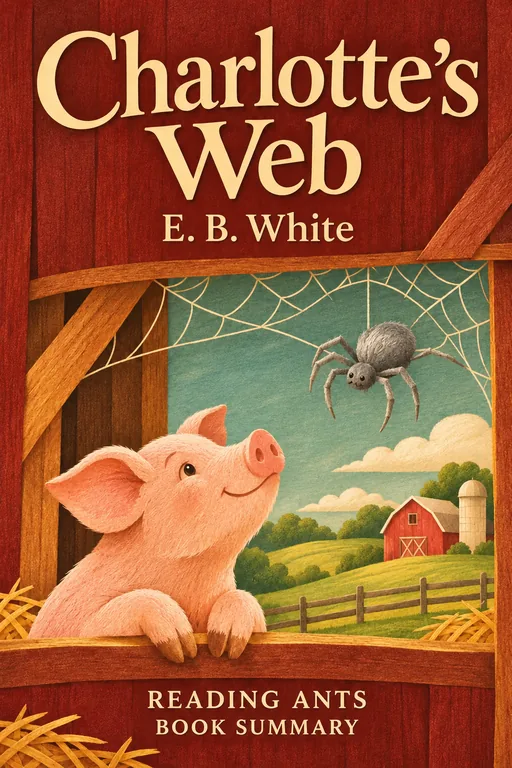
Charlotte's Web
E. B. White
A lonely pig named Wilbur learns he is going to be killed, and his clever friend Charlotte, a spider, comes up with an amazing plan to save his life.
🧸 Children's Books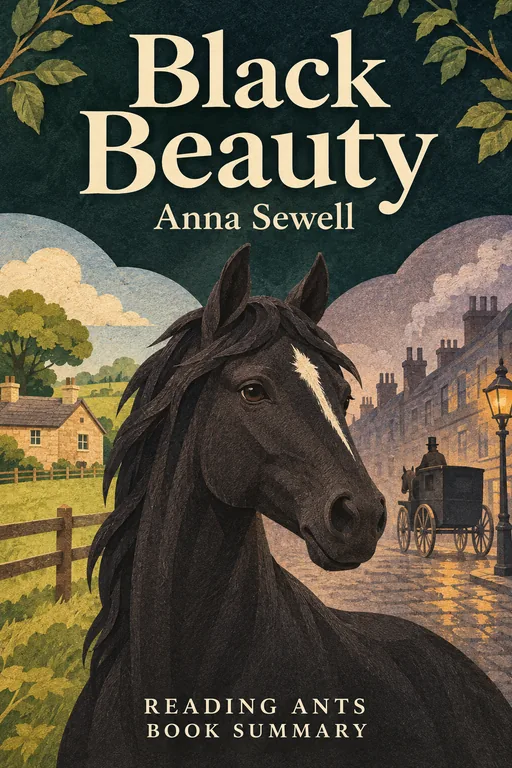
Black Beauty
Anna Sewell
A gentle black horse tells the story of his life, from a happy childhood to hard years pulling cabs, and shows how kindness or cruelty can change an animal's whole life.
🧸 Children's Books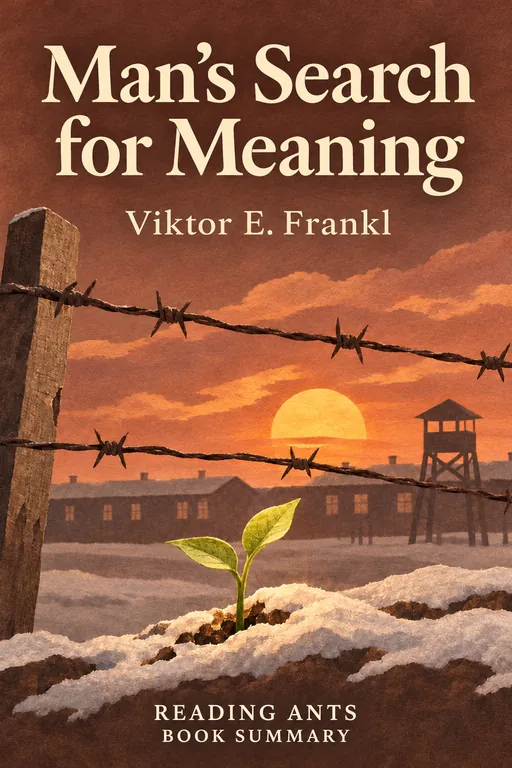
Man's Search for Meaning
Viktor E. Frankl
A psychiatrist who survived the Nazi concentration camps explains that even in the worst suffering, people can choose their attitude, and that finding a reason to live is what gives us the strength to endure.
👤 Real LivesWant something different?
Pick another topic and we will show you three books to start with.