 Reading Ants
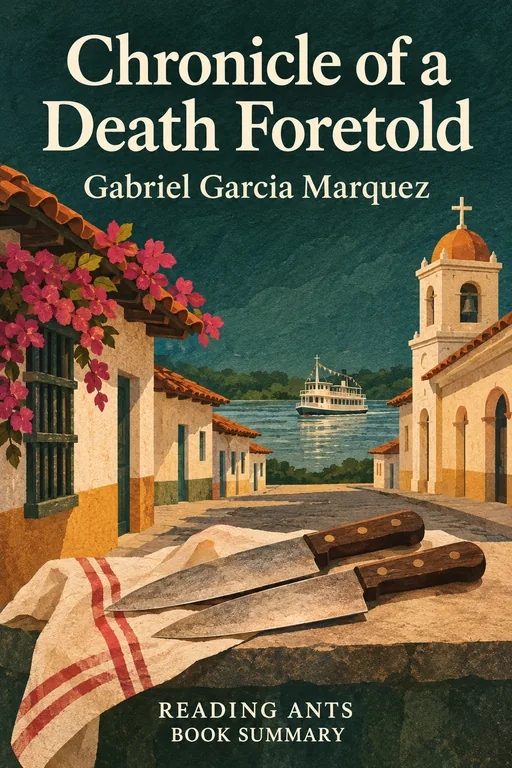
Chronicle of a Death Foretold
Original title: Crónica de una muerte anunciada
In a small Colombian town, everyone knows that two brothers plan to kill a young man, and yet nobody stops them.
Overview
Chronicle of a Death Foretold is a short novel by the Colombian writer Gabriel Garcia Marquez, published in 1981. It is set in a sleepy river town in Colombia, on the day that a bishop’s boat is due to pass. The narrator, who grew up in the town, returns years later to investigate the murder of his friend Santiago Nasar. The novel gives away the ending at the start, so the question is not who will die, but how a whole community could let it happen. It is a book about honor, guilt and the way that people look away.
Main Characters
- Santiago Nasar: a young, wealthy man of Arab descent, the victim, who is shown with both charm and flaws.
- Angela Vicario: a beautiful young woman, who is sent back to her family on her wedding night.
- Bayardo San Roman: Angela’s wealthy new husband, a stranger who arrives in town.
- Pedro and Pablo Vicario: Angela’s twin brothers, who set out to kill Santiago.
- The narrator: a friend of Santiago’s, who tries to piece together what happened.
- Placida Linero: Santiago’s mother.
- Victoria Guzman: the cook in Santiago’s house.
Full Summary
The Day of the Bishop
The book opens with the end: on the morning that Santiago Nasar is killed, he gets up early to meet the bishop’s boat, which is coming to the town. He has slept little, as there had been a big wedding the night before. He walks out of his house, unaware that two men are waiting to kill him.
The narrator then goes back to explain what led up to this moment. The story moves back and forth in time, as he questions witnesses decades later.
The Wedding
Some time before, a handsome stranger named Bayardo San Roman had arrived in the town, and had made it known that he wanted to marry. He chose Angela Vicario, the daughter of a poor family, and he paid for a huge wedding party. The whole town came to celebrate.
During the night, Bayardo discovered that Angela was not a virgin. He took her back to her mother’s house. Her mother beat her, and demanded to know the name of the man.
The Name
Angela, who is terrified, names Santiago Nasar. It is never made clear whether she told the truth, or whether she was protecting someone else. In the culture of the town, the honor of the family is at stake, and the twin brothers decide that they must kill Santiago.
The brothers, who work as butchers, sharpen their knives and tell everyone what they are about to do. They are not hiding their plan, and some part of them hopes that someone will stop them.
Nobody Stops Them
Throughout the morning, people in the town hear of the plan. Some do not believe it, and others think that it is just drunken talk. A few try to warn Santiago or to stop the brothers: Clotilde Armenta, who runs a milk shop, begs the authorities to act, and Santiago’s friend Cristo Bedoya looks for him, but messages are delayed or lost. A priest does not want to interfere, and the police chief takes the brothers’ knives away, but lets them go.
Santiago’s mother, Placida, thinks that he is already in the house, and locks the door. He is thus locked out when the brothers arrive. The whole town waits in the square, and watches as if it were a show.
The Killing
The brothers attack him in front of his own front door. He is stabbed many times, and he stumbles through the house, holding his wounds, and goes into the kitchen, where he falls. The crowd looks on, in a state of shock.
His death is bloody and slow. His body is cut open for an autopsy by a priest who is not a doctor, in a rough and horrible way, which adds to the sense of shame felt by the town.
Afterward
The novel itself ends with the killing, so this aftermath is gathered here from events that the book tells earlier and in pieces. The Vicario brothers are arrested but are later set free, as it is held that they acted in defense of their honor. Angela and her family leave the town. Bayardo San Roman disappears.
Years later, Angela writes letters to Bayardo, every week for many years. One day, he returns, with the letters, which he has never opened. Angela, now a middle-aged woman, has learned to love him, and their reunion is a strange, sad ending.
Why It Matters
This novella is often cited as one of Garcia Marquez’s finest works, and he said that it was his favorite. He won the Nobel Prize in Literature in 1982. The story is based on a real killing that took place in Colombia in 1951, which the author knew. It is admired for its form: a murder mystery in which the ending is known, but the story is no less gripping. It has been adapted for the stage and film, and it is widely read in schools. It remains a model of how to build suspense and tell a story with great economy.
Key Takeaways
- Communities can be complicit. Everyone knows, and no one stops the crime.
- Honor can destroy. The code of honor leads to a senseless death.
- Truth is slippery. We never learn the full facts, even years later.
- Fate and chance mix. Small accidents, such as a locked door, seal Santiago’s fate.
- Memory shapes history. The narrator’s account is based on the memories of many people.
What We Can Learn
The book makes us think about our responsibility when we see something wrong. Many people in the story could have prevented the killing, but each had a reason to stay out of it. It encourages us to speak up when we see danger or injustice, even if it is awkward.
It also shows how social rules, such as ideas about honor and shame, can lead to cruelty. We can ask which of our own customs might cause harm. Finally, the story demonstrates how rumors and half-truths can spread, and why it is wise to ask for evidence.
Criticism and Counterpoints
Some readers feel that the book’s treatment of Angela, whose story is largely seen from outside, is too limited, and that the victim of the real injustice is overlooked. Others find the structure, with its time shifts and many characters, confusing, and the killing scene too graphic. Some critics argue that its picture of a community driven by honor is a stereotype of Latin America. Still, most readers praise it as a masterpiece of the form.
Who Should Read It
This book is for older teens and adults who like short, tightly built novels. It can be read in an afternoon. It is a good introduction to Garcia Marquez, and it suits readers who like mysteries that focus on people and society. The violent scene may disturb some readers.
Want the whole book?
A summary is a taste, not the meal. Here is where to find the full book.
You reached the end 🎉
Nicely done. Mark this one as read, and we will suggest what to read next.
Read this next
One Hundred Years of Solitude
Gabriel Garcia Marquez
Seven generations of the Buendía family live, love, fight and repeat the same mistakes in the magical Colombian town of Macondo, from its founding to its final destruction.
🌍 World Literature
Love in the Time of Cholera
Gabriel Garcia Marquez
Two people separated in youth meet again in old age, forcing readers to ask whether lifelong romantic devotion is noble, selfish or inseparably both.
🌍 World Literature
The Stranger
Albert Camus
An emotionally detached office worker kills a man on an Algerian beach and discovers that society condemns him as much for refusing its expected feelings as for the murder itself.
🌍 World Literature
The Name of the Rose
Umberto Eco
A Franciscan friar investigates deaths in a medieval abbey, where the struggle to control books and laughter proves more dangerous than any supernatural curse.
🌍 World Literature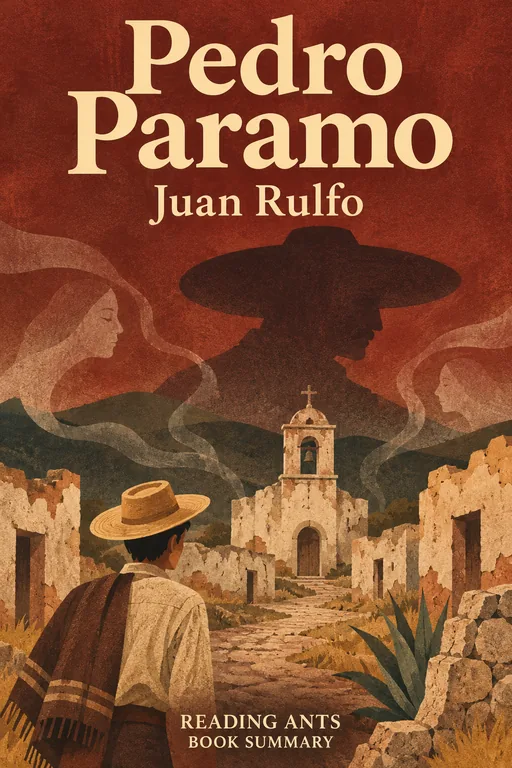
Pedro Paramo
Juan Rulfo
A young man travels to a deserted Mexican village to find his father, and finds a town full of whispering ghosts and the story of a cruel landowner.
🌍 World Literature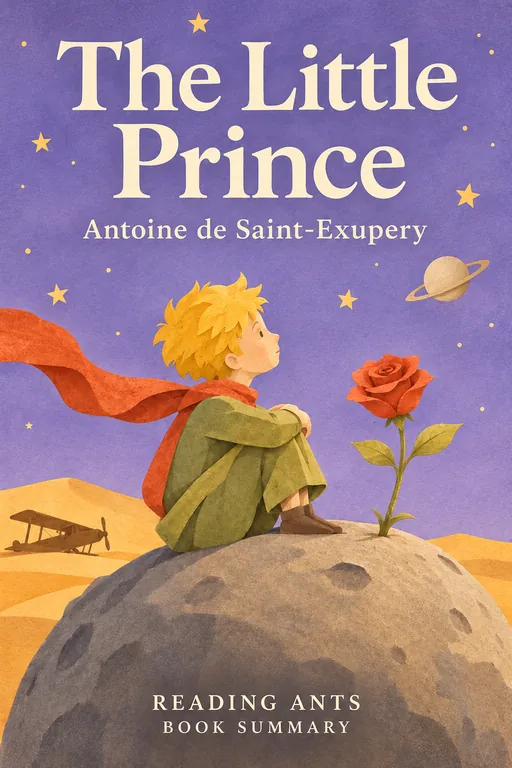
The Little Prince
Antoine de Saint-Exupery
A pilot stranded in the desert meets a small boy from a tiny planet, who teaches him that the most important things in life, like love and friendship, can only be seen with the heart.
🌍 World LiteratureWant something different?
Pick another topic and we will show you three books to start with.