 Reading Ants
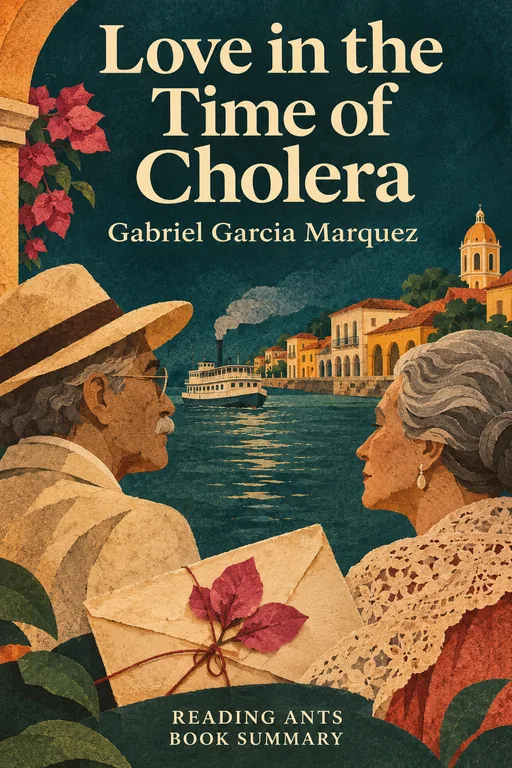
Love in the Time of Cholera
Original title: El amor en los tiempos del cólera
Two people separated in youth meet again in old age, forcing readers to ask whether lifelong romantic devotion is noble, selfish or inseparably both.
Overview
Set in an unnamed Caribbean port city over many decades, Love in the Time of Cholera follows Florentino Ariza, Fermina Daza and Dr. Juvenal Urbino. Florentino and Fermina fall in love through letters when young, but she rejects the relationship after seeing him again. She marries the respected doctor and builds a long, imperfect life with him. Florentino waits for another chance while having numerous affairs that complicate his claim of faithfulness. After Urbino dies, Florentino renews his declaration. Gabriel García Márquez treats love as romance, illness, habit, appetite and endurance. The novel is lush and often comic, but its troubling behavior prevents its central relationship from becoming a simple ideal.
Main Characters
- Florentino Ariza: a poetically inclined telegraph clerk who builds a business career while waiting for Fermina.
- Fermina Daza: a strong-willed woman who outgrows youthful fantasy and later reassesses her life.
- Dr. Juvenal Urbino: Fermina’s accomplished husband, committed to public health and social order.
- Lorenzo Daza: Fermina’s ambitious father, who opposes her youthful romance.
- Tránsito Ariza: Florentino’s practical mother and early confidante.
- Hildebranda Sánchez: Fermina’s cousin and ally during her youth.
- Leona Cassiani: Florentino’s gifted colleague and trusted friend.
Full Summary
A Death and a Declaration
The novel opens in old age. Dr. Urbino examines the suicide of his friend Jeremiah de Saint-Amour, then returns home. While trying to retrieve an escaped parrot, Urbino falls from a ladder and dies. Fermina is devastated despite the tensions that existed in their marriage.
After the funeral, Florentino approaches the newly widowed Fermina and announces that he still loves her after more than half a century. She furiously orders him away. The startling declaration sends the story backward to explain why he has preserved this attachment and why Fermina regards it so differently.
Love by Letter
As a young telegraph clerk, Florentino sees Fermina and becomes obsessed. They exchange secret letters with the help of Fermina’s aunt. Their relationship largely exists in words and imagination; Florentino experiences his longing like a physical disease. Fermina agrees to marry him before they have truly shared ordinary life.
Her father discovers the romance and takes her on a long journey to break it. Fermina continues corresponding through telegraph contacts, but time away also changes her. When she finally sees Florentino in a public place, the fantasy suddenly collapses. She decides their love was an illusion and ends it decisively.
Marriage to Dr. Urbino
Dr. Juvenal Urbino courts Fermina. Educated in Europe, he wants to modernize medicine and sanitation in a city repeatedly threatened by disease. Fermina does not feel the feverish love she once imagined, but she accepts him and enters a respected marriage.
Their decades together contain affection, children, arguments, travel and routine. Urbino’s status cannot make him flawless: he is proud and is unfaithful at least once. Fermina temporarily leaves him after discovering the affair, then returns. Their marriage becomes a practiced partnership whose value lies partly in surviving disappointments. At his death, Fermina loses not an ideal hero but the person around whom her daily life has formed.
Florentino’s Long Wait
Rejected by Fermina, Florentino vows to wait for her. Yet his life is not celibate. He has many sexual relationships while insisting inwardly that his heart remains Fermina’s. Some partners seek pleasure or companionship on their own terms, but other episodes expose selfishness, unequal power and serious harm. His private definition of fidelity protects his romantic self-image more than it protects others.
Florentino also develops professionally in his uncle’s riverboat company. Though awkward at first, he learns business and eventually rises to leadership. Leona Cassiani becomes an important colleague and friend. His career shows patience and competence that contrast with the reckless parts of his intimate life.
Courtship in Old Age
After Urbino’s death, Florentino begins writing to Fermina. His first declaration offended her, but later letters speak more thoughtfully about age, grief and life. Fermina gradually replies. Their correspondence creates a new relationship, less feverish than the youthful one and grounded in their awareness of death.
Fermina faces gossip and conflict within her family, yet she increasingly claims the right to make her own choices. She and Florentino spend time together, confronting the physical realities of age. Neither is the person the other imagined decades earlier. Their renewed bond must therefore be built between actual elderly people rather than ideal figures preserved in letters.
The River Journey
Florentino invites Fermina on a river voyage aboard one of his company’s boats. Away from social judgment, they become lovers. The river landscape also reveals decay: environmental damage and years of conflict have changed the country. Their private happiness travels through a world marked by loss.
To avoid taking on passengers during the return journey, the boat raises the yellow flag associated with cholera. Florentino asks the captain to keep sailing back and forth rather than end the voyage. When asked how long, he answers in effect that they should continue for the rest of their lives. The ending is both triumphant and evasive: the lovers create freedom, but they do so by turning the sign of disease into a barrier against ordinary society.
Why It Matters
The novel expands the love story beyond courtship and youth. Bodies age, marriages become habits, desire changes form, and death makes time visible. García Márquez treats romance with both grandeur and irony: Florentino’s waiting can look devoted in one scene and deeply self-serving in another. Fermina’s long marriage, meanwhile, gains meaning through ordinary companionship rather than perfect passion.
Its images of cholera connect love with fever, vulnerability and social fear. The river journey brings private renewal into contact with environmental destruction and national violence, preventing the lovers’ world from feeling entirely separate from history. The book remains important because it refuses a clean answer about its ending. Readers must decide how much admiration Florentino deserves and whether the final voyage represents mature freedom, denial of consequences, or both.
Key Takeaways
- Love has many forms. Infatuation, marriage, sexual desire, friendship and care are related but not identical.
- Time changes the people who wait. Florentino and Fermina cannot recover youth; they can only meet as the people decades have made them.
- Romantic language can hide selfishness. Florentino’s claim of emotional fidelity does not erase the effects of his behavior on others.
- Ordinary partnership has value. Fermina and Urbino’s imperfect marriage includes conflict, betrayal, repair and shared daily life.
- Old age does not end desire or choice. Fermina’s final decisions challenge the idea that later life should contain only memory.
What We Can Learn
The novel invites us to distinguish loving a real person from protecting a private story about them. Long persistence is not automatically respectful; affection must leave room for the other person’s boundaries and changing wishes. Florentino’s example should therefore prompt caution, not simple imitation.
Fermina’s life also shows that relationships cannot be judged only by their most dramatic moment. Daily care, argument, compromise and grief may matter as much as passionate beginnings. For older readers especially, the final courtship affirms that change and intimacy remain possible. At every age, however, freedom should include honesty about power, consequences and the people affected by our choices.
Criticism and Counterpoints
The largest concern is the gap between the novel’s romantic tone and Florentino’s conduct. His many affairs include serious inequalities and at least one relationship with a very young person under his guardianship. Such behavior should not be excused as proof of devotion to Fermina. Some women appear mainly as episodes in his private mythology rather than fully developed lives.
The nonlinear chronology and elaborate style can also make the story feel distant or repetitive. Defenders argue that discomfort is intentional and that irony prevents simple celebration, but readers reasonably differ over whether the narrative criticizes Florentino strongly enough.
Who Should Read It
This is for adult readers interested in literary romance, aging, marriage and morally complicated characters. It is not a model of healthy persistence. Readers sensitive to suicide, exploitation, age-gap sexual relationships or infidelity may want to skip it. Patient readers who enjoy ambiguity will gain the most.
Want the whole book?
A summary is a taste, not the meal. Here is where to find the full book.
You reached the end 🎉
Nicely done. Mark this one as read, and we will suggest what to read next.
Read this next
One Hundred Years of Solitude
Gabriel Garcia Marquez
Seven generations of the Buendía family live, love, fight and repeat the same mistakes in the magical Colombian town of Macondo, from its founding to its final destruction.
🌍 World Literature
The House of the Spirits
Isabel Allende
Four generations of a Latin American family, bound by love, anger and the spirits that haunt them, live through the changes of a country moving toward dictatorship.
🌍 World Literature
Anna Karenina
Leo Tolstoy
In imperial Russia, a married aristocrat falls passionately in love with a dashing officer and loses her place in society, while a thoughtful landowner seeks a meaningful life through love, work and faith.
🌍 World Literature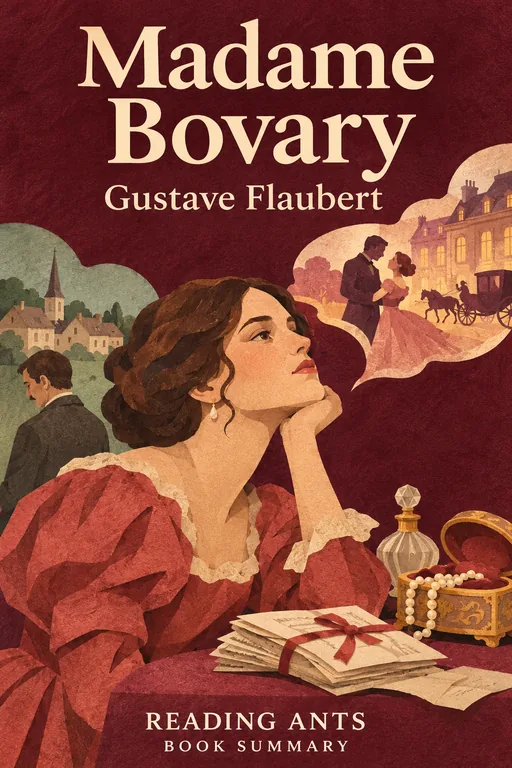
Madame Bovary
Gustave Flaubert
A romantic young woman, bored by her provincial marriage to a kind but dull doctor, seeks excitement in love affairs and luxury, and is crushed by debt and disillusion.
🌍 World Literature
The Little Prince
Antoine de Saint-Exupery
A pilot stranded in the desert meets a small boy from a tiny planet, who teaches him that the most important things in life, like love and friendship, can only be seen with the heart.
🌍 World Literature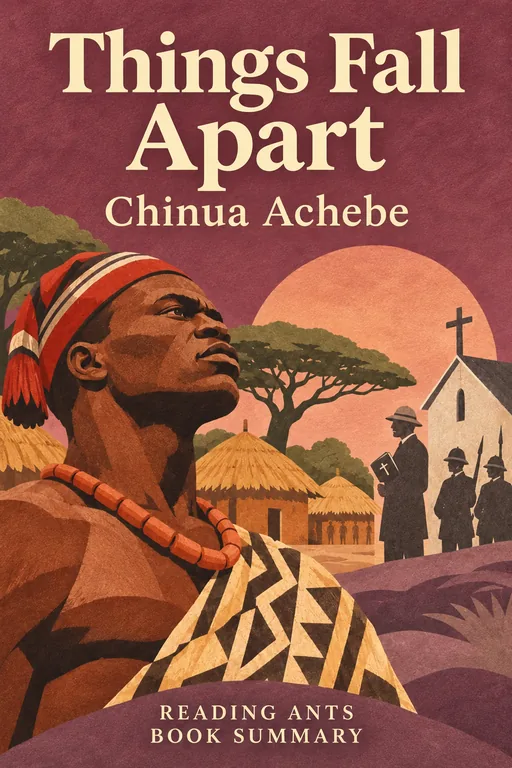
Things Fall Apart
Chinua Achebe
Okonkwo, a proud and fearsome leader in an Igbo village in Nigeria, struggles against his own fears and against the arrival of British missionaries and colonial rulers, who change his world forever.
🌍 World LiteratureWant something different?
Pick another topic and we will show you three books to start with.