 Reading Ants
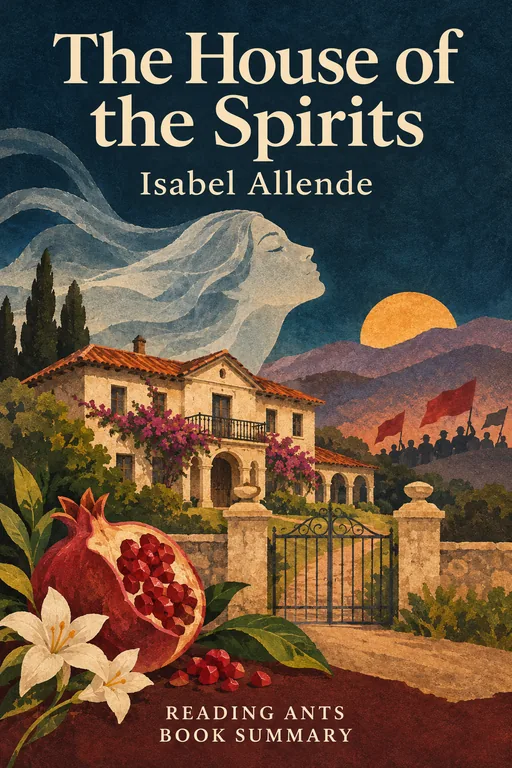
The House of the Spirits
Original title: La casa de los espíritus
Four generations of a Latin American family, bound by love, anger and the spirits that haunt them, live through the changes of a country moving toward dictatorship.
Overview
The House of the Spirits is the first novel by the Chilean writer Isabel Allende, published in 1982. It follows the Trueba family over most of the twentieth century, in an unnamed Latin American country that closely resembles Chile. The novel mixes family drama, magic and politics. It is narrated by Alba, the youngest member of the family, who looks back on her relatives’ stories. The book is a leading example of magical realism, and it asks how love, power and memory shape a family and a nation. It contains scenes of violence and cruelty.
Main Characters
- Esteban Trueba: a proud, violent landowner, who rises from poverty to power.
- Clara del Valle: his wife, a gentle woman with clairvoyant gifts, who talks to spirits.
- Blanca Trueba: their daughter, who falls in love with a poor man.
- Alba: Blanca’s daughter, the narrator.
- Rosa: Clara’s older sister, known for her beauty and her green hair.
- Pedro Tercero Garcia: a peasant singer and activist, the love of Blanca.
- Ferula: Esteban’s sister, who lives with Clara for a time.
Full Summary
Rosa and Clara
The story begins with the del Valle family. Rosa, the eldest daughter, is so beautiful that people stare at her. She is engaged to Esteban Trueba, a young man who is working in a mine to earn enough money to marry. When Rosa dies suddenly after drinking poisoned brandy that was meant for her father, Esteban is devastated.
Clara, the younger sister, who has the gift of seeing the future and of moving objects with her mind, stops speaking for years after Rosa’s death. Her silence ends only when she announces that she will marry Esteban.
Tres Marias
Esteban, bitter after Rosa’s death, returns to his family’s run-down estate, Tres Marias, and, by hard work and cruelty, turns it into a rich and powerful property. He rules the peasants harshly, and he rapes some of the young women, an act that will have consequences later in the story.
He marries Clara, and they have a daughter, Blanca, and twin sons. Clara fills the big house on the corner with guests, writes in notebooks and talks with ghosts. Esteban is often angry, but he loves Clara in his way.
Blanca and Pedro
As she grows up, Blanca befriends Pedro Tercero Garcia, the son of a peasant on the estate. They fall in love and have a secret relationship. When Esteban finds out, he is furious, and tries to destroy Pedro. He whips Blanca, and when Clara protests he strikes her, and she stops speaking to him for the rest of her life.
Blanca, who is pregnant by Pedro Tercero, is pushed by her father into marrying a French count, but she soon leaves him and returns home. She has a daughter, Alba.
Politics
Esteban becomes a senator for the conservative party. The country is divided between the left, which wants social reforms, and the right, which wants to keep power. A socialist government is elected, and Esteban, along with many other landowners, is horrified by the changes. The family also splits, as Blanca and Alba support the left, and Esteban is a firm enemy.
The Coup
After a military coup, the new rulers begin to arrest and torture their enemies. Esteban, who had helped to bring about the coup, realizes with horror that it is far crueler than he imagined. Alba is taken prisoner and tortured, by a military officer, Esteban Garcia, who is the grandson of Esteban Trueba, born to one of the women Esteban raped years before. It is a harsh reminder that the old crimes of the family have come back.
With the help of friends who have influence with the new rulers, Esteban gets Alba released, and he grows close to her. He is a broken old man. After he and Alba spend time working on the family story together, he dies in her arms, with a better understanding of what he has done.
Writing the Story
Alba, who is pregnant after being raped in prison and does not know who the father is, decides not to seek revenge, and she begins to write the story of the family, from the notebooks of her grandmother Clara. She finds that the writing helps her to heal, and to see that the hatred and violence of the past can be broken.
The book ends on a note of hope.
Why It Matters
The House of the Spirits made Allende one of the most widely read Latin American writers, and the book has been translated into dozens of languages. It was one of the first widely read Latin American novels by a woman, appearing in the years after the “Boom,” a literary movement that had been dominated by men. It was adapted into a film in 1993. It is also valued as a view of the political upheavals in Chile, and Allende, who is a relative of the former Chilean president Salvador Allende, drew on her own family’s story.
Key Takeaways
- Family history shapes us. The sins of the past return in later generations.
- Power corrupts. Esteban’s abuse of his workers and his land has consequences.
- Women hold hidden strength. Clara, Blanca and Alba each resist in their own way.
- Writing can heal. Alba’s act of storytelling brings peace.
- Love can overcome class lines. Blanca and Pedro’s love defies class.
What We Can Learn
The book teaches that cruelty tends to pass from one generation to another, and that someone must choose to break the cycle. Alba’s choice not to take revenge, and to tell the story instead, is an example. It also shows that we are shaped by our families, but that we are not bound by them.
The story invites us to consider how political choices affect ordinary lives, and what responsibility we have when we support a cause. Finally, it shows the value of memory and storytelling in healing from pain.
Criticism and Counterpoints
Some critics say that the book’s magical elements are borrowed from Garcia Marquez’s One Hundred Years of Solitude, and that the comparison is not always in Allende’s favor. Others find the characters too simple, with a clear division between good and bad. Some also object to the portrayal of sexual violence, or to the book’s strongly political message. The structure, with its many characters, can be confusing, and the ending is considered by some to be too neat.
Who Should Read It
This book is for mature readers who like family sagas, history and magical realism. It is a good choice for those who enjoyed One Hundred Years of Solitude and want a story with strong female characters. Those who are sensitive to violence and abuse should be careful.
Want the whole book?
A summary is a taste, not the meal. Here is where to find the full book.
You reached the end 🎉
Nicely done. Mark this one as read, and we will suggest what to read next.
Read this next
One Hundred Years of Solitude
Gabriel Garcia Marquez
Seven generations of the Buendía family live, love, fight and repeat the same mistakes in the magical Colombian town of Macondo, from its founding to its final destruction.
🌍 World Literature
Love in the Time of Cholera
Gabriel Garcia Marquez
Two people separated in youth meet again in old age, forcing readers to ask whether lifelong romantic devotion is noble, selfish or inseparably both.
🌍 World Literature
Like Water for Chocolate
Laura Esquivel
In revolutionary Mexico, a young woman forbidden to marry the man she loves pours her feelings into her cooking, and her food carries her emotions to everyone who eats it.
🌍 World Literature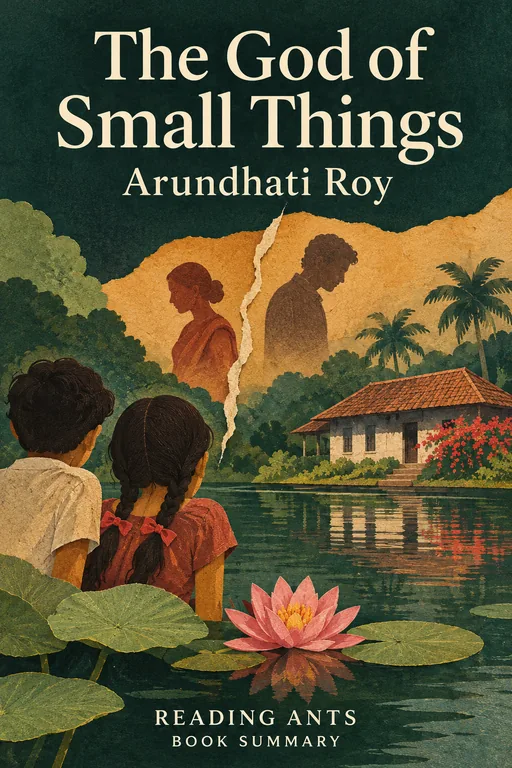
The God of Small Things
Arundhati Roy
In Kerala, India, a pair of twins grows up in a divided family where a forbidden love across caste lines leads to a tragedy that haunts them for the rest of their lives.
✨ Modern Fiction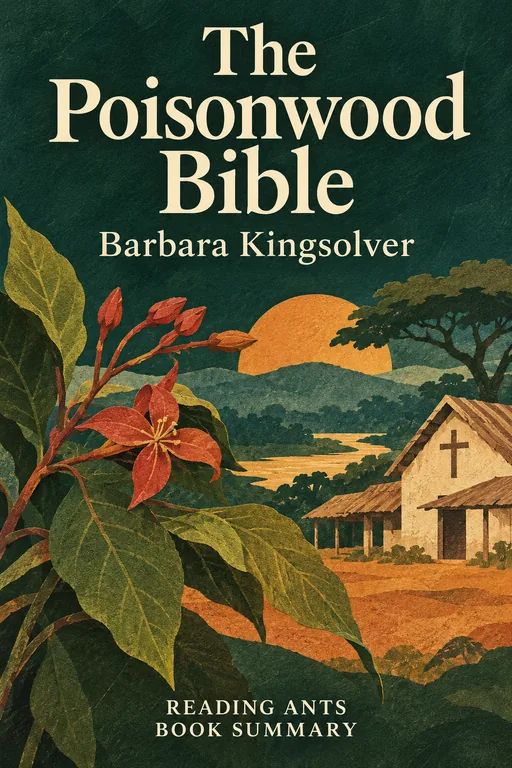
The Poisonwood Bible
Barbara Kingsolver
In 1959, an American Baptist missionary named Nathan Price drags his wife and four daughters to the Belgian Congo, where his rigid zeal and the country's turmoil change all of their lives, as told by the women of the family.
✨ Modern Fiction
The Little Prince
Antoine de Saint-Exupery
A pilot stranded in the desert meets a small boy from a tiny planet, who teaches him that the most important things in life, like love and friendship, can only be seen with the heart.
🌍 World LiteratureWant something different?
Pick another topic and we will show you three books to start with.