 Reading Ants
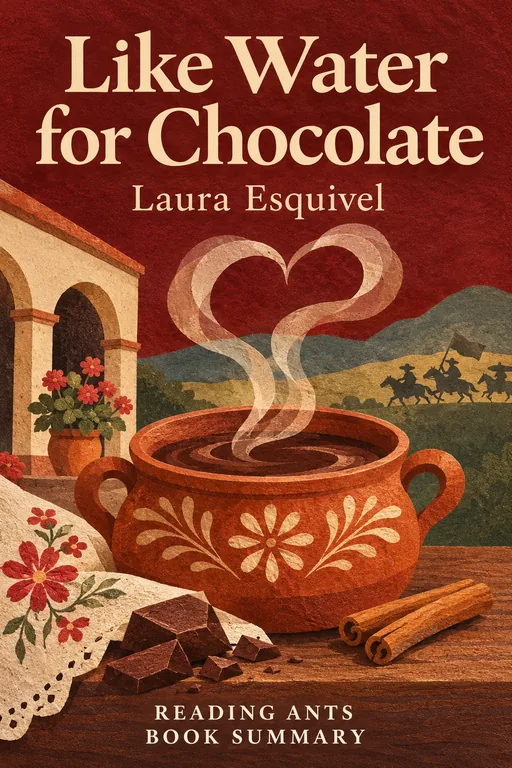
Like Water for Chocolate
Original title: Como agua para chocolate
In revolutionary Mexico, a young woman forbidden to marry the man she loves pours her feelings into her cooking, and her food carries her emotions to everyone who eats it.
Overview
Like Water for Chocolate is a novel by the Mexican writer Laura Esquivel, published in 1989. It is set on a ranch in northern Mexico, in the early twentieth century, at the time of the Mexican Revolution. Each chapter is named for a month of the year and begins with a recipe. The story is told by a great-niece, who uses a family cookbook to tell of her great-aunt Tita. The book is a mixture of romance, history and magical realism. It contains sexual content and violence.
Main Characters
- Tita De la Garza: the youngest daughter, a gifted cook, born in the kitchen.
- Pedro Muzquiz: the man who loves Tita, and who marries her sister to stay close.
- Mama Elena: Tita’s cold, harsh mother, who rules the household.
- Rosaura: Tita’s older sister, who marries Pedro.
- Gertrudis: the middle sister, bold and passionate, who runs away.
- Nacha: the family’s old cook, who raises Tita.
- Dr. John Brown: a kind American doctor who cares for Tita.
Full Summary
Born in the Kitchen
Tita is born on the kitchen table, in a flood of tears that dries into salt. She grows up among the pots and pans, taught by the cook Nacha. In her family, a tradition says that the youngest daughter may not marry, but must care for her mother until her mother dies.
When Pedro Muzquiz asks to marry Tita, Mama Elena refuses, but offers him her older daughter Rosaura. Pedro, to remain near Tita, agrees.
The Wedding Cake
Tita is ordered to bake the cake for Pedro and Rosaura’s wedding. As she cooks, she weeps into the batter, and the guests, who eat the cake, are overcome by a wave of sadness and homesickness. Many are sick.
This is the first sign that Tita’s feelings pass into her food. In the days that follow, she cooks other dishes, each of which has its own effect on those who eat it.
Quail in Rose Petal Sauce
Pedro gives Tita a bouquet of roses. Mama Elena tells her to throw it away, but Tita uses the petals to cook quail. The dish is so full of passion that her sister Gertrudis, who eats it, is seized by desire. She runs away from the ranch, and is carried off by a soldier of the Revolution.
Gertrudis later becomes a general in the revolutionary army. Tita, meanwhile, stays at the ranch, hiding her love for Pedro.
The Secret and the Mother
Pedro and Tita find ways to be together in secret, although he is married to Rosaura. Rosaura, who is not clever, is jealous but has no proof. She has a child, whom Tita nurses with her own milk, which appears in a magical way, though Tita has never given birth.
Mama Elena grows suspicious, and sends Pedro and Rosaura away to another town, far from the ranch, where Tita cannot see them. The baby dies there, and Tita, who had loved him as her own, breaks down. She stops speaking, and she hides in the dovecote, refusing to eat or to see anyone. She is taken to a doctor, John Brown, who is kind to her. He cares for her in his own house, and helps her to recover.
Revolution and Return
When Tita returns to the ranch, bandits attack it, and Mama Elena is badly injured. Soon after, fearing that she is being poisoned, she takes a strong emetic of her own, and dies. Tita becomes the head of the household. John falls in love with her and asks her to marry him. She agrees, but she is still bound to Pedro.
Rosaura, who has long suffered from stomach trouble, dies. Tita is now free. At last, she and Pedro are able to be together.
The Fire
Tita is torn between the kind John Brown and Pedro, whom she has loved all her life. In the end, she chooses Pedro, and John accepts her decision with generosity. At the wedding of Esperanza, the daughter of Rosaura and Pedro, to Alex, John’s son, Tita and Pedro, now free to be together openly, make love once more. Pedro, overwhelmed, dies of passion.
Tita, in grief, wants to follow him, and she kindles the fire within her, the image of the box of matches that John once described, so that the ranch goes up in flames. The two lovers are united in death. Years later, the narrator, Tita’s great-niece, finds the cookbook, which preserves their story.
Why It Matters
The novel was an enormous success, in Mexico and worldwide. It spent a long time on bestseller lists and was made into a film in 1992, which became one of the most successful foreign-language films in the United States. The title is a Mexican saying, used for water that is boiling, or a person who is very angry or passionate. The book is celebrated for connecting food, family and feeling, and for giving a female point of view of the Mexican Revolution. It also helped to make magical realism popular with a wider audience.
Key Takeaways
- Food carries feeling. Tita’s cooking passes her emotions to others.
- Tradition can imprison. The rule that the youngest daughter may not marry does harm.
- Passion cannot be denied. Love finds a way, even at a high cost.
- Women’s work has power. The kitchen is a place of creativity and strength.
- History is personal. The Revolution is seen through a family’s life.
What We Can Learn
The book invites us to think about the traditions that we follow, and to ask which ones serve us and which ones harm us. It also shows how powerful it is to put love and care into what we do, such as when we cook for others.
The story also celebrates the work and wisdom of women, often overlooked in history. Finally, it shows how suppressing feelings can lead to explosions, and encourages us to find healthy ways to express them.
Criticism and Counterpoints
Some critics find the book too sentimental and the plot melodramatic, with villains, such as Mama Elena, who are one-sided. The recipes and the magical elements can seem gimmicky to some readers. Others note that the book’s heroine is passive and that its ending, with its death, glorifies suffering. The treatment of sexuality has also been debated: some see it as liberating, others as exploitative. Some readers also feel that the book’s picture of Mexico, with its kitchens, ranches and revolutionaries, is more a romantic postcard than a realistic portrait of the period.
Who Should Read It
This book is for older teens and adults who like romance, magical realism and food. It is short and easy to read. Those who prefer realism may find it too fantastic, but readers who enjoy stories about family and passion may find it delightful.
Want the whole book?
A summary is a taste, not the meal. Here is where to find the full book.
You reached the end 🎉
Nicely done. Mark this one as read, and we will suggest what to read next.
Read this next
The House of the Spirits
Isabel Allende
Four generations of a Latin American family, bound by love, anger and the spirits that haunt them, live through the changes of a country moving toward dictatorship.
🌍 World Literature
Love in the Time of Cholera
Gabriel Garcia Marquez
Two people separated in youth meet again in old age, forcing readers to ask whether lifelong romantic devotion is noble, selfish or inseparably both.
🌍 World Literature
One Hundred Years of Solitude
Gabriel Garcia Marquez
Seven generations of the Buendía family live, love, fight and repeat the same mistakes in the magical Colombian town of Macondo, from its founding to its final destruction.
🌍 World Literature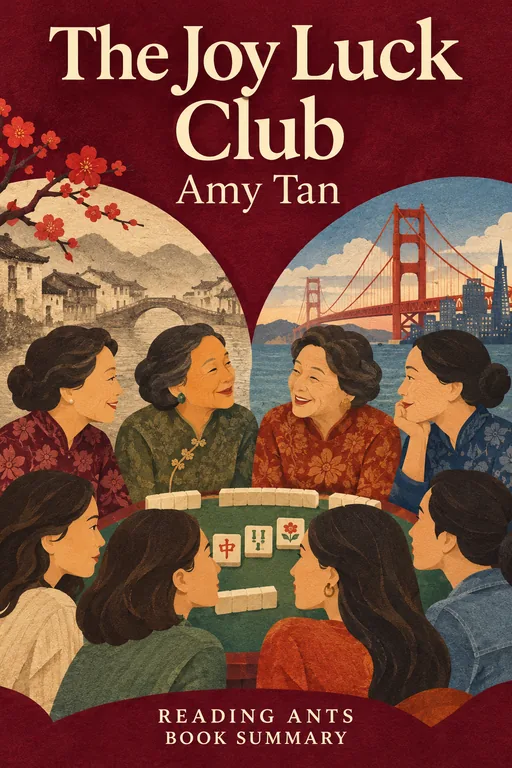
The Joy Luck Club
Amy Tan
Four Chinese immigrant mothers and their American-born daughters tell interlocking stories of hardship, love and misunderstanding across the gap between two cultures, as the daughters finally begin to understand who their mothers really are.
✨ Modern Fiction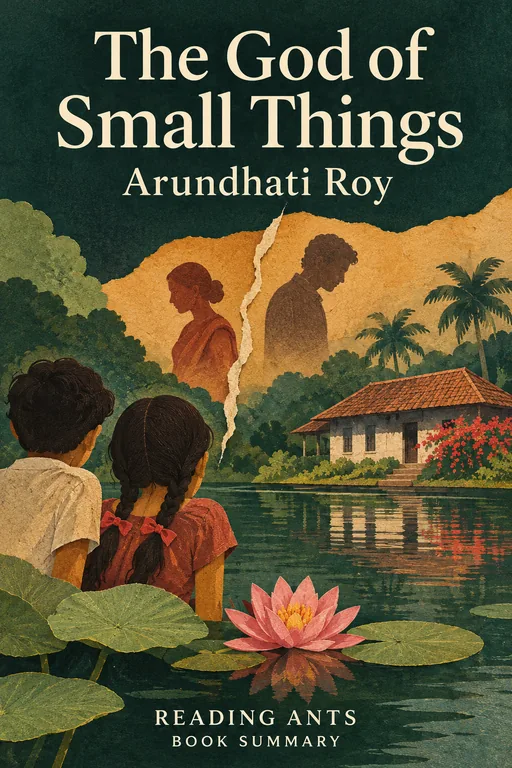
The God of Small Things
Arundhati Roy
In Kerala, India, a pair of twins grows up in a divided family where a forbidden love across caste lines leads to a tragedy that haunts them for the rest of their lives.
✨ Modern Fiction
The Little Prince
Antoine de Saint-Exupery
A pilot stranded in the desert meets a small boy from a tiny planet, who teaches him that the most important things in life, like love and friendship, can only be seen with the heart.
🌍 World LiteratureWant something different?
Pick another topic and we will show you three books to start with.