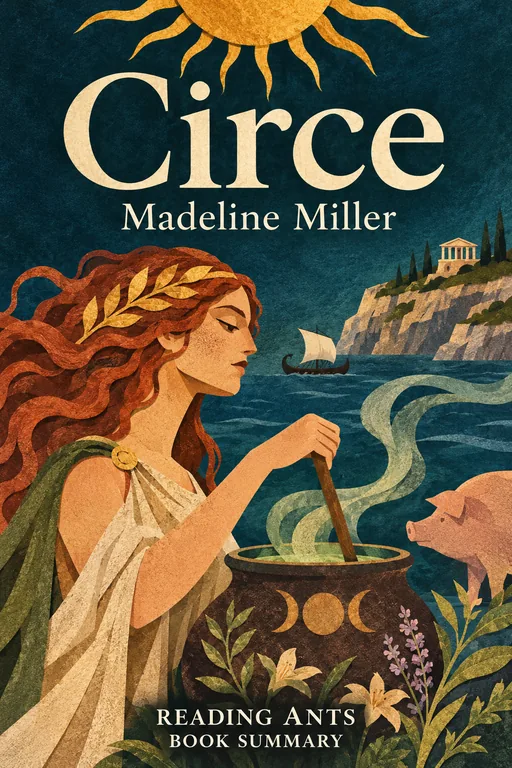
Circe
The witch Circe, a minor figure in Homer's *Odyssey*, tells her own story: born to the sun god and exiled to a lonely island, she learns the craft of witchcraft, meets famous heroes and monsters, and finally chooses mortality.
Overview
Circe, by Madeline Miller, was published in 2018 and became an international bestseller. It retells the story of Circe, the witch who turned Odysseus’s men into pigs in Homer’s Odyssey. Miller invents a full life for her, beginning in the halls of her father, Helios, the sun god, who rules the sky. Circe is a disappointment to her family: she lacks the power and beauty of the gods and speaks with a mortal-sounding voice. She discovers that she has the power of witchcraft and is exiled to the island of Aiaia. There she lives for centuries, meeting figures such as Daedalus, the Minotaur, Medea and Odysseus. The novel mixes mythology with a story about growing into independence and finding one’s voice.
Main Characters
- Circe: the daughter of Helios and the nymph Perse, a witch.
- Helios: Circe’s father, the sun god.
- Aeëtes: her brother, a powerful sorcerer.
- Pasiphaë: her sister, who marries King Minos and gives birth to the Minotaur.
- Prometheus: the Titan punished for giving fire to humans.
- Daedalus: the legendary craftsman.
- Odysseus: the clever Greek hero.
- Telemachus: Odysseus’s son.
- Penelope: Odysseus’s wife.
- Telegonus: Circe’s son by Odysseus.
Full Summary
A Disappointing Daughter
Circe is born in the glittering halls of Helios, an unimpressive, dull-voiced daughter among shining gods. Her family mocks her. When she meets a mortal fisherman, Glaucos, and falls in love with him, she uses herbs to turn him into a god. He abandons her for the sea nymph Scylla, and in jealous rage Circe uses a potion to turn Scylla into a six-headed monster.
Circe’s use of witchcraft is exposed. Zeus, afraid that her powers could threaten the gods, exiles her to the remote island of Aiaia.
Aiaia
On the island, Circe discovers that she is alone, with no one to tell her what to do. She learns to work with plants, make potions, tame wild animals and cast spells. Over centuries, her powers grow, but she is lonely. She develops a habit: when men who come to her island treat her badly, she turns them into pigs.
The Minotaur and Daedalus
Circe is called to the island of Crete to help her sister Pasiphaë, who gave birth to the Minotaur, a monstrous child with a bull’s head. Circe sees the horrors of Minos’s palace. She meets the craftsman Daedalus, who builds the labyrinth to hold the monster. Later, she hears of the death of the Minotaur, killed by the hero Theseus.
Visitors
Over the centuries, Circe grows used to being alone, but visitors still come, and each one teaches her something about gods, mortals and herself. She meets many figures, both gods and mortals, on her island. She remembers the Titan Prometheus, whose punishment she witnessed in her father’s halls and whose courage still inspires her. Her niece, Medea, arrives with her husband, the hero Jason, after betraying her family to help him steal the Golden Fleece; Circe cleanses them of a killing, and Medea later commits terrible acts. The captain of a ship of weary sailors, whom Circe welcomes and feeds, assaults her, and she punishes him and his crew by turning them into pigs. After this, she places protective spells around her island.
Odysseus
Odysseus arrives with his crew on his long journey home from Troy. Circe turns his men into pigs, but Odysseus, protected by an herb given by Hermes, resists her magic. They become lovers, and she is struck by his intelligence and gentleness. He stays with her for a year and tells her the story of the war. She advises him on how to continue his journey. Odysseus eventually leaves for Ithaca, and afterward Circe realizes that she is pregnant and bears a son, Telegonus.
Telegonus and Athena
Telegonus grows up on Aiaia, curious about his father. Circe, seeing that her son is in danger from Athena, who hates her family, works to protect him. When Telegonus reaches adulthood, he travels to find Odysseus, and by mistake kills his own father. He returns, grieving, with Odysseus’s widow, Penelope, and son, Telemachus, in tow.
Mortality
In the end, the endless life of the gods starts to seem empty to her. Circe, wise from centuries of experience, comes to terms with her past, including the harm she did to Scylla, and brews a potion that will make her mortal. Telemachus, who is by now a grown man, falls in love with her, and Penelope befriends her and stays with her on the island. Telegonus eventually leaves Aiaia. Circe chooses to leave the world of gods behind, and she and Telemachus begin a mortal life together.
Why It Matters
Circe was a New York Times bestseller and won widespread praise. It was named one of the best books of the year by many publications and shortlisted for the Women’s Prize for Fiction. It joined a wave of retellings of classical myths from women’s perspectives, along with Miller’s own earlier The Song of Achilles and works by Pat Barker, Natalie Haynes and others.
The novel transformed a minor figure into a complex, fully human heroine, reflecting modern interest in giving voice to the women of myth. It has introduced many readers to Greek mythology and led them to read the Odyssey itself.
Key Takeaways
- Voice and independence can be found. Circe grows from a dismissed girl into a powerful woman.
- Exile can lead to freedom. On Aiaia, Circe gains independence.
- Mortality gives life meaning. She chooses a finite life over endless existence.
- Women’s stories were often untold. The novel gives voice to a silenced character.
- Power requires wisdom. Circe learns to use her abilities carefully.
What We Can Learn
Circe reminds us that being underestimated can be a hidden advantage. Circe is dismissed by her family, but she develops her own strengths.
It also shows that we can create our own sense of home and belonging. Though she is isolated, Circe finds satisfaction in her work and her island.
Finally, the novel suggests that a meaningful life depends on our choices, not just our power. Circe’s decision to become mortal shows that love, family and finite time can be more valuable than endless power.
Criticism and Counterpoints
Some critics find the pacing of the novel slow, since Circe’s centuries on the island have a repetitive feel. Others dislike how the novel makes some mythological characters, such as Odysseus, more sympathetic.
Classical scholars have also noted that Miller changes many details of the myths, though she does so by design. Some readers have also found its portrayal of sexual violence disturbing. Supporters argue that the novel’s modern perspective illuminates old stories.
Who Should Read It
This novel suits teens and adults who enjoy mythology and fantasy. It contains scenes of sexual violence, handled seriously. Readers who like The Odyssey or The Song of Achilles will love it.
Want the whole book?
A summary is a taste, not the meal. Here is where to find the full book.
You reached the end 🎉
Nicely done. Mark this one as read, and we will suggest what to read next.
Read this next
The Song of Achilles
Madeline Miller
Retelling the story of the Trojan War from the viewpoint of Patroclus, the gentle outcast who becomes the companion and lover of the great hero Achilles, this novel follows their love from boyhood to the ruin at Troy.
✨ Modern Fiction
The Odyssey
Homer
After the Trojan War, the clever hero Odysseus struggles for ten years against monsters, gods and temptations to return home to his faithful wife and son, then must win back his house from the men trying to steal it.
🎭 Epics, Drama & Poetry
The Iliad
Homer
During the final year of the Trojan War, the great Greek warrior Achilles withdraws from battle in anger, and only the death of his dearest friend drives him back to fight, leading to terrible loss and a moment of shared human grief with his enemy.
🎭 Epics, Drama & Poetry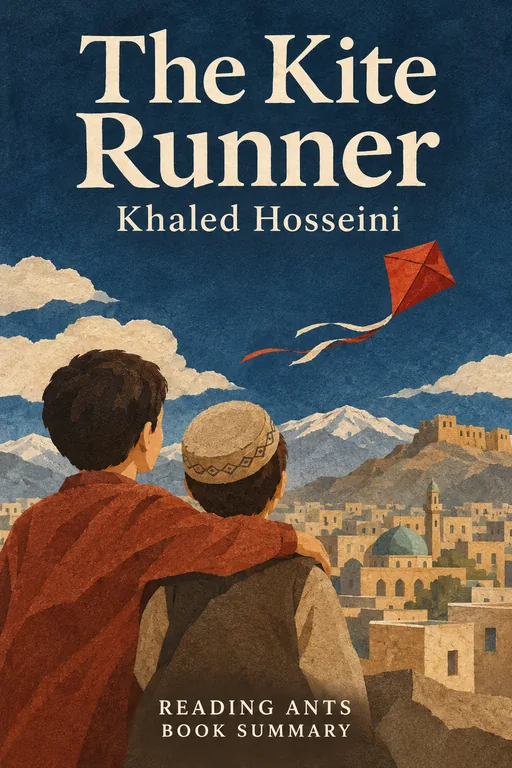
The Kite Runner
Khaled Hosseini
A wealthy boy in Kabul betrays his loyal best friend on the day of a kite tournament, and decades later, after fleeing to America, he returns to a Taliban-ruled Afghanistan to try to make things right.
✨ Modern Fiction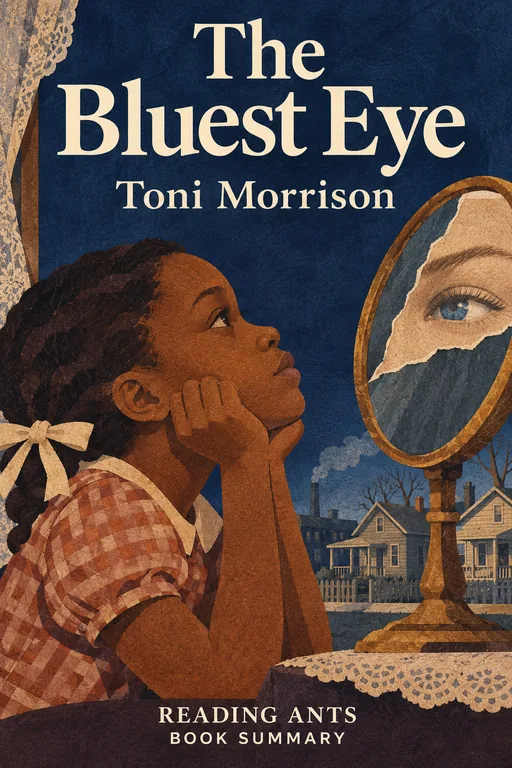
The Bluest Eye
Toni Morrison
In 1940s Ohio, a poor Black girl named Pecola Breedlove, who believes that she is ugly, prays for blue eyes, and the community's failure to protect her leads to tragedy.
✨ Modern Fiction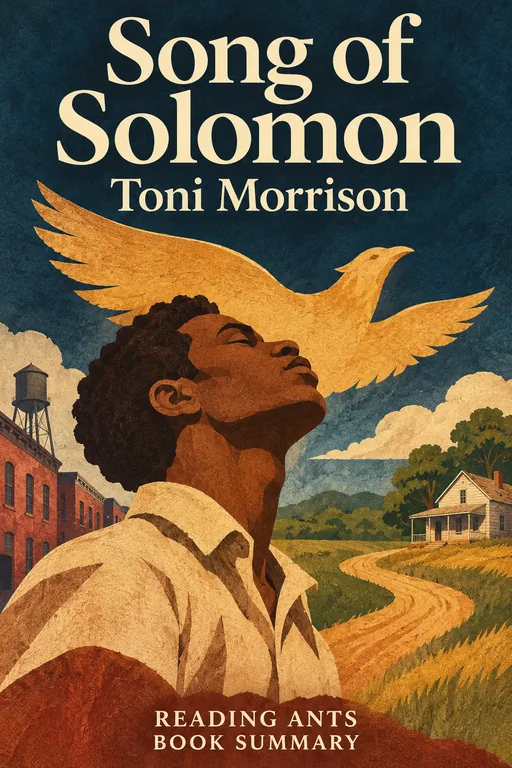
Song of Solomon
Toni Morrison
Macon "Milkman" Dead, a self-absorbed young man from Michigan, goes south in search of a family treasure and finds instead his family's history, and learns to take responsibility and to fly.
✨ Modern FictionWant something different?
Pick another topic and we will show you three books to start with.