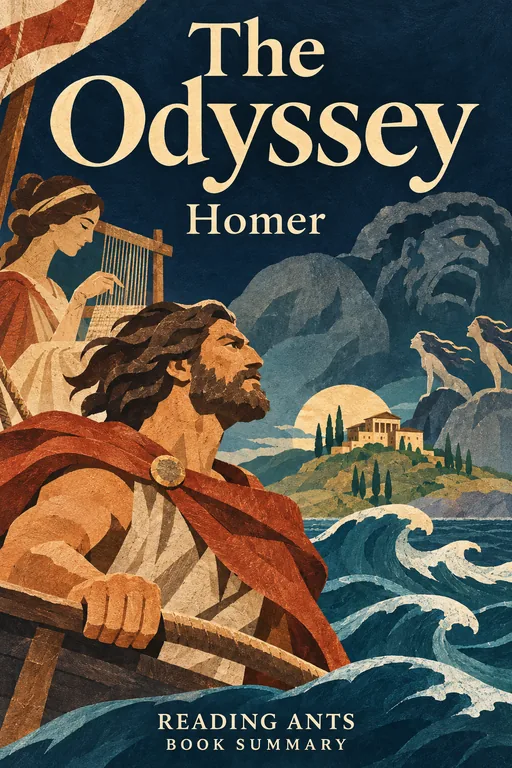
The Odyssey
Original title: Οδύσσεια
After the Trojan War, the clever hero Odysseus struggles for ten years against monsters, gods and temptations to return home to his faithful wife and son, then must win back his house from the men trying to steal it.
Overview
The Odyssey is one of the oldest and greatest stories in Western literature. Composed in ancient Greece, probably in the eighth century BCE, it is traditionally credited to the poet Homer and was originally performed aloud. It continues the story begun in The Iliad. The Trojan War is over, and the Greek heroes have gone home, all except Odysseus, king of the island of Ithaca, who has been missing for years. Meanwhile, a crowd of arrogant men has moved into his palace, eating his food and demanding that his wife, Penelope, marry one of them. The poem follows Odysseus’s dangerous journey home, full of famous adventures with the Cyclops, the Sirens and the witch Circe, and his son Telemachus’s search for him.
Main Characters
- Odysseus: the brave and cunning king of Ithaca.
- Penelope: his loyal, clever wife.
- Telemachus: their son, growing from a boy into a man.
- Athena: the goddess of wisdom, who protects Odysseus.
- Poseidon: the god of the sea, who hates Odysseus.
- The suitors: rude young nobles who want to marry Penelope, led by Antinous.
- Calypso and Circe: powerful goddesses who keep Odysseus with them.
- Polyphemus: a one-eyed giant, son of Poseidon.
- Eumaeus: Odysseus’s loyal swineherd.
Full Summary
A House Full of Enemies
Twenty years after Odysseus left for Troy, his palace in Ithaca is overrun by more than a hundred suitors who feast at his expense and pressure Penelope to remarry. Penelope delays them with a trick: she promises to choose a husband after finishing a burial shroud for Odysseus’s father, but secretly unravels her weaving each night. Eventually she is discovered.
The goddess Athena, disguised as a family friend, encourages Telemachus to stand up to the suitors and to travel in search of news of his father. He visits the old king Nestor and then King Menelaus and Queen Helen in Sparta, who tell him that Odysseus is alive but held captive on a distant island by the nymph Calypso.
Release from Calypso
Odysseus has been trapped for seven years on Calypso’s island. She loves him and offers to make him immortal, but he longs for home and sits weeping by the shore. The gods send the messenger Hermes to order his release. Odysseus builds a raft and sets sail, but his enemy Poseidon wrecks it with a storm. Odysseus washes up, exhausted, on the island of the Phaeacians, where the princess Nausicaa finds him and guides him toward her parents’ palace. At a feast, he tells the story of his wanderings.
The Cyclops
After leaving Troy, Odysseus and his men had many adventures. On one island, some of the crew ate the fruit of the lotus and forgot all desire to return home, so Odysseus dragged them back to the ships. In the cave of the one-eyed giant Polyphemus, the Cyclops trapped them and began eating the men. Odysseus told the giant his name was “Nobody,” got him drunk on strong wine and drove a burning stake into his eye. When the giant shouted for help, saying Nobody was hurting him, the other Cyclopes ignored him. The men escaped by clinging to the bellies of his sheep. But as he sailed away, Odysseus proudly shouted his real name, and Polyphemus begged his father Poseidon for revenge.
Witches, Winds and the Dead
The wind god Aeolus gave Odysseus a bag holding all the storm winds, so he could sail home safely. Within sight of Ithaca, his curious crew opened it, thinking it held treasure, and the winds blew them far away. Cannibal giants destroyed all their ships except one. On the island of the enchantress Circe, Odysseus’s men were turned into pigs. Protected by a magic herb from Hermes, Odysseus forced Circe to change them back, and they stayed with her for a year.
Circe sent Odysseus to the land of the dead to consult the prophet Tiresias. There he met the spirits of his mother, who had died of grief waiting for him, and of the hero Achilles, who told him that he would rather be a poor living servant than a king among the dead.
Sirens, Monsters and the Sun God’s Cattle
Warned by Circe, Odysseus had his men plug their ears with wax as they passed the Sirens, whose beautiful songs lure sailors to their deaths. He had himself tied to the mast so he could listen safely. They then sailed between Scylla, a six-headed monster who snatched six men, and Charybdis, a whirlpool that swallows ships.
On the island of the sun god Helios, the starving crew ignored Odysseus’s warnings and killed the god’s sacred cattle. As punishment, Zeus destroyed their ship with a thunderbolt. All the men drowned except Odysseus, who drifted to Calypso’s island.
Home in Disguise
Moved by his story, the Phaeacians carry Odysseus home to Ithaca. Athena disguises him as an old beggar so he can test who is still loyal. He stays with his faithful swineherd, Eumaeus, and reveals himself to Telemachus, who has returned home. Together they plan their revenge. At the palace, Odysseus’s old dog, Argos, recognizes him after twenty years, wags his tail and dies. The suitors insult and abuse the beggar. His old nurse, Eurycleia, recognizes him by a scar on his leg, but he swears her to secrecy.
The Contest of the Bow
Penelope announces that she will marry the man who can string Odysseus’s great bow and shoot an arrow through twelve axe heads. None of the suitors can even bend it. Then the beggar asks to try. He strings it easily and shoots the arrow through all the axes. Throwing off his rags, Odysseus turns his bow on the suitors, and with Telemachus and two loyal servants, he kills them all. He also has the household’s disloyal maids hanged, a harsh act against enslaved women that troubles many readers.
Penelope, cautious, tests him one last time. She orders their bed to be moved. Odysseus angrily replies that it cannot be moved, because he built it himself around the trunk of a living olive tree. Only the real Odysseus would know this secret, and the couple are joyfully reunited. Odysseus visits his aged father, Laertes, and when the suitors’ families seek revenge, Athena steps in and makes peace.
Why It Matters
The Odyssey is one of the foundational works of Western literature, and nearly three thousand years after it was composed, it is still read, taught and retold around the world. Its adventures, such as the Cyclops, the Sirens and the Trojan Horse story told within it, are among the most famous tales ever told. The word “odyssey” now means any long, adventurous journey.
The poem has influenced countless writers, from the Roman poet Virgil to James Joyce, whose novel Ulysses retells it in modern Dublin, and modern works such as Madeline Miller’s Circe. It also shaped the “hero’s journey” pattern found in many films and stories. Its themes of homecoming, loyalty, cleverness and identity remain universal.
Key Takeaways
- Cleverness can beat strength. Odysseus survives by his wits as much as his courage.
- Pride brings trouble. Shouting his name to the Cyclops causes years of suffering.
- Loyalty is rewarded. Penelope, Telemachus and Eumaeus stay faithful through long years.
- Home is worth fighting for. Odysseus rejects immortality to return to his family.
- Hospitality matters. The poem honors those who welcome strangers and punishes those who abuse it.
What We Can Learn
The Odyssey teaches persistence. Odysseus faces setback after setback but never stops trying to reach home. When our own goals seem far away, such as finishing a long project or recovering from a setback, patience and determination can carry us through.
It also warns against boasting. Odysseus’s need for glory, when he reveals his name to the Cyclops, brings disaster. Humility often protects us better than pride.
Finally, the story shows the value of patience and careful thinking. Penelope’s weaving trick and Odysseus’s disguise show that sometimes the wisest path is to wait, observe and plan before acting.
Criticism and Counterpoints
Modern readers are often troubled by the poem’s violence, especially the brutal killing of the suitors and the hanging of the servant women who had sided with them. Critics also note that Odysseus himself is far from perfect: he is unfaithful to Penelope with Calypso and Circe while expecting her complete loyalty, and his leadership leads to the deaths of all his crew.
Some readers find the slow opening chapters, focusing on Telemachus, and the long passages of feasting and storytelling, less exciting than the famous adventures. Translations differ widely in style, so choosing a readable modern version, such as Emily Wilson’s, can make a big difference.
Who Should Read It
This epic suits teenagers and adults who enjoy adventure, mythology and classic stories. Younger readers can start with a retelling for children. Anyone interested in where Western storytelling began should read it.
Want the whole book?
A summary is a taste, not the meal. Here is where to find the full book.
You reached the end 🎉
Nicely done. Mark this one as read, and we will suggest what to read next.
Read this next
The Iliad
Homer
During the final year of the Trojan War, the great Greek warrior Achilles withdraws from battle in anger, and only the death of his dearest friend drives him back to fight, leading to terrible loss and a moment of shared human grief with his enemy.
🎭 Epics, Drama & Poetry
The Aeneid
Virgil
After the fall of Troy, the hero Aeneas leads a band of refugees across the sea to Italy, where he is fated to found the line that will build Rome, at great personal cost.
🎭 Epics, Drama & Poetry
The Epic of Gilgamesh
Anonymous
A proud, powerful king of ancient Mesopotamia gains a true friend, loses him to death, and journeys to the edge of the world in search of eternal life, only to learn that what lasts is the life and legacy we leave behind.
🎭 Epics, Drama & Poetry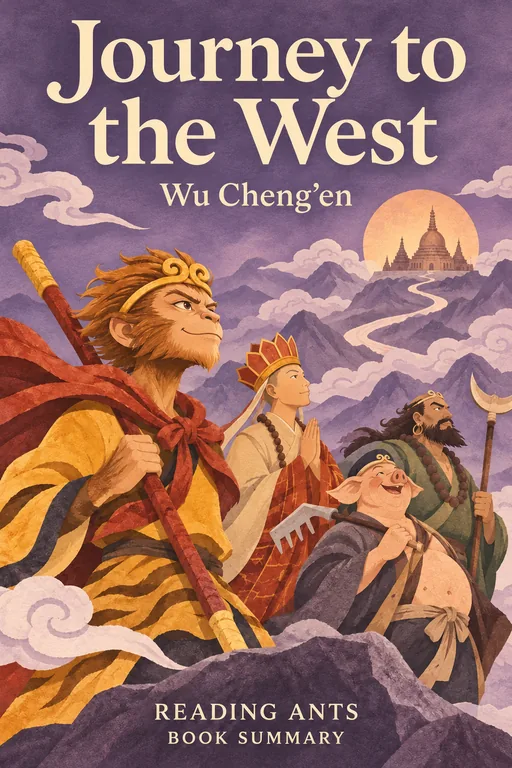
Journey to the West
Wu Cheng'en
A rebellious, magical Monkey King and two monstrous companions protect a gentle Buddhist monk on his long, demon-filled journey from China to India to bring back holy scriptures.
🌍 World Literature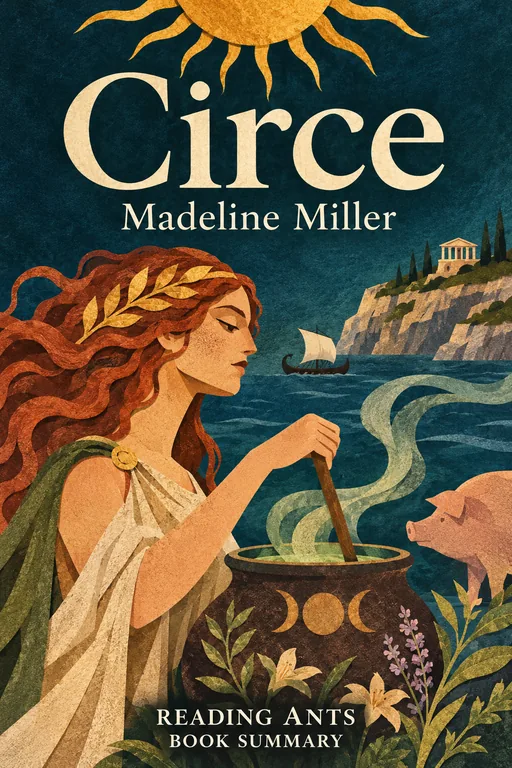
Circe
Madeline Miller
The witch Circe, a minor figure in Homer's *Odyssey*, tells her own story: born to the sun god and exiled to a lonely island, she learns the craft of witchcraft, meets famous heroes and monsters, and finally chooses mortality.
✨ Modern Fiction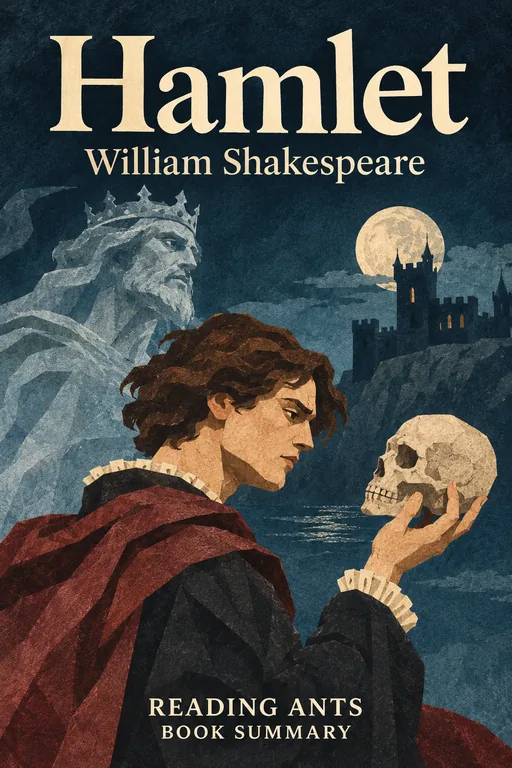
Hamlet
William Shakespeare
A grieving prince of Denmark learns from his father's ghost that his uncle murdered the king to take the throne, and his struggle to decide whether and how to take revenge leads to madness and death.
🎭 Epics, Drama & PoetryWant something different?
Pick another topic and we will show you three books to start with.