 Reading Ants
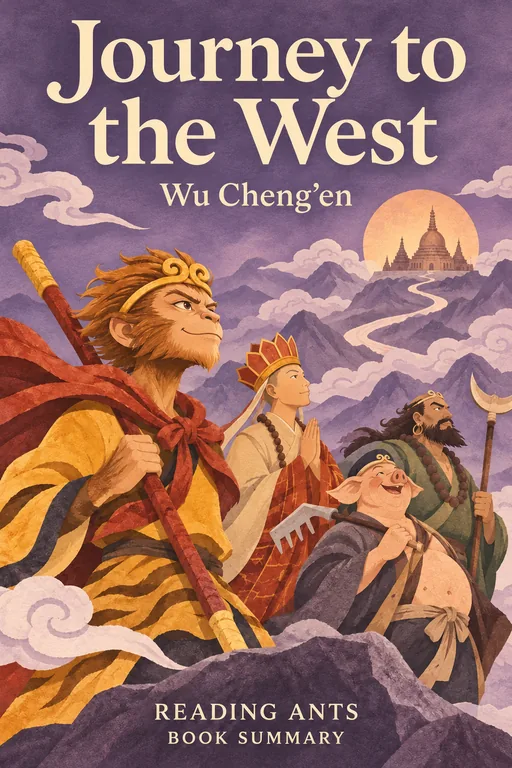
Journey to the West
Original title: 西游记
A rebellious, magical Monkey King and two monstrous companions protect a gentle Buddhist monk on his long, demon-filled journey from China to India to bring back holy scriptures.
Overview
Journey to the West is one of the four great classical novels of Chinese literature. Published in the late 1500s and traditionally credited to Wu Cheng’en, it is inspired by the real journey of the monk Xuanzang, who traveled from China to India in the seventh century to collect Buddhist texts. In the novel, the monk is accompanied by three unforgettable disciples: Sun Wukong, the mischievous Monkey King with incredible powers; Zhu Bajie, a greedy, lazy pig-man; and Sha Wujing, a quiet, loyal river spirit. Together they face eighty-one trials, battling demons who want to eat the monk to gain eternal life. Full of humor, action and Buddhist and Taoist ideas, the story is beloved across East and Southeast Asia.
Main Characters
- Sun Wukong (the Monkey King): a clever, proud and powerful monkey with magical skills.
- Tang Sanzang (Xuanzang): a kind, devout but timid Buddhist monk.
- Zhu Bajie (Pigsy): a lazy, greedy and comic pig-man, formerly a heavenly marshal.
- Sha Wujing (Sandy): a calm, hardworking river monster who was once a heavenly general.
- The White Dragon Horse: a dragon prince transformed into the monk’s horse.
- Guanyin: the compassionate goddess of mercy who guides the pilgrims.
- The Buddha: the enlightened one who finally gives them the scriptures.
- The Jade Emperor: the ruler of Heaven.
Full Summary
The Birth of the Monkey King
On the Mountain of Flowers and Fruit, a magic stone cracks open and a monkey is born. He bravely leaps through a waterfall and discovers a cave behind it, and the other monkeys make him their king. Worried that one day he will die, he travels far to find a teacher. A Taoist master teaches him seventy-two transformations and a “cloud somersault” that carries him thousands of miles in one leap, and gives him the name Sun Wukong.
Back home, Wukong takes a magical iron staff from the Dragon King of the Eastern Sea. It can shrink to the size of a needle or grow as tall as the sky. When death comes to collect him, he crosses out his name from the Book of Life and Death.
Havoc in Heaven
The Jade Emperor invites Wukong to Heaven, hoping to keep him out of trouble, and gives him a lowly job looking after the heavenly horses. Insulted, Wukong rebels and declares himself the Great Sage Equal to Heaven. Put in charge of the Garden of Immortal Peaches, he eats the peaches of immortality, gulps down the elixir pills of the sage Laozi and wrecks a heavenly banquet. Whole armies of heavenly soldiers cannot defeat him.
Finally the Buddha is called. He makes a bet with Wukong: if the monkey can leap out of the Buddha’s palm, he can rule Heaven. Wukong somersaults to the edge of the universe, where he sees five pillars and writes his name on one. Returning, he finds that the pillars were the Buddha’s fingers. He never left the Buddha’s hand. The Buddha traps him under a mountain, where he remains for five hundred years.
The Pilgrims Gather
In China, the Tang emperor sends the monk Tang Sanzang on a journey to the West, to India, to bring back Buddhist scriptures that can help save people from suffering. The goddess Guanyin arranges for him to receive protectors who will earn forgiveness for their past sins by serving him.
Tang Sanzang frees Wukong from the mountain. Wukong becomes his disciple, but he is so wild that Guanyin gives the monk a magic headband for him. Whenever Wukong misbehaves, the monk recites a spell that tightens the band and gives him a terrible headache. Along the way they gain three more companions: Zhu Bajie, a former heavenly marshal banished to Earth in the form of a pig; Sha Wujing, a former heavenly general who now lives in a river as a monster; and a dragon prince who becomes the monk’s white horse.
Demons and Disguises
The journey brings eighty-one trials. Many demons have heard that eating the monk’s flesh will grant immortality, so they try to capture him again and again. Tang Sanzang is good-hearted but easily fooled, while Wukong, with his fiery eyes, can see through any disguise.
In one famous episode, the White Bone Demon disguises herself three times, as a young woman, an old woman and an old man. Each time Wukong recognizes her and strikes her down. Pigsy, jealous of Wukong, tells the monk that the monkey is killing innocent people, and Tang Sanzang angrily banishes Wukong. Without him, the monk is soon captured by another demon, and the others must beg Wukong to return. He does, and saves his master.
Fire, Fans and Temptations
The pilgrims face many other trials. At the Flaming Mountains, the heat is so intense that they cannot pass. Wukong must trick Princess Iron Fan, the wife of the Bull Demon King, into lending him her giant palm-leaf fan, which can put out the flames. After several failed attempts and a great battle with the Bull Demon King, he succeeds.
In a kingdom of women, the queen wants to marry Tang Sanzang, and he must find a gentle way to refuse. Pigsy, always hungry and lazy, often wants to quit and go home, providing much of the story’s comedy. Each trial tests the pilgrims’ patience, loyalty and wisdom.
Arrival in the West
After fourteen years, the pilgrims reach the Buddha’s home on Vulture Peak. At first, two disciples give them blank scrolls because the pilgrims offered no gift. Realizing the trick, they return and receive the true scriptures. On the way home, one last trial is needed to complete the eighty-one: an old turtle tips them into a river, and the scriptures get wet. They dry the pages on a rock.
The scriptures reach China, and the pilgrims are rewarded. Tang Sanzang becomes a Buddha, and Wukong, now patient and wise, also becomes a Buddha, and his headband disappears. Pigsy is given a position cleaning the altars, which lets him eat the offerings; Sandy becomes an enlightened saint; and the horse becomes a heavenly dragon.
Why It Matters
Journey to the West is one of the most famous and influential works of Chinese literature, counted among the Four Great Classical Novels along with Romance of the Three Kingdoms, Water Margin and Dream of the Red Chamber. Sun Wukong is one of the best-known characters in Asian culture, appearing in countless operas, films, TV series, comics and video games.
The story has shaped popular culture far beyond China. The Japanese manga Dragon Ball was inspired by it, and many Vietnamese, Korean and Japanese children grow up with its adventures. Beneath the fun, the novel is also an allegory of spiritual growth: the unruly monkey represents the restless mind that must be disciplined through faith and effort, and the long journey stands for the path to enlightenment.
Key Takeaways
- Even great power needs discipline. Wukong becomes wise only when he learns patience and humility.
- Teamwork overcomes obstacles. Each pilgrim contributes different strengths.
- The journey shapes the traveler. The trials transform the companions, not just their destination.
- Appearances deceive. Demons in disguise test who can see the truth.
- Pride comes before a fall. Wukong’s arrogance traps him under a mountain for five centuries.
What We Can Learn
The Monkey King shows that talent alone is not enough. He is the strongest and smartest of the group, but his pride and temper cause trouble. Learning to control our impulses and work with others turns natural gifts into real achievement.
The pilgrims also teach the value of persistence. Their journey takes fourteen years and brings constant setbacks. Big goals, like learning a language or a musical instrument, require the same steady effort over time.
Finally, the story shows that loyalty matters. Even after Wukong is unfairly sent away, he returns to save his master. Forgiving others and sticking together through mistakes makes friendships and teams stronger.
Criticism and Counterpoints
Modern readers sometimes find the novel repetitive. Many episodes follow a similar pattern: a demon captures the monk, Wukong investigates and fights, and help arrives from the heavens. The full text is very long, about a hundred chapters, so many people read abridged versions or translations such as Arthur Waley’s shortened Monkey.
Tang Sanzang himself can frustrate readers, because he is often weak, easily fooled and quick to blame Wukong. Some readers find the religious symbolism hard to follow without background in Buddhism and Taoism. Others love the novel precisely for its humor and its playful mix of serious ideas with wild adventure.
Who Should Read It
This story is great for readers from about 10 upward, especially in abridged or illustrated versions, and adults will enjoy the full novel’s humor and depth. Fans of superheroes, fantasy and mythology will love the Monkey King. Readers who prefer tightly plotted stories may find the full version long.
Want the whole book?
A summary is a taste, not the meal. Here is where to find the full book.
You reached the end 🎉
Nicely done. Mark this one as read, and we will suggest what to read next.
Read this next
Romance of the Three Kingdoms
Luo Guanzhong
As the Han dynasty collapses, warlords, strategists and sworn brothers struggle to reunify China, discovering that loyalty and brilliance cannot permanently master political change.
🌍 World Literature
Dream of the Red Chamber
Cao Xueqin
The rise and decline of an aristocratic household unfolds through a sensitive boy's bonds with two remarkable young women, revealing beauty made fragile by family power and impermanence.
🌍 World Literature
Water Margin
Shi Nai'an
A band of one hundred and eight outlaws gather in a marsh stronghold to fight corrupt officials, and in the end accept the government's offer of pardon, with tragic results.
🌍 World Literature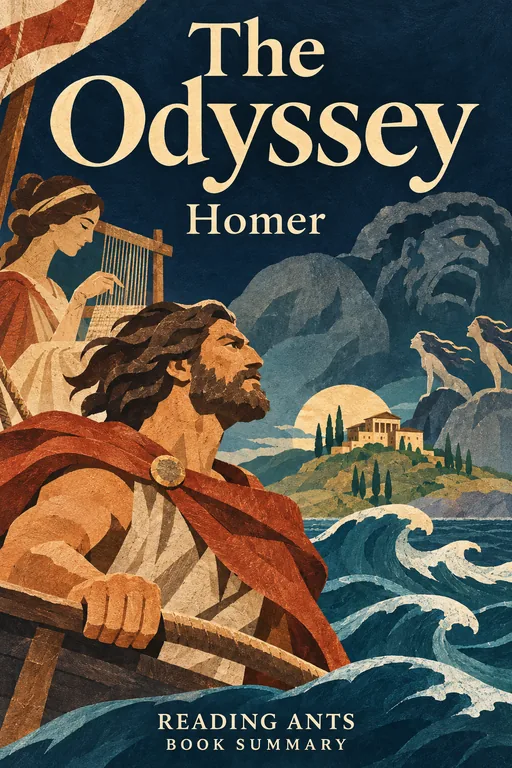
The Odyssey
Homer
After the Trojan War, the clever hero Odysseus struggles for ten years against monsters, gods and temptations to return home to his faithful wife and son, then must win back his house from the men trying to steal it.
🎭 Epics, Drama & Poetry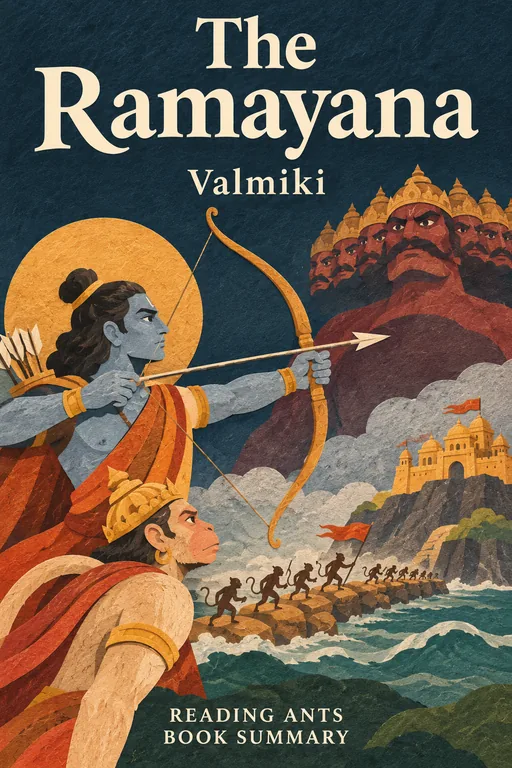
The Ramayana
Valmiki
The virtuous prince Rama is exiled from his kingdom, and when his beloved wife Sita is kidnapped by the demon king Ravana, he rescues her with the help of his loyal brother and an army of monkeys, with the devoted Hanuman as its great hero.
🎭 Epics, Drama & Poetry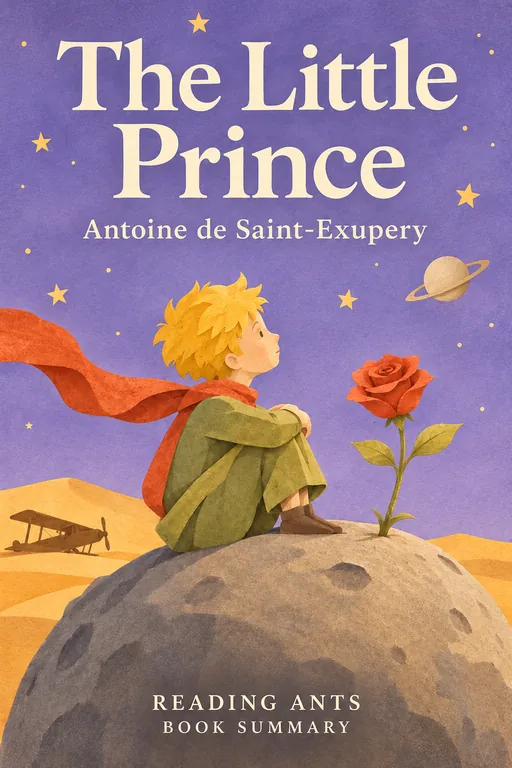
The Little Prince
Antoine de Saint-Exupery
A pilot stranded in the desert meets a small boy from a tiny planet, who teaches him that the most important things in life, like love and friendship, can only be seen with the heart.
🌍 World LiteratureWant something different?
Pick another topic and we will show you three books to start with.