 Reading Ants
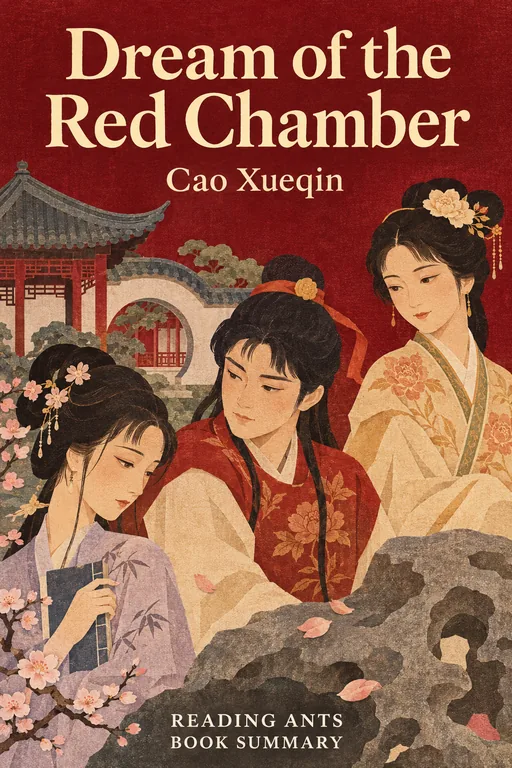
Dream of the Red Chamber
Original title: 红楼梦
The rise and decline of an aristocratic household unfolds through a sensitive boy's bonds with two remarkable young women, revealing beauty made fragile by family power and impermanence.
Overview
Dream of the Red Chamber, also translated as The Story of the Stone, is one of China’s great classical novels. It follows the wealthy Jia clan, especially Jia Baoyu and his cousins Lin Daiyu and Xue Baochai. Hundreds of relatives, servants, visitors and officials create a detailed household world shaped by poetry, ritual, money, gender and rank. Baoyu resists the career expected of an elite son and feels most at home among the young women of the family compound. His deep connection with the brilliant, sickly Daiyu is threatened by misunderstanding and family plans. The novel begins in myth and ends in loss, presenting worldly splendor as precious but temporary. Its last forty chapters have a complicated textual history and are commonly associated with Gao E’s edition.
Main Characters
- Jia Baoyu: the cherished heir born with a magical jade, sensitive and resistant to official ambition.
- Lin Daiyu: Baoyu’s poetic, perceptive and physically fragile cousin.
- Xue Baochai: a capable, composed cousin regarded as an ideal match for Baoyu.
- Wang Xifeng: a brilliant household manager whose energy can become ruthless.
- Granny Jia: the family matriarch and emotional center of the household.
- Jia Zheng: Baoyu’s strict father, who expects conventional scholarly success.
- The young women and servants of the garden: a large community whose talents and fates reveal the household’s inequalities.
Full Summary
A Stone Enters the World
A magical stone, left unused after a goddess repairs the sky, longs to experience mortal life. It enters the human world and becomes connected to Jia Baoyu, who is born with a piece of jade in his mouth. The myth signals that the family story is also a spiritual journey through illusion, attachment and loss.
The Jia clan occupies two grand linked households and enjoys imperial favor. Baoyu grows up protected by Granny Jia but criticized by his father. He dislikes the examinations and official career expected of him. He believes the girls around him are more intelligent and spiritually clean than the men who pursue status.
Daiyu and Baochai
Lin Daiyu comes to live with the Jias after losing her mother. She and Baoyu recognize an immediate closeness, but both are sensitive and easily wounded. Daiyu’s sharp wit and fear of dependence make her alert to every possible slight. Their arguments repeatedly reveal how much they care.
Xue Baochai also joins the household. Healthy, socially skilled and self-controlled, she carries a golden token that seems symbolically matched to Baoyu’s jade. The family increasingly sees her as a suitable wife. The contrast between the cousins is not simple rivalry: Daiyu and Baochai respect each other’s gifts, while social expectations place them in painful positions.
Life in the Garden
After one of the Jia daughters becomes an imperial consort, the family builds a magnificent garden for her visit. Baoyu and the young women later live there, forming poetry clubs, celebrating festivals and creating a protected cultural world. Their poems and jokes give characters distinct voices rarely recognized by the formal family hierarchy.
Yet servants can be punished or dismissed, marriages are arranged, and money is being spent faster than the family can sustain. Wang Xifeng manages crises with extraordinary skill, but her authority depends on a harsh system. Illnesses, deaths and ominous dreams repeatedly interrupt the garden’s beauty.
Cracks in the House
Baoyu’s resistance to approved male behavior brings conflict with his father, who beats him severely after accusations and scandals. The women of the household nurse him, which reinforces his sense that his emotional safety lies with them. Elsewhere in the clan, corruption, debt and irresponsible men weaken the household while its ceremonies continue to display wealth.
Several young women face tragic outcomes shaped by rank and limited choice. A servant’s reputation can be destroyed by gossip; a daughter may be sent into an unhappy marriage; grief and pressure lead some characters toward death. The garden gradually empties, showing that the protected world was always temporary.
The Broken Match
The family decides that Baoyu should marry Baochai. Because they fear he will refuse, the wedding is arranged through deception while Daiyu is gravely ill. Believing that Baoyu has been lost to Baochai, Daiyu burns writings that preserve their shared poetic life and dies in grief around the time of the marriage.
Baoyu, who has been led to expect Daiyu, discovers after the ceremony that the veiled bride is Baochai. Baochai is not the villain of the substitution; she too has been used by family strategy. The marriage unites the matching gold and jade tokens and two socially compatible families, but it cannot reproduce Baoyu’s bond with Daiyu.
Decline and Departure
The Jia family’s political protection fails. Officials search the household, property is confiscated and status collapses, though some fortunes later partly recover. Baoyu finally sits the civil examinations and succeeds, apparently fulfilling his family’s hopes. He then disappears from ordinary life.
In the common ending, Baoyu is seen with Buddhist and Daoist figures, having renounced worldly attachment. Baochai is left pregnant, preserving the family line at personal cost. The magical jade and stone frame return the immense household drama to the language of dream. Wealth, love and art were not meaningless because they vanished; their fragility is what made them beautiful and painful.
Why It Matters
The novel is treasured for the scale and precision with which it represents domestic life. Instead of treating servants, girls and household routines as background to official history, it makes them central. Food, clothing, medicine, poetry and etiquette reveal how a powerful family actually functions. Many readers also see autobiographical echoes in the Jia clan’s decline, though the novel transforms any source material into a vast imagined world.
Its treatment of impermanence gives private loss wider meaning. The garden’s beauty matters precisely because institutions cannot protect it. Baoyu’s affection for young women challenges the male career system, yet his privilege also shelters him in ways unavailable to them. The book has generated an entire field of study often called “Redology,” reflecting debates over authorship, textual versions, symbolism and family history. It remains both an intimate love tragedy and a major portrait of Qing-era elite society.
Key Takeaways
- Splendor can conceal decline. The Jia household performs wealth and order while debt and corruption weaken it.
- Private life is historically important. Poems, friendships and servant relationships reveal structures that official records may overlook.
- Gender shapes freedom. Talented young women create art and community but remain vulnerable to marriage plans and household authority.
- Love cannot escape institutions. Baoyu and Daiyu’s bond is real, yet family strategy determines what choices they can make.
- Impermanence does not erase value. The garden’s brief life makes its creativity more moving, not meaningless.
What We Can Learn
The novel teaches attention to systems hidden inside everyday life. A beautiful household may depend on underpaid labor, rigid rank or money it does not truly possess. Looking beyond appearances helps us understand who bears the cost of comfort.
Baoyu and Daiyu also show how insecurity can turn affection into repeated tests and misunderstandings. Honest reassurance is kinder than expecting another person to read every hidden fear. At the same time, individual communication cannot overcome every structural barrier. Families and communities should examine whether traditions protect people or mainly protect reputation. Finally, keeping poems, letters and memories can honor a vanished community, even though preservation cannot prevent change.
Criticism and Counterpoints
The enormous cast, multiple names and detailed social rituals can overwhelm new readers, especially across translations. The common ending’s authorship and relationship to Cao Xueqin’s intentions remain disputed, so interpretations of Baoyu’s final path should acknowledge textual uncertainty.
Although the novel gives unusual depth to many women, it still emerges from an elite household structured by patriarchy and servitude. Baoyu’s admiration can idealize girls as spiritually purer rather than recognize every person equally. Readers also see the working poor mainly through their relationship to aristocratic decline.
Who Should Read It
This is for patient readers who enjoy family sagas, tragic romance, poetry and detailed social worlds. A character guide and annotated translation are helpful. Readers wanting rapid action may struggle, while those sensitive to suicide, illness, harsh discipline and coerced marriage should approach with care.
Want the whole book?
A summary is a taste, not the meal. Here is where to find the full book.
You reached the end 🎉
Nicely done. Mark this one as read, and we will suggest what to read next.
Read this next
The Tale of Genji
Murasaki Shikibu
A gifted prince's loves, losses and descendants reveal the beauty and cruelty of court life, where every relationship is shaped by rank, time and impermanence.
🌍 World Literature
Anna Karenina
Leo Tolstoy
In imperial Russia, a married aristocrat falls passionately in love with a dashing officer and loses her place in society, while a thoughtful landowner seeks a meaningful life through love, work and faith.
🌍 World Literature
One Hundred Years of Solitude
Gabriel Garcia Marquez
Seven generations of the Buendía family live, love, fight and repeat the same mistakes in the magical Colombian town of Macondo, from its founding to its final destruction.
🌍 World Literature
Journey to the West
Wu Cheng'en
A rebellious, magical Monkey King and two monstrous companions protect a gentle Buddhist monk on his long, demon-filled journey from China to India to bring back holy scriptures.
🌍 World Literature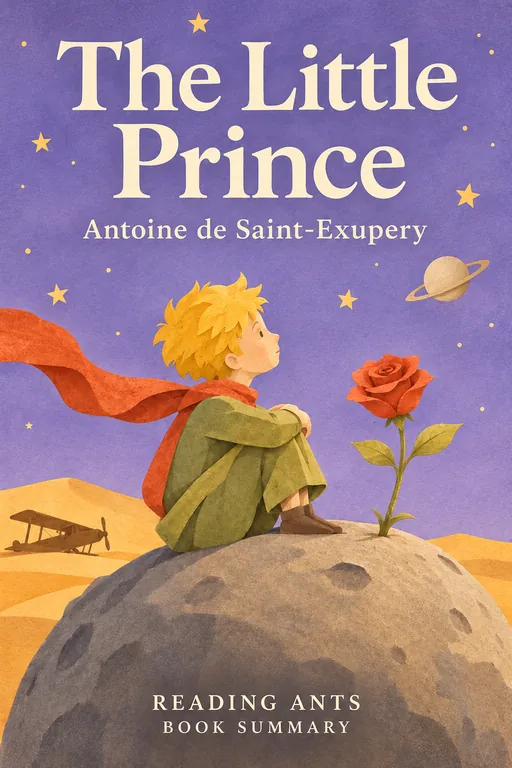
The Little Prince
Antoine de Saint-Exupery
A pilot stranded in the desert meets a small boy from a tiny planet, who teaches him that the most important things in life, like love and friendship, can only be seen with the heart.
🌍 World Literature
Things Fall Apart
Chinua Achebe
Okonkwo, a proud and fearsome leader in an Igbo village in Nigeria, struggles against his own fears and against the arrival of British missionaries and colonial rulers, who change his world forever.
🌍 World LiteratureWant something different?
Pick another topic and we will show you three books to start with.