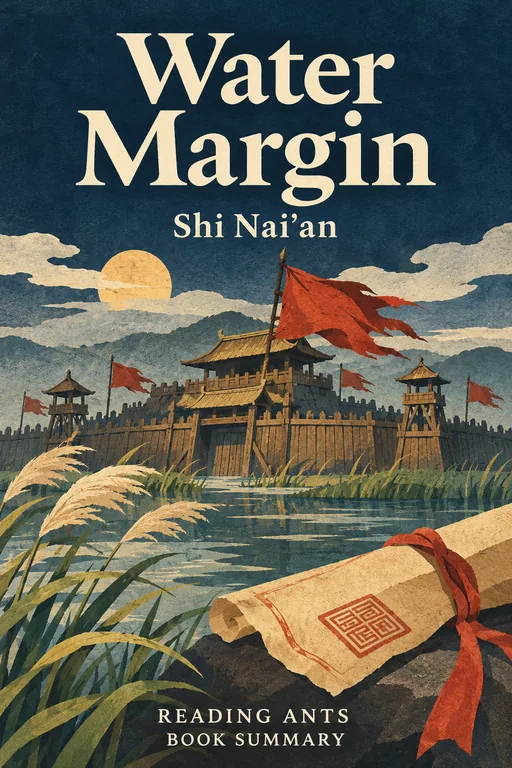
Water Margin
Original title: 水浒传
A band of one hundred and eight outlaws gather in a marsh stronghold to fight corrupt officials, and in the end accept the government's offer of pardon, with tragic results.
Overview
Water Margin (also called Outlaws of the Marsh) is one of the four great classical novels of Chinese literature. It is traditionally credited to Shi Nai’an, though its authorship and exact date are uncertain, and the earliest known printed editions date from the sixteenth century. It is set in the early twelfth century, at the end of the Northern Song dynasty, when the government was weak and corrupt. The book is made up of many linked adventures about heroes who are driven to rebel. It is a story of loyalty, brotherhood, revenge and justice.
Main Characters
- Song Jiang: a clerk who becomes the leader of the outlaws, known for his generosity.
- Lin Chong: a skilled instructor of the imperial guard, who is framed and exiled.
- Wu Song: a strong man who kills a tiger with his bare hands.
- Lu Zhishen: a tough, honest monk, who loves wine and fights for the weak.
- Lu Junyi: a rich and gifted fighter, who is drawn to the outlaws.
- Gao Qiu: a corrupt, powerful official who is the villain of the story.
- Chao Gai: the leader of the outlaw band before Song Jiang.
Full Summary
A Marshal’s Mistake
The story begins with a mistake. Marshal Hong, a court official, ignores warnings and breaks the seal on a place where a group of demons had been shut away, and these are said to be reborn as the 108 heroes. This sets up the idea that their fates are tied together.
The novel then turns to the story of individual heroes, each driven out of ordinary life by injustice. Lu Zhishen, a military officer, beats a butcher to death in order to protect a young woman, and flees to a monastery, where he becomes a monk. But he cannot keep the rules, and he is soon expelled.
Lin Chong
Lin Chong is an instructor of the imperial guard, who has a beautiful wife. Gao Qiu’s adopted son wants her, and Gao Qiu sets a trap, which gets Lin Chong convicted. He is exiled, and attacked on the road, but is saved by Lu Zhishen. Eventually, he is forced to kill his enemies and flee to the marsh of Liangshan.
His story is typical: a good man, wronged by the powerful, finds his only refuge among outlaws.
Wu Song and Others
Wu Song, a big man, while traveling home, drinks several bowls of wine, and then walks over a mountain pass where a man-eating tiger is said to live. He meets the tiger and kills it with his fists. He becomes a hero, and later avenges the murder of his brother, who was poisoned by the brother’s wife and her lover.
Other heroes join, with stories of their own. A group of seven men steal a convoy of treasure by tricking the guards with drugged wine. They flee to Liangshan Marsh, where Chao Gai becomes the band’s new chief after Lin Chong turns against the old leader.
The Gathering at Liangshan
Song Jiang, a clerk who has a reputation for helping others, kills a woman who threatens him with blackmail, and becomes an outlaw. After various adventures, he joins the Liangshan band, and after Chao Gai’s death becomes its leader.
More and more heroes come to the marsh: soldiers, bandits, fishermen and even officials. The band grows to 108 members, who swear brotherhood. They defeat the armies sent against them. They have a code of honor, and they say that they act “on behalf of Heaven.”
Amnesty
The emperor, who is advised by a few honest men, offers the outlaws a pardon, if they agree to serve the state. Song Jiang, who has always been loyal to the emperor and who blames corrupt officials, accepts, although some of his brothers disagree.
The outlaws are sent to fight foreign invaders, and then to put down other rebellions. They win many battles, but they lose many of their number.
The End
At the end, the survivors are given honors, but the corrupt court officials remain jealous and hostile. Song Jiang is poisoned by jealous court officials who send him a poisoned drink in the emperor’s name, and he, knowing it, makes sure that his friend, who is a fierce fighter, will not rebel, by also giving him the poison. The heroes are mourned, and they are remembered as gods.
The story ends on a sad note, as the great band is broken, and the court is as corrupt as before.
Why It Matters
Water Margin is one of the most widely read novels in Chinese history, and it has inspired countless plays, films, television series and comics in China, Japan and Korea. It was one of the first major novels written in the spoken language rather than classical Chinese. Its heroes are known to almost everyone in East Asia, and are a symbol of the fight against injustice. It has also been a source of debate: it has been praised as a story of rebellion and criticized as a glorification of violence. It remains a great source of stories and proverbs.
Key Takeaways
- Injustice drives good people to rebel. Many of the heroes begin as honest men.
- Loyalty is a high value. The outlaws are bound by brotherhood.
- Corruption destroys states. The villain’s power comes from the weakness of the court.
- Loyalty can be a trap. Song Jiang’s faith in the emperor leads to disaster.
- Violence is double-edged. The heroes use violence for justice, but it also brings pain.
What We Can Learn
The book encourages us to value loyalty and friendship, but also to ask what we are loyal to. Song Jiang’s devotion to a corrupt court leads him and his men to ruin. It is important to know when to question authority.
It also asks what justice is, and whether it can be found outside the law. The heroes’ answers are not always comfortable, and modern readers can ask whether they are right. Finally, the story shows how a group of different people can come together in a shared cause.
Criticism and Counterpoints
Many modern readers are troubled by the novel’s graphic violence, and by its treatment of women, who are often villains or victims. Some episodes show cruelty against innocent people, which the book does not always condemn. The long list of characters is hard to follow, and the structure is loose. Some critics argue that the book glorifies banditry, and, in the past, it was banned by some rulers for this reason.
Who Should Read It
This book is for mature readers who like epic adventure, and who are curious about Chinese culture and history. It is very long, and best read in an abridged or well-annotated edition. Those who dislike violent scenes should be careful.
Want the whole book?
A summary is a taste, not the meal. Here is where to find the full book.
You reached the end 🎉
Nicely done. Mark this one as read, and we will suggest what to read next.
Read this next
Romance of the Three Kingdoms
Luo Guanzhong
As the Han dynasty collapses, warlords, strategists and sworn brothers struggle to reunify China, discovering that loyalty and brilliance cannot permanently master political change.
🌍 World Literature
Journey to the West
Wu Cheng'en
A rebellious, magical Monkey King and two monstrous companions protect a gentle Buddhist monk on his long, demon-filled journey from China to India to bring back holy scriptures.
🌍 World Literature
Dream of the Red Chamber
Cao Xueqin
The rise and decline of an aristocratic household unfolds through a sensitive boy's bonds with two remarkable young women, revealing beauty made fragile by family power and impermanence.
🌍 World Literature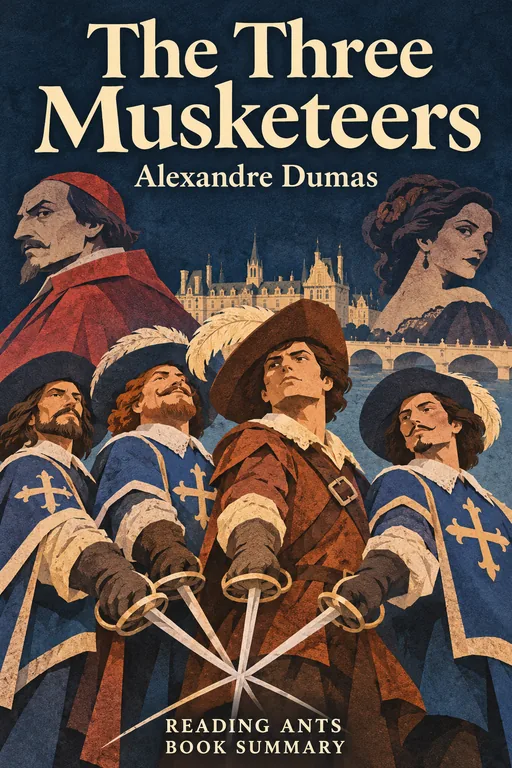
The Three Musketeers
Alexandre Dumas
A young Gascon swordsman travels to Paris in the 1620s to join the King's Musketeers, befriends three legendary soldiers, and together they fight to protect the Queen's honor against the scheming Cardinal Richelieu and the dangerous Milady.
🌍 World Literature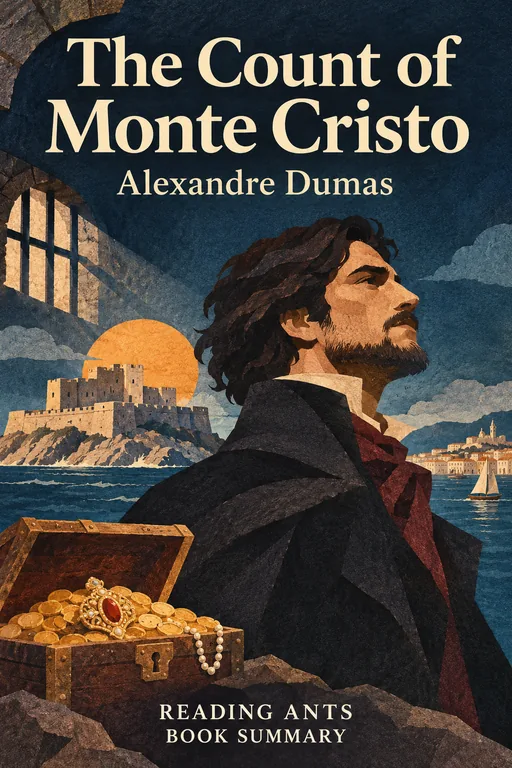
The Count of Monte Cristo
Alexandre Dumas
A young sailor, betrayed by jealous rivals and thrown into a dungeon for fourteen years, escapes with the help of a fellow prisoner, finds a vast treasure and returns as a mysterious, powerful count to take elaborate revenge on those who ruined him.
🌍 World Literature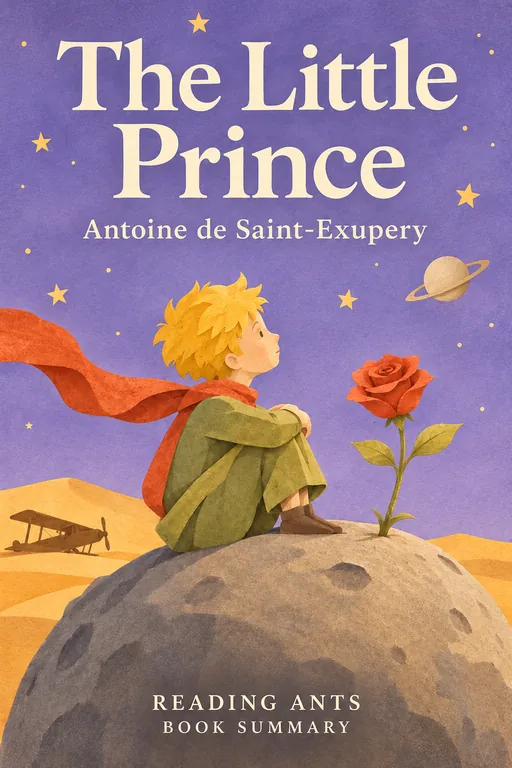
The Little Prince
Antoine de Saint-Exupery
A pilot stranded in the desert meets a small boy from a tiny planet, who teaches him that the most important things in life, like love and friendship, can only be seen with the heart.
🌍 World LiteratureWant something different?
Pick another topic and we will show you three books to start with.