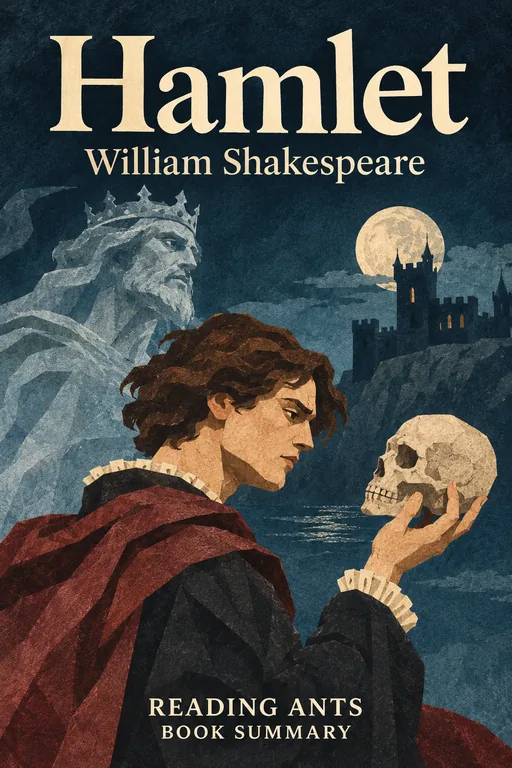
Hamlet
A grieving prince of Denmark learns from his father's ghost that his uncle murdered the king to take the throne, and his struggle to decide whether and how to take revenge leads to madness and death.
Overview
Hamlet is William Shakespeare’s longest and most famous play, written around 1600. Prince Hamlet returns home to Denmark after his father, the king, dies suddenly. Within weeks, his mother, Queen Gertrude, has married his father’s brother, Claudius, who is now king. Then a ghost appears, claiming to be Hamlet’s father and revealing that Claudius poisoned him. Hamlet swears revenge, but he is a thinker, full of doubts about life, death, truth and action. Pretending to be mad, he tests his uncle, while the court spies on him and tragedy spreads. The play contains some of the most famous lines in the English language and is one of the most performed and studied works of literature in the world.
Main Characters
- Hamlet: the brilliant, troubled Prince of Denmark.
- Claudius: Hamlet’s uncle, who has seized the throne.
- Gertrude: Hamlet’s mother, now married to Claudius.
- The Ghost: the spirit of Hamlet’s father, the old king.
- Polonius: the king’s talkative, meddling adviser.
- Ophelia: Polonius’s daughter, who loves Hamlet.
- Laertes: Polonius’s son, quick to anger.
- Horatio: Hamlet’s loyal friend.
- Rosencrantz and Guildenstern: Hamlet’s old school friends, used by the king as spies.
Full Summary
The Ghost
On a cold night at the castle of Elsinore, guards see a ghost that looks exactly like the dead King Hamlet. They tell Prince Hamlet’s friend Horatio, who tells Hamlet. Hamlet is already miserable: his father has died, and his mother has quickly married his uncle Claudius, the new king.
When Hamlet meets the ghost, it tells him that Claudius murdered him by pouring poison in his ear while he slept, then took his crown and his queen. The ghost demands revenge, but tells Hamlet not to harm his mother. Hamlet swears to obey. He tells his friends that he may pretend to be mad, and makes them promise to keep silent.
Hamlet’s “Madness”
Hamlet begins behaving strangely, speaking in riddles and treating Ophelia, whom he loves, cruelly. Her father, Polonius, believes Hamlet has gone mad from love for her. The worried king and queen summon Rosencrantz and Guildenstern, Hamlet’s old school friends, to find out what is wrong. Hamlet quickly realizes they are spying for the king.
Alone, Hamlet broods over life and death in his famous speech that begins “To be, or not to be.” He wonders whether it is nobler to endure life’s suffering or to end it, and concludes that fear of what comes after death makes people hesitate. He is also tormented by doubt: is the ghost truly his father, or a devil sent to trick him?
The Play Within the Play
When a group of traveling actors arrives, Hamlet has an idea. He asks them to perform a play showing a murder very like his father’s, to watch how Claudius reacts. During the performance, when the murderer pours poison into the sleeping king’s ear, Claudius stands up in alarm and storms out. Hamlet is now certain of his guilt.
Soon after, Hamlet finds Claudius alone, praying. He could kill him, but he hesitates: if Claudius dies while praying, his soul might go to heaven. He decides to wait for a moment when Claudius is sinning. Ironically, Claudius admits to himself that he cannot truly repent.
A Fatal Mistake
Hamlet confronts his mother in her room, angrily accusing her of betraying his father. Polonius, hiding behind a curtain to spy, cries out, and Hamlet, thinking it might be the king, stabs through the curtain and kills him. The ghost appears again to remind Hamlet of his purpose, though Gertrude cannot see it and believes her son is mad.
Claudius, now afraid of Hamlet, sends him to England with Rosencrantz and Guildenstern, carrying a secret letter ordering Hamlet’s execution. On the voyage, Hamlet discovers the letter and rewrites it so that Rosencrantz and Guildenstern will be executed instead. Pirates attack the ship and return Hamlet to Denmark.
Ophelia and Laertes
Meanwhile, Ophelia, heartbroken by Hamlet’s rejection and her father’s death, loses her mind, singing strange songs and handing out flowers. She drowns in a stream, perhaps by accident, perhaps on purpose. Her brother Laertes returns from France, furious and demanding revenge for his father and sister. Claudius persuades him to fight Hamlet in a fencing match, using a sword with a sharp, poisoned tip. As a backup, the king prepares a cup of poisoned wine.
The Graveyard
Back in Denmark, Hamlet and Horatio pass through a graveyard, where Hamlet talks with a gravedigger and holds the skull of Yorick, a jester he loved as a child, reflecting that death comes to everyone, rich or poor. Then he sees Ophelia’s funeral procession and learns she has died. He and Laertes fight in her grave before being separated.
The Final Duel
Hamlet agrees to the fencing match. Gertrude drinks from the poisoned cup meant for Hamlet. Laertes wounds Hamlet with the poisoned sword; in a scuffle, they exchange swords, and Hamlet wounds Laertes with the same blade. Gertrude collapses and dies. Dying, Laertes confesses the plot and blames the king. Hamlet finally kills Claudius, stabbing him and forcing him to drink the poison.
As Hamlet dies, he asks Horatio to live and tell his story truthfully. Fortinbras, the prince of Norway, arrives with his army, finds the royal family dead, and takes the throne. He orders that Hamlet be carried away with the honors of a soldier.
Why It Matters
Hamlet is often considered the greatest play ever written. It has been performed more often than almost any other play, translated into almost every language and adapted into countless films, from Laurence Olivier’s to modern versions, and it inspired works such as The Lion King and Tom Stoppard’s Rosencrantz and Guildenstern Are Dead.
The play’s exploration of the human mind, through Hamlet’s doubts, grief and inner debates, was revolutionary, and many critics see Hamlet as one of the first truly modern characters. Many phrases from it are part of everyday English, including “to be, or not to be,” “something is rotten in the state of Denmark,” “the lady doth protest too much” and “brevity is the soul of wit.”
Key Takeaways
- Thinking can delay action. Hamlet’s endless doubts lead to disaster.
- Revenge destroys everyone. The quest for vengeance kills the guilty and the innocent alike.
- Corruption spreads. One secret crime poisons a whole kingdom and nearly everyone in the royal court.
- Appearances deceive. Characters constantly spy, lie and pretend.
- Death is universal. The graveyard reminds everyone that all lives end the same way.
What We Can Learn
Hamlet shows the danger of overthinking. It is wise to think carefully, but endless doubt can stop us from acting when action is needed. Sometimes we must decide based on the best information we have.
It also warns about revenge. Every act of vengeance in the play leads to more deaths. Looking for justice, forgiveness or a peaceful way out is usually better than trying to get even.
Finally, the play reminds us to be honest with those we love. Much of the tragedy comes from secrets, spying and miscommunication. Talking openly with family and friends can prevent misunderstandings from growing into disasters.
Criticism and Counterpoints
Some readers find Hamlet long and confusing, with complex language, many subplots and characters whose motives are unclear. Critics have debated for centuries why Hamlet delays his revenge, whether his madness is real or pretended, and how much Gertrude knew about the murder.
Ophelia has been seen by many modern critics as a tragically underdeveloped character, controlled by her father and brother and destroyed by Hamlet’s cruelty. The poet T. S. Eliot even called the play an artistic failure, arguing that Hamlet’s emotions are larger than the events that cause them. Nonetheless, most critics consider these mysteries part of the play’s enduring power.
Who Should Read It
This play suits older teenagers and adults, especially those interested in drama, psychology and big questions about life and death. Watching a good performance or film alongside reading helps a great deal. Readers new to Shakespeare may prefer an edition with modern notes or a parallel modern translation.
Want the whole book?
A summary is a taste, not the meal. Here is where to find the full book.
You reached the end 🎉
Nicely done. Mark this one as read, and we will suggest what to read next.
Read this next
Macbeth
William Shakespeare
A brave Scottish general, spurred on by a witches' prophecy and his ambitious wife, murders the king to take the throne, and is driven by guilt and paranoia into more and more killing until he is destroyed.
🎭 Epics, Drama & Poetry
King Lear
William Shakespeare
An aging king divides his kingdom among his daughters based on how much they flatter him, banishes the one who truly loves him, and is driven to madness on a stormy heath as his family and kingdom collapse.
🎭 Epics, Drama & Poetry
Othello
William Shakespeare
A noble Black general in the Venetian army is manipulated by his trusted officer Iago into believing that his loving wife is unfaithful, and his jealousy leads him to destroy her and himself.
🎭 Epics, Drama & Poetry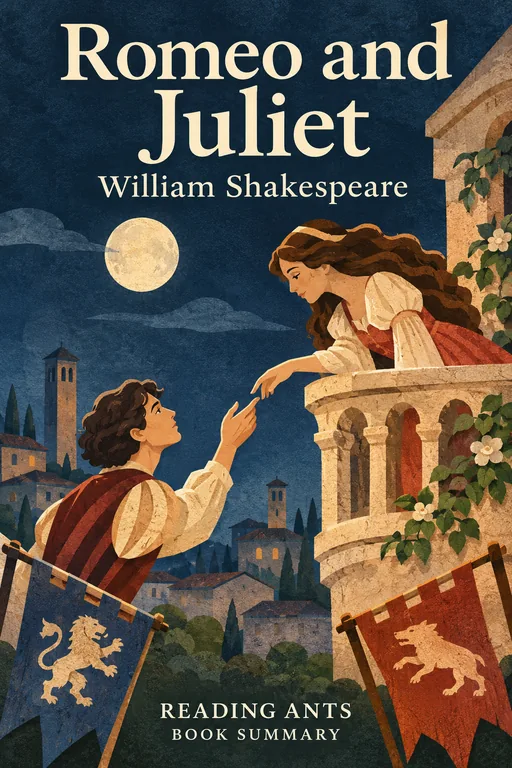
Romeo and Juliet
William Shakespeare
Two teenagers from feuding families in Verona fall in love at first sight and marry in secret, but hatred, haste and bad luck lead them to a tragic end that finally brings their families together.
🎭 Epics, Drama & Poetry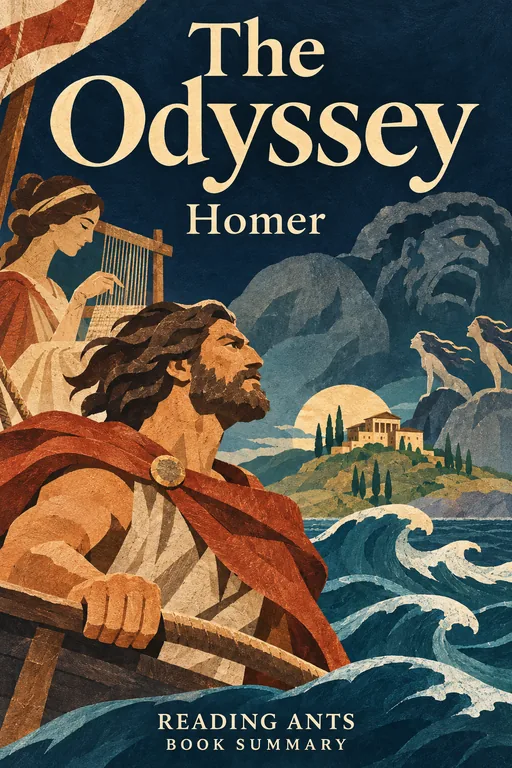
The Odyssey
Homer
After the Trojan War, the clever hero Odysseus struggles for ten years against monsters, gods and temptations to return home to his faithful wife and son, then must win back his house from the men trying to steal it.
🎭 Epics, Drama & Poetry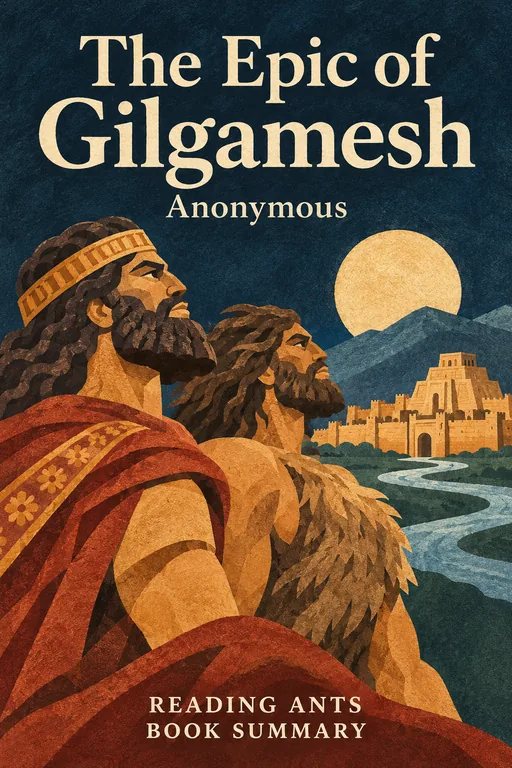
The Epic of Gilgamesh
Anonymous
A proud, powerful king of ancient Mesopotamia gains a true friend, loses him to death, and journeys to the edge of the world in search of eternal life, only to learn that what lasts is the life and legacy we leave behind.
🎭 Epics, Drama & PoetryWant something different?
Pick another topic and we will show you three books to start with.