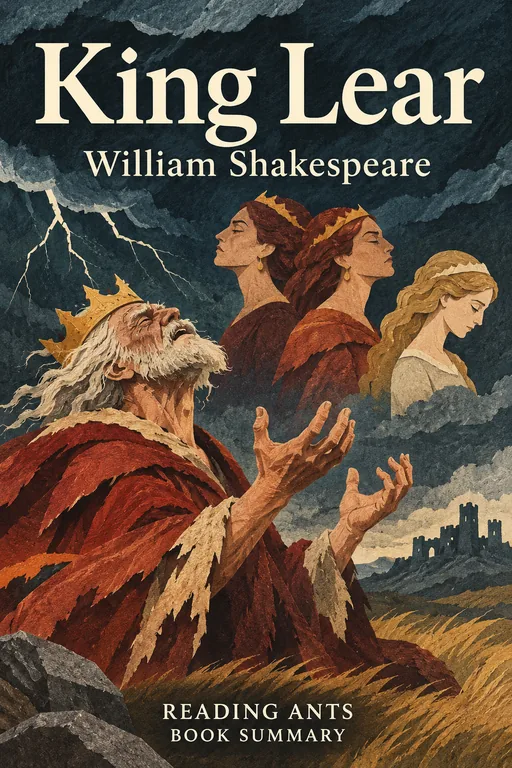
King Lear
An aging king divides his kingdom among his daughters based on how much they flatter him, banishes the one who truly loves him, and is driven to madness on a stormy heath as his family and kingdom collapse.
Overview
King Lear, written by William Shakespeare around 1605 and 1606, is often considered his greatest and most devastating tragedy. Lear, the elderly king of ancient Britain, decides to give up his power and divide his kingdom among his three daughters. He asks each to say how much she loves him. The two eldest, Goneril and Regan, flatter him with grand speeches, but the youngest, Cordelia, refuses to exaggerate, saying she loves him as a daughter should. Furious, Lear disowns her. A second story follows the Earl of Gloucester, who is deceived by his scheming son, Edmund, and turns against his loyal son, Edgar. The play explores family, power, foolishness, cruelty and suffering.
Main Characters
- King Lear: the proud, aging king of Britain.
- Goneril and Regan: Lear’s eldest daughters, ambitious and cruel.
- Cordelia: Lear’s youngest daughter, honest and loving.
- The Earl of Gloucester: a nobleman loyal to Lear.
- Edgar: Gloucester’s loyal elder son.
- Edmund: Gloucester’s scheming younger son.
- The Earl of Kent: Lear’s loyal adviser.
- The Fool: Lear’s jester, who speaks truth through jokes.
- The Duke of Albany and the Duke of Cornwall: Goneril’s and Regan’s husbands.
Full Summary
The Love Test
King Lear announces that he will divide his kingdom among his daughters and asks which loves him most. Goneril and Regan give flowery speeches claiming they love him more than anything. Cordelia, disgusted by their flattery, says she loves him according to her duty, no more and no less. Enraged, Lear disowns her and splits her share between her sisters. When the loyal Earl of Kent defends Cordelia, Lear banishes him too. The King of France marries Cordelia without a dowry, recognizing her worth.
Edmund’s Plot
Meanwhile, the Earl of Gloucester has two sons: Edgar, his legitimate heir, and Edmund, born outside marriage. Bitter at being treated as inferior, Edmund forges a letter suggesting that Edgar plans to kill their father. Gloucester believes him, and Edgar flees, disguising himself as a mad beggar called Poor Tom.
Ungrateful Daughters
Lear plans to stay with Goneril and Regan in turn, with a hundred knights. Kent returns in disguise to serve him. Goneril soon complains about Lear’s rowdy knights and tells him to reduce them. Furious, Lear goes to Regan, who is equally cold. The two sisters keep cutting his followers until he has none. Realizing his mistake, Lear rushes out into a violent storm, accompanied only by his Fool and the disguised Kent.
The Storm
On the heath, Lear rages at the wind and rain, losing his mind. He begins to understand the suffering of the poor, which he ignored as king. The group meets Poor Tom, actually Edgar in disguise, and Lear sees in this nearly naked madman the true nature of humanity, stripped of wealth and power.
Gloucester, secretly loyal to Lear, helps the king escape to Dover, where Cordelia has arrived with a French army. But Edmund betrays his father to Regan and her husband, Cornwall. In one of the most horrifying scenes in Shakespeare, Cornwall gouges out Gloucester’s eyes. A servant, sickened, fatally wounds Cornwall. Blind, Gloucester learns that Edmund betrayed him and that Edgar was innocent.
Dover
The blind Gloucester wanders, led by his disguised son Edgar, whom he does not recognize. Wanting to die, he asks to be taken to the cliffs of Dover. Edgar tricks him into thinking he has jumped from a cliff and survived, convincing him to keep living. Meanwhile, Goneril and Regan both fall in love with Edmund, becoming rivals.
Lear, wandering mad and crowned with wild flowers, is found by Cordelia’s people. After rest, he awakens and recognizes her. He kneels and asks her forgiveness, calling himself a foolish, fond old man. She forgives him lovingly.
The Tragic End
The British forces, led by Edmund, defeat the French army, and Lear and Cordelia are captured. Lear is happy just to be with Cordelia, even in prison. But Edmund secretly orders their deaths.
Edgar challenges Edmund to a duel and mortally wounds him. Goneril, jealous, has poisoned Regan, and when her plots are exposed, she kills herself. Gloucester, after Edgar finally reveals himself, dies of mixed joy and grief. Dying, Edmund tries to do one good deed and reveals his order to kill Lear and Cordelia, but it is too late. Lear enters, carrying Cordelia’s body in his arms, howling with grief. He hopes she is still breathing, then dies of a broken heart. The survivors, Albany, Kent and Edgar, are left with a shattered kingdom. Kent says that he expects to follow his master in death, and the play ends with exhaustion rather than a settled succession.
Why It Matters
King Lear is often ranked among the greatest works of literature ever written. Its exploration of aging, family betrayal, justice and human suffering is profound, and its storm scene and final moments are among the most powerful in theater. Many great actors consider playing Lear the ultimate challenge of their careers.
The play’s bleakness troubled audiences for centuries. From the late 1600s, a rewritten version with a happy ending, in which Cordelia survives and marries Edgar, replaced Shakespeare’s original on stage for about 150 years. Today, the original is widely performed and admired. It has inspired countless adaptations, including Akira Kurosawa’s film Ran and Jane Smiley’s novel A Thousand Acres.
Key Takeaways
- Flattery can blind us. Lear trusts sweet words and rejects honest love.
- True love is often quiet. Cordelia’s sincerity is worth more than her sisters’ speeches.
- Power reveals character. Goneril, Regan and Edmund show their cruelty once they gain control.
- Suffering can bring wisdom. Lear learns compassion only after losing everything.
- Family betrayal is devastating. Both fathers misjudge their children with tragic results.
What We Can Learn
King Lear warns us not to judge love by words alone. People who truly care for us may not always say what we want to hear, while flatterers may hide selfish motives. Paying attention to actions, not just speeches, helps us see who really cares.
It also teaches the importance of humility. Lear’s pride and anger lead him to reject the people who love him most. Being willing to listen to honest criticism, even when it hurts, can protect us from serious mistakes.
Finally, the play invites compassion for the elderly and the vulnerable. Lear’s suffering reminds us to treat aging parents and grandparents with patience and respect.
Criticism and Counterpoints
Many readers and audiences find King Lear almost unbearably bleak, with its suffering, cruelty and the death of the innocent Cordelia. The writer Samuel Johnson said he found her death so shocking that he could hardly bear to reread the ending. The play’s double plot and many characters can also be confusing.
Leo Tolstoy famously criticized the play as unrealistic and badly constructed, especially the opening love test. Others note the extreme villainy of Goneril and Regan, with little explanation of why they are so cruel, although some productions explore the idea that Lear was a harsh father. Most critics nonetheless regard the play as one of the summits of world drama.
Who Should Read It
This play suits older teens and adults ready for a powerful, challenging tragedy. Its violence and despair are intense. Reading it with notes, or watching a good stage or film production, helps with the complex plot and language.
Want the whole book?
A summary is a taste, not the meal. Here is where to find the full book.
You reached the end 🎉
Nicely done. Mark this one as read, and we will suggest what to read next.
Read this next
Hamlet
William Shakespeare
A grieving prince of Denmark learns from his father's ghost that his uncle murdered the king to take the throne, and his struggle to decide whether and how to take revenge leads to madness and death.
🎭 Epics, Drama & Poetry
Macbeth
William Shakespeare
A brave Scottish general, spurred on by a witches' prophecy and his ambitious wife, murders the king to take the throne, and is driven by guilt and paranoia into more and more killing until he is destroyed.
🎭 Epics, Drama & Poetry
Othello
William Shakespeare
A noble Black general in the Venetian army is manipulated by his trusted officer Iago into believing that his loving wife is unfaithful, and his jealousy leads him to destroy her and himself.
🎭 Epics, Drama & Poetry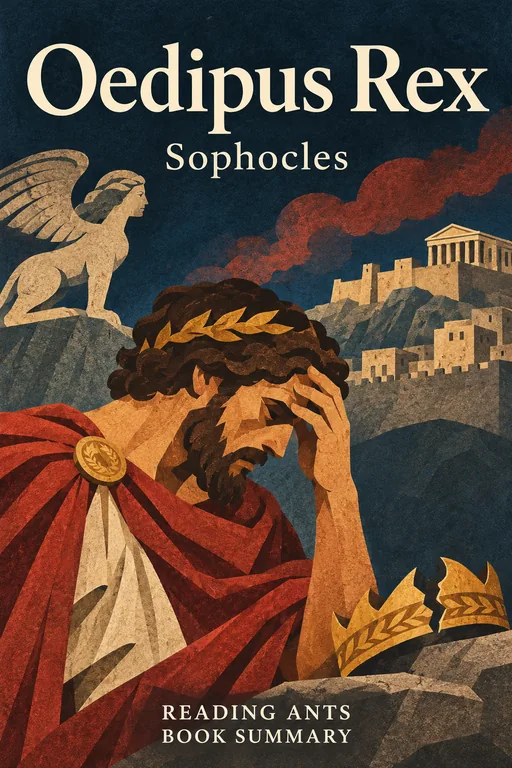
Oedipus Rex
Sophocles
A wise and respected king determined to save his city from a plague investigates an old murder, and discovers the horrifying truth that he himself fulfilled a prophecy by killing his father and marrying his mother.
🎭 Epics, Drama & Poetry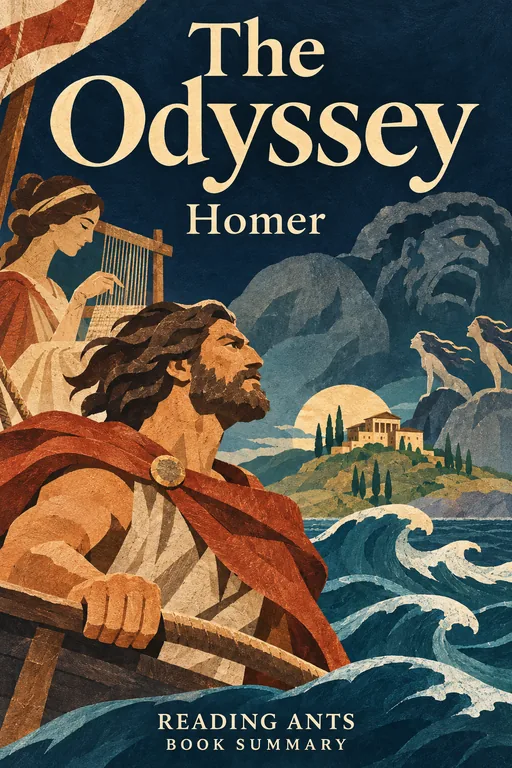
The Odyssey
Homer
After the Trojan War, the clever hero Odysseus struggles for ten years against monsters, gods and temptations to return home to his faithful wife and son, then must win back his house from the men trying to steal it.
🎭 Epics, Drama & Poetry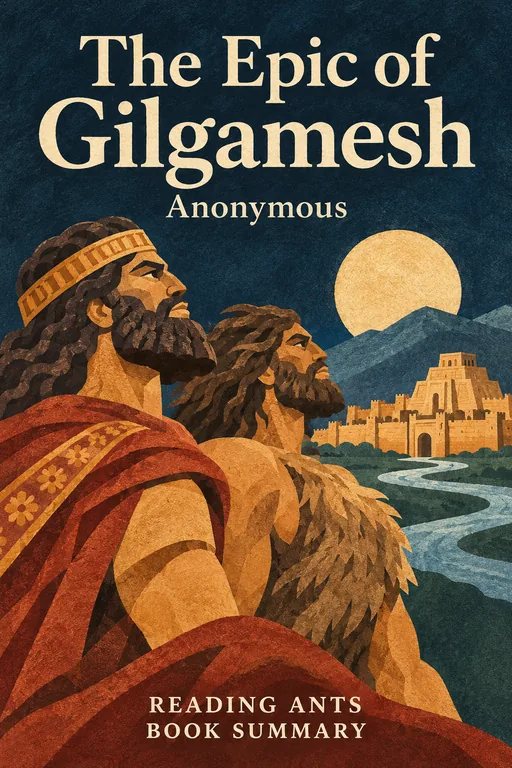
The Epic of Gilgamesh
Anonymous
A proud, powerful king of ancient Mesopotamia gains a true friend, loses him to death, and journeys to the edge of the world in search of eternal life, only to learn that what lasts is the life and legacy we leave behind.
🎭 Epics, Drama & PoetryWant something different?
Pick another topic and we will show you three books to start with.