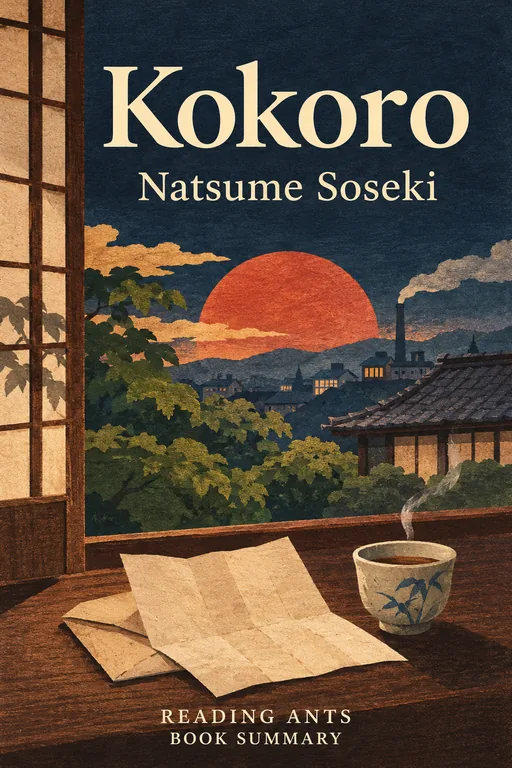
Kokoro
Original title: こころ
A young student befriends a quiet, haunted older man known as "Sensei," and learns, from a long letter, the secret of guilt and betrayal that has shadowed his life.
Overview
Kokoro is a novel by the Japanese writer Natsume Soseki, published in 1914. The title means “heart” or “mind” or “the heart of things.” It is set in Japan at the end of the Meiji era, around 1912, when the old Japan was giving way to a modern, Western-influenced country. The story is told in three parts: the narrator’s friendship with Sensei, his return to his dying father, and Sensei’s own confession. The book asks how loneliness and guilt can shape a person’s life, and what is lost when a society changes quickly. It deals with suicide.
Main Characters
- The narrator: a young university student, curious and eager to learn.
- Sensei: a quiet, learned, withdrawn man, who lives with his wife, and who rarely goes out in society.
- Sensei’s wife (Shizu): a kind woman, who does not know her husband’s secret.
- K: Sensei’s boyhood friend, who is serious and devoted to a life of spiritual discipline.
- The narrator’s father: a traditional man from the countryside, who falls ill.
Full Summary
Meeting Sensei
The narrator meets Sensei by chance at a beach in Kamakura, and is drawn to him. He calls him “Sensei,” which means “teacher,” though the older man teaches him nothing formal. Sensei is courteous but distant. He visits a grave every month, and will not say whose it is.
Over time, the narrator becomes a regular visitor to Sensei’s house, where he meets Sensei’s wife. He senses a sadness in their home, and an unspoken wall between husband and wife. Sensei says that he does not trust himself, or people in general.
A Hint of the Past
Sensei tells the young man that he was once cheated by an uncle, who took his inheritance after his parents died. He says that this experience made him distrust all people, including himself. He promises that, one day, he will tell his story.
The narrator graduates, and returns to his family home in the countryside, where his father, who is ill, lies dying. He is torn between his duty to his father and his attachment to Sensei.
The Father’s Illness
The narrator’s father is a simple man, who is proud of his son’s success. Yet the young man feels the gap between his own world and his family’s. The death of the Emperor Meiji, and the suicide of General Nogi, a hero of the era, who followed his emperor in death, shock the family and the nation.
Then, a thick letter arrives from Sensei. In a panic, the narrator leaves his dying father, and takes a train to Tokyo, reading the letter along the way.
Sensei’s Letter
In the letter, Sensei writes of his past. After his uncle’s betrayal, he went to Tokyo to study, and rented a room in the house of a widow, who had a daughter. He fell in love with the daughter. Then his friend K, who was in financial difficulty, moved into the house at Sensei’s request.
K, who was a serious young man, confided in Sensei that he too was in love with the daughter. Sensei, who was jealous, turned K’s own strict ideals against him, telling him that anyone without spiritual aspiration is foolish, and secretly asked the widow for her daughter’s hand, and she agreed. K learned of it only later.
K’s Death
A few days later, K was found dead, having killed himself. He left a short note that did not mention Sensei by name and did not state a single clear reason. Sensei’s belief that he caused K’s death is his own guilty interpretation. Sensei was overcome with guilt, and tried to conceal what had happened. He married the daughter, but he could not forget K. He believed that he had betrayed his friend, and that he had caused his death.
Years pass, and Sensei, who lives in isolation, feels that he has no right to live. When the Emperor dies, and General Nogi follows him in death, he sees a sign that his time, the Meiji era, is over, and he decides to end his own life.
The Ending
The narrator reads the letter on the train, and he knows that Sensei has already made his decision. The novel ends inside the letter itself, so the reader is not shown what happens next to Sensei or to the narrator.
Sensei asks the narrator to keep the secret from his wife, so that she may remember her husband without shame.
Why It Matters
Kokoro is one of the most widely read novels in Japan, and it is part of the school curriculum. Soseki, who is on the Japanese thousand-yen note in an earlier series, is considered one of the founders of modern Japanese literature. The novel presents the conflict between the old values and Western-style individualism that marked the Meiji era. It is also a great psychological study of guilt and loneliness. It has been translated into many languages, and has been adapted for stage, film and manga. It is often the first Japanese novel that foreign readers pick up, since its story of friendship and guilt is easy to relate to, and it is often discussed together with the writer’s other works about the lonely modern mind.
Key Takeaways
- Betrayal haunts the betrayer. Sensei’s guilt lasts for decades.
- Isolation deepens pain. He cannot share his secret with anyone.
- A changing society leaves some behind. The end of an era marks Sensei’s end.
- Friendship demands honesty. His silence toward K leads to disaster.
- Truth can be a burden. The narrator bears Sensei’s confession.
What We Can Learn
The book shows that unspoken feelings and guilt can eat away at a person, and that it is better to talk about them with someone we trust. If we have done wrong, it helps to make amends while we can. Because the story involves suicide, readers who are going through dark times should speak to someone who can help.
It also reminds us to be honest with friends, and to avoid acting out of jealousy. Finally, it asks us to think about what we owe to our families, and to those who teach us.
Criticism and Counterpoints
Some readers find the book slow, and the story’s connection with Meiji history hard to follow without background. Others feel that Sensei’s guilt is excessive, and that his suicide is a failure rather than a sacrifice. The female characters, such as the wife, have little voice in the story. A few critics have said that the middle section, about the narrator’s father, is not well connected to the main plot.
Who Should Read It
This book is for teens and adults who like quiet, thoughtful novels about relationships. It is not long. Readers who like fast plots may find it slow, but it rewards careful reading.
Want the whole book?
A summary is a taste, not the meal. Here is where to find the full book.
You reached the end 🎉
Nicely done. Mark this one as read, and we will suggest what to read next.
Read this next
No Longer Human
Osamu Dazai
A man who feels like an alien among other people hides behind a mask of clowning, and sinks, through drink, drugs and failed relationships, into despair.
🌍 World Literature
Snow Country
Yasunari Kawabata
A wealthy Tokyo idler repeatedly visits a remote hot spring town in the snowy mountains, where a geisha gives her heart to him, though he is unable to love in return.
🌍 World Literature
The Sorrows of Young Werther
Johann Wolfgang von Goethe
A sensitive young man falls in love with a woman who is promised to another, and his passion leads him to despair.
🌍 World Literature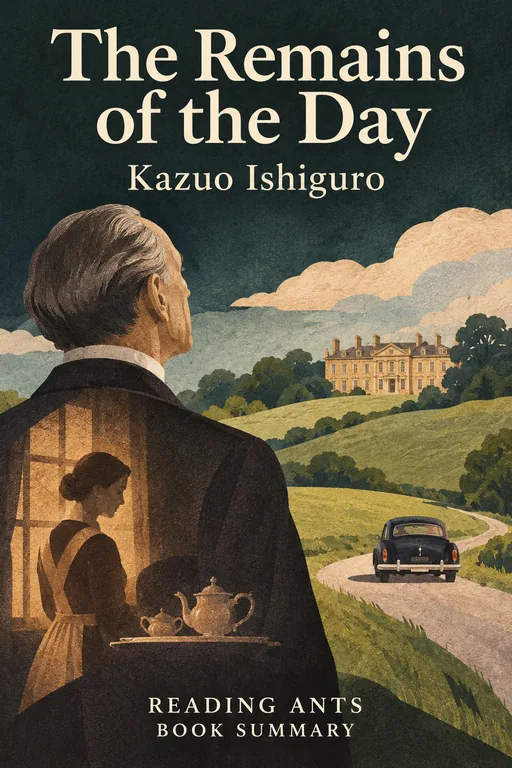
The Remains of the Day
Kazuo Ishiguro
An elderly English butler on a road trip across the countryside looks back on his life of strict duty and gradually realizes how much he gave up, including love, in service of a master who may not have deserved his loyalty.
✨ Modern Fiction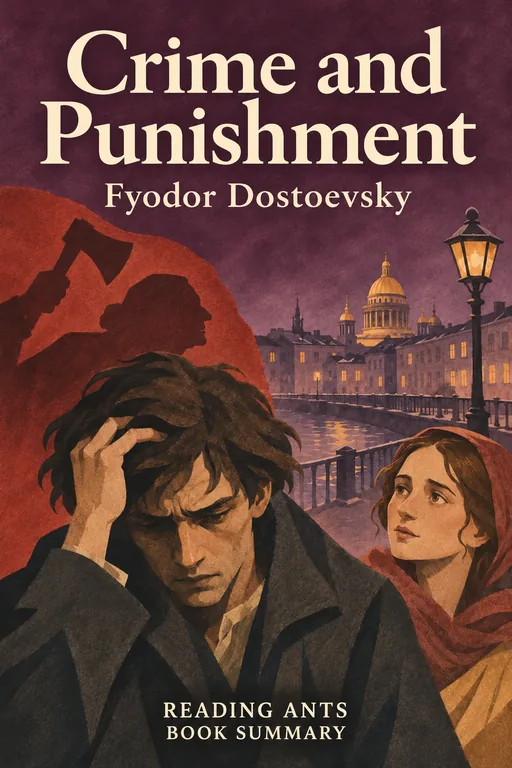
Crime and Punishment
Fyodor Dostoevsky
A poor former student in St. Petersburg murders an old pawnbroker to prove he is an extraordinary man above ordinary morality, then is tormented by guilt until love and confession offer him a path to redemption.
🌍 World Literature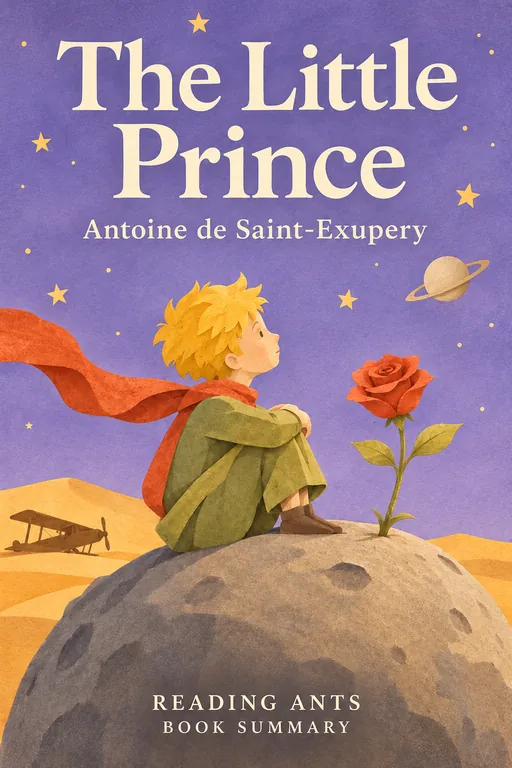
The Little Prince
Antoine de Saint-Exupery
A pilot stranded in the desert meets a small boy from a tiny planet, who teaches him that the most important things in life, like love and friendship, can only be seen with the heart.
🌍 World LiteratureWant something different?
Pick another topic and we will show you three books to start with.