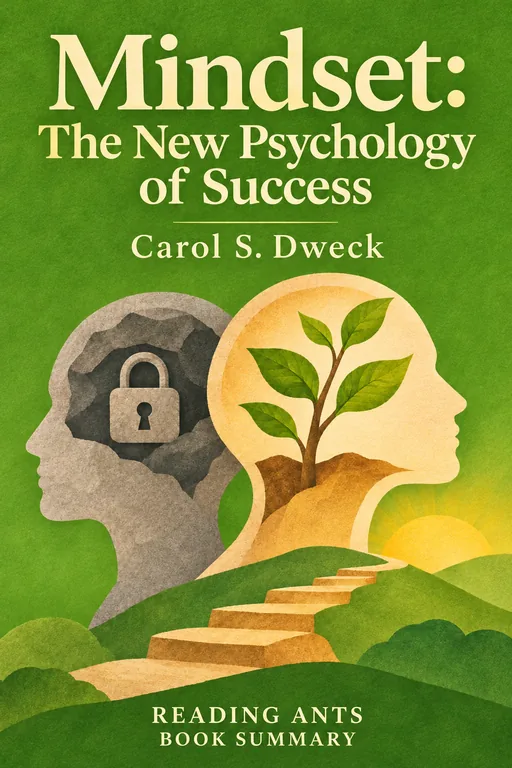
Mindset: The New Psychology of Success
Psychologist Carol Dweck shows that people who believe abilities can grow, a growth mindset, learn, cope with failure and achieve more than people who believe their talents are fixed.
Overview
Mindset: The New Psychology of Success was written by Carol Dweck, a professor of psychology at Stanford University, and published in 2006. Dweck had spent decades studying how children and adults respond to challenges and setbacks. She found that people hold one of two basic beliefs about their abilities. In a fixed mindset, intelligence and talent are seen as unchangeable traits that you either have or do not, so every task becomes a test of your worth. In a growth mindset, abilities are seen as qualities that can be developed through effort, strategies and help from others. The book explains how these mindsets develop and shape education, work, relationships and parenting.
Full Summary
1. The two mindsets
The idea: Dweck introduces the two mindsets through research. In one of her experiments, children were given puzzles of increasing difficulty. Those with a fixed mindset got discouraged when the puzzles got hard and said they were not smart. Those with a growth mindset were excited by the challenge and some said they hoped for harder ones. The difference was not in ability but in how they interpreted difficulty: as a sign of limits or as an opportunity to grow.
In real life: Two students receive the same low grade: one concludes “I’m bad at this,” and the other asks “What should I do differently?”
2. Inside the mindsets
The idea: The book explains how each mindset affects behavior. With a fixed mindset, people want to look smart, avoid challenges, give up easily, see effort as pointless and ignore useful criticism. With a growth mindset, people embrace challenges, persist when it’s hard, see effort as the path to mastery and learn from feedback. Dweck points out that most people have a mix of mindsets in different areas, and that mindsets can change.
In real life: Someone might have a growth mindset about sports but a fixed one about math, and recognizing that can be the first step toward change.
3. Mindsets in sports and business
The idea: Dweck describes how mindsets show up among champions and leaders. Successful athletes, she says, often have a growth mindset: they see failure as information and train relentlessly. In contrast, some talented athletes with fixed mindsets crumble after a loss. In business, leaders with a fixed mindset may surround themselves with flatterers and blame others for failures, while those with a growth mindset encourage honest feedback and learning, leading to stronger organizations.
In real life: A manager who welcomes questions and mistakes creates a team that improves faster.
4. Relationships and parenting
The idea: The same ideas apply to relationships. A fixed mindset can lead people to see conflict as a sign that a relationship is doomed, or to blame partners instead of working on problems. A growth mindset sees relationships as something that develops with effort. In parenting and teaching, Dweck stresses the effect of praise: praising children for being “smart” can make them cautious and afraid of failure, while praising effort, strategies and progress encourages them to try harder tasks.
In real life: Saying “You worked hard on that and found a clever way” supports learning better than “You’re so smart.”
5. Changing mindset
The idea: In the final chapters, Dweck explains how people can move toward a growth mindset. She suggests learning about the brain’s ability to change, noticing the “fixed-mindset voice” in one’s head, and talking back to it with a growth view. She recommends using the word “yet”: instead of “I can’t do this,” say “I can’t do this yet.” She emphasizes that change takes practice and that a growth mindset is not a quick fix.
In real life: Adding the word “yet” to statements like “I don’t understand fractions” changes them from a verdict into a plan.
6. A caution on false growth mindset
The idea: Dweck later warned of a misunderstanding she calls false growth mindset: simply praising effort, even if it doesn’t lead to progress, or telling everyone they have a growth mindset. A true growth mindset needs effort, good strategies, and help-seeking, and a plan for learning, not just encouragement. She also notes that mindset is not the only factor in success, and that schools and workplaces must provide support and resources.
In real life: A teacher who says “good effort” without helping a struggling student find better methods is not truly supporting growth.
Why It Matters
Mindset has sold millions of copies and has been translated into dozens of languages. It has had a major impact on education, with many schools adopting “growth mindset” language and programs, and on business, where companies talk about learning cultures. Dweck’s TED talk on the “power of yet” has been viewed by millions.
The book encouraged a shift from valuing innate talent to valuing learning and effort, which has helped many students feel more confident about trying challenging work.
It also led to a large body of research and classroom practice, and to important debates about how to apply psychological findings responsibly, which is part of why it is still discussed today.
Key Takeaways
- Abilities can grow. Effort and good strategies matter.
- Challenges are chances. Difficulty is part of learning.
- Failure is information. It shows what to try next.
- Praise effort and process. Avoid labeling people as smart or not.
- Use the word yet. It turns limits into plans.
What We Can Learn
The book teaches us to notice how we talk to ourselves about difficulty. When we catch a thought like “I’m just not good at this,” we can reframe it as a challenge to be worked on, with new strategies and support.
It also guides how we speak to others. Encouraging children and colleagues by acknowledging effort, strategy and improvement fosters resilience.
Finally, it reminds us that growth depends on environment as well as attitude. Schools, teams and families can create conditions in which people feel safe to try and fail.
Criticism and Counterpoints
Some researchers have found that the effects of growth mindset interventions are smaller than early studies suggested, and that results are inconsistent across different groups and settings. Large reviews have found modest benefits, especially for lower-achieving students, and others have failed to replicate some of Dweck’s original findings.
Critics also say the idea has been oversimplified in schools, where it is sometimes used to blame students for not trying hard enough, or to ignore structural problems such as poverty or poor teaching. Dweck herself has acknowledged these misuses. The core idea, that beliefs about ability influence learning, remains widely accepted but should be applied carefully.
Who Should Read It
This book suits readers from about age ten up to adults, including parents, teachers, coaches and managers. It is easy to read, with many examples. Teachers and parents may find the chapters on praise especially useful.
Want the whole book?
A summary is a taste, not the meal. Here is where to find the full book.
You reached the end 🎉
Nicely done. Mark this one as read, and we will suggest what to read next.
Read this next

Grit
Angela Duckworth
Psychologist Angela Duckworth argues that success depends not only on talent but on grit, a combination of passion and long-term perseverance, and shows how people can grow it in themselves and others.
🌱 Self-Improvement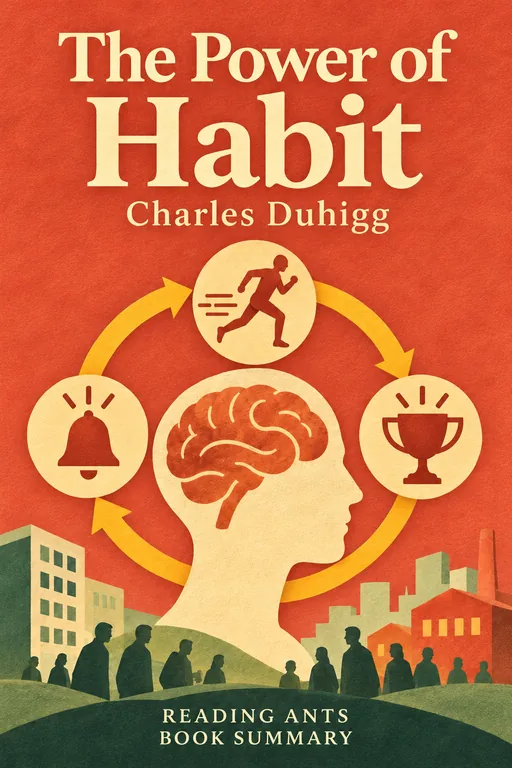
The Power of Habit
Charles Duhigg
Charles Duhigg shows that habits follow a loop of cue, routine and reward, and that by understanding the loop we can change our own habits, as well as those of companies and societies.
🌱 Self-Improvement
Outliers
Malcolm Gladwell
Malcolm Gladwell argues that extraordinary success comes not only from talent and effort but from hidden advantages of timing, place, culture and opportunity, so we should look at the whole story behind every "self-made" success.
🧩 Mind & Psychology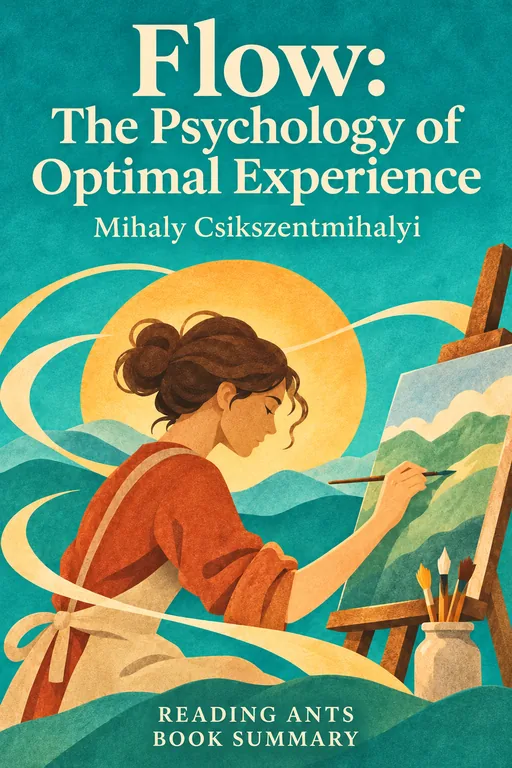
Flow
Mihaly Csikszentmihalyi
Psychologist Mihaly Csikszentmihalyi shows that people feel happiest not when relaxing but when fully absorbed in a challenging activity that matches their skills, a state he calls flow.
🧩 Mind & Psychology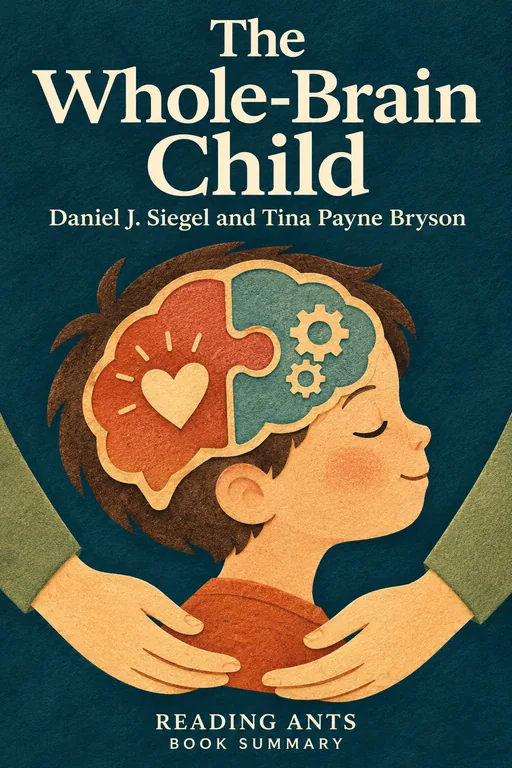
The Whole-Brain Child
Daniel J. Siegel and Tina Payne Bryson
Understanding how a child's brain develops helps parents respond to tantrums, fears and conflicts in ways that connect, calm and teach, so that different parts of the brain work together.
🎓 Parenting & Education
Atomic Habits
James Clear
Big changes in life come not from huge leaps but from tiny habits repeated every day, and you can build good habits (and break bad ones) by designing your life so the right choices are obvious, attractive, easy and satisfying.
🌱 Self-ImprovementWant something different?
Pick another topic and we will show you three books to start with.