
Outliers
Malcolm Gladwell argues that extraordinary success comes not only from talent and effort but from hidden advantages of timing, place, culture and opportunity, so we should look at the whole story behind every "self-made" success.
Overview
Outliers: The Story of Success was written by Malcolm Gladwell, a staff writer at The New Yorker, and published in 2008. An outlier is something that lies far outside the normal range, and Gladwell asks why some people become outliers in fields like sport, business and music. His answer is that we usually focus on individual qualities such as intelligence or ambition, while overlooking the world around them: the year they were born, the family and culture they came from, and the chances they happened to receive. The book mixes stories, statistics and research, and became a worldwide bestseller. It popularized the idea of the “10,000-hour rule.”
Full Summary
1. The Matthew effect and the importance of birth dates
The idea: Gladwell begins with Canadian junior hockey. He notes that a large share of elite players are born in the first few months of the year, because the age cutoff for youth teams is January 1, and children born early are older, bigger and more skilled when they are selected. They get extra coaching and games, which compounds their edge. This is an example of what the sociologist Robert Merton called the Matthew effect: those who start with a small advantage get more opportunities and widen the gap.
In real life: In a school class, a child who is almost a year older than classmates may seem more mature and get more attention and praise.
2. The 10,000-hour rule
The idea: Gladwell draws on research by the psychologist Anders Ericsson, who found that top violinists had practiced much longer than less successful ones, and suggests that around ten thousand hours of practice is needed to master a complex skill. He applies this to the Beatles, who played thousands of hours in clubs in Hamburg, Germany, before becoming famous, and to Bill Gates, who as a teenager had unusual access to a computer at his school in the 1960s and spent a huge amount of time programming. Opportunity to practice, he argues, is as important as talent.
In real life: A student who has a chance to use a good musical instrument or computer early has a chance to build skills that others never get.
3. Intelligence and the limits of IQ
The idea: Gladwell examines very high IQ. He discusses Lewis Terman’s long study of gifted children, whose results were mixed: most did well but few became world-famous. He also tells the story of Christopher Langan, a man with an extraordinarily high IQ who did not achieve prominence, partly because he lacked social support and practical know-how. Gladwell suggests that beyond a certain level, more intelligence does not guarantee more success, and that the ability to talk to people and navigate institutions, which he calls practical intelligence, often depends on upbringing.
In real life: Two equally bright students may do very differently if one knows how to ask teachers for help and the other has never been taught to.
4. Cultural legacies
The idea: In the second part, on legacy, Gladwell looks at how culture shapes behavior. He discusses a pattern of plane crashes involving a Korean airline, and argues that a culture of deference to authority made it hard for junior crew to speak up to captains, and that changing communication training helped. He also describes how the farming of rice in Asia, with its need for careful work through the year, may help explain why students from those cultures often do well in math. Such “legacies,” he says, can be lasting.
In real life: A workplace where junior staff are afraid to question the boss may miss important warnings.
5. Meaningful work and opportunity
The idea: Gladwell tells about the sons and daughters of Jewish immigrants who became leading lawyers in New York, partly because their parents had worked in the garment industry and taught them skills and values about work, and because they were born in the early 1930s, when the Depression had lowered the birth rate, so they faced less competition for schools and jobs. He adds that success often depends on three things: autonomy, complexity and a link between effort and reward, which make work meaningful.
In real life: A job that gives people some control, interesting problems and visible results tends to motivate them more.
6. A personal epilogue
The idea: In the final section, Gladwell traces the history of his own family in Jamaica. His mother, a Jamaican woman of mixed race, was able to attend good schools and later move to England, and these chances, shaped by history, class and race, helped lead to his own career. He suggests that if societies recognized how much success depends on opportunities, they could give more people a chance to develop their abilities.
In real life: Programs such as scholarships, mentoring and free libraries aim to give more young people the kind of breaks that successful people often received by luck.
Why It Matters
Outliers was an international bestseller, and its phrase “the 10,000-hour rule” entered popular culture. It changed how many readers think about success, by drawing attention to the role of context and opportunity and challenging the myth of the self-made person. It has been used in classrooms, businesses and sports programs to discuss practice and fairness.
It also helped make social science research accessible to a large audience, joining Gladwell’s other books, such as The Tipping Point and Blink, in a wave of popular writing about psychology and society.
Key Takeaways
- Context matters. Success depends on timing, place and opportunity.
- Practice takes time. Mastery requires thousands of hours of work.
- Small advantages grow. Early edges can snowball.
- Culture shapes behavior. Inherited habits affect how we work.
- Opportunity should be shared. Society can create more chances for people to develop their abilities.
What We Can Learn
The book encourages us to be humble about success and compassionate about failure. When we look at someone’s achievement, we can ask what advantages and chances helped them, and when we see struggle, we can ask what was missing.
It also stresses the value of practice and persistence. Even if talent and luck matter, steady, deliberate work is a part of every skill we admire.
Finally, it invites us to think about how to design fairer systems, such as school entry rules that avoid giving advantage to the oldest children, or programs that open doors for those who would otherwise be left out.
Criticism and Counterpoints
Anders Ericsson himself said that Gladwell misrepresented his research. The “10,000 hours” figure was an average from a small study of violinists, not a magic number, and the quality of practice matters more than quantity. Other studies show that the amount of practice explains only part of the differences in skill, and that talent and genes also play a role.
Critics also say that Gladwell cherry-picks stories and uses selective data to fit a neat thesis, and that some examples, such as the cultural explanation for plane crashes, are too simple. Others note that stressing luck may understate people’s effort and agency. Still, many appreciate the book as an engaging prompt to think about success.
Who Should Read It
This book suits teenagers and adults. It is easy to read and full of stories, and it works well for discussion. Readers should treat its claims as ideas to test, not as final conclusions.
Want the whole book?
A summary is a taste, not the meal. Here is where to find the full book.
You reached the end 🎉
Nicely done. Mark this one as read, and we will suggest what to read next.
Read this next
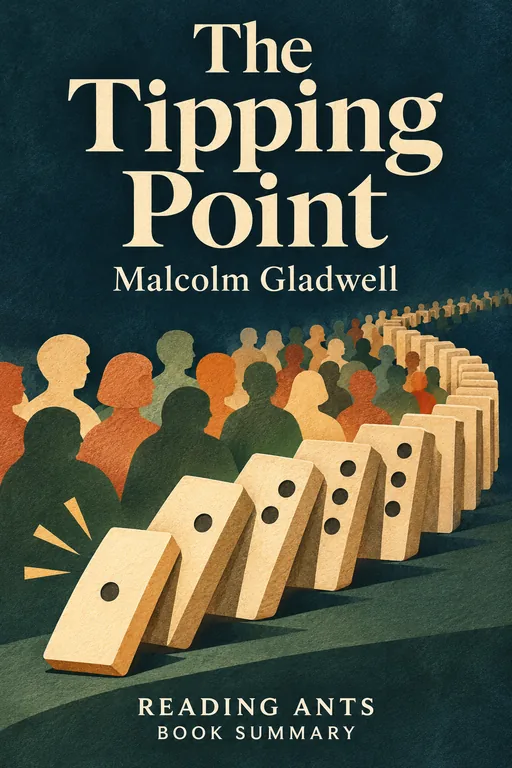
The Tipping Point
Malcolm Gladwell
Ideas, products and behaviors spread like epidemics, and Malcolm Gladwell shows that small changes in a few key people, messages and circumstances can suddenly tip a trend into a major wave.
🧩 Mind & Psychology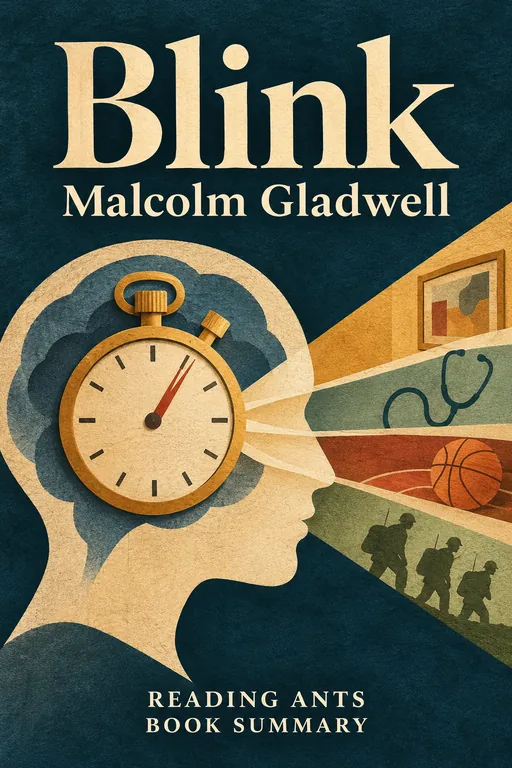
Blink
Malcolm Gladwell
Malcolm Gladwell explores how quick, unconscious judgments, made in the blink of an eye, can be remarkably accurate, but can also be misled by prejudice and pressure, and how we can learn to trust and improve our instincts.
🧩 Mind & Psychology
Grit
Angela Duckworth
Psychologist Angela Duckworth argues that success depends not only on talent but on grit, a combination of passion and long-term perseverance, and shows how people can grow it in themselves and others.
🌱 Self-Improvement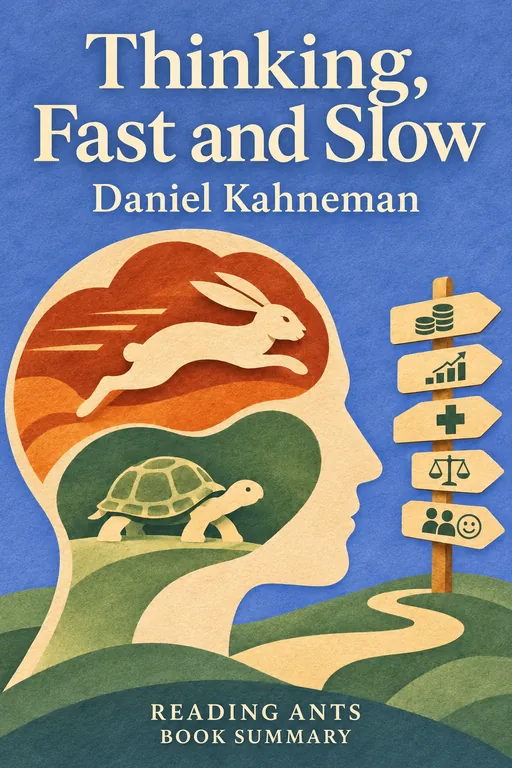
Thinking, Fast and Slow
Daniel Kahneman
Our minds run on two systems, a fast, intuitive one and a slow, careful one, and understanding how the fast system fools us can help us make better decisions about money, risk, work and happiness.
🧩 Mind & Psychology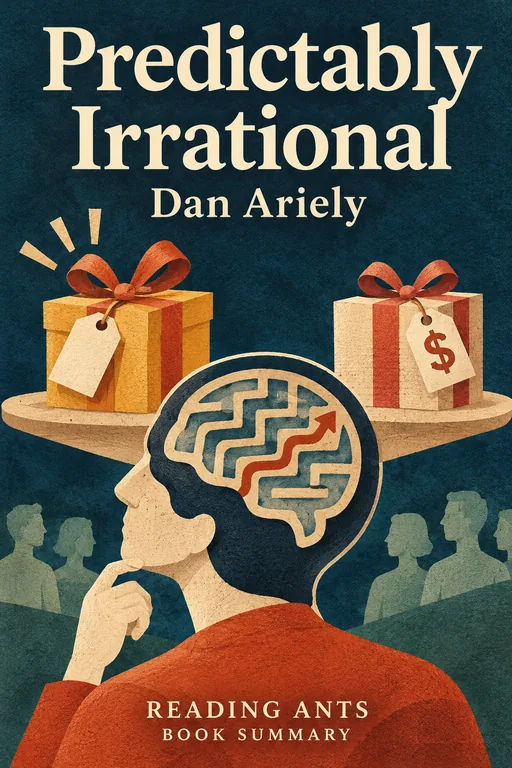
Predictably Irrational
Dan Ariely
Behavioral economist Dan Ariely uses entertaining experiments to show that people's decisions are shaped by predictable mental quirks, such as relativity, the lure of "free" and social norms, rather than by cool, rational calculation.
🧩 Mind & Psychology
Nudge
Richard H. Thaler and Cass R. Sunstein
Because people are not perfectly rational, the way choices are presented strongly affects what they choose, and designers of choices can gently steer people toward better decisions without taking away their freedom.
🧩 Mind & PsychologyWant something different?
Pick another topic and we will show you three books to start with.