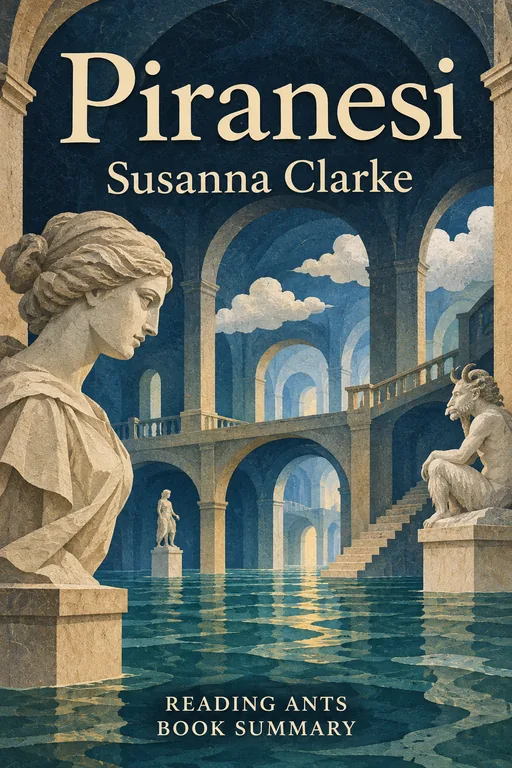
Piranesi
A man living alone in an endless, flooded house of statues slowly discovers that his gentle world is a trap, and that he was once someone else.
Overview
Piranesi is a short fantasy novel by Susanna Clarke, published in 2020, and it won the Women’s Prize for Fiction. It is told in the form of journals written by a man who lives in a huge house of marble halls, with tides that flood the lower levels and clouds that drift in the upper ones. He believes that he is a scholar who explores the House, and he is content, curious and kind. As he begins to find clues that other people have been in the House, he must decide what to trust. The book is a mystery, a fairy tale and a story about memory, and it is quiet, strange and moving.
Main Characters
- Piranesi: the narrator, a gentle explorer who loves the House.
- The Other (Valentine Ketterley): a smooth, secretive man who visits twice a week.
- 16 (Sarah Raphael): a young police investigator, who leaves messages for Piranesi.
- The Dead: the bones of thirteen people that Piranesi tends with care.
Full Summary
The House
The book opens with Piranesi’s description of the House: an immense building of halls and statues, with oceans that rise and fall inside. He knows only one living person: the Other, who comes twice a week. He also visits the skeletons of the dead, and he cares for them, bringing food and respect. He writes in his journal about the tides, the birds and the statues, with a childlike joy.
He is happy, and he sees the House as a place of beauty and kindness. He has few possessions, and he catches fish and gathers seaweed to eat. The Other, who is polite and calm, brings him supplies and asks him to help with research into a lost knowledge that he believes lies in the House.
The Other’s Request
The Other calls the narrator “Piranesi,” a name that he does not remember choosing. He asks Piranesi to look for traces of a magical knowledge, and to keep a record of the places that he explores. In return, the Other brings him new clothes, tools and food. Piranesi trusts him.
Then the Other tells Piranesi that a third person is coming, someone dangerous, called 16, and that Piranesi must not speak to her. Piranesi, who has never seen anyone but the Other, becomes curious.
The Journals
Piranesi begins to read his old journals, written by himself, and finds that dates and notes do not match what he thinks he remembers. He also pieces together fragments of old papers showing that he was once known by a different name. He realizes that the Other has been lying, and that the world outside the House exists.
He also finds messages left by 16, who turns out to be Sarah Raphael, a woman who has been trying to help him. She warns him that the Other is dangerous, and that he must be careful.
The Truth
Piranesi learns that he is actually Matthew Rose Sorensen, a man who came to the House after looking into the strange work of Laurence Arne-Sayles, a missing scholar, and who was trapped there by the Other, whose real name is Valentine Ketterley. Piranesi’s name for himself was given to him by the Other. The House slowly wears away a person’s memory, and the Other used this to keep Matthew compliant, while he searched for magical knowledge. The House is a world apart, built by powerful forces, and few people know of its existence.
The Other has also left others to die. The bones that Piranesi has been caring for belong to people who came before. He realizes that he has been a prisoner, and that the gentle world he loves has been used against him.
Escape
Piranesi decides to act. With the help of 16, he faces the Other, and the Other is drowned in an exceptional tide of the House. Piranesi, who has regained his memory, is urged to return to the world he came from. He is torn, because the House has been his home, and he is not sure that he can live in the outside world.
He leaves the House with Sarah Raphael, the detective who has been looking for him, and goes back to London. In the real world, he is lost and homesick. He sees the noise and the crowds, and he longs for the quiet of the House.
Return
In the final scenes, Piranesi accepts that he is both Piranesi and Matthew. He is no longer the innocent explorer, but he has kept some of his gentleness. He returns to the House to say goodbye, and sees that it is still beautiful. He realizes that he can carry its kindness with him into the real world.
Why It Matters
Piranesi was a surprise success, praised for its imagination, its lovely language and its quiet strangeness. It came sixteen years after Clarke’s first novel, and it won critical acclaim and many awards. It is a rare novel in which the main character is kind, and in which kindness is shown as a strength.
The book has also been discussed as a story about trauma, and about the way a person can survive by creating a world of their own. Readers see in it themes of captivity, memory and the question of what a person is when he forgets who he was.
Key Takeaways
- Wonder is a form of strength. Piranesi’s curiosity keeps him alive.
- Memory shapes identity. Piranesi must recover his past to be whole.
- Manipulation can look like kindness. The Other pretends to help.
- A person can be more than one self. Piranesi and Matthew are both real.
- Beauty can be found anywhere. Piranesi loves a world that others would fear.
What We Can Learn
The book shows that attention and gratitude can make a hard life bearable. Piranesi is cut off from everything, but he finds joy in small things, such as the birds and the tides. We can try to notice and appreciate small details of our own days.
It also warns that people who present themselves as friends may be using us. The Other is polite and generous, but he uses Piranesi for his own ends. Learning to check whether kindness is real, and to ask questions, is a useful skill.
Finally, the story reminds us that who we were and who we are can both be part of us. Growth does not mean erasing the past, but making room for it.
Criticism and Counterpoints
Some readers find the book too slow and strange, with little action for most of its length and a plot that depends on a twist. Others say that the explanation of how the House works is vague, and that the villain is a stock figure, a manipulative academic. A few find the ending, in which the hero returns to the world, rushed.
Still, the book is widely loved for its tone and its quiet beauty.
Who Should Read It
This book is for teenagers and adults who like quiet, imaginative stories. It has a few dark moments, but it is gentle in tone. It is a good choice for readers who enjoy puzzles, and for anyone who wants a short, unusual and thoughtful fantasy.
Want the whole book?
A summary is a taste, not the meal. Here is where to find the full book.
You reached the end 🎉
Nicely done. Mark this one as read, and we will suggest what to read next.
Read this next
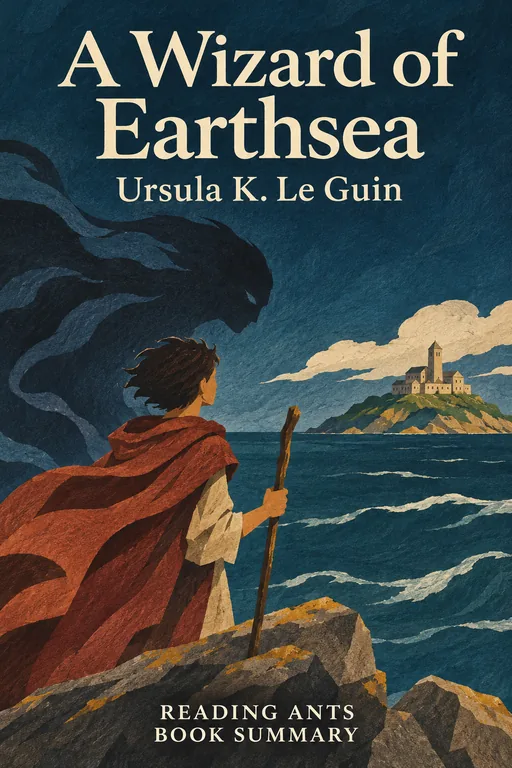
A Wizard of Earthsea
Ursula K. Le Guin
A proud, gifted boy named Ged becomes a powerful wizard, but his arrogance releases a dark shadow that he can defeat only by facing it.
🚀 Sci-Fi & Fantasy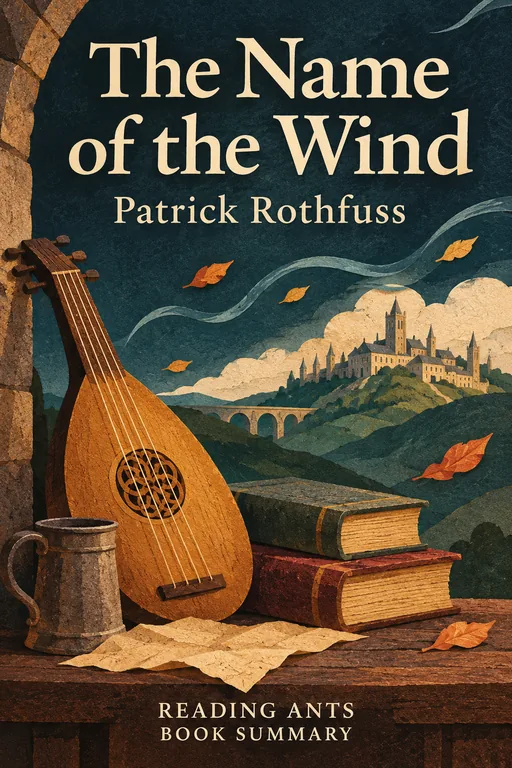
The Name of the Wind
Patrick Rothfuss
A famous hero who is now hiding as an innkeeper tells the true story of his youth: how a boy from a family of traveling performers became the most notorious wizard of his age.
🚀 Sci-Fi & Fantasy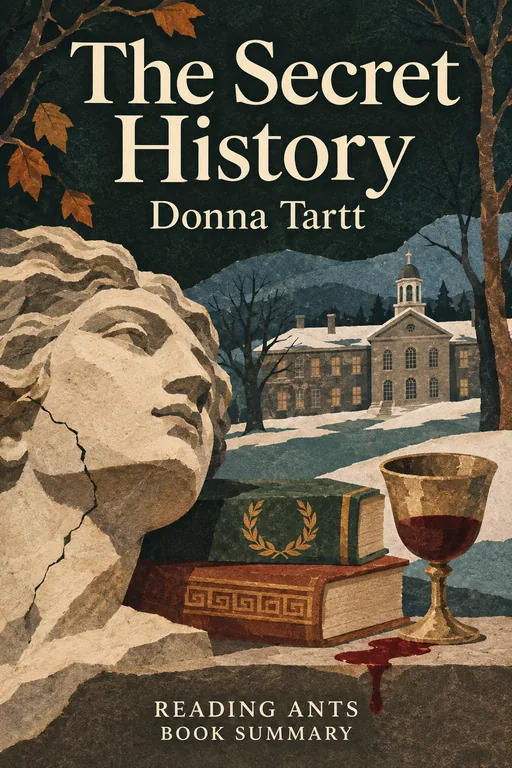
The Secret History
Donna Tartt
A California boy named Richard Papen, who transfers to a Vermont college and joins a small circle of classics students, is drawn into a murder, and the book follows how a group of brilliant friends destroy each other.
✨ Modern Fiction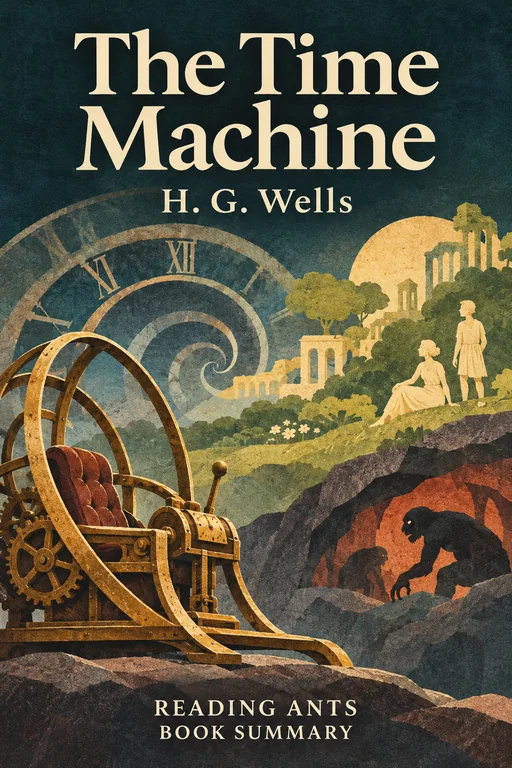
The Time Machine
H. G. Wells
A Victorian inventor, known only as the Time Traveller, builds a machine that carries him to the year 802,701, where he finds humanity split into two species, the gentle Eloi and the monstrous Morlocks, and then to a dying Earth.
🚀 Sci-Fi & Fantasy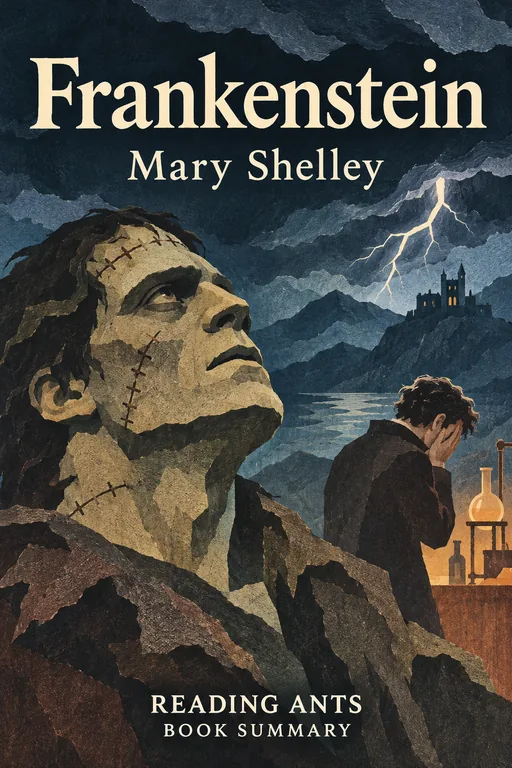
Frankenstein
Mary Shelley
A young scientist creates a living being from dead body parts, then abandons it in horror, and his rejected creation, longing for love, turns to revenge.
🚀 Sci-Fi & Fantasy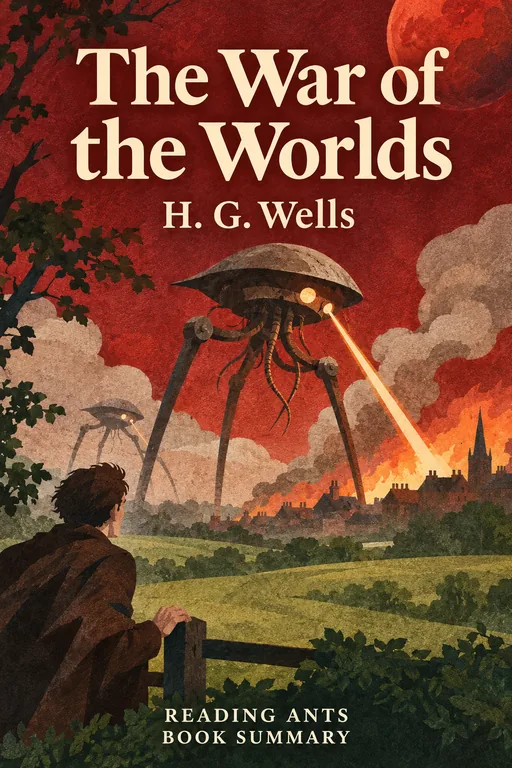
The War of the Worlds
H. G. Wells
Martians land in the English countryside with war machines and heat-rays that overwhelm human armies, until the invaders are brought down by the one thing humans never expected: Earth's smallest germs.
🚀 Sci-Fi & FantasyWant something different?
Pick another topic and we will show you three books to start with.