 Reading Ants
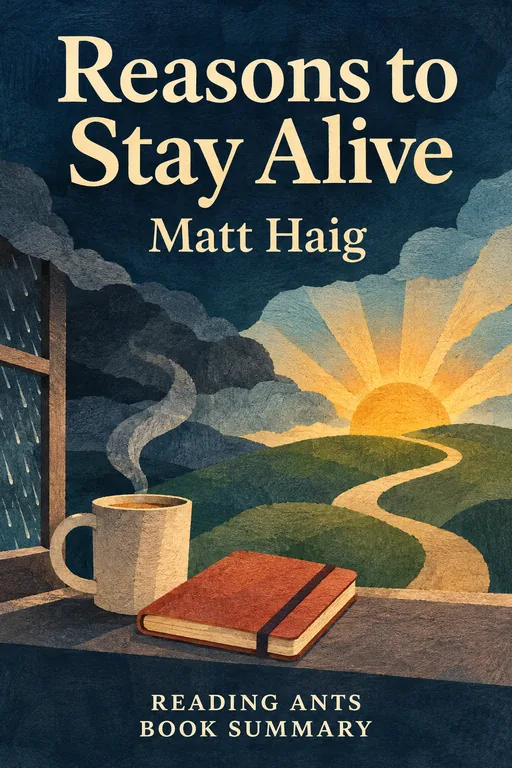
Reasons to Stay Alive
Novelist Matt Haig describes how he lived through severe depression and anxiety, how he found his way back, and why he believes that hope is always possible, even when it feels out of reach.
Overview
Reasons to Stay Alive was published in 2015 by Matt Haig, a British author of novels for adults and children. It is a short, honest account of a mental health crisis he experienced in his twenties, when he was overwhelmed by depression and anxiety and thought about ending his life. The book is written in short chapters, lists and notes, rather than as a traditional story, because that is how a troubled mind can feel. It is meant to comfort people who suffer, and to help others to understand what depression is like. The book discusses suicide and is not suitable for very young readers.
Full Summary
1. The edge
The idea: Haig begins with the day when he was twenty-four, living abroad with his partner, and felt that he could no longer carry on. He describes the moment of crisis, a suicidal crisis in which he came close to ending his life, and this summary leaves out the details. He says that the thought of the people who loved him held him back, and that afterward a small part of him found the strength to fight the illness. He wants to say plainly that the worst moments can pass, and that being alive allowed him to experience much good later.
In real life: A small, brief reason to wait, such as the thought of someone who loves you, can be enough to get through a dark hour.
2. What depression feels like
The idea: Haig explains that depression is not simply sadness. It can be like a dark cloud, or a feeling of being cut off from oneself and the world, mixed with fear and exhaustion. He describes anxiety, panic attacks and the trouble of doing ordinary things. He says that it is an illness of the mind that is real, even if it cannot be seen, and that people who have it are not weak or lazy.
In real life: A person with a broken leg gets a cast, but someone with depression may have to explain why they cannot get out of bed.
3. The long road back
The idea: The author describes how recovery took time and was not a straight line. There were bad days after good ones. He mentions the support of family and, above all, of his partner, Andrea, who stayed with him. He says that medication did not work for him, though he accepts that it helps other people, and that he learned about himself and his illness by finding what made him feel better. He stresses that his story is a personal one, and that what worked for him may not work for everyone.
In real life: Progress can feel like a staircase with some steps downwards, but the overall direction can still be up.
4. What helped
The idea: Haig lists small things that gave him comfort and a sense of life: reading and writing, exercise such as walking and running, yoga and meditation, sunshine, sleep, and the company of people he trusted. He talks about the benefit of telling others what he was going through. He says that books were a lifeline, because they showed that other people had felt the same.
From the book: He includes lists, such as things that people with depression should know, and things he wishes people had told him, to give the reader something quick to hold on to.
In real life: A short walk, a favorite song or a text to a friend may not fix everything, but it can lighten a hard day.
5. Stigma and speaking out
The idea: The book argues that shame and silence make mental illness worse. Haig says that society still treats it as something to hide, and that people should be able to talk about it as they would about a physical illness. He also argues that the modern world, in which an economy can profit from people being discontented, may add to anxiety, and he describes how slowing down and living in the moment, through practices such as yoga and meditation, helped him.
In real life: If a classmate says that they have been feeling very low, a calm, kind reply may be the first step toward help.
6. Hope
The idea: The final chapters return to the main message: that the darkness is not permanent, and that life can be worth living again. Haig says that he is now glad to be alive, and that recovery, though it can be slow, is possible. He writes that, having felt what it is to feel nothing, he came to appreciate life and the things he once took for granted, and that he is grateful for a second chance. He ends with encouragement to hold on, and to ask for help.
In real life: Remembering a time when things got better is a reminder that bad times change.
Why It Matters
Reasons to Stay Alive became a bestseller and brought a frank conversation about depression and suicide to many readers who might not have picked up a clinical book. Many readers have written that it helped them to feel less alone, to speak to family or doctors, or to understand someone they love. Its short, simple form made it easy to read even when concentration was hard. The book contributed to a wider public discussion about mental health, and showed that a well-known writer could talk openly about it. For many people, its main gift is a voice that says: you are not the only one, and you can get through this.
Key Takeaways
- Depression is an illness. It is not a weakness or a choice.
- Hope is possible. Dark periods can lift, even if it takes a long time.
- Recovery is not a straight line. Setbacks do not erase progress.
- Small things help. Reading, walking, rest and company can support healing.
- Talk and seek help. Silence and shame make things harder.
What We Can Learn
If you or someone you know is struggling, the book suggests that you should talk to someone you trust, such as a parent, a friend, a teacher or a doctor, and that you should not wait. Be gentle with yourself and others: you cannot see what someone else is carrying. Notice small things that give comfort, and make time for them. If you want to support a friend, listen, stay with them, and do not try to argue them out of how they feel. If you are in immediate danger or are thinking of harming yourself, contact your local emergency number or a crisis helpline right away.
Criticism and Counterpoints
The book is one person’s story, and what helped the author, such as his support network and certain activities, will not work for everyone. One reviewer worried that his comments about medication might discourage readers who could benefit from it, and depression can need professional treatment. Others note that the text is informal and fragmentary, and that it is a personal, literary account rather than a medical explanation. A few readers find the upbeat message too simple, or expected more from it. Some people who are in a very low state find any book difficult. The author acknowledges that medication helps some people, and readers should seek medical help when they need it.
Who Should Read It
This book is for people who have experienced depression or anxiety, and for family and friends who want to understand. It is short and gentle in tone, but it discusses suicide, so it may be hard to read when you are very low, and it is not for young children. If you are struggling, please also reach out to a trusted person or a local helpline.
Want the whole book?
A summary is a taste, not the meal. Here is where to find the full book.
You reached the end 🎉
Nicely done. Mark this one as read, and we will suggest what to read next.
Read this next

The Midnight Library
Matt Haig
On the night she decides to end her life, a depressed woman enters a library between life and death, where each book lets her try a different life, and she learns what makes living worthwhile.
✨ Modern Fiction
Man's Search for Meaning
Viktor E. Frankl
A psychiatrist who survived the Nazi concentration camps explains that even in the worst suffering, people can choose their attitude, and that finding a reason to live is what gives us the strength to endure.
👤 Real Lives
Daring Greatly
Brene Brown
Researcher Brené Brown argues that vulnerability, the willingness to show up and be seen when outcomes are uncertain, is not weakness but the foundation of courage, connection and creativity.
🌱 Self-Improvement
A Monster Calls
Patrick Ness
A thirteen-year-old boy whose mother is dying is visited at night by a giant tree monster, who tells him three stories and demands that he tell a fourth: the truth.
🎒 Young Adult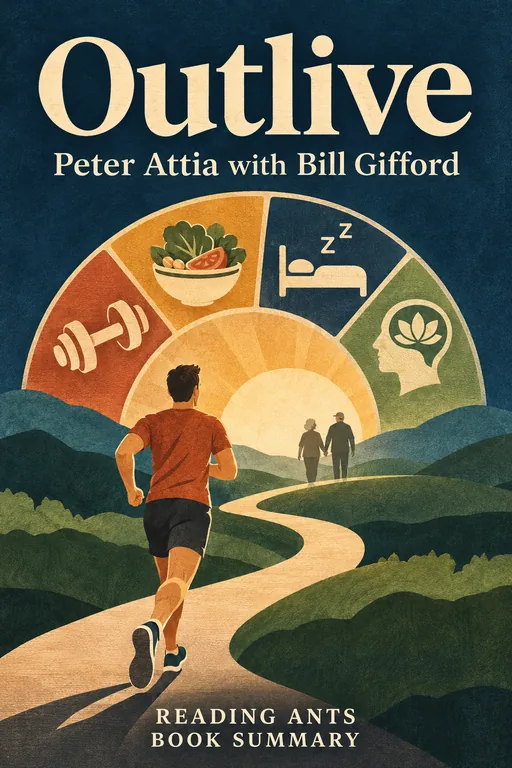
Outlive
Peter Attia with Bill Gifford
To live longer and better, we should work early to prevent the chronic diseases that kill most people, by training the body with exercise, paying attention to nutrition and sleep, and caring for our mental health.
🍎 Health
The Blue Zones
Dan Buettner
Dan Buettner visits places around the world where people live unusually long, healthy lives and finds common habits in diet, movement, purpose and community that the rest of us can borrow.
🍎 HealthWant something different?
Pick another topic and we will show you three books to start with.