 Reading Ants
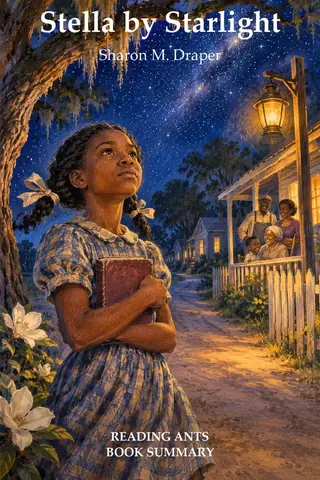
Stella by Starlight
In 1932 North Carolina, an eleven-year-old Black girl who loves to write watches her community face the Klan when its men try to register to vote.
Overview
Stella by Starlight is a 2015 novel by Sharon M. Draper, set in the small town of Bumblebee, North Carolina, in 1932, when Black families lived under segregation and the threat of violence. Stella Mills is eleven, and she loves to write, often at night under the stars. One evening she and her younger brother Jojo see Klansmen burn a cross across the pond near their home, and the fear it brings changes the whole community. As the adults decide to register to vote, the Klan strikes back. The story shows a community’s courage, and a girl finding her voice. Draper has said that she drew on memories of her own grandmother, who was also named Stella Mills.
Main Characters
- Stella Mills: the eleven-year-old narrator, who loves to write.
- Jojo: her eight-year-old brother.
- Mama and Papa: her parents.
- Mrs. Grayson: her teacher, who encourages her writing.
- Pastor Patton: the minister who urges the congregation to vote.
- The Spencer family: neighbors, including Mr. and Mrs. Spencer and their daughter Hazel.
- Spoon Man: a traveling storyteller.
- Dr. Hawkins and his son Tony: the Black doctor and his boy.
- Dr. Packard and his daughter Paulette: the white doctor, who treats only white patients, and his daughter.
Full Summary
The Fire at the Pond
One night Stella and her brother Jojo hide among the trees and see men in white robes burn a cross by the pond. Their parents tell the Black men of the community, and the grown-ups gather to talk about what it means. Stella has always seen how unequal the town is: the white children have better schools, and the Black school gets their hand-me-downs. Dr. Packard, the white doctor, treats only white patients, and Stella suspects that he is one of the Klan.
Spoon Man and the Eagle
A traveling storyteller known as Spoon Man comes to town. At a potluck supper he tells a story about an eagle who believes that he is a chicken. His story stays with Stella and, as the weeks go by, it motivates her to act. Stella herself loves to write, and she sneaks out at night to write under the stars. Her teacher, Mrs. Grayson, encourages her to enter a newspaper contest. Stella writes about the Klan, but she does not win.
Registering to Vote
Pastor Patton urges his church to vote. Stella’s father and Mr. Spencer decide to register, and Pastor Patton goes with them. The white officials make it hard, asking absurd questions to catch the men out, but the men refuse to leave until they are approved. Stella goes along and sees how much courage it takes.
The Burning
Soon afterward the Klan burns down the Spencers’ house. Hazel Spencer goes missing, and Stella finds her safe. The town hails Stella as a hero, and Mrs. Spencer gives her a typewriter. Stella uses it to start her own newspaper, which she calls Stella’s Star Sentinel.
Fear and Injury
The town’s fear grows. Tony Hawkins, the son of the Black doctor, is attacked by two white men while he is out getting medicine for Jojo. Then Mama is bitten by a rattlesnake, and Dr. Packard refuses to help. A kind white neighbor fetches Dr. Hawkins, who saves Mama with antivenom, though she is left with a limp.
The Pond Again
One night Stella rescues a drowning girl from the pond, and the girl turns out to be Paulette, Dr. Packard’s daughter. Paulette tells Stella that her father hits her, and she reveals that he is involved with the Klan. Stella has to look at the white girl in a new way, and see that hatred can hurt even those who spread it.
Christmas
The story ends at the Christmas pageant, where the nativity scene is cheerful and goes comically wrong. Stella shares her hopes for the future through her writing. The ending is hopeful, with a girl who has found her voice and a community that has found its strength.
Words and Courage
Beneath the dramatic events, the book is about the power of words. Stella loves writing, and the pieces that she writes under the stars become her way of thinking about what is happening around her. The men who register to vote must use their words too, as they answer absurd questions designed to make them fail. Spoon Man’s story of the eagle who thinks he is a chicken stays with Stella as she thinks about her own voice. By the end, her typewriter and her newspaper are signs of the voice that she will use in time.
Why It Matters
Stella by Starlight is a novel about the civil rights struggle a generation before the famous marches. It shows that the effort to vote and to be safe began long before the 1960s. Kirkus Reviews named it one of the best books of 2015 and called it a Jim Crow-era story that does not sugar-coat the past.
It is also a story about the power of writing. Stella’s writing, and the typewriter she is given, are symbols of the voice she will use. The book reminds readers that ordinary families, not only famous leaders, took part in the long struggle for equal rights.
Key Takeaways
- Voting was a fight. Black citizens faced absurd tests and threats to register.
- Community is strength. Neighbors help one another after the fire.
- Everyone has a voice. Stella finds hers in writing.
- Hate hurts everyone. Even Paulette, a white girl, suffers because of her father.
- Courage takes many forms. Stella helps save Hazel and Paulette.
What We Can Learn
If you have a talent that you are shy about, Stella’s story encourages you to keep working at it, and to share it when you are ready. Many writers begin in secret, as Stella does, and find their courage later.
The book also teaches us how recent some of the injustices in American history are, and why the right to vote is precious.
Finally, it shows that kindness can cross even the lines drawn by hatred, as when Stella rescues Paulette. Her compassion for Paulette is a quiet act of courage.
Criticism and Counterpoints
Some readers feel that the story of Paulette and her father is left unresolved, and that Dr. Packard’s character does not really change. Others find that there are many events and a large cast, so that the plot is crowded. The violence, including the cross burning and the fire, may upset younger children. Kirkus Reviews calls the book honest rather than sugar-coated, and many teachers praise it for its warmth.
Who Should Read It
This book suits readers from about ten to fourteen who are interested in history and civil rights, and families who want to talk about voting and racism. It is a good companion to classroom study of the Jim Crow era. Because of the Klan scenes and the near-drowning, it is best read with some adult support.
Want the whole book?
A summary is a taste, not the meal. Here is where to find the full book.
You reached the end 🎉
Nicely done. Mark this one as read, and we will suggest what to read next.
Read this next
Roll of Thunder, Hear My Cry
Mildred D. Taylor
A Black family in 1930s Mississippi fights to keep their land and their dignity in the face of racism, and a young girl learns what it means to stand up.
🎒 Young Adult
The Watsons Go to Birmingham - 1963
Christopher Paul Curtis
A funny family from Flint, Michigan, drives south to Alabama in the summer of 1963 to straighten out their troublemaking oldest son, and finds themselves close to one of the worst crimes of the civil rights era.
🧸 Children's Books
Brown Girl Dreaming
Jacqueline Woodson
A poet tells the story of her childhood in the 1960s and 1970s, moving between South Carolina and New York, and discovering her love of words.
🎒 Young Adult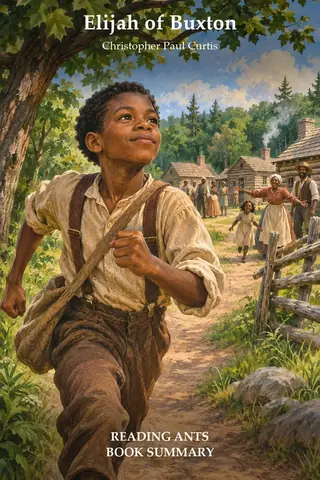
Elijah of Buxton
Christopher Paul Curtis
A funny, tender-hearted boy who is the first child born free in a Canadian settlement of former slaves is forced to learn what freedom cost when he follows a thief across the border into the United States.
🧸 Children's Books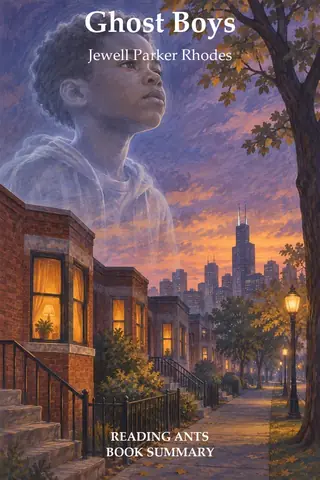
Ghost Boys
Jewell Parker Rhodes
A twelve-year-old boy shot by a police officer becomes a ghost who watches what happens to his family and to the officer's daughter, and asks the living to bear witness.
🧸 Children's Books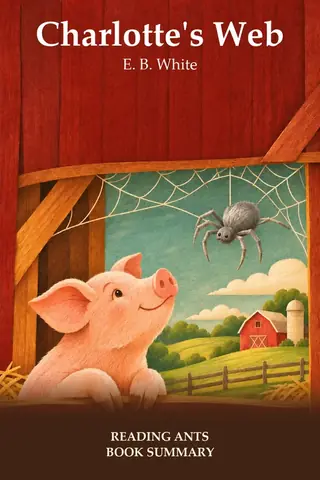
Charlotte's Web
E. B. White
A lonely pig named Wilbur learns he is going to be killed, and his clever friend Charlotte, a spider, comes up with an amazing plan to save his life.
🧸 Children's BooksWant something different?
Pick another topic and we will show you three books to start with.