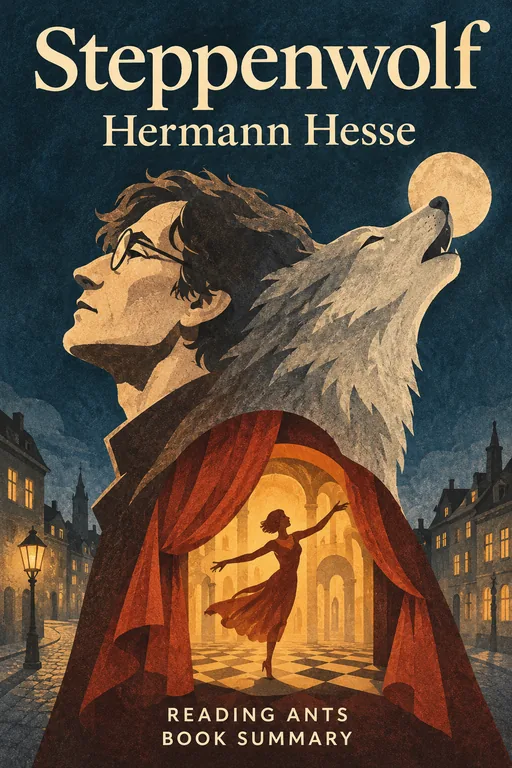
Steppenwolf
Original title: Der Steppenwolf
A lonely, middle-aged writer who feels half man and half wolf is drawn out of despair by a strange young woman and a journey through a surreal theater of the soul.
Overview
Steppenwolf is a novel by the German-Swiss writer Hermann Hesse, published in 1927. It is set in a German-speaking city in the 1920s, after the First World War. Its hero, Harry Haller, is a scholar who feels at odds with modern life and who often thinks of ending his life. The book mixes realistic scenes with dreams and visions, and it is partly a diary and partly a fantasy. It asks whether a single person can contain many selves, and how one can find joy in a world that seems shallow. The book contains drug use, sexual themes and the subject of suicide.
Main Characters
- Harry Haller: the “Steppenwolf,” a gloomy, cultured man in his late forties, who feels trapped between his human side and his wolfish side.
- Hermine: a clever, free-spirited young woman who becomes Harry’s guide and friend.
- Maria: a warm, sensual young woman who brings Harry physical joy.
- Pablo: a jazz saxophonist, relaxed and generous, who introduces Harry to the Magic Theater.
- The landlady’s nephew: a practical man who writes a short introduction about Harry.
Full Summary
A Lodger’s Notes
The book begins with a preface by the nephew of Harry’s landlady, who describes Harry as a strange but gentle lodger. Harry keeps odd hours, drinks too much and reads at all times. He disappears one day, leaving behind a manuscript, which the nephew decides to publish.
In his manuscript, Harry describes himself as the Steppenwolf, a creature who does not belong to the bourgeois world, but who also cannot escape it. He loves Mozart and Goethe, but he despises modern society. He has given himself permission to end his life, if he chooses, on his fiftieth birthday, as a kind of escape that he keeps in reserve.
The Treatise
One night, as Harry walks through the city, he meets a man carrying a sign advertising a “Magic Theater,” which is “for madmen only.” The man hands him a pamphlet, “Treatise on the Steppenwolf,” which seems to describe Harry exactly. It tells him that he sees himself as being made of two halves, man and wolf, but that in reality he has many more selves, thousands of them.
The pamphlet suggests that humor and acceptance, and not suicide, are the way out. Harry is struck by it, but he is not yet convinced.
Hermine
In a tavern, Harry meets Hermine, a young woman who seems to know him. She is direct, and she orders him around. She teaches him to dance, a skill he has always scorned, and she introduces him to the lighter side of life. He begins to feel more alive than he has in years.
Hermine also introduces him to Maria, a lover who delights him, and to Pablo, a musician who plays jazz, a music that Harry first thinks vulgar. Harry learns to enjoy the music, and the simple pleasures that he once despised.
The Masked Ball
At a grand masked ball, Harry loses himself in dancing and in the crowd, and he feels a rare joy. At the end of the night, Hermine appears and takes him to a hidden room, where he sees her as she really is. Pablo then invites him to the Magic Theater.
In the theater, Harry sees a series of strange rooms behind doors, each of which shows a different side of himself. He imagines himself in a great war between humans and machines, in love with many women, and in a fantasy of being a murderous wolf.
Judgment
In a final scene, Harry sees Hermine lying with Pablo, and, in a mix of jealousy, confusion and her earlier request that he one day kill her, he stabs her. Pablo explains that it was a mistake, and that Hermine has not really been killed, but that she has become a part of the game. Harry is then put on trial by the immortals, who judge him for killing a girl in a fantasy.
He is not condemned for the killing, but for taking the game too seriously. His sentence is to be laughed at, and to be shut out of the Theater for a time. Harry decides that he will learn to laugh, and to play the game of life again, however many times he must. The novel ends with a note of hope.
Why It Matters
Steppenwolf became enormously popular, particularly in the 1960s, when young people around the world embraced its themes of alienation, spiritual search and rebellion against convention. It was translated into many languages and made a deep impression on readers in the United States, and a rock band later took its name from the book. Hesse, who received the Nobel Prize in Literature in 1946, used the novel to explore psychology, and the ideas of Carl Jung had an influence on the story. It remains one of the best-known works of twentieth-century German literature.
Key Takeaways
- We contain many selves. Harry’s idea of being two people is too simple.
- Humor can heal. The immortals’ laughter is the cure for his despair.
- Joy is a skill. Harry has to learn to dance and enjoy simple pleasures.
- Society can feel hollow. Harry sees the shallowness of the age.
- Life is a game to be played. Taking everything too seriously leads to pain.
What We Can Learn
Steppenwolf reminds us that people are more complex than the labels they give themselves. If you think of yourself as “a loner” or “a failure,” the book suggests that you may be many other things as well. It encourages us to be open to new parts of ourselves.
The story also shows how important it is to find joy in simple things, such as music, dancing and friendship, and not to put them down as unworthy. Harry’s intellect has cut him off from life, and Hermine helps him back. Finally, the book carries a gentle warning: if thoughts of suicide become strong, it is important to reach out to a friend, family member or a professional for help.
Criticism and Counterpoints
Some critics find the book’s final part, the Magic Theater, confusing and overly strange. Others see Harry as self-pitying and the book’s attitude to women, who exist mostly to help him, as limited. Its use of drugs and sex was controversial in its time. Hesse’s work has also been said to be a bit naive in its spirituality. Many readers still love it, but it is not for everyone.
Who Should Read It
This book is for older teens and adults who enjoy philosophical fiction and have felt like outsiders. It is short but demanding, and the last section is strange. Readers who want realistic stories may find it difficult, while those who like inward journeys may find it moving.
Want the whole book?
A summary is a taste, not the meal. Here is where to find the full book.
You reached the end 🎉
Nicely done. Mark this one as read, and we will suggest what to read next.
Read this next
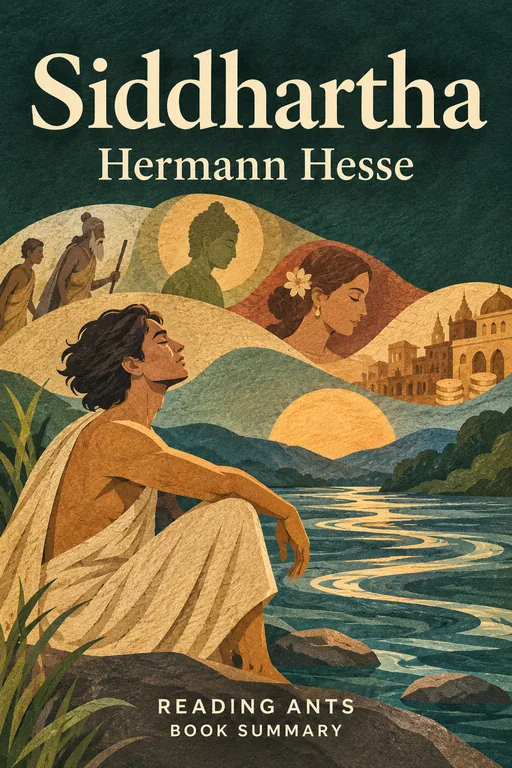
Siddhartha
Hermann Hesse
A gifted young man leaves teachers, wealth and family behind in search of enlightenment, only to discover through love, grief and a river that wisdom must be lived rather than borrowed.
🌍 World Literature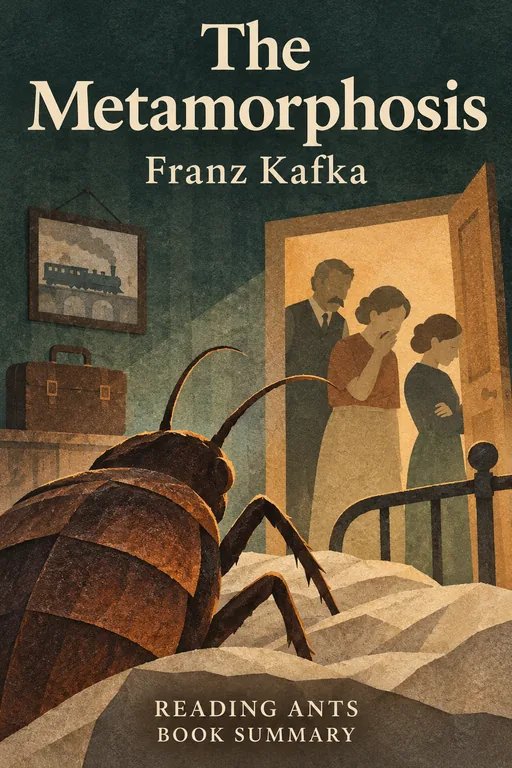
The Metamorphosis
Franz Kafka
A hardworking traveling salesman wakes one morning to find himself transformed into a monstrous insect, and his family's love for him slowly turns to disgust and neglect.
🌍 World Literature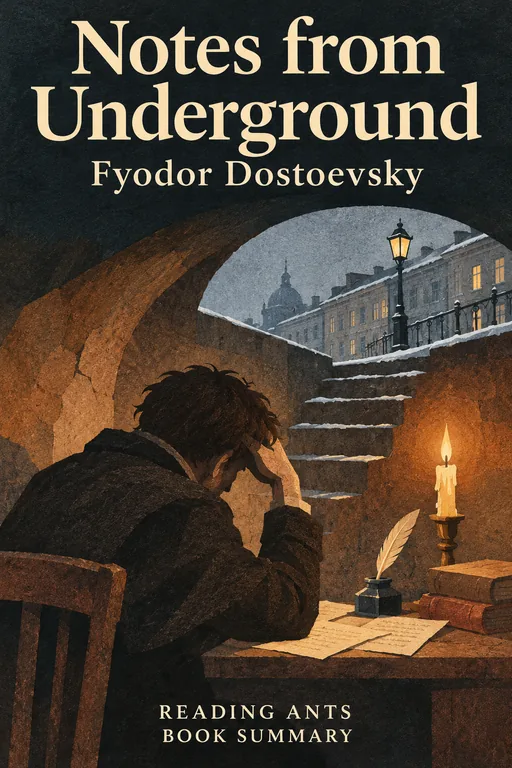
Notes from Underground
Fyodor Dostoevsky
A bitter, lonely former clerk who lives in a squalid underground existence writes an angry confession about his own spite, his contempt for the world and a humiliating episode from his past.
🌍 World Literature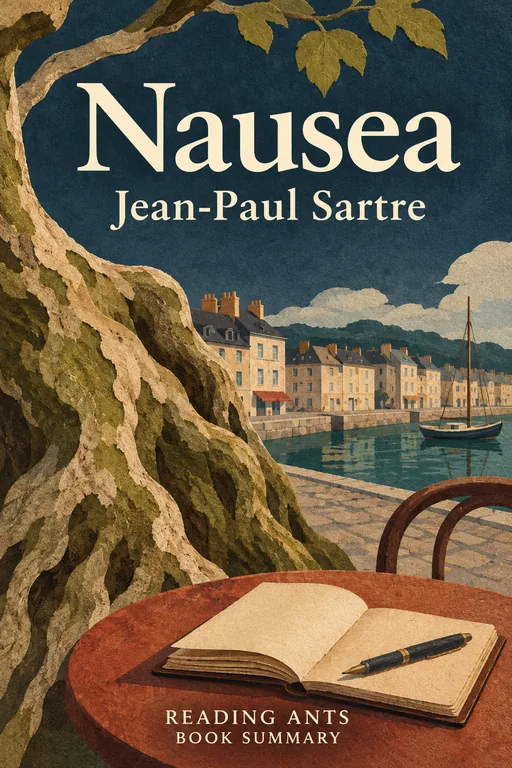
Nausea
Jean-Paul Sartre
A lonely historian in a French port town is overcome by a sickening awareness that things simply exist, without reason, and he searches for a way to live with this.
🌍 World LiteratureThe Catcher in the Rye
J. D. Salinger
After being expelled from his boarding school, a lonely, sarcastic sixteen-year-old wanders New York City for three days, struggling with grief, phoniness and the frightening idea of growing up.
📜 Classics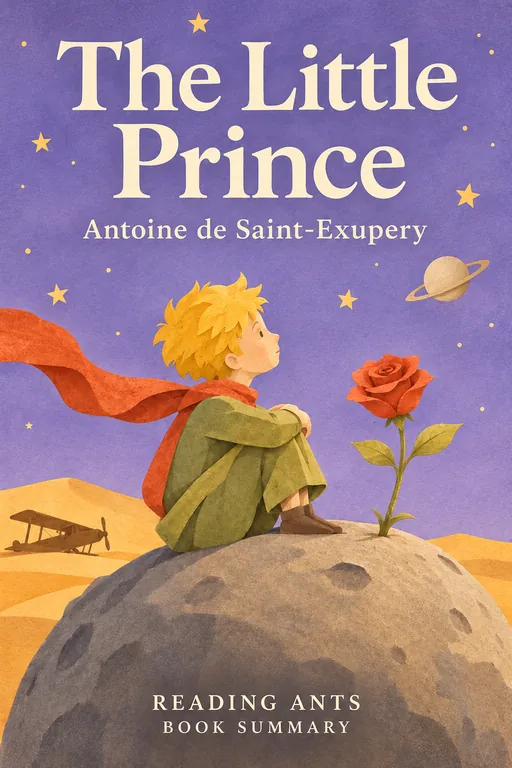
The Little Prince
Antoine de Saint-Exupery
A pilot stranded in the desert meets a small boy from a tiny planet, who teaches him that the most important things in life, like love and friendship, can only be seen with the heart.
🌍 World LiteratureWant something different?
Pick another topic and we will show you three books to start with.