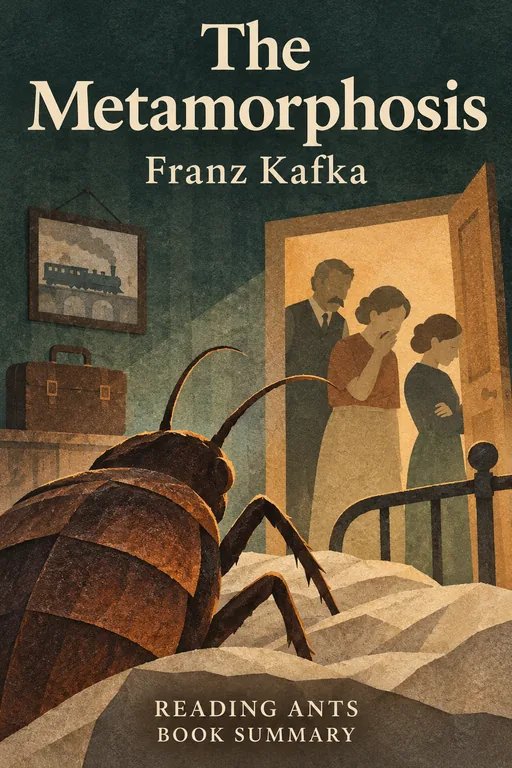
The Metamorphosis
Original title: Die Verwandlung
A hardworking traveling salesman wakes one morning to find himself transformed into a monstrous insect, and his family's love for him slowly turns to disgust and neglect.
Overview
The Metamorphosis is a novella by Franz Kafka, written in 1912 and published in 1915. It begins with one of the most famous opening lines in literature: Gregor Samsa wakes up to find that he has been changed into a giant insect-like creature, often translated as “vermin.” Instead of fantasy or horror, Kafka treats the situation with calm, realistic detail. Gregor’s first worry is that he will be late for work. The story follows how his family, who relied on his salary, reacts to his transformation, and how their feelings change over weeks and months. It is a short, haunting, sometimes darkly funny story about alienation, family duty and what makes a person human.
Main Characters
- Gregor Samsa: a devoted traveling salesman who supports his family.
- Grete Samsa: his younger sister, who at first cares for him.
- Mr. Samsa: his father, who has been retired and sickly.
- Mrs. Samsa: his mother, who loves him but is frightened.
- The chief clerk: Gregor’s boss’s representative, who arrives to find out why Gregor is late.
- The charwoman: a rough servant who is not afraid of Gregor.
- The three lodgers: boarders who rent a room in the apartment.
Full Summary
The Transformation
Gregor Samsa wakes one morning in his bed and finds that he has turned into an enormous insect, with a hard, brown back, many thin legs and a domed belly. His first thoughts are about work: he hates his job, which he took to pay off his parents’ debt, but he worries that he’ll miss his train. He lies on his back and struggles to turn over and get out of bed.
His family calls through the door. The chief clerk from the firm arrives to demand why Gregor has not turned up for work. Gregor manages to unlock the door with his mouth, and appears before them. His mother faints, his father drives him back into his room with a cane and a newspaper, and the chief clerk flees in horror. Gregor, wounded, is pushed back into his room.
Life in the Room
At first, his sister Grete takes care of him. She brings him food, discovers that he prefers rotting vegetables to milk, and cleans his room. She moves the furniture to give him room to crawl on the walls, but Gregor, who is fond of his belongings, hides under a couch and clings to a framed picture of a woman in furs to protect it. The sight of him sends his mother into a faint again, and his father, in a rage, throws apples at him. One apple lodges in his back and begins to rot, giving him a lasting injury.
The family, who have lost their only wage-earner, must go to work. His father takes a job as a bank messenger, his mother sews for a clothing store and Grete becomes a shop assistant. They rent out a room to three lodgers to make more money. Gregor is mostly neglected, and his room becomes a dumping ground for junk.
Money and Shame
From behind the door, Gregor overhears his family talking about money. To his surprise, he learns that his father had put aside a small sum from the collapse of his business years earlier, more than Gregor had known, and had never said so. Gregor feels both relieved and bitter, since he had worked for years to pay off a debt that might have been smaller. He remembers how he had planned to send Grete to the conservatory to study violin, a dream he had hoped to announce at Christmas. Now there is nobody to tell. His family, exhausted and ashamed, slowly stops speaking his name.
The Violin
One evening, Grete plays the violin for the lodgers, and Gregor, drawn by the music, creeps out of his room, covered in dust. The lodgers, disgusted, threaten to leave without paying. Grete, who has had enough, tells her parents that they must get rid of “it,” because it is no longer Gregor, who would have left by himself. Gregor, hearing this, crawls back into his room, weak and starving.
The End
Gregor dies in the night, alone, thinking tenderly of his family and agreeing that he must disappear. The charwoman finds him dead the next morning and announces it cheerfully. The Samsas, relieved, give the lodgers notice, and take a tram ride into the country, enjoying the sun. They notice that Grete has grown into a beautiful young woman, and they begin to think of finding her a husband. The story ends with Grete stretching her young body, as the family looks toward a hopeful future.
Why It Matters
The Metamorphosis is one of the most widely read and discussed works of modern literature, and it is Kafka’s best-known story. It has been translated into dozens of languages and is a staple of school and university courses. Its opening has become shorthand for sudden, inexplicable change.
The story has been interpreted in many ways: as an expression of alienation under modern capitalism, as a reflection of Kafka’s difficult relationship with his father, as a picture of illness or disability, and as a study of how families treat members who can no longer contribute. Because Kafka never says why Gregor changes, readers are free to find their own meaning. It has inspired adaptations in theater, film and graphic novels.
Key Takeaways
- Love can be conditional. Gregor’s family cares for him as long as he is useful.
- Work can erase the self. Gregor’s identity was his job.
- Alienation is painful. Gregor is isolated even when surrounded by family.
- People adapt to their own comfort. The Samsas grow stronger as Gregor weakens.
- Appearances shape treatment. Gregor’s body changes how everyone sees him.
What We Can Learn
The story invites us to think about how we treat family members who are sick, disabled or struggling. Gregor’s family begins with some care and quickly loses patience. Love needs to be more than an exchange of favors.
It also asks us to think about what we make of our work. Gregor’s life is a tiring routine of travel and orders, and he hardly knows himself. Taking time for friends, hobbies and rest guards against losing ourselves in work.
Finally, it reminds us that dignity does not depend on usefulness. A person is worth caring for, whatever they can or cannot do.
Criticism and Counterpoints
Some readers find the story’s premise absurd or too bleak, and are frustrated that Kafka never explains the transformation. Others feel that the ending, with the family’s cheerful relief, is cruel. Scholars have debated whether Gregor is a victim of his family or partly responsible for his own situation, since he has always put his needs second.
Disability scholars have also noted that the story can be read as a portrayal of how society treats people with disabilities, but some critics find it uncomfortable that the story uses a disabling change as a symbol. Kafka himself asked that the insect not be drawn on the book’s cover.
Who Should Read It
This short novella suits teens and adults, and can be read in one sitting. It is a good first Kafka book. Readers who dislike ambiguity may find the lack of explanation frustrating, but many find it unforgettable.
Want the whole book?
A summary is a taste, not the meal. Here is where to find the full book.
You reached the end 🎉
Nicely done. Mark this one as read, and we will suggest what to read next.
Read this next
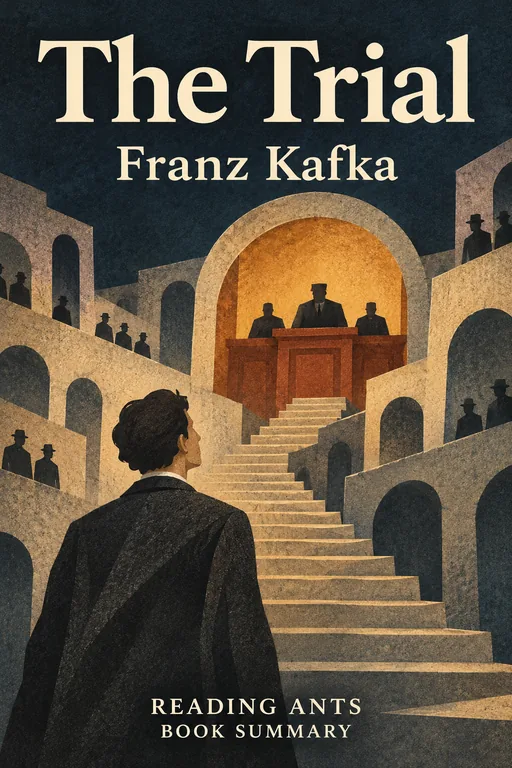
The Trial
Franz Kafka
A respectable senior bank officer is arrested one morning for a crime nobody will name, and is dragged through a vast, senseless legal system that he can neither understand nor escape.
🌍 World Literature
The Stranger
Albert Camus
An emotionally detached office worker kills a man on an Algerian beach and discovers that society condemns him as much for refusing its expected feelings as for the murder itself.
🌍 World Literature
Frankenstein
Mary Shelley
A young scientist creates a living being from dead body parts, then abandons it in horror, and his rejected creation, longing for love, turns to revenge.
🚀 Sci-Fi & Fantasy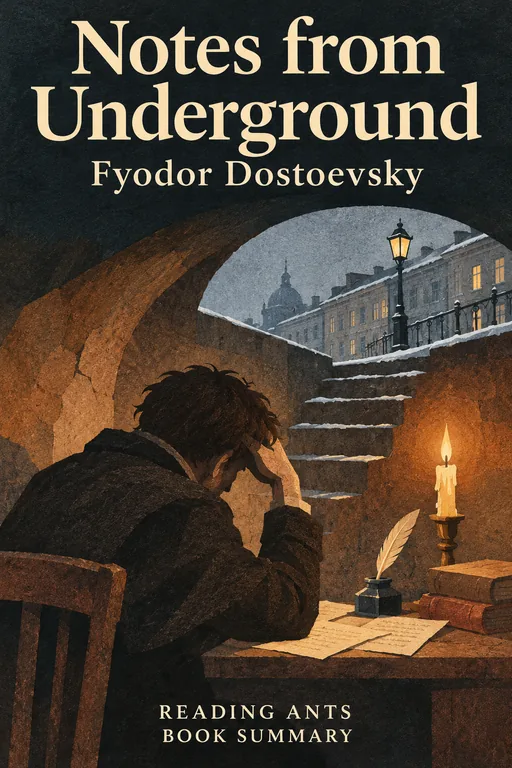
Notes from Underground
Fyodor Dostoevsky
A bitter, lonely former clerk who lives in a squalid underground existence writes an angry confession about his own spite, his contempt for the world and a humiliating episode from his past.
🌍 World Literature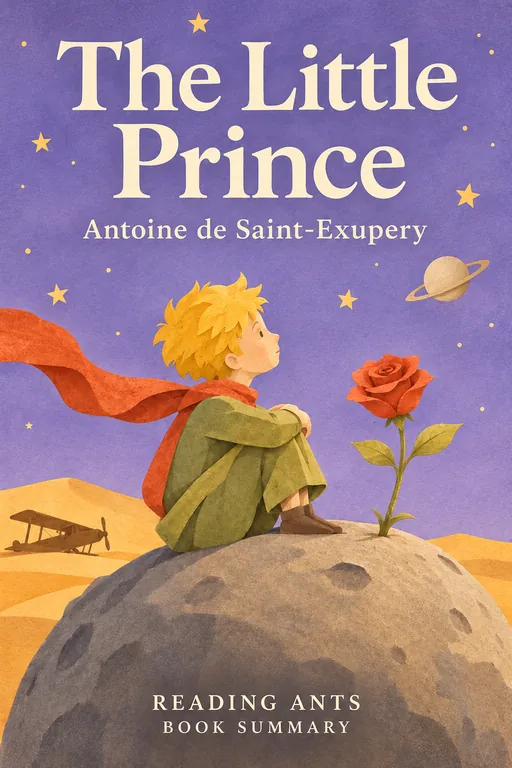
The Little Prince
Antoine de Saint-Exupery
A pilot stranded in the desert meets a small boy from a tiny planet, who teaches him that the most important things in life, like love and friendship, can only be seen with the heart.
🌍 World Literature
Things Fall Apart
Chinua Achebe
Okonkwo, a proud and fearsome leader in an Igbo village in Nigeria, struggles against his own fears and against the arrival of British missionaries and colonial rulers, who change his world forever.
🌍 World LiteratureWant something different?
Pick another topic and we will show you three books to start with.