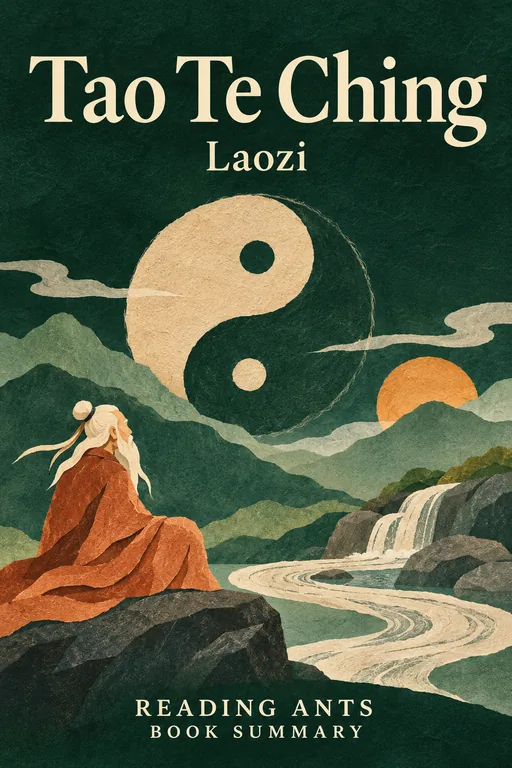
The deepest wisdom is to live in harmony with the Tao, the natural way of the universe, by being humble, gentle and simple, and by acting without force.
Overview
The Tao Te Ching (also written Daodejing), usually translated as “The Classic of the Way and Virtue,” is one of the most important books in Chinese thought and the founding text of Taoism. It is traditionally credited to Laozi, meaning “Old Master,” a wise man said to have lived around the sixth century BCE, although many scholars believe it was gathered from several sources over time. In about five thousand Chinese characters, arranged in eighty-one short poetic chapters, it offers advice on how to live wisely and how to rule well. Its central idea is the Tao, or “Way,” a mysterious source of all things that cannot be fully described in words. Short, paradoxical and beautiful, it is one of the most translated books in the world.
Full Summary
1. The Tao cannot be put into words
The idea: The book begins by saying that the Tao that can be talked about is not the eternal Tao, and that the name that can be named is not the eternal name. The Tao is the nameless origin of heaven and earth, the source from which all things arise and to which they return. We cannot define it, but we can sense it by quieting our minds and observing nature.
Traditional story (background, not part of the text): According to legend, Laozi grew tired of the corruption of his time and rode westward on a water buffalo to leave China. At the border pass, a gatekeeper begged him to write down his wisdom before he left, and Laozi wrote the Tao Te Ching, then disappeared.
In real life: Try describing the taste of a mango to someone who has never had one. Words help, but the real experience is beyond them, just as the Tao is.
2. Act without forcing
The idea: A key Taoist idea is wu wei, often translated as “non-action” or “effortless action.” It doesn’t mean laziness, but acting in harmony with the natural flow of things instead of struggling against it. The sage does not rush, push or show off, yet everything gets done. Nature works this way: the seasons change and plants grow without strain.
In real life: A good swimmer doesn’t thrash against the water; they move with it. Likewise, in an argument, staying calm and listening often achieves more than pushing harder.
3. Be like water
The idea: Water is the book’s favorite image. It is soft and yielding, yet nothing is better at wearing down hard, strong things. It benefits all living things without competing, and it flows to low places others avoid. The softest things in the world overcome the hardest, and gentleness is stronger than force.
In real life: A river carves a canyon through solid rock over thousands of years. Patience and steady gentleness often achieve what force cannot.
4. Emptiness is useful
The idea: The Tao Te Ching teaches that empty space is just as important as solid things. The book points out that a wheel works because of the empty hole at its center, a clay pot is useful because of its hollow inside, and a room is useful because of its empty space. What is not there gives what is there its usefulness.
In real life: A schedule packed with activities leaves no room for rest or surprises. Leaving some empty time in your day can be the most useful thing you do.
5. Opposites belong together
The idea: The book teaches that opposites depend on each other: beauty exists only because ugliness exists, long only because of short, high only because of low. This idea is connected to yin and yang, the complementary forces that balance each other. Those who understand this stop clinging to one side and accept change. What is bent becomes straight; what is empty becomes full.
In real life: We appreciate sunshine more after days of rain. Difficult times often make us value good times more deeply.
6. Simplicity and contentment
The idea: Laozi warns against greed, ambition and the endless desire for more. Those who know when they have enough are rich. The sage values simplicity, like an uncarved block of wood, natural and whole. Chasing fame, wealth and possessions only brings worry. The book also teaches humility: those who boast are not wise, and those who know do not need to speak much.
In real life: Someone who is always comparing their phone, clothes or grades with others rarely feels satisfied. Learning to say “this is enough” brings peace.
7. The wise ruler
The idea: Many chapters give advice to rulers. The best leaders are barely noticed by the people. When their work is done, the people say they did it themselves. Rulers should avoid too many laws, heavy taxes and war, which only cause disorder and suffering. Ruling a great nation, the book says, is like cooking a small fish: if you poke it too much, it falls apart. The book also reminds us that great achievements are built from small beginnings, as a long journey starts with a single step.
In real life: A great team captain often supports and encourages others quietly, so the whole team feels proud of the win, rather than taking all the credit.
Why It Matters
The Tao Te Ching is one of the foundational texts of Chinese civilization and the central scripture of Taoism, which has shaped Chinese religion, medicine, martial arts, painting, poetry and politics for more than two thousand years. It deeply influenced Zen Buddhism and is studied alongside Confucius’s Analects as one of the two great pillars of Chinese philosophy.
It is among the most translated books in the world, with hundreds of versions in many languages. In the West, its ideas have inspired writers, environmentalists, leadership thinkers and spiritual seekers. Phrases from it, such as the idea that a journey of a thousand miles begins with a single step, are known worldwide, even by people who have never read the book.
Key Takeaways
- The Tao is beyond words. The deepest truths can be sensed but not fully explained.
- Effortless action works best. Acting in harmony with nature achieves more than force.
- Softness overcomes hardness. Like water, gentleness and patience are powerful.
- Simplicity brings peace. Knowing when you have enough is true wealth.
- The best leaders lead quietly. Good rulers serve without seeking glory.
What We Can Learn
The Tao Te Ching invites us to slow down. In a busy world, spending a few quiet moments each day, perhaps walking in nature or simply breathing, can help us feel more balanced.
It also teaches the strength of gentleness. When conflicts arise, responding with calm patience instead of anger can soften the situation, just as water gradually reshapes stone.
Finally, it encourages us to want less. Before buying something new or chasing another goal, ask whether it will truly make life better, or whether you already have enough. Contentment is a skill we can practice.
Criticism and Counterpoints
Because the text is so short and poetic, it is very open to interpretation, and translations differ enormously. Some readers find its paradoxes frustrating or vague, and it is easy to read whatever one wants into it. Modern popular versions sometimes stray far from the original meaning.
Critics have also questioned its political advice. The idea that rulers should keep people simple and free of too much knowledge can sound like an argument for keeping people uneducated. Some argue that wu wei can be misused to justify passivity in the face of injustice. Defenders reply that the book’s message is about humility and harmony, not ignorance or indifference.
Who Should Read It
This short book suits readers of almost any age who are curious about philosophy, spirituality or Chinese culture. It is best read slowly, a chapter at a time. Comparing two or three translations helps reveal the richness of the original.
Want the whole book?
A summary is a taste, not the meal. Here is where to find the full book.
You reached the end 🎉
Nicely done. Mark this one as read, and we will suggest what to read next.
Read this next
The Analects
Confucius
A good life and a good society are built on personal virtue: being kind, respectful and honest, learning constantly, honoring family, and leading others by example rather than by force.
🕊️ Philosophy & Religion
Zhuangzi
Zhuangzi
A witty collection of stories, jokes and arguments from ancient China that invites readers to loosen their fixed ideas, to follow the natural way of things and to find freedom in changing with the world.
🕊️ Philosophy & Religion
The Art of War
Sun Tzu
The greatest victory is the one won without fighting, achieved through careful planning, knowing both yourself and your opponent, and using deception, flexibility and timing.
🕊️ Philosophy & Religion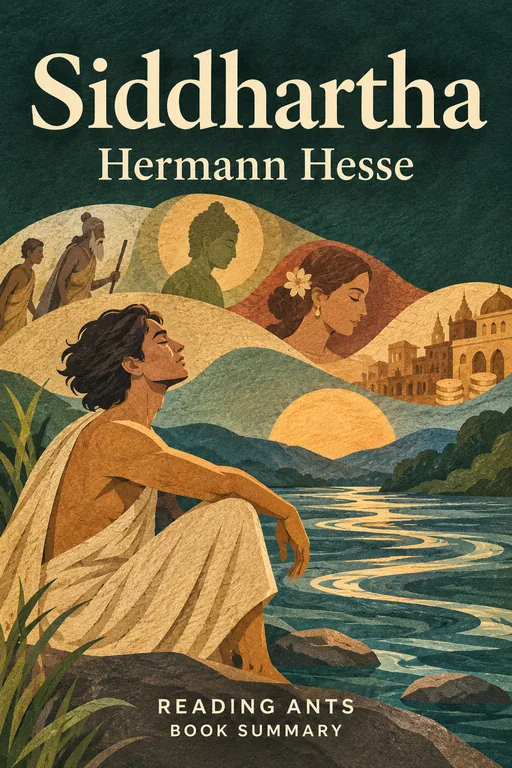
Siddhartha
Hermann Hesse
A gifted young man leaves teachers, wealth and family behind in search of enlightenment, only to discover through love, grief and a river that wisdom must be lived rather than borrowed.
🌍 World Literature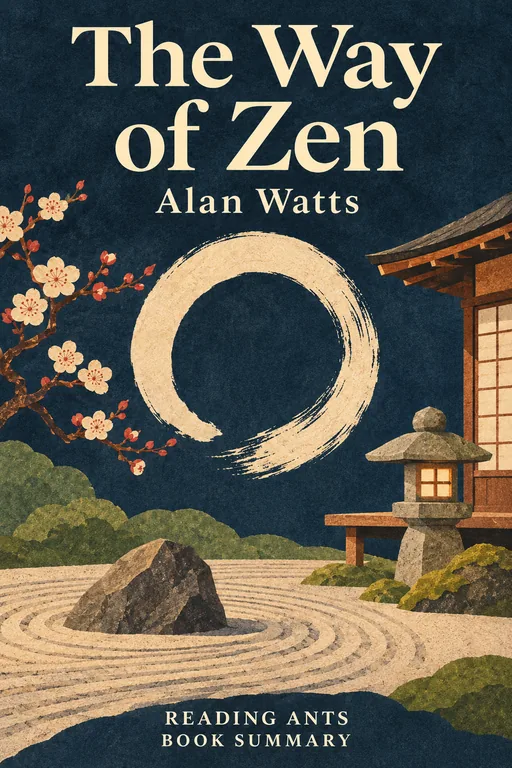
The Way of Zen
Alan Watts
Alan Watts traces the history and spirit of Zen from India and China to Japan, and explains for Western readers its teaching that liberation comes from direct experience rather than from concepts and doctrines.
🕊️ Philosophy & Religion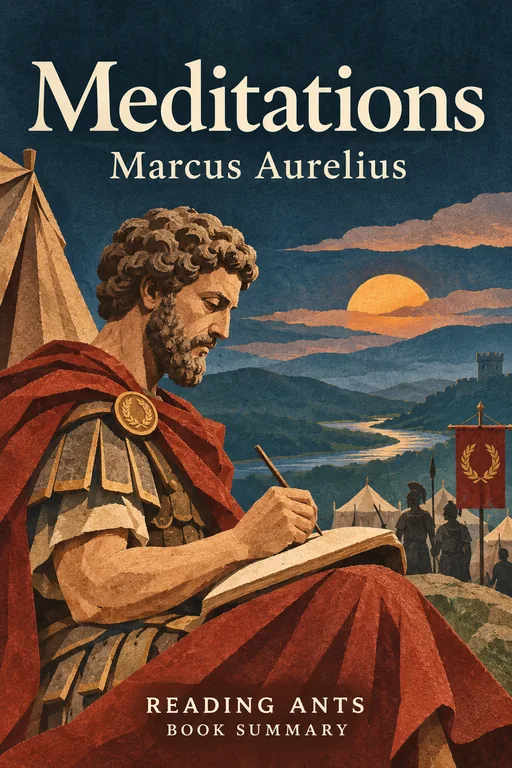
Meditations
Marcus Aurelius
The private notebook of a Roman emperor, reminding himself daily to accept what he cannot control, to act with justice and kindness, and to remember that life is short.
🕊️ Philosophy & ReligionWant something different?
Pick another topic and we will show you three books to start with.