 Reading Ants
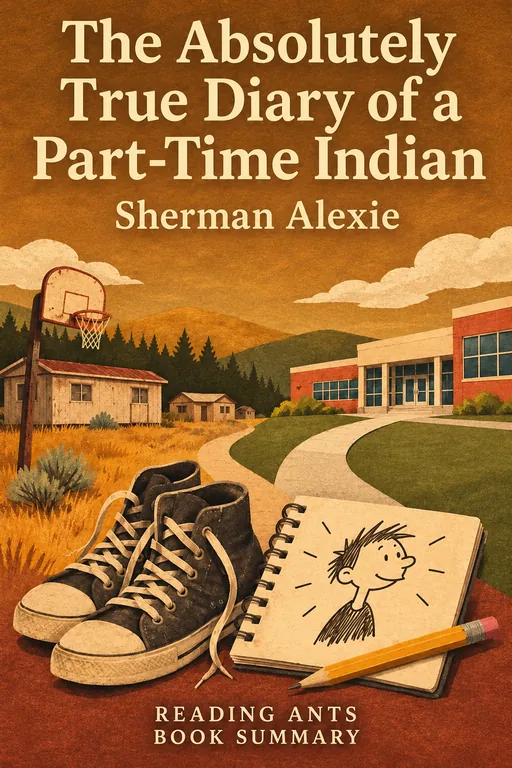
The Absolutely True Diary of a Part-Time Indian
A funny, clever teenager from a Native American reservation decides to leave his old school for an all-white high school, and must live between two worlds.
Overview
The Absolutely True Diary of a Part-Time Indian is a young adult novel by Sherman Alexie, published in 2007, with drawings by Ellen Forney. It is set on the Spokane Indian Reservation in Washington State, and in the nearby, mostly white town of Reardan. The narrator, Arnold Spirit Jr., called Junior, is fourteen, and the story is told like a diary, with cartoons that he draws. It is a story about poverty, racism, friendship and hope, told with humor and heartbreak. It won the National Book Award and has also been one of the most challenged books in American schools.
Main Characters
- Arnold Spirit Jr. (Junior): the narrator, a smart, funny cartoonist, who was born with hydrocephalus, sometimes called water on the brain.
- Rowdy: his best friend on the reservation, a tough boy who is abused at home.
- Junior’s parents: loving but poor. His father is an alcoholic, and his mother is a former one.
- Penelope: a popular girl at Reardan, who becomes Junior’s friend and his crush.
- Gordy: one of the smartest students at Reardan, who becomes Junior’s first real friend there.
- Coach: the basketball coach at Reardan, who supports Junior on and off the court.
- Mary (Junior’s sister): his older sister, who writes romance stories and leaves the reservation.
Full Summary
Born to Struggle
Junior was born with hydrocephalus, which left him small for his age, with seizures, poor eyesight, a stutter and a lisp. He is bullied on the reservation, and his only friend is Rowdy, a boy with a reputation as a bully, who often stands up for him. The two bond over their love of comics. Junior’s family is very poor, and alcohol is a serious problem for many people on the reservation. Junior draws cartoons, as a way to cope and to dream.
On the first day of school, he finds his mother’s name written in his geometry textbook, and he is angry that the school is so poor that it cannot afford new books. He throws the book, and it hits his teacher, Mr. P, and breaks his nose. Mr. P visits Junior at home, and he persuades him that he must leave the reservation school, if he wants to have a future.
The New School
Junior decides to attend Reardan, a school in a much wealthier, mostly white town, some miles away. His parents, who are poor and have little money for gas, do what they can to make it possible, and his father drives him when he can. Rowdy feels betrayed by Junior’s choice, and the two gradually lose contact.
At Reardan, Junior is the only Native American student. He feels like an outsider, and he is mocked. But he begins to make friends, such as Gordy and Penelope. Later, he tries out for the school’s basketball team, at the suggestion of a classmate, and to his surprise he makes the varsity team.
Making Friends
At first, Junior expects to be mocked, and he is. But at Reardan, he also finds unexpected allies. Penelope, who is popular but fed up with the small town and its conformity, becomes his friend, and Junior develops a crush on her. Gordy, a brilliant student, helps him with schoolwork and encourages his love of reading. When Roger, a star athlete, insults him, Junior punches him, as he would be expected to on the reservation. To Junior’s surprise, Roger never takes revenge, and comes to respect him.
The coach is supportive of Junior, and pays no attention to his race. Junior also learns how different his own family ties are from those of many of his white classmates, who sometimes have fathers who never come to school events.
Two Worlds
Junior leads a double life: a “part-time Indian.” When there is no money for gas, he has to hitchhike to school, or not go at all. He feels torn between pressure to fit in at Reardan and loyalty to his own people.
Tragedy strikes. His grandmother, who is his favorite person in the world, is killed by a drunk driver while walking home from a powwow. After her funeral, Eugene, a friend of the family and his father’s best friend, is shot in the face by another friend while they are both drunk and fighting over the last of a bottle. Junior is overwhelmed by grief, and he begins to question his future and the darker side of life on the reservation.
The Game
Junior’s place on the Reardan varsity team pits him against his old school, Wellpinit, and against Rowdy, who is its star freshman. When Junior walks onto the court for the first game, his former schoolmates boo and insult him. Rowdy knocks him unconscious, but the coach praises his commitment to the team.
In the second game, Reardan wins. Junior feels triumphant until he sees the look of defeat on the faces of the Wellpinit players, and remembers how little hope he had for his own future while growing up on the reservation. Ashamed, he runs to the locker room, and he is sick and breaks down in tears. Soon afterwards, he learns that his sister Mary and her husband have been killed in a fire at their trailer, after a party where people were drinking.
Reconciliation
These tragedies force Junior to think hard about his future, but they also deepen his love for his family and friends. He comes to see himself as both Indian and American. Rowdy comes to realize that Junior is the only one on the reservation who has really left to find something new, which makes him in some ways more of a traditional Indian than anyone else there.
In the end, the two boys reconcile while playing basketball, and they promise to stay friends, no matter where the future takes them. Junior realizes that he belongs to more than one tribe, and that this can make him stronger.
Why It Matters
The novel won the National Book Award for Young People’s Literature in 2007, and it has become a staple of school reading lists. It is praised for its honesty, its humor and its portrait of life on a reservation, which is rare in literature for young people. It has also been challenged by many schools and parents, for its language, its sexual references and its portrayal of alcohol, poverty and violence, and it was the most frequently challenged book in the United States from 2010 to 2019. The book has encouraged conversations about race, poverty and hope. Its mix of cartoons and plain, funny writing, with about sixty drawings, has also made it popular with young readers.
Key Takeaways
- Hope can be found in hard places. Junior keeps believing in a better future.
- Identity can be plural. He can belong to two worlds.
- Education offers a way out, but at a cost. He has to leave friends behind.
- Humor helps us to survive. Junior jokes about even the darkest events.
- Friendship can be repaired. Rowdy and Junior find their way back.
What We Can Learn
The book teaches us to look beyond stereotypes, and to see the individuals behind them. It shows how poverty and racism limit opportunities, and why it takes courage to try something different.
It also shows that grief, though painful, can be shared, and that humor and creativity can help us bear it. Finally, it encourages us to be proud of who we are and where we come from, while we grow into who we want to be. It can also lead to a conversation about the way that schools and towns treat students who are different, and about what each of us can do to make a newcomer feel welcome.
Criticism and Counterpoints
Some readers object to the book’s crude language and its sexual jokes, which have led to challenges in schools. Challenges have also cited its treatment of bullying, violence and bulimia, though the author has defended the book, arguing that readers gain from facing hard realities. Others say that it presents a bleak picture of reservation life, which may reinforce stereotypes of alcoholism and poverty, though the author drew on his own life. In recent years, serious allegations about the author’s behavior have led some readers to reconsider his work.
Who Should Read It
This book is for readers aged thirteen and up, who like funny, honest stories about growing up. It is an easy read, with many drawings. Those who are bothered by crude humor should be aware, and the deaths in the story may be hard for some readers.
Want the whole book?
A summary is a taste, not the meal. Here is where to find the full book.
You reached the end 🎉
Nicely done. Mark this one as read, and we will suggest what to read next.
Read this next
The Hate U Give
Angie Thomas
After witnessing a police officer kill her unarmed friend, a Black teenager finds her public voice while navigating grief, racism and the different expectations of her neighborhood and private school.
🎒 Young Adult
Wonder
R. J. Palacio
A ten-year-old boy born with a rare facial difference goes to school for the first time, and through bullying, friendship and courage he helps everyone around him learn to choose kindness.
🧸 Children's Books
Holes
Louis Sachar
A boy with a family curse is wrongly sent to a desert detention camp where boys must dig holes all day, and he uncovers a buried secret that connects his family's past to the camp's cruel warden.
🧸 Children's Books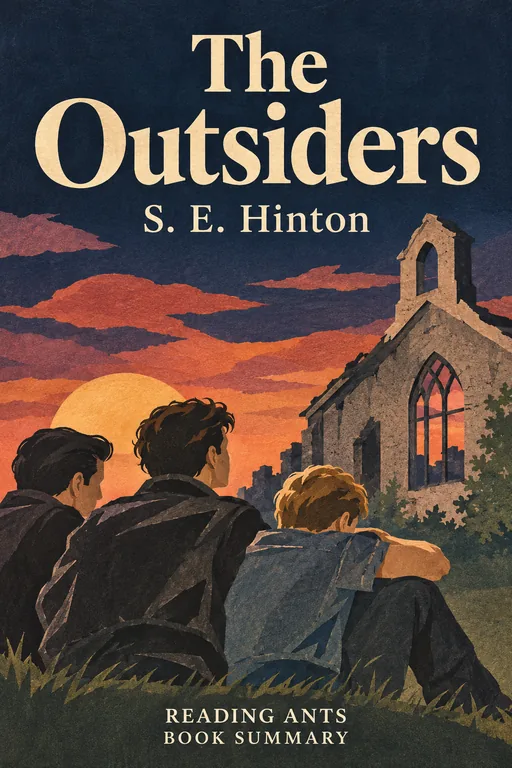
The Outsiders
S. E. Hinton
After a deadly clash between rival social groups, teenager Ponyboy Curtis learns that loyalty can sustain people without making violence noble or erasing their shared humanity.
🎒 Young Adult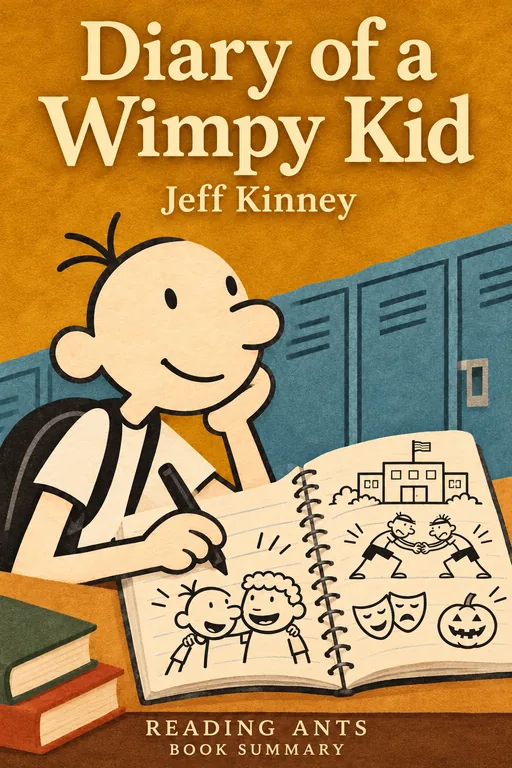
Diary of a Wimpy Kid
Jeff Kinney
A scrawny, self-centered middle schooler records his schemes to become popular in a cartoon-filled journal, and learns, slowly and hilariously, what it means to be a good friend.
🧸 Children's Books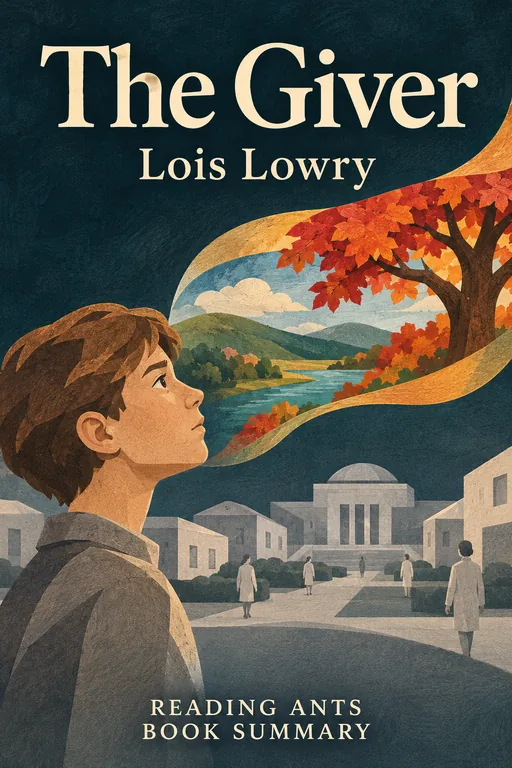
The Giver
Lois Lowry
In a perfectly controlled community with no pain, choice or color, a boy about to turn twelve is chosen to hold the memories of the past, and discovers the terrible price his people pay for their safety.
🎒 Young AdultWant something different?
Pick another topic and we will show you three books to start with.