 Reading Ants
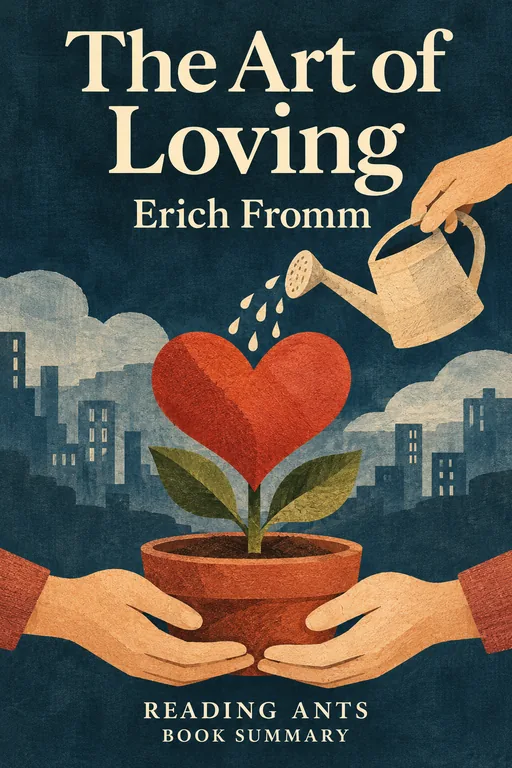
The Art of Loving
Original title: Die Kunst des Liebens
Psychoanalyst Erich Fromm argues that love is not a feeling that simply happens to us but a skill that must be learned, requiring care, responsibility, respect and knowledge, and that modern society makes it harder to practice.
Overview
The Art of Loving was published in 1956 by Erich Fromm, a German-born psychoanalyst and social thinker who lived in the United States and Mexico. It is a short book that became a bestseller. Fromm says that most people think of love as a problem of being loved, of becoming attractive, or of finding the right object, and so they neglect the problem of the capacity to love. He compares love to other arts, such as music or medicine, which need theory and practice. The book discusses several kinds of love, and the conditions that help or hinder it.
Full Summary
1. Is love an art?
The idea: Fromm begins by saying that people tend to see love as a pleasant feeling that you “fall into” if you are lucky. He disagrees. Love, he argues, is a capacity that must be developed, and people go wrong when they treat it as a problem of finding the right object, or of becoming popular and attractive. He also separates the thrill of suddenly “falling” in love, which does not last, from the lasting state of “standing” in love. Learning to love, like learning music or medicine, takes both theory and practice, and in addition a supreme concern with mastering it, which most people give instead to success, money and prestige.
In real life: Becoming good at an instrument takes practice, and so does becoming good at caring for others.
2. The theory: the answer to human separateness
The idea: According to Fromm, the deepest need of human beings is to overcome their separateness and to escape the prison of loneliness. There are incomplete ways to do it, such as orgiastic states, conforming to the group, and absorption in creative work, and an immature kind of union in which one person submits to another or dominates another. The mature answer is love, a union that allows each person to preserve their integrity. Real love, he says, is giving, not taking, and the giving is a joy.
In real life: Giving your time to a friend can be more satisfying than receiving a gift.
3. The elements of love
The idea: Fromm says that, in all forms of love, there are common elements: care, which is active concern for the life and growth of the loved one; responsibility, the readiness to respond to their needs; respect, seeing the person as they are and wanting them to flourish in their own way; and knowledge, understanding the person deeply. These elements are connected, and together make up mature love.
In real life: A good friend notices what you need, and does not try to turn you into someone else.
4. Kinds of love
The idea: The book discusses different objects of love. Brotherly love, the sense of responsibility and care for all human beings, is the basis of the others. Motherly love is unconditional love for a child, and Fromm says that it is hard because it must also let the child go. Erotic love is the craving for complete fusion with one other person, and it is exclusive in a way that brotherly and motherly love are not. Fromm adds that it involves an act of will and decision, not only feeling. Self-love, he says, is not selfishness, but a condition of loving others. And he also discusses love of God.
In real life: A person who cannot value themselves may find it hard to value others.
5. Love and its disintegration in modern society
The idea: Fromm criticizes the capitalist culture of his time, where people treat each other as commodities, and think of love as a kind of exchange, in which each looks for a good bargain. Marriage may become a partnership of two egos, and a team against the world. Love is hindered by a culture that stresses consumption, conformity and the pursuit of success. Near the end of the book he concludes that people capable of love are exceptions in such a society, and that radical changes in the social structure are needed if love is to become more than a marginal phenomenon.
In real life: Looking for a partner as if shopping for the best deal can hinder real closeness.
6. The practice of love
The idea: In the last chapter, Fromm gives advice on practice. He recommends discipline in the whole of one’s life, concentration, the ability to be alone, patience and a supreme concern for mastering the art. Concentration includes the ability to be alone with oneself, and to listen fully to others. He also says that we need faith, in ourselves, others and humanity, and courage, to take risks. He says that the art of loving needs a person’s whole life to be devoted to it.
In real life: Putting away your phone to listen to a friend is a small practice of concentration.
Why It Matters
The Art of Loving is Fromm’s best-selling work and has sold millions of copies. It remains one of the best-known books about love, offering a serious, philosophical alternative to the idea that love is something that just happens. Its claim that love is a skill has influenced psychologists, therapists and many readers. The book also links personal relationships to social conditions, and is admired for its humane and thoughtful tone. It was especially popular on university campuses in the 1960s, and it shares the concerns of Fromm’s earlier books, such as The Sane Society, about how modern society shapes the individual. It remains widely read and discussed.
Key Takeaways
- Love is an art. It requires effort, practice and discipline.
- Love overcomes separateness. It unites without destroying individuality.
- Care, responsibility, respect and knowledge. These are the basic elements.
- Self-love is not selfishness. It underlies the capacity to love others.
- Society shapes love. A culture of consumption makes love harder.
What We Can Learn
You can use the book to reflect on how you act toward the people close to you. Ask whether you show care, respect and an effort to understand them, not only whether you feel affection. Practice listening without distraction, and give your time. Be honest with yourself about whether you look for love as a way of being approved of. Spend some time alone, since being at ease alone helps you to be with others. And remember that all the kinds of love, for friends, family and humanity, deserve practice.
Criticism and Counterpoints
Some critics say that Fromm’s view is idealistic and moralizing, and that the demands he places on love are too high for ordinary people. Others note that the book is general and offers few concrete examples or scientific evidence, and that its picture of the family and of gender roles reflects the 1950s. His critique of capitalism has been called oversimplified. A few readers find the discussion of love of God vague. Psychologists who study relationships today have added research on attachment and communication. Still, the book’s main insight remains influential.
Who Should Read It
This book is for readers who want a thoughtful, short book on love and relationships, including teenagers and adults. It is clearly written, though a little abstract. Those who want practical tips on dating or communication might also read a more modern guide.
Want the whole book?
A summary is a taste, not the meal. Here is where to find the full book.
You reached the end 🎉
Nicely done. Mark this one as read, and we will suggest what to read next.
Read this next
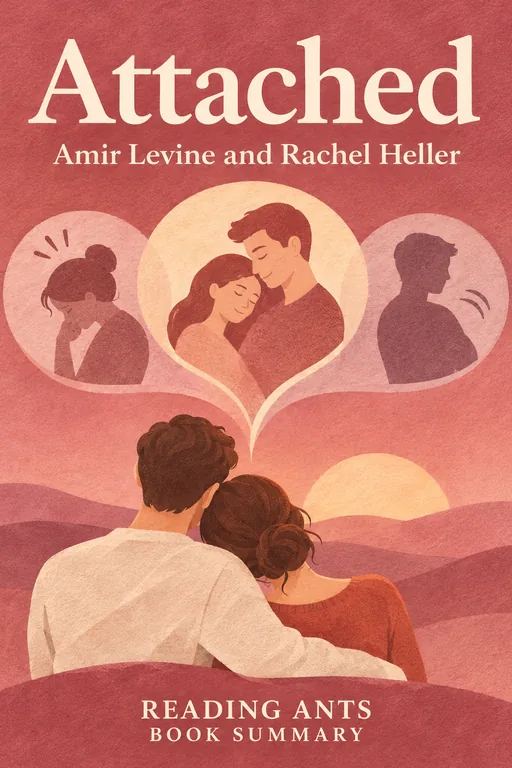
Attached
Amir Levine and Rachel Heller
Psychiatrist Amir Levine and psychologist Rachel Heller use attachment theory to explain why people behave as they do in romantic relationships, describing three styles, anxious, avoidant and secure, and giving advice on how to find and keep a good partner.
🌱 Self-Improvement
The Book of Joy
Dalai Lama and Desmond Tutu with Douglas Abrams
Two Nobel Peace Prize winners, the Dalai Lama and Archbishop Desmond Tutu, talk about how to find lasting joy even in the face of suffering, and share the habits and attitudes that they believe lead to it.
🕊️ Philosophy & Religion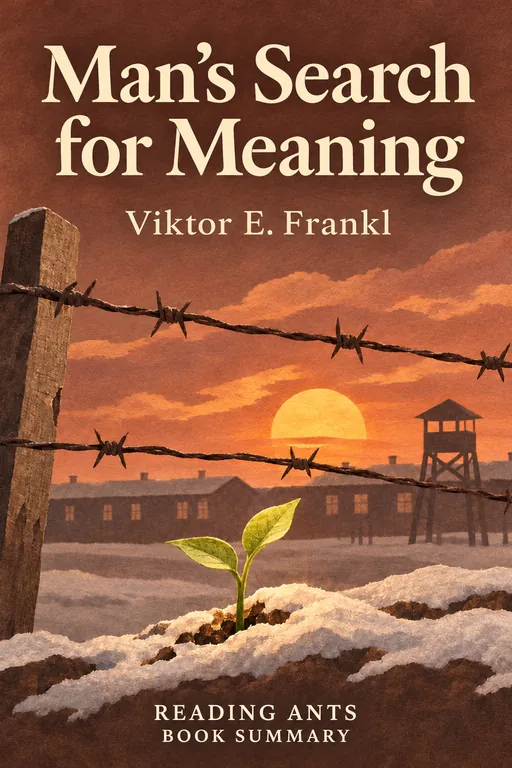
Man's Search for Meaning
Viktor E. Frankl
A psychiatrist who survived the Nazi concentration camps explains that even in the worst suffering, people can choose their attitude, and that finding a reason to live is what gives us the strength to endure.
👤 Real Lives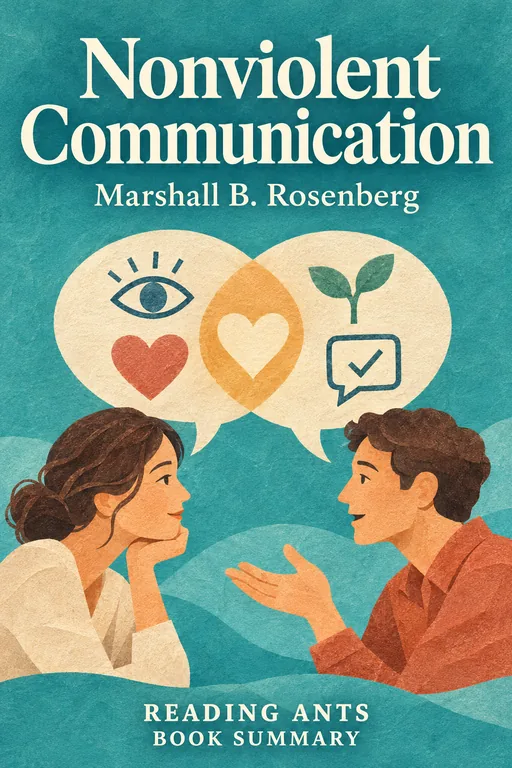
Nonviolent Communication
Marshall B. Rosenberg
Psychologist Marshall Rosenberg teaches a method of speaking and listening, built on observations, feelings, needs and requests, that aims to replace blame, criticism and demands with honesty and empathy, so that conflicts can be resolved with compassion.
🌱 Self-Improvement
The Road Less Traveled
M. Scott Peck
Psychiatrist M. Scott Peck opens with the statement that life is difficult, and argues that real growth comes from facing problems, with discipline, love and a willingness to accept grace, and he draws on his work with patients to show how.
🌱 Self-Improvement
Thinking, Fast and Slow
Daniel Kahneman
Our minds run on two systems, a fast, intuitive one and a slow, careful one, and understanding how the fast system fools us can help us make better decisions about money, risk, work and happiness.
🧩 Mind & PsychologyWant something different?
Pick another topic and we will show you three books to start with.