 Reading Ants
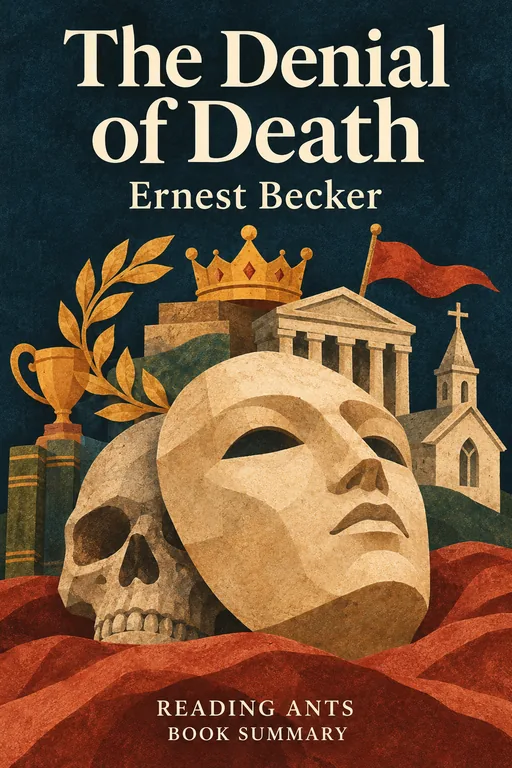
The Denial of Death
Cultural anthropologist Ernest Becker argues that the fear of death is the main force behind human behavior, and that much of what we do, from heroic deeds to work, religion and politics, is an attempt to deny our mortality.
Overview
The Denial of Death was published in 1973 by Ernest Becker, an American cultural anthropologist who had been a professor at several universities. It won the Pulitzer Prize in 1974, shortly after he died of cancer at the age of forty-nine. Becker pulls together ideas from Freud, Otto Rank, Kierkegaard and others, and builds a theory that human beings are creatures who are both animal and self-aware, and who cannot bear this knowledge. The book is demanding, but has had great influence on psychology, and inspired a field of research known as terror management theory.
Full Summary
1. The human paradox
The idea: Becker opens with the claim that humans are unique in that we are half animal and half symbolic. Becker describes a split between a physical self, with a body that decays and dies, and a symbolic self, with a mind that can imagine eternity and knows that it will end. This is a terrifying contradiction, he says, for a creature who can think like a god yet is bound to a mortal body. To cope, we repress awareness of death, and build a character that gives us a sense of control and meaning. Most of the time we do not notice this.
In real life: People rarely think about their own death in daily life, though they know it is certain.
2. Character as a defense
The idea: Drawing on Freud and Rank, Becker argues that personality is a way of shielding ourselves from anxiety, and he roots it in a child’s deep need for self-esteem. Adults continue the defense in ways such as keeping busy with trivial matters, following customs and finding a partner. He calls character a “vital lie”: it lets us function in the world, but it also narrows our experience and hides genuine self-knowledge.
In real life: A person who always has to be busy may be avoiding something.
3. The hero system and the need for significance
The idea: Becker says that humans need to feel that they are special, and that their lives matter in the larger scheme of things. Societies provide hero systems, cultural frameworks of meaning in which people can feel that they are contributing to something that outlasts them. We seek a kind of immortality, he says, through projects that tie us to something larger and longer-lived, such as raising a family, devoting ourselves to a nation or a religion, or creating something of lasting value. The way to feel that we transcend death is to be a hero.
In real life: Wanting to be remembered for something is a common wish.
4. Romantic love and religion
The idea: The author discusses how other relationships also serve this function. In romantic love, we look to a partner to be everything, to give meaning and rescue us from our fears, which he says is a burden that no person can bear. Religion offers a more direct answer, by promising an afterlife. Becker thinks that these forms satisfy deep needs, but he also argues that they can lead to disappointment, and that clashes between rival hero systems are a major source of violence and misery in the world.
In real life: Expecting a partner to fill all your emotional needs may lead to disappointment.
5. Neurosis and creativity
The idea: Becker examines what happens when the defense fails. He sees neurosis as trouble living with the truth of existence, something that touches everyone to some degree, and he describes depression as the feeling that one’s own hero project is failing, which brings mortality and the body back to mind. He draws on Kierkegaard and on Rank. Creative people, he says, also refuse to accept either physical reality or ready-made cultural projects and want to make a reality of their own. What separates them from someone who retreats into a purely private mental world, he says, is that their talent lets others appreciate what they make.
In real life: A writer may hope that a book will live after they are gone.
6. What can we do? Living with the truth
The idea: In the end, Becker does not offer a definitive answer, because he thinks there is no perfect solution. He says that traditional hero systems such as religion no longer convince many people in the age of reason, and that we need new illusions that let us feel heroic in agreeable ways. His hope is that a gradual realization of what drives us, namely the fear of death, can help bring about a better world. The final chapter returns to psychology and religion and asks what a heroic individual would be.
In real life: Being aware that life is limited can lead a person to focus on what matters.
Why It Matters
The Denial of Death has become a classic of modern thought, and has been read by psychologists, philosophers, artists and ordinary readers. It popularized the idea that death anxiety shapes culture and behavior, and it is the main work behind terror management theory, in which researchers test how reminders of mortality influence attitudes, for example by strengthening people’s attachment to their cultural worldview. The book has not gone out of print, and a fiftieth-anniversary edition appeared in 2023. It has also turned up in popular culture, for example in the film Annie Hall. It also encouraged discussion of how societies deal with death, and of the role of meaning. The book is often praised for its courage in confronting an uncomfortable subject.
Key Takeaways
- We are aware of death. This awareness shapes human life.
- Character is a defense. Our routines and personalities protect us from anxiety.
- We seek significance. Hero projects give a sense of lasting value.
- No person can be everything. Expecting a partner to save us is a burden.
- Awareness can help. Facing mortality can guide us toward worthwhile aims.
What We Can Learn
You can use the book to think about what you are living for, and whether your goals come from a wish to feel important or from real care. Notice when you are busy in order to avoid certain thoughts. Be kind to others whose beliefs give them comfort, even if they differ from yours. Consider using the awareness that life is finite to choose what matters, such as relationships and service. If thoughts about death are distressing, talk to a trusted person or a counselor. The book is serious, and reading it can be heavy.
Criticism and Counterpoints
Critics say that Becker’s theory is too broad, tries to explain all human behavior by one cause, and gives a reductive picture of mental health and human nature. Some psychologists note that parts of the argument rest on psychoanalytic ideas that are hard to test. Terror management research has also been challenged: a large multi-lab project called Many Labs 4 failed to reproduce a key finding, although one of the theory’s founders disputed how that study was run. Others find the book dense and pessimistic. Still, its insights endure.
Who Should Read It
This book is for mature readers interested in psychology, philosophy and the human condition. It is demanding and sometimes dark. Those who are facing grief or illness may find it either helpful or heavy, and may prefer a gentler book on mortality.
Want the whole book?
A summary is a taste, not the meal. Here is where to find the full book.
You reached the end 🎉
Nicely done. Mark this one as read, and we will suggest what to read next.
Read this next
Man's Search for Meaning
Viktor E. Frankl
A psychiatrist who survived the Nazi concentration camps explains that even in the worst suffering, people can choose their attitude, and that finding a reason to live is what gives us the strength to endure.
👤 Real Lives
Being Mortal
Atul Gawande
Surgeon and writer Atul Gawande argues that modern medicine is good at fighting death but poor at helping people live well as they age and approach the end, and that doctors and families should focus on what matters most to the person.
👤 Real Lives
When Breath Becomes Air
Paul Kalanithi
Paul Kalanithi, a young neurosurgeon, writes about facing terminal lung cancer at thirty-six and asks what makes a life meaningful when time is short.
👤 Real Lives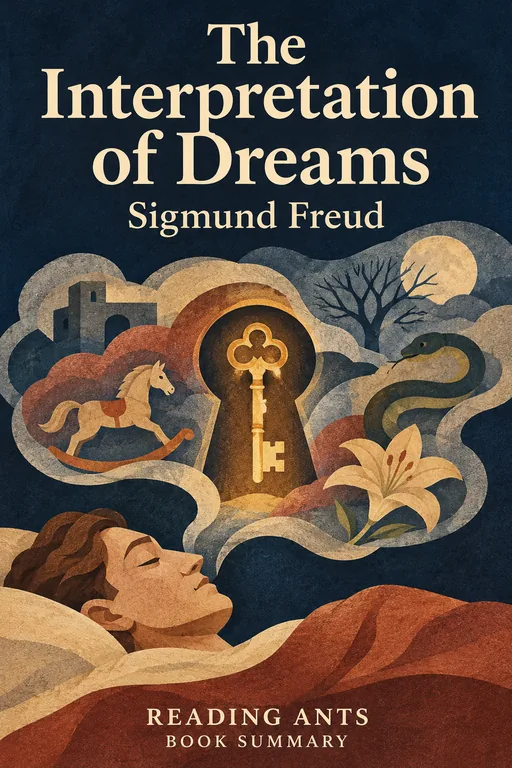
The Interpretation of Dreams
Sigmund Freud
Sigmund Freud proposes that dreams are disguised fulfillments of hidden wishes, and that by analyzing them we can discover unconscious desires and conflicts, which he calls the royal road to the unconscious.
🧩 Mind & Psychology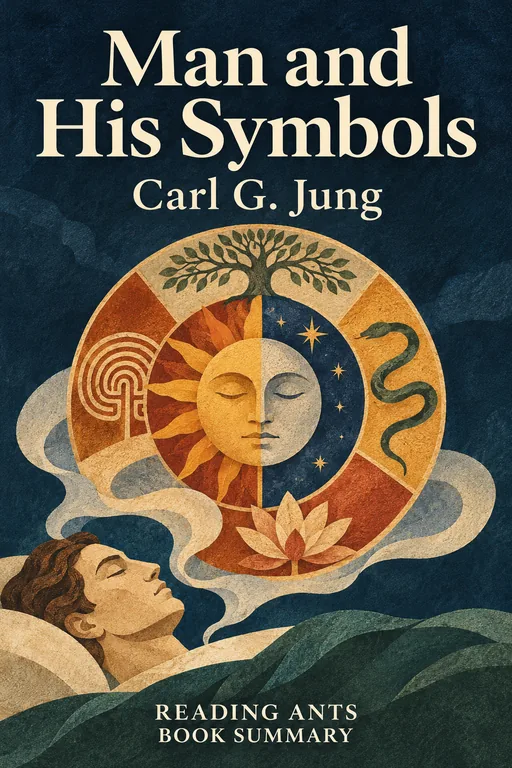
Man and His Symbols
Carl G. Jung
Carl Jung and four of his followers explain, for general readers, how dreams and symbols express the unconscious mind, and how paying attention to them can help a person grow into a more whole self.
🧩 Mind & Psychology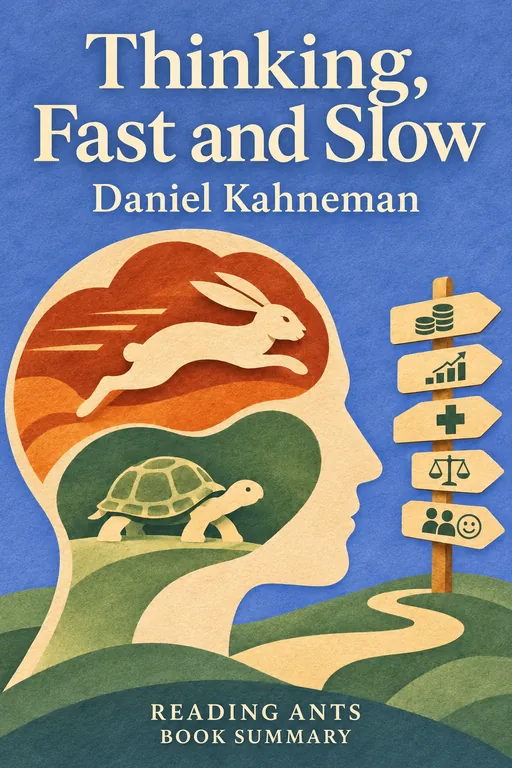
Thinking, Fast and Slow
Daniel Kahneman
Our minds run on two systems, a fast, intuitive one and a slow, careful one, and understanding how the fast system fools us can help us make better decisions about money, risk, work and happiness.
🧩 Mind & PsychologyWant something different?
Pick another topic and we will show you three books to start with.