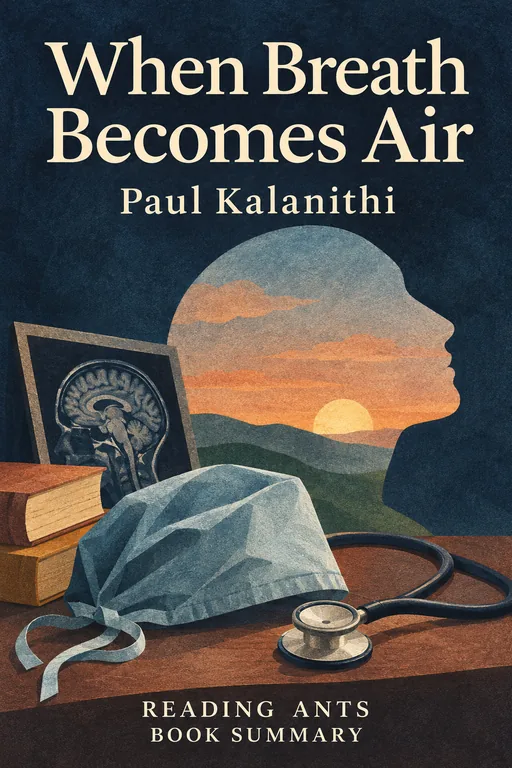
When Breath Becomes Air
Paul Kalanithi, a young neurosurgeon, writes about facing terminal lung cancer at thirty-six and asks what makes a life meaningful when time is short.
Overview
When Breath Becomes Air is a memoir by Paul Kalanithi, who was a neurosurgery resident at Stanford University when he was diagnosed with advanced lung cancer in 2013. He wrote the book as he was dying and finished most of it before his death in March 2015, at age thirty-seven. It was published in 2016, with a foreword by the physician and writer Abraham Verghese and an epilogue by Kalanithi’s wife, Lucy, who is also a doctor. The book moves between his background and training and his experience as a patient, and it reflects on mortality, purpose and love. It became an international bestseller.
Full Summary
1. The making of a doctor
The idea: Kalanithi grows up in Arizona, in a family of Indian background, with a father who is a doctor. As a young man, he is more drawn to literature and philosophy than to medicine, and studies English and biology at Stanford, earning a master’s degree in English literature there, and a master’s degree in the history and philosophy of science and medicine at Cambridge. He wants to understand what makes life meaningful, and eventually decides that medicine, particularly neurosurgery, lets him study the brain, the organ that makes us who we are, and be present at the boundaries of life and death.
In real life: Choosing a career because it connects to a deep question can make hard work feel purposeful.
2. Residency and the weight of responsibility
The idea: He trains at Yale medical school and then does his residency at Stanford; Kalanithi describes the long hours, intense pressure and moral weight of operating on the brain, where a small error can change a person forever. He writes about patients he treats, and about how he learns to deliver bad news. He believes doctors must treat patients as whole people, not just cases. He speaks about the closeness he feels to families in crisis and the toll of seeing death often, and he is on his way to a promising career.
In real life: Professionals who deal with life-and-death decisions often carry a heavy emotional load.
3. The diagnosis
The idea: In his final year of residency, Kalanithi begins losing weight and suffering back pain. Scans reveal that he has stage IV lung cancer, even though he does not smoke. Suddenly he is a patient instead of a doctor, and he finds himself looking at the same images he has examined for others. He describes the shock and the sense that the future he planned has vanished. He and his wife, Lucy, must decide how to spend the time that remains.
In real life: A sudden illness can change one’s sense of who one is, from the person who helps to the person who needs help.
4. Living with uncertainty
The idea: Kalanithi starts treatment and, for a while, responds well enough to return to work. He and Lucy decide to have a child, and their daughter, Cady, is born in 2014. He describes the joy of fatherhood alongside the knowledge that he will not see her grow up. He wrestles with the question of what he wants to do with his remaining time, whether to go back to surgery, to write or to be with his family. He reflects that uncertainty is part of every life, but illness makes it impossible to ignore.
In real life: Facing limits can help us decide what is most important and let go of what is not.
5. Writing and meaning
The idea: When his cancer progresses and he can no longer operate, Kalanithi turns to writing, which he had always loved. He returns to the books that shaped him and finds that language can help express what medical charts cannot. He wants to leave something for his daughter, and he uses the time to put his thoughts into words. He concludes that meaning is found in relationships, work and moments of presence, instead of in perfect answers.
In real life: Writing can be a way to make sense of experience and share it with others.
6. The epilogue
The idea: Kalanithi’s own text ends with a message addressed to his daughter Cady, and the book is then completed by Lucy’s epilogue, in which she describes his final months, his death in March 2015 with his family around him and her feelings of loss and gratitude. She explains how he faced death with honesty, and how he and she tried to make the best of their time. Her words give the book a gentle, human ending.
In real life: Being present with someone who is dying can be a final act of love.
Why It Matters
When Breath Becomes Air was a New York Times bestseller and was translated into dozens of languages. It has been praised for the way it combines a doctor’s training and a poet’s sensitivity, and it opened a conversation among patients, families and medical professionals about how to live with a terminal diagnosis.
The book is also used in medical education as an example of the experience of illness from both sides, and it is read by many ordinary readers searching for perspective on life and death. His wife, Lucy, has spoken widely about the book and his legacy, and his daughter’s birth, described near the end, remains for many readers the most hopeful part of the story.
Key Takeaways
- Mortality clarifies values. Facing death shows what matters most.
- Doctors are human. Illness can change the role of caregiver to patient.
- Meaning comes from connection. Relationships and work give life purpose.
- Writing helps us understand. Words can capture what numbers cannot.
- Presence is a gift. Time with loved ones is precious.
What We Can Learn
The book encourages us to think about how we use our time. We often postpone what matters most, and Kalanithi’s story invites us to ask what we would do if we knew our time was limited.
It also shows that health professionals need compassion and honesty. He argues that doctors should treat people as whole persons, not only as medical problems, something that matters for patients and families.
Finally, it reminds us that a life can be complete even if short. Kalanithi’s reflections suggest that meaning is not measured by length but by love, effort and attention.
Criticism and Counterpoints
Some readers feel that the book is too brief and unfinished, since it ends before Kalanithi could develop his ideas, and that it offers few answers to the questions it raises. A few critics note that it presents a privileged perspective, that of an educated, well-insured professional with access to the best care, and that most patients do not have such resources.
Others find the emotional weight heavy, or say that the book is more a reflection than a guide. Some note that its spiritual thoughts will not suit every reader. Most reviewers, however, find it moving and honest, and appreciate that the author does not turn his illness into a neat lesson.
Who Should Read It
This book suits teenagers and adults who are ready to read about illness and loss. It is short and beautifully written, but the subject is sad and may be especially hard for those who have lost someone to cancer.
Want the whole book?
A summary is a taste, not the meal. Here is where to find the full book.
You reached the end 🎉
Nicely done. Mark this one as read, and we will suggest what to read next.
Read this next
Being Mortal
Atul Gawande
Surgeon and writer Atul Gawande argues that modern medicine is good at fighting death but poor at helping people live well as they age and approach the end, and that doctors and families should focus on what matters most to the person.
👤 Real Lives
Man's Search for Meaning
Viktor E. Frankl
A psychiatrist who survived the Nazi concentration camps explains that even in the worst suffering, people can choose their attitude, and that finding a reason to live is what gives us the strength to endure.
👤 Real Lives
The Last Lecture
Randy Pausch
Dying of pancreatic cancer, computer science professor Randy Pausch shares life lessons about achieving your dreams, helping others and enjoying every moment, in a book based on his famous farewell lecture.
🌱 Self-Improvement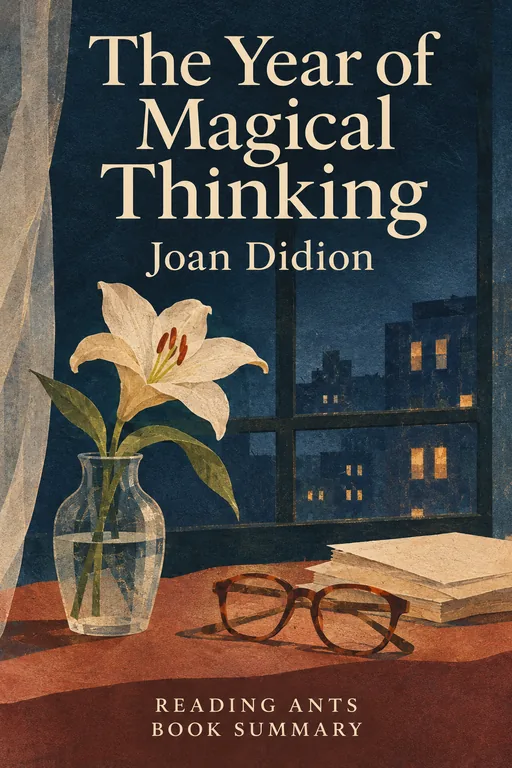
The Year of Magical Thinking
Joan Didion
Joan Didion writes with precision and restraint about the year after her husband's sudden death, when she also faced her daughter's grave illness, and she examines how grief can warp thinking and time.
👤 Real Lives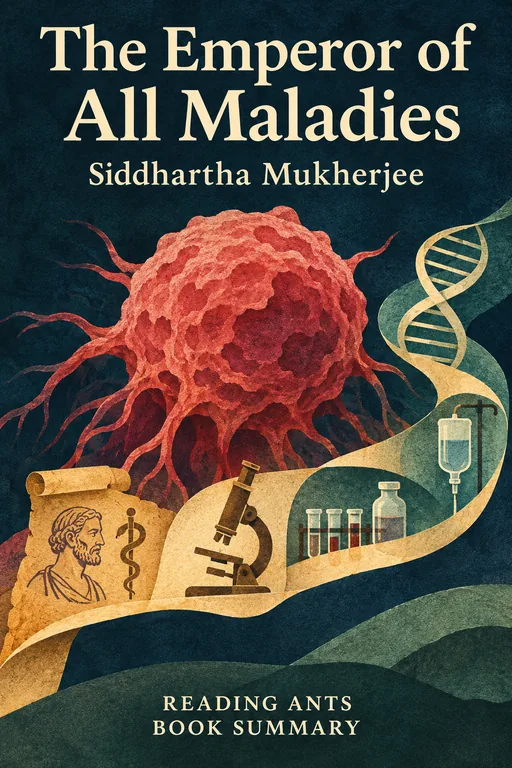
The Emperor of All Maladies
Siddhartha Mukherjee
Physician Siddhartha Mukherjee tells the history of cancer from ancient times to the present, showing how doctors and researchers have fought a disease that is, at its heart, a distortion of our own cells.
🔬 Science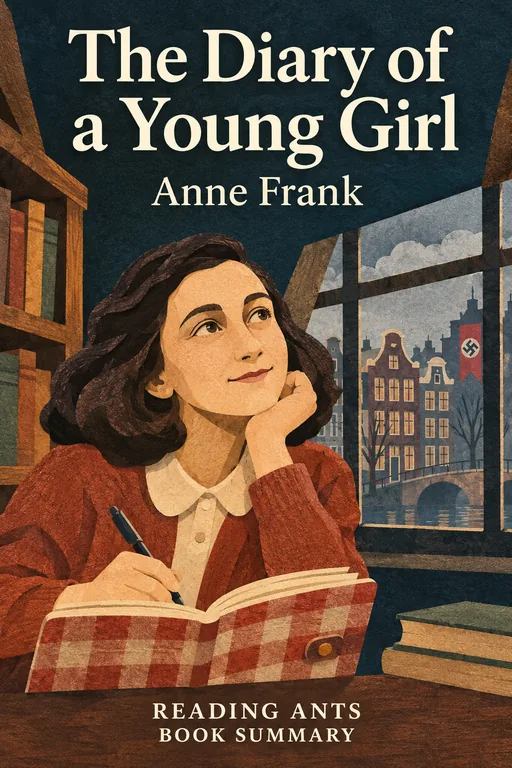
The Diary of a Young Girl
Anne Frank
A Jewish teenage girl hiding from the Nazis in a secret apartment in Amsterdam records two years of fear, family quarrels, first love and big dreams in a diary that became one of the most famous books in the world.
👤 Real LivesWant something different?
Pick another topic and we will show you three books to start with.