 Reading Ants
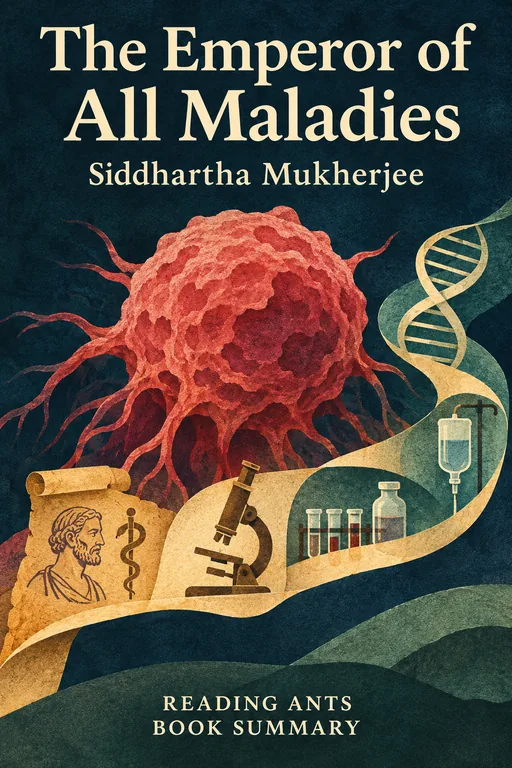
The Emperor of All Maladies
Physician Siddhartha Mukherjee tells the history of cancer from ancient times to the present, showing how doctors and researchers have fought a disease that is, at its heart, a distortion of our own cells.
Overview
The Emperor of All Maladies: A Biography of Cancer was written by Siddhartha Mukherjee, a cancer physician and researcher who trained in India, the United States and Britain, and published in 2010. It won the Pulitzer Prize for General Nonfiction in 2011. Mukherjee describes the book as a “biography” of cancer because he treats the disease as if it were a living character with a long life story. The narrative is interwoven with the experience of his own patients, including a woman called Carla, whose fight with leukemia gives the book a human thread. It is a history of ideas, scientists, patients and the long search for treatments and prevention.
Full Summary
1. Ancient disease and early surgery
The idea: Mukherjee begins with the earliest descriptions of cancer, which appear in ancient Egyptian writings and in the works of Greek doctors. The name comes from the Greek word for crab, because tumors seemed to grip the body with claws. For centuries, doctors could do little. In the late nineteenth century, surgeons such as William Halsted pioneered the radical mastectomy, removing the breast and surrounding tissue. Believing that more extensive surgery would cure more people, surgeons performed ever more drastic operations, which later proved no better than less extreme ones in many cases.
In real life: Treatments that seem logical, such as “cut out more,” need testing, which is why modern medicine relies on clinical trials.
2. Chemotherapy and the first cures
The idea: In the 1940s, the pathologist Sidney Farber in Boston treated children with leukemia using a chemical that blocked a vitamin needed by cancer cells, producing temporary remissions. This was a major early step toward modern chemotherapy, following earlier trials of nitrogen mustard. Later researchers developed combinations of drugs that cured some childhood leukemias and some lymphomas. These successes encouraged hope, but the treatments were harsh, causing severe side effects, and doctors faced the ethical problem of how much suffering to ask patients to bear.
In real life: Many children with leukemia today survive because of the combination therapies first tested in those years.
3. The war on cancer and public support
The idea: Farber teamed with the wealthy philanthropist Mary Lasker to lobby for government funding. In 1971, President Richard Nixon signed the National Cancer Act, launching what became known as the war on cancer. The campaign raised huge sums and expectations, perhaps too high. Mukherjee shows how political pressure and optimism sometimes outpaced the science, as researchers hoped for a quick victory and found instead that cancer was a diverse and adaptable foe.
In real life: Big funding programs can speed research but may also encourage unrealistic promises.
4. Prevention and screening
The idea: Another part of the story concerns prevention. Evidence linking smoking to lung cancer, the subject of landmark studies in the 1950s, led to public health campaigns, though the tobacco industry fought them for decades. Screening tests, such as mammograms and Pap smears, helped to detect cancers early, but also raised questions about overdiagnosis and false alarms. Mukherjee argues that prevention, such as cutting tobacco use, may save more lives than many new treatments.
In real life: Quitting smoking, vaccination against viruses that cause cancer and regular screening are practical ways to lower risk.
5. The cancer cell and the genetic revolution
The idea: In the later decades of the twentieth century, scientists, including Michael Bishop and Harold Varmus, discovered that cancer arises from changes in the genes of normal cells. Oncogenes drive cells to grow uncontrollably, while tumor suppressor genes normally act as brakes. Cancer, Mukherjee explains, is a disease of our own genome, in which cells follow the same drive to survive and reproduce, but without limits. This view helped explain why cancer is so hard to eradicate: its cells are our own, evolving as they grow.
In real life: Because tumor cells mutate, a drug that works at first may later stop working as resistant cells survive.
6. Targeted therapies and the future
The idea: Knowledge of the genetic basis of cancer led to targeted therapies, drugs designed to attack specific molecular changes. An example is imatinib, sold as Gleevec, which turned a deadly form of leukemia into a manageable condition for many patients. Mukherjee also describes immunotherapy and the hope of personalized medicine. He ends with cautious optimism: cancer may never be wholly conquered, but we may learn to live with it, to control it and to prevent much of it.
In real life: Doctors now often test a tumor’s genes to choose the most suitable drug for each patient.
Why It Matters
The Emperor of All Maladies has been praised as one of the most important popular science books of recent years. It brought the history of a feared disease to a broad audience in an accessible and humane way, and helped many patients and families understand what they were facing. It was adapted into a television documentary series on PBS in 2015, directed by Barak Goodman, with Ken Burns as executive producer.
The book also shows how science works: with false starts, rivalries and persistence. Medical students and general readers alike have used it to gain perspective on how treatment advances and what challenges remain.
It has also influenced how doctors speak with patients, since it models a way of describing a serious illness honestly and with compassion. Many readers who were diagnosed with cancer report that the book helped them to ask better questions of their medical teams.
Key Takeaways
- Cancer is old and complex. It has been known for thousands of years, and it has many forms.
- Medicine advances in steps. Surgery, chemotherapy, genetics and targeted drugs each added something.
- Prevention matters. Reducing smoking and screening save many lives.
- Cancer arises from our own cells. That is why it is hard to treat.
- Hope and humility go together. Progress is real but slower than hoped.
What We Can Learn
The book teaches that big problems are rarely solved by a single breakthrough. Progress in cancer came from many people, working over decades, and from learning from failures as well as successes.
It also shows the importance of empathy in medicine. Mukherjee reminds us that behind every statistic is a person with fears and hopes, and that good care means treating the person as well as the disease.
Finally, it encourages us to value prevention and to support research. Choices such as not smoking, getting vaccinated and following screening guidelines can reduce risk, and public funding for science helps new treatments reach patients.
Criticism and Counterpoints
Some reviewers found the book long and dense, with too many names and details for general readers, and a few felt that the structure, which jumps between history and personal stories, was uneven. Cancer specialists have pointed out that some simplifications are made for readability, and that some areas, such as non-Western contributions and the details of newer therapies, receive less attention.
The book was published in 2010, so it does not cover major developments in immunotherapy and genetic treatments that came later. Some critics also felt that Mukherjee’s “war” language and focus on medical heroes understate the role of patients and caregivers. Nonetheless, it is widely regarded as a landmark of science writing.
Who Should Read It
This book suits older teenagers and adults. It is long and discusses serious illness and death, so it may be emotional for people who have been affected by cancer. It rewards readers who want a full picture of the disease, and can be read in parts.
Want the whole book?
A summary is a taste, not the meal. Here is where to find the full book.
You reached the end 🎉
Nicely done. Mark this one as read, and we will suggest what to read next.
Read this next
When Breath Becomes Air
Paul Kalanithi
Paul Kalanithi, a young neurosurgeon, writes about facing terminal lung cancer at thirty-six and asks what makes a life meaningful when time is short.
👤 Real Lives
Being Mortal
Atul Gawande
Surgeon and writer Atul Gawande argues that modern medicine is good at fighting death but poor at helping people live well as they age and approach the end, and that doctors and families should focus on what matters most to the person.
👤 Real Lives
The Immortal Life of Henrietta Lacks
Rebecca Skloot
Doctors took cells from Henrietta Lacks, a poor Black woman, without telling her, creating the HeLa cell line that transformed medicine; Rebecca Skloot tells the story of the woman and her family.
🔬 Science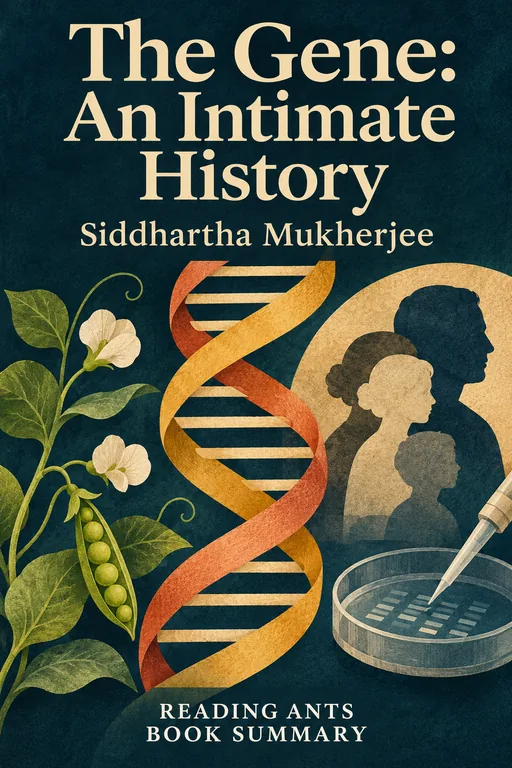
The Gene: An Intimate History
Siddhartha Mukherjee
Physician and writer Siddhartha Mukherjee tells the story of the gene, from Mendel's pea plants to gene editing, weaving in the history of his own family's experience with mental illness and asking what mastery over heredity means.
🔬 Science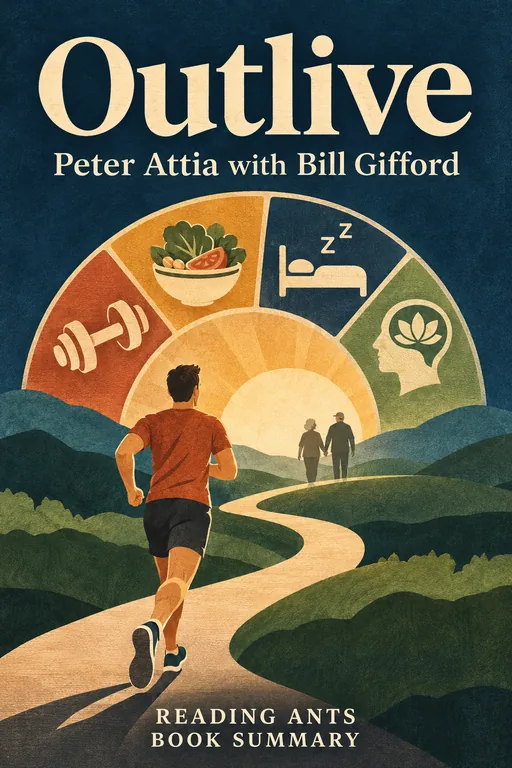
Outlive
Peter Attia with Bill Gifford
To live longer and better, we should work early to prevent the chronic diseases that kill most people, by training the body with exercise, paying attention to nutrition and sleep, and caring for our mental health.
🍎 Health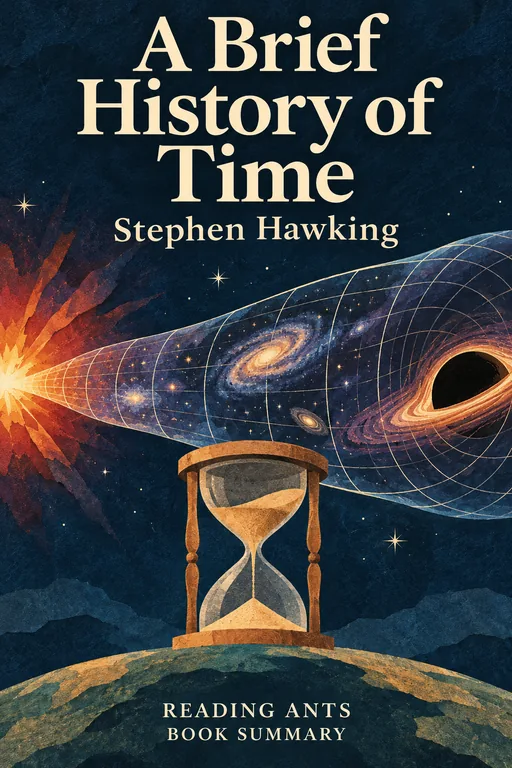
A Brief History of Time
Stephen Hawking
One of the world's greatest physicists explains, with almost no math, what we know about the origin, structure and fate of the universe, from the Big Bang to black holes and the nature of time itself.
🔬 ScienceWant something different?
Pick another topic and we will show you three books to start with.