 Reading Ants
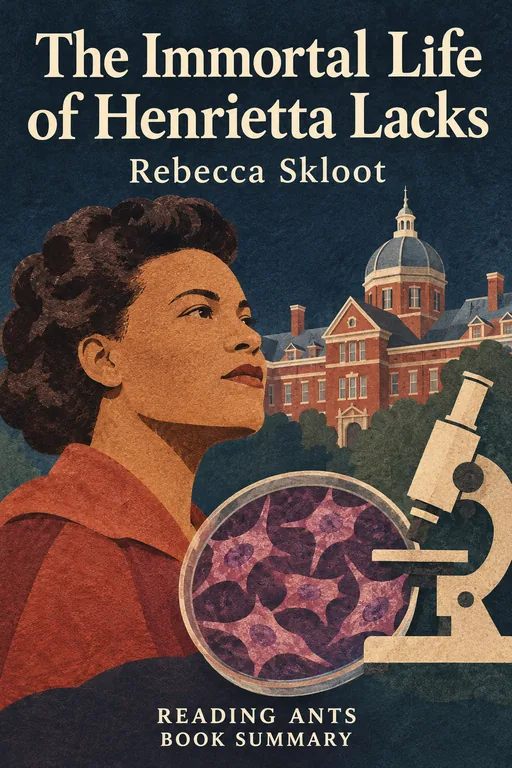
The Immortal Life of Henrietta Lacks
Doctors took cells from Henrietta Lacks, a poor Black woman, without telling her, creating the HeLa cell line that transformed medicine; Rebecca Skloot tells the story of the woman and her family.
Overview
The Immortal Life of Henrietta Lacks is a work of narrative science journalism by Rebecca Skloot, published in 2010 after a decade of research. In 1951, Henrietta Lacks, a young Black mother of five from Virginia, was treated for cervical cancer at Johns Hopkins Hospital in Baltimore. Without her knowledge or permission, a researcher took samples of her tumor. Unlike other human cells, they kept growing in the laboratory and became known as HeLa cells. They have been used in countless experiments around the world. The book interweaves the science of the cells, the story of Henrietta’s life and the story of her family, especially her daughter Deborah, and the author’s relationship with them.
Full Summary
1. Henrietta’s life and illness
The idea: Skloot introduces Henrietta Lacks, born in 1920 in Virginia into a family of tobacco farmers, who married her cousin David, called Day, and moved to Maryland, where he worked at a steel mill. She had five children. In 1951, she felt a knot in her womb and went to Johns Hopkins, one of the few hospitals that treated Black patients. Doctors diagnosed a malignant tumor and treated her with radium, but the cancer spread rapidly, and she died in October 1951 at the age of thirty-one.
In real life: At that time, segregation meant that Black patients often had to go to particular hospitals, which affected the care they received.
2. The cells that would not die
The idea: A doctor, George Gey, who ran a tissue culture lab at Hopkins, had long tried to grow human cells outside the body, but they always died. Samples of Henrietta’s tumor and healthy tissue were sent to him, taken without her informed consent, as was common practice then. Her tumor cells thrived and divided endlessly, doubling every day. Gey shared them with other scientists, and they became the first immortal human cell line, a tool that scientists around the world could use.
In real life: Researchers today still use cell lines to study diseases and test drugs without needing to repeatedly collect cells from patients.
3. HeLa and the advance of science
The idea: Skloot describes the scientific achievements made possible by HeLa. The cells were used to test the polio vaccine developed by Jonas Salk, and they were mass produced in a factory at the Tuskegee Institute. They were flown into space, exposed to radiation, used to study viruses, cancer and genes, and contributed to the development of treatments for many diseases. Their widespread use also led to problems: HeLa contaminated many other cell cultures, which wasted research, until it was discovered.
In real life: Vaccines and drugs we use today may have been tested on HeLa cells at some stage.
4. The family in the dark
The idea: For decades, the Lacks family did not know about the cells. They only learned about them years later, when researchers contacted them to ask for blood samples to study the genes. The family was confused and upset: they believed that Henrietta was being experimented on, or kept alive in a lab, and many companies were making money from the cells while the family could not afford health insurance. Her daughter Deborah, who never knew her mother, was especially anxious to learn what had happened to her.
In real life: Without clear explanations, people can fear the worst when they learn that parts of their relative are in laboratories.
5. Skloot and Deborah
The idea: Skloot spends years earning the trust of Deborah Lacks and her family. The two women begin a journey together, visiting the labs where HeLa cells are kept, seeing the cells under a microscope for the first time and traveling to Henrietta’s hometown. Deborah’s emotional ups and downs, her health problems and her mistrust of the medical world are part of the story. Along the way, Skloot also confronts the Lacks family’s experience of poverty and racism.
In real life: Building trust takes time, honesty and respect, especially when people have been treated unfairly.
6. Ethics, consent and ownership
The idea: In the later chapters, Skloot examines legal and ethical questions. Who owns tissue taken from a person’s body? Should patients be told and give consent for its use in research, and should they share in profits? She discusses a court case, Moore v. Regents of the University of California, in which a patient lost his claim to the profits from his cells. She also shows that debates about consent and ownership continue, and that Henrietta’s story has become part of those debates.
In real life: Today, patients are often asked to sign consent forms for research use of their tissue, though some details are still debated.
Why It Matters
The book was a long-running bestseller, won awards and was adapted into a 2017 film for HBO starring Oprah Winfrey. It brought attention to Henrietta Lacks and her family, who had been little known, and to questions about race, class and ethics in medical research. It is widely taught in science and ethics courses.
In 2013, scientists published the HeLa genome, which prompted a new discussion, and an agreement with the National Institutes of Health gave the family some say in how the genome data is used. The book helped to push the scientific community toward recognizing the contribution and dignity of patients whose tissues are used in research.
Skloot also set up a foundation that has helped members of the Lacks family with education costs, using money from the book’s royalties, which shows how a work of journalism can have real consequences for those it describes.
Key Takeaways
- One person’s cells changed medicine. HeLa has been used in countless experiments.
- Consent matters. Patients should know how their bodies are used.
- Race and poverty shaped the story. Inequality affected both care and recognition.
- Behind science are people. Every sample comes from someone.
- Trust must be earned. Researchers owe honesty to those they study.
What We Can Learn
The book teaches us to ask where scientific knowledge comes from, and who paid the price for it. When we benefit from a medicine or a vaccine, there may be people whose contribution deserves recognition.
It also teaches us to treat others with respect and openness. The Lacks family’s confusion shows that explaining things clearly, and listening, is part of ethical research.
Finally, it shows the power of curiosity and persistence. Skloot’s long effort to understand and tell Henrietta’s story turned a footnote in scientific history into a widely known account.
Criticism and Counterpoints
Some members of the Lacks family and others have criticized the book, saying that it exposed private family matters without enough permission, or that the family did not share fairly in the success of the book. Some scientists argue that the book is too harsh on researchers, who were following the standards of the time, and that the laws on tissue ownership are not as simple as the book suggests.
Others note that the book mixes several different stories, science, biography and memoir, which can make it feel uneven. Some critics also say that Skloot’s role as a character in the book distracts from Henrietta. Nonetheless, it is widely praised for bringing a neglected person’s story to light.
Who Should Read It
This book suits teenagers and adults. It includes illness, death and racism, and some distressing scenes of medical history. It is a good choice for discussion about science, ethics and equality.
Want the whole book?
A summary is a taste, not the meal. Here is where to find the full book.
You reached the end 🎉
Nicely done. Mark this one as read, and we will suggest what to read next.
Read this next
The Emperor of All Maladies
Siddhartha Mukherjee
Physician Siddhartha Mukherjee tells the history of cancer from ancient times to the present, showing how doctors and researchers have fought a disease that is, at its heart, a distortion of our own cells.
🔬 Science
Just Mercy
Bryan Stevenson
Lawyer Bryan Stevenson tells how he defended people condemned or imprisoned unfairly, especially a Black man named Walter McMillian who was sentenced to death for a crime he did not commit, and argues that mercy and justice must go together.
⚖️ Politics & Society
The Warmth of Other Suns
Isabel Wilkerson
Isabel Wilkerson tells the story of the Great Migration, in which about six million Black Americans left the South for cities in the North and West, through the lives of three people who made the journey.
🏛️ History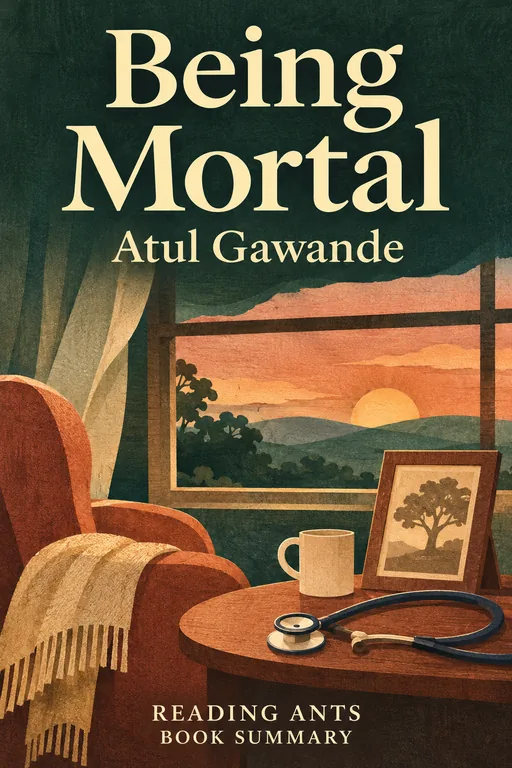
Being Mortal
Atul Gawande
Surgeon and writer Atul Gawande argues that modern medicine is good at fighting death but poor at helping people live well as they age and approach the end, and that doctors and families should focus on what matters most to the person.
👤 Real Lives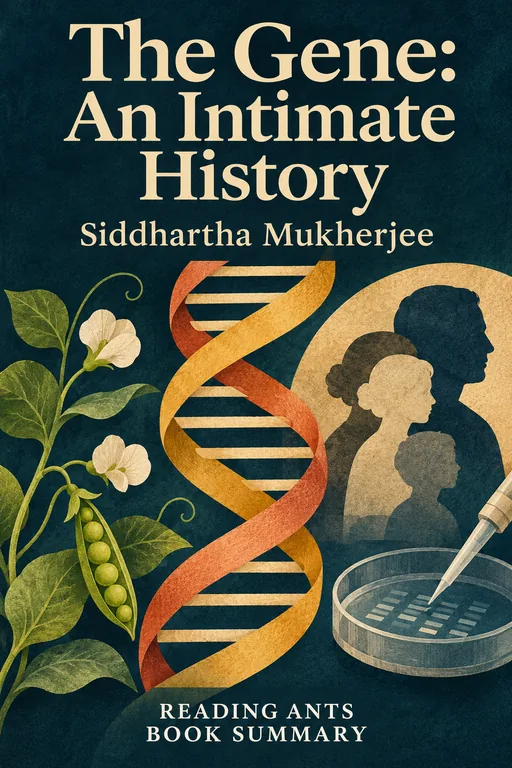
The Gene: An Intimate History
Siddhartha Mukherjee
Physician and writer Siddhartha Mukherjee tells the story of the gene, from Mendel's pea plants to gene editing, weaving in the history of his own family's experience with mental illness and asking what mastery over heredity means.
🔬 Science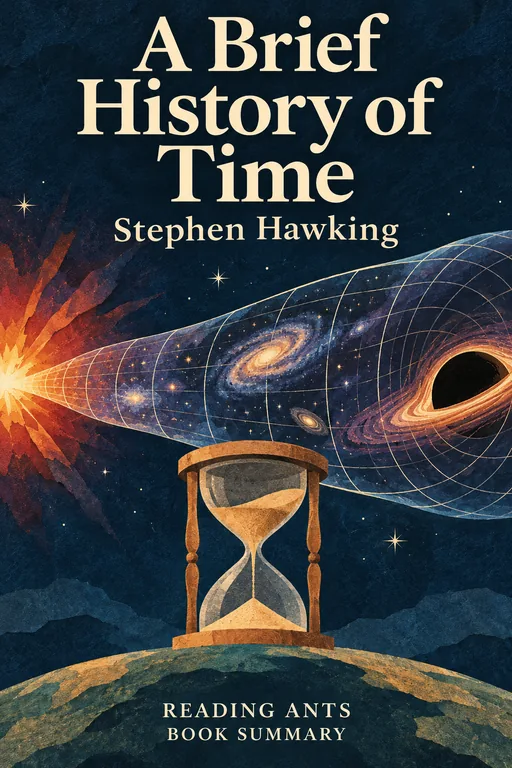
A Brief History of Time
Stephen Hawking
One of the world's greatest physicists explains, with almost no math, what we know about the origin, structure and fate of the universe, from the Big Bang to black holes and the nature of time itself.
🔬 ScienceWant something different?
Pick another topic and we will show you three books to start with.