
The Glass Castle
Jeannette Walls recounts a childhood with brilliant but irresponsible parents who moved constantly, left their children hungry and unsafe, and still gave them a sense of wonder, and how she and her siblings made their own way out.
Overview
The Glass Castle is a memoir by Jeannette Walls, a journalist who was born in 1960 and grew up in a family that wandered across the American Southwest and then settled in Welch, West Virginia. She published it in 2005, after keeping her origins secret for many years. Her father, Rex, was a charming, clever man who struggled with drinking, and her mother, Rose Mary, was an artist who preferred painting to housekeeping. The “glass castle” of the title is a house Rex promised to build for the family, with solar power and glass walls, but which never came to be. The book became an enormous bestseller, and a film version came out in 2017.
Full Summary
1. A childhood on the move
The idea: Jeannette’s earliest memory is of being on fire at age three, when she was cooking hot dogs on a stove and her dress caught light, which she describes with surprising calm. Her father, afraid of the hospital bills and distrustful of doctors, takes her out of the hospital without paying. She and her siblings, Lori, Brian and later Maureen, spent early years moving from town to town, often in the middle of the night, a practice her parents called “skedaddling” when they were hiding from bill collectors or from trouble. Rex tells the children that life is an adventure and teaches them about science and stars, while Rose Mary lets them choose what to eat and when.
In real life: Some children grow up believing their unsettled life is exciting, and only later see how much it cost them.
2. Dreams and disappointments
The idea: Rex dreams of building the Glass Castle, a house powered by the sun, and shows the children detailed plans. He gives them wonder, as when he lets Jeannette choose a star as a Christmas present. But he is often unemployed or drunk, and money disappears. Rose Mary says that she does not like being “tied down,” and she paints and writes rather than cook or clean. The children often go hungry, search for food in garbage cans and wear dirty clothes. Jeannette admires her parents but begins to notice that their promises are empty.
In real life: Loving a parent and being let down by them can happen at the same time, and both feelings are real.
3. Welch, West Virginia
The idea: When the family runs out of options, they move to Welch, West Virginia, the town where Rex grew up. They live in a run-down house with a leaking roof and no working plumbing. The children are teased at school and the town is poor and often unfriendly. Rex’s drinking worsens and he sometimes disappears. The siblings begin to rely on each other for survival, scavenging food and finding ways to make money. Jeannette starts working on the school newspaper and finds that she has a talent for writing.
In real life: Siblings who must rely on each other often form bonds that last a lifetime.
4. Taking charge
The idea: As the children grow older, they realize that no one will rescue them. Lori, who loves to draw, plans to leave for New York, and she and Jeannette start saving money. Jeannette works at jobs such as at the newspaper and a jewelry store, and hides her earnings from her father, who has taken money before. One by one, the children leave Welch for New York City, with Jeannette following when she is seventeen, to finish high school and work, and then attend Barnard College on a scholarship, later working as a journalist.
In real life: Planning ahead and saving small amounts, even in a hard situation, can open a path to a different life.
5. Reunion and a hard truth
The idea: Later, her parents also move to New York and, with little money, live as squatters in an abandoned building. Jeannette, now a successful writer with a comfortable life, feels ashamed and hides the truth about her family from friends and colleagues. When she finally tells her husband and others, she feels both relief and guilt. Her parents insist they prefer their way of life, and her attempts to help them are often refused. Her sister Maureen stabs their mother, is hospitalized and later moves to California, and the family learns that Rose Mary owns land in Texas, inherited from her own family, that is worth a great deal, even after years of hunger. The family gathers at holidays, with a mix of love and tension.
In real life: Sometimes we cannot fix someone else’s choices, even when we love them and have the means to help.
6. Acceptance
The idea: Rex dies in 1994 of a heart problem after a life of heavy drinking. Later, at a Thanksgiving gathering at Jeannette’s home, the family toasts his memory, and Jeannette reflects that, in spite of everything, her father gave her a sense of wonder and a love of learning. She comes to see her parents’ flaws and gifts together. In the end, she writes that she has accepted her story and her history, and that she sees the choice to tell it as a way to free herself of shame.
In real life: Accepting hard parts of one’s past can make it easier to move forward without hiding.
Why It Matters
The Glass Castle spent years on the bestseller lists and has been read widely in schools and book clubs. It offered a frank look at poverty and neglect, and at the way children can love parents who fail them. Many readers have said that it helped them speak about their own difficult childhoods.
The book is also an example of how a writer can tell a painful story without bitterness, mixing humor, honesty and compassion, and it has been often cited in conversations about resilience. Teachers and counselors sometimes recommend it to young people who feel alone in a hard family situation, because it shows that a difficult start does not have to decide the ending.
Key Takeaways
- Love and failure can coexist. Parents can be loving and still harmful.
- Children adapt to hardship. The siblings learned to survive.
- Education opens doors. School and scholarship were a way out.
- Shame can hide a story. Telling the truth brought relief.
- Acceptance isn’t approval. She understood her parents without excusing them.
What We Can Learn
The book invites us to be understanding and honest about family. Jeannette does not simply blame her parents, nor does she excuse them, which is a difficult balance that many people struggle to find.
It also shows how young people can take control of their future with planning and effort. The siblings’ choice to save money, work and apply for school were practical steps that changed their lives.
Finally, it reminds us not to judge people by appearances. Behind a shabby home or a ragged child there may be a story we do not know, and kindness costs little.
Criticism and Counterpoints
Some critics have said the book romanticizes parents who put their children in danger, and that Jeannette’s affectionate tone can seem to excuse neglect. Others have questioned how accurate some memories are, as the events are told from the viewpoint of a small child, and some family members have disputed parts of the story.
Readers also have different views on the way she portrays her mother, who is often shown as selfish. Some find the film adaptation softens the harshest parts. Still, many readers appreciate the book’s honesty and the humane way it treats everyone in the story.
Who Should Read It
This book suits older teenagers and adults. It includes scenes of neglect, alcohol abuse and a sexual assault attempt, and may be upsetting. It is a gripping memoir that works well for discussion groups.
Want the whole book?
A summary is a taste, not the meal. Here is where to find the full book.
You reached the end 🎉
Nicely done. Mark this one as read, and we will suggest what to read next.
Read this next

Educated
Tara Westover
A girl raised by survivalist parents in the mountains of Idaho, with no school, no birth certificate and no doctors, teaches herself enough to reach university and eventually earns a PhD from Cambridge, at the painful cost of her family.
👤 Real Lives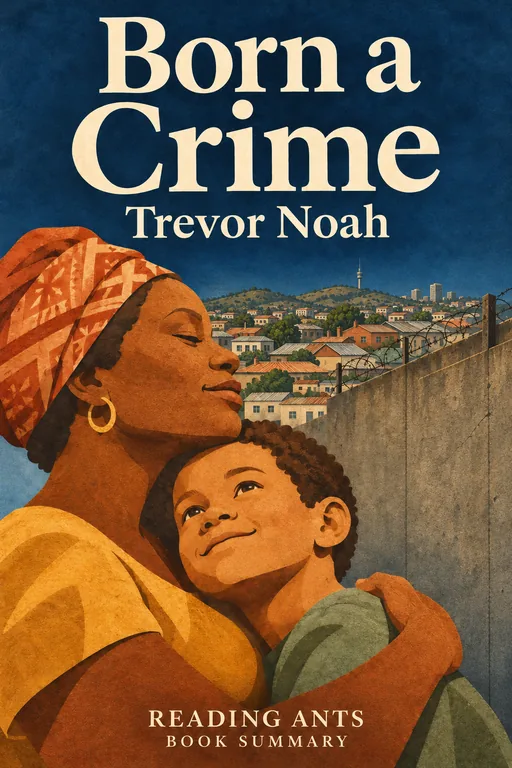
Born a Crime
Trevor Noah
Trevor Noah, the comedian, recounts growing up in South Africa as the child of a Black mother and a white father at a time when their relationship was a crime, and pays tribute to the mother who raised him.
👤 Real Lives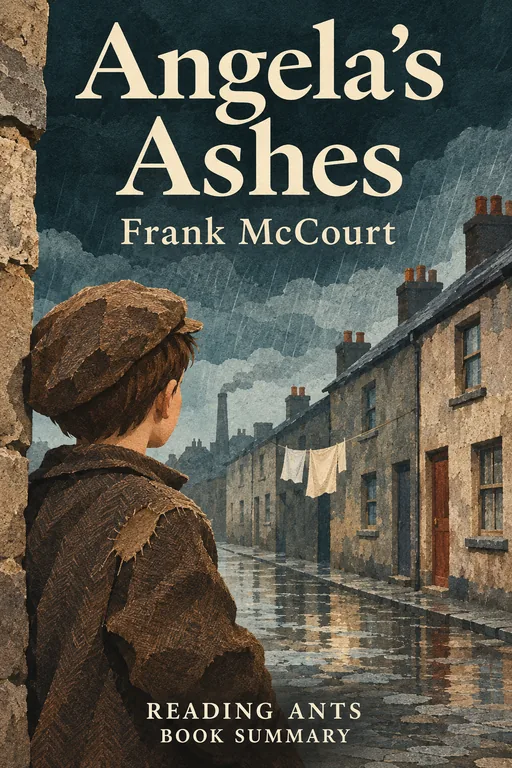
Angela's Ashes
Frank McCourt
Frank McCourt looks back at his childhood in the slums of Limerick, Ireland, where hunger, rain and a father's drinking could not quite silence the humor, stories and stubborn hope of a boy who dreamed of America.
👤 Real Lives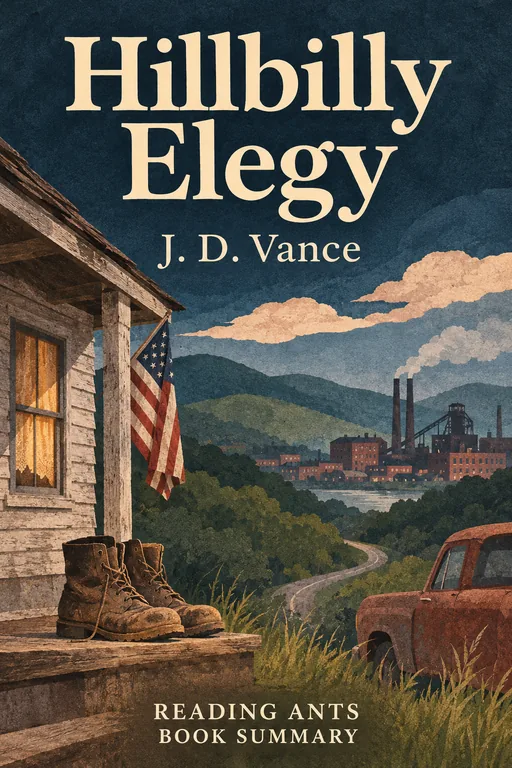
Hillbilly Elegy
J. D. Vance
J. D. Vance recalls growing up in a struggling Ohio steel town in a family from Kentucky's Appalachian hills, marked by poverty and addiction, and uses his story to reflect on the troubles of white working-class America.
⚖️ Politics & Society
Man's Search for Meaning
Viktor E. Frankl
A psychiatrist who survived the Nazi concentration camps explains that even in the worst suffering, people can choose their attitude, and that finding a reason to live is what gives us the strength to endure.
👤 Real Lives
The Diary of a Young Girl
Anne Frank
A Jewish teenage girl hiding from the Nazis in a secret apartment in Amsterdam records two years of fear, family quarrels, first love and big dreams in a diary that became one of the most famous books in the world.
👤 Real LivesWant something different?
Pick another topic and we will show you three books to start with.