 Reading Ants
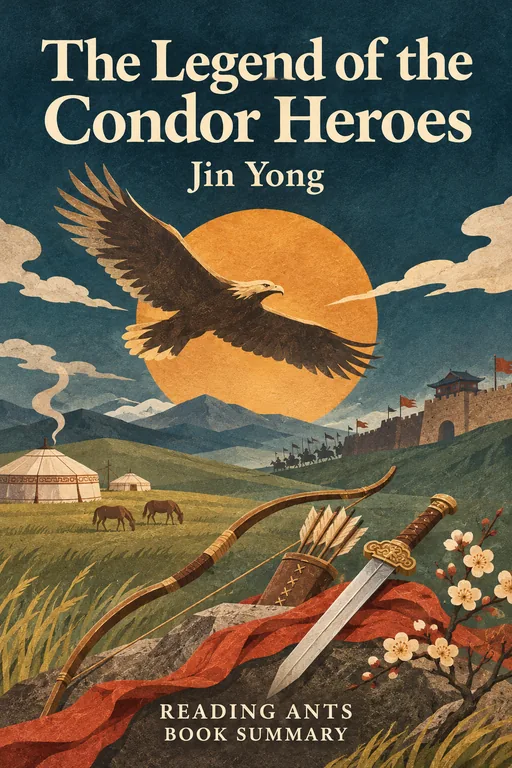
The Legend of the Condor Heroes
Original title: 射雕英雄传
A simple, honest young man raised on the Mongolian steppe grows into a great martial artist, and, with a clever, loving companion, comes to defend his homeland against invasion.
Overview
The Legend of the Condor Heroes is a martial arts novel by the Hong Kong writer Jin Yong (Louis Cha), first serialized in a newspaper from 1957. It is set in China in the late twelfth and early thirteenth centuries, when the Southern Song dynasty is threatened by the Jin and the rising Mongols under Genghis Khan. It is a “wuxia” story, a tale of chivalrous fighters who live by a code of honor. Hugely popular across the Chinese-speaking world, it mixes history, adventure, romance and philosophy.
Main Characters
- Guo Jing: a slow-witted but very honest, brave and loyal young man.
- Huang Rong: a clever, mischievous, loving girl, who becomes Guo Jing’s companion.
- Yang Kang: the son of a patriot, who is raised in a Jin prince’s palace, and who is led astray.
- Hong Qigong: the beggar-sect master, a great fighter who loves food.
- Huang Yaoshi: Huang Rong’s father, the “Eastern Heretic,” an eccentric genius.
- Ouyang Feng: the “Western Venom,” a ruthless villain who wants a secret martial arts manual.
- Genghis Khan: the Mongol leader, who rewards Guo Jing with high rank and a royal betrothal, but whose wars Guo Jing cannot support.
Full Summary
Two Families
The story opens in a Song village, where two friends, Guo Xiaotian and Yang Tiexin, who are sworn brothers, meet a wandering Taoist master, Qiu Chuji. They become friends, and before he leaves he names their unborn children Guo Jing and Yang Kang. The two men also joke that two boys would become sworn brothers. Soon after, soldiers attack the village, and the fathers die. The mothers are separated, and each raises a son in different circumstances.
One boy, Guo Jing, is raised on the Mongolian steppe, and the other, Yang Kang, is taken in by a Jin prince, who is secretly the enemy of his father.
A Boy on the Steppe
Guo Jing grows up among the Mongols, and is not clever, but he is honest and stubborn. He is taught by the Seven Freaks of Jiangnan, a group of martial artists who came to the north to find him, as part of a promise. His training is slow, but he works hard.
He also befriends the young Mongol prince, Tolui, and wins the respect of Genghis Khan. He becomes a soldier, and he helps the Mongols to win a battle, but he is troubled by what he sees.
Huang Rong
On a journey to the south, Guo Jing meets a young beggar who is actually Huang Rong, a clever girl in disguise, who has run away from home. She is quick-witted and playful, and she teaches him to think. They become close friends.
Huang Rong tricks the great beggar chief Hong Qigong into teaching Guo Jing his famous “Eighteen Dragon-Subduing Palms,” by cooking marvelous food. Guo Jing also learns other secret skills, including a text called the Nine Yin Manual, which is much desired by the martial arts world.
Rivals and Enemies
Many villains, such as Ouyang Feng, chase the manual, and the story is full of ambushes and duels. Huang Rong’s father, Huang Yaoshi, who is protective of her, initially disapproves of Guo Jing. Yet he comes to respect him.
Meanwhile, Yang Kang, who has been raised in luxury, does not share his father’s sense of duty, and is drawn toward the Jin court. He is repeatedly given the chance to change, but he does not. In the end he is tied to the murder of Guo Jing’s teachers, and he dies of poison in an old temple. Guo Jing, despite everything, buries his remains.
The War
Genghis Khan, who has grown more powerful, decides to invade the lands to the west, and later the Song. Guo Jing is torn: he owes the Khan a great debt for his kindness, but he cannot take part in the killing of innocent people. He leads Mongol troops in the western campaign, but he is sickened by the destruction, and he begs the Khan to spare the people of Samarkand, which angers his comrades. When the Khan turns his eye on the Song, Guo Jing refuses to attack his homeland and goes back to the south.
Later, when Mongol armies press on China, Guo Jing and Huang Rong help defend a city against them, and Guo Jing faces his sworn brother Tolui across the field. The old and ailing Genghis Khan calls Guo Jing to a last meeting. Guo Jing tells him frankly that conquest does not make a hero, and the Khan dies soon after. Guo Jing and Huang Rong then leave the Mongol camp and head south. Their later fame as defenders of the city of Xiangyang, an important stronghold in the south, is told in the sequels.
The Condors
The Chinese title speaks of eagle-shooting heroes, and large birds of prey, called “condors” in English, take a part in Guo Jing’s story: Princess Huazheng gives him a pair of white eagles, which later carry messages. Another famous episode is the great contest on Mount Hua, where the top fighters compete for the title of the best martial artist. The ruthless Ouyang Feng, who has chased power and the manual all his life, wins the duels of strength but is outwitted by Huang Rong and runs away in terror. Afterward, Huang Yaoshi invites Guo Jing to his island to marry Huang Rong.
The book ends with Guo Jing and Huang Rong together, as heroes whose story is not yet done. It continues in the sequels, The Return of the Condor Heroes and The Heaven Sword and Dragon Saber.
Why It Matters
Jin Yong is the most widely read martial arts novelist in the Chinese language, and The Legend of the Condor Heroes is his most famous work. It has been adapted for television and film many times. It popularized the idea that a “hero” is one who serves the people, not just his country or his leader. His characters have entered the common culture, and his ideal of the hero who serves ordinary people, developed further in the sequels, is often quoted in Chinese-speaking countries. The book has been translated into English, which has opened it to a new audience.
Key Takeaways
- True strength is moral. Skill matters less than character.
- Honesty and effort can beat cleverness. Guo Jing is slow but steady.
- Loyalty has limits. Guo Jing must choose between a debt and what is right.
- Friendship and love support greatness. Huang Rong complements Guo Jing.
- Ambition corrupts. The pursuit of power ruins many fighters.
What We Can Learn
The story teaches that persistence and honesty can lead to success, even without natural gifts. Guo Jing shows that being a hard worker and a good friend is a form of strength.
It also encourages us to think about duty and loyalty, and to ask when we must stand against those who raised us, if their actions are wrong. Finally, the relationship between Guo Jing and Huang Rong shows how different strengths can complement each other. His steadiness and her cleverness make them a team, and the story suggests that a good partnership, whether in love, work or friendship, depends on respecting what the other person does best.
Criticism and Counterpoints
Some readers find the plot, with its many characters and coincidences, to be too complicated. The martial arts fights are not realistic and can be repetitive. The female characters, though lively, are often defined by their relationship to the male hero. Some critics argue that the book’s national feeling is too strongly Han Chinese, and that its portrayal of the Mongols and other peoples is not always fair. Violence is frequent.
Who Should Read It
This book is for teens and adults who like epic adventures, martial arts and historical stories. It is very long, and the English translation is published in several volumes. Those who love fantasy and heroic quests may find it a delight.
Want the whole book?
A summary is a taste, not the meal. Here is where to find the full book.
You reached the end 🎉
Nicely done. Mark this one as read, and we will suggest what to read next.
Read this next
Water Margin
Shi Nai'an
A band of one hundred and eight outlaws gather in a marsh stronghold to fight corrupt officials, and in the end accept the government's offer of pardon, with tragic results.
🌍 World Literature
Romance of the Three Kingdoms
Luo Guanzhong
As the Han dynasty collapses, warlords, strategists and sworn brothers struggle to reunify China, discovering that loyalty and brilliance cannot permanently master political change.
🌍 World Literature
Journey to the West
Wu Cheng'en
A rebellious, magical Monkey King and two monstrous companions protect a gentle Buddhist monk on his long, demon-filled journey from China to India to bring back holy scriptures.
🌍 World Literature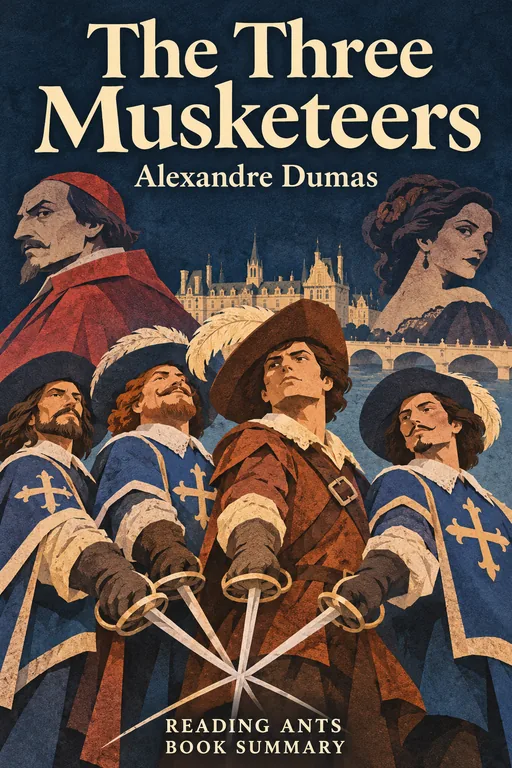
The Three Musketeers
Alexandre Dumas
A young Gascon swordsman travels to Paris in the 1620s to join the King's Musketeers, befriends three legendary soldiers, and together they fight to protect the Queen's honor against the scheming Cardinal Richelieu and the dangerous Milady.
🌍 World Literature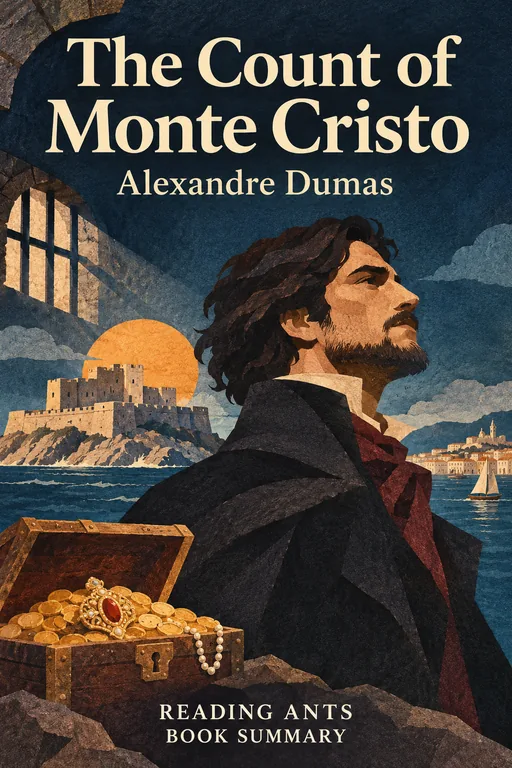
The Count of Monte Cristo
Alexandre Dumas
A young sailor, betrayed by jealous rivals and thrown into a dungeon for fourteen years, escapes with the help of a fellow prisoner, finds a vast treasure and returns as a mysterious, powerful count to take elaborate revenge on those who ruined him.
🌍 World Literature
The Little Prince
Antoine de Saint-Exupery
A pilot stranded in the desert meets a small boy from a tiny planet, who teaches him that the most important things in life, like love and friendship, can only be seen with the heart.
🌍 World LiteratureWant something different?
Pick another topic and we will show you three books to start with.