 Reading Ants
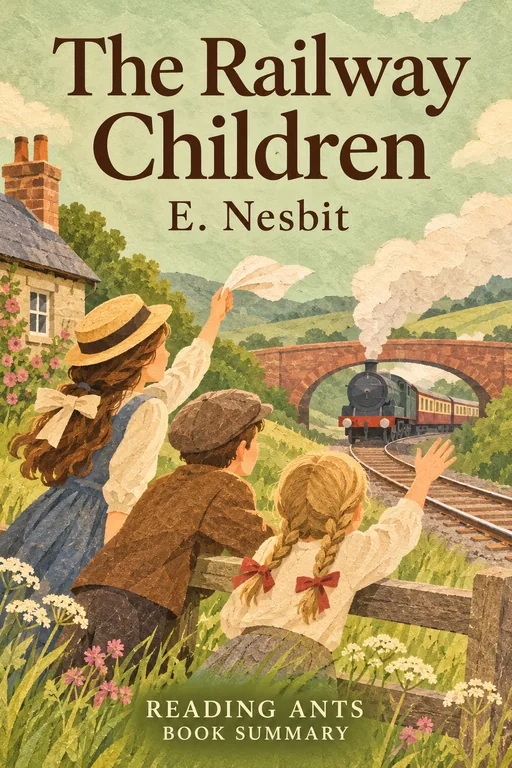
The Railway Children
When their father is mysteriously taken away, three children move with their mother to a house beside a railway line, where they find friends, adventure and a chance to help others, while they wait for their father's return.
Overview
The Railway Children is a children’s novel by the English writer E. Nesbit, first published as a magazine serial and then as a book in 1906. It tells the story of Roberta, Peter and Phyllis, who have lived comfortably in London until their father suddenly disappears. Their mother takes them to a small house in the countryside near a railway, where the children become fascinated by the trains and the people who work on them. The book is warm, funny and moving, and it was made into a well-known film in 1970.
Main Characters
- Roberta, called Bobbie: the eldest, thoughtful and kind, who is the most observant of the children.
- Peter: the brother, energetic and fond of engines, who longs to do something useful.
- Phyllis: the youngest, cheerful and quick to help.
- Mother: a loving, brave woman who writes stories to earn money.
- Perks: the friendly station porter who becomes a friend to the children.
- The Old Gentleman: a kind, well-off man who travels on the morning train and takes an interest in them.
- Father: the children’s father, who is taken away for reasons that are only explained later.
Full Summary
The sudden change
The three children live in a pleasant London villa with their parents. One evening, two men come to the house and take Father away, and Mother tells the children that he has gone on business. The family’s comfortable life ends. Mother explains that they must live more simply, and they move to a small house called Three Chimneys, in the country. The children are puzzled and sad, but Mother asks them to be good and happy, to stop quarrelling, and not to ask questions about Father’s trouble.
Life by the railway
At their new home, the children find that the railway line runs near the house. They become friends with Perks, the station porter, and with the station master, after an early scrape over some coal that Peter took, and they wave each day to the morning train, which they imagine carrying their love to Father. One day a hand waves back from a first-class carriage, and the children come to know the owner as the kind old gentleman who always travels on that train. They like to think that he may know Father. The railway becomes a place of adventures, and they grow fond of the workers, and learn about the ways of the station.
The red petticoats
One day, the children discover that heavy rain has caused a landslide that has blocked the railway line, and that a passenger train will soon come around the bend. Bobbie and Phyllis take off their red flannel petticoats and, with Peter, tear them into flags on sticks, and the three of them wave them on the line. The driver sees the signals and brings the train to a halt in time. The children are celebrated as heroes, and later the railway company honors them at a small ceremony, where each of them is given a gold watch.
Helping others
The children continue to find ways to be kind. One wet day they meet a Russian writer at the station, who had been imprisoned for a book about poor people, and Mother takes him in. Bobbie asks the old gentleman, who turns out to be a director of the railway, to help find the man’s wife and children, and he succeeds. The children also plan a birthday for Perks, with gifts from the neighbors, which at first offends him because he takes it for charity until Bobbie explains. Later a schoolboy named Jim breaks his leg in the railway tunnel during a paper chase. The three children go to his rescue, and Bobbie stays with him while the others fetch help. He is carried to Three Chimneys and nursed by Mother, and he turns out to be the old gentleman’s grandson. The children’s good deeds reveal their character, and make them dear to the village.
The truth about Father
Meanwhile, Mother is working hard, and the family is short of money. Bobbie learns from an old newspaper, wrapped around a parcel, that her father had been convicted of selling state secrets to the Russians and sent to prison, and she is horrified but sure that he is innocent. Mother tells her the whole story and says that someone must have planted the evidence. Bobbie writes to the Old Gentleman, who is a person of influence, and asks him to help. He tells her that he had already doubted the verdict and has been looking into the case. Thanks to the Old Gentleman’s efforts, the guilty man is caught and Father is freed.
Father comes home
One autumn morning, villagers greet Bobbie in odd and friendly ways because they have seen the news in the papers. She goes down to the station and waits for the train, not knowing what to expect. A train arrives and only three passengers get out, and the third is her father. She cries out in joy, and runs to him, and the family is reunited. The story ends with the children’s happiness, and with the sense that the kindness they gave to others has been returned to them, and that their patience and trust in their father have been justified.
Why It Matters
The Railway Children is one of the most loved English children’s novels, remembered for its warmth, humor and its picture of Edwardian childhood. It balances an adventure with an emotional story of a family’s loyalty and hope, and shows children acting with courage and kindness. The scene in which Bobbie sees her father at the station is among the most famous moments in children’s literature. The book has been adapted for radio, television and cinema, and it helped to establish the family story as a lasting form. It also reflects the excitement of the railway age.
Key Takeaways
- Kindness comes back. The children’s good deeds bring them help later.
- Courage can be practical. The red petticoats save a train.
- Family loyalty endures hardship. The children trust their father.
- Cheerfulness helps in difficulty. Mother’s brave example holds the family together.
- Everyone’s contribution counts. Even young children can make a difference.
What We Can Learn
You can learn from the children to meet change with courage, and to look for ways to help others even when your own life is hard. The story shows that trust and loyalty matter when the truth is not yet known, and that asking for help from the right person can resolve a problem. It also encourages curiosity about how things work, whether trains or other systems. Try doing a small act of kindness each day, as the children do, and notice how it changes the people around you and yourself.
Criticism and Counterpoints
Some modern readers find that the book is sentimental, and that the children behave with a degree of virtue and good luck that seems unlikely. Others note that its picture of class and charity reflects Edwardian attitudes, in which poor people accept gifts gratefully from the well-off, and that a few passages, such as those about the Russian exile and foreigners, show the prejudices of their time. The mystery of Father’s crime, and the speed of its resolution, may also seem too neat. Even so, the book is admired for its charm and humor.
Who Should Read It
This book is for children from about eight, for families who like to read together, and for adults who enjoy classic stories. It can be read aloud over many evenings. Some of the language and customs are old-fashioned, but the feelings are timeless.
Want the whole book?
A summary is a taste, not the meal. Here is where to find the full book.
You reached the end 🎉
Nicely done. Mark this one as read, and we will suggest what to read next.
Read this next
Little Women
Louisa May Alcott
Four very different sisters grow up together in a loving but poor family in New England during and after the American Civil War, learning about love, ambition, loss and finding their own paths in life.
📜 Classics
The Secret Garden
Frances Hodgson Burnett
A lonely, spoiled orphan sent to live in a gloomy English mansion discovers a locked, forgotten garden, and as she brings it back to life with two new friends, she and her sickly cousin are healed too.
🧸 Children's Books
Anne of Green Gables
L. M. Montgomery
A talkative, imaginative red-haired orphan is sent by mistake to an elderly brother and sister who wanted a boy, and she wins their hearts and fills their quiet farm with life.
🧸 Children's Books
Heidi
Johanna Spyri
An orphan girl brings joy to her grumpy grandfather in the Swiss Alps, is taken away to a sad city life, and then returns home to the mountains she loves.
🌍 World Literature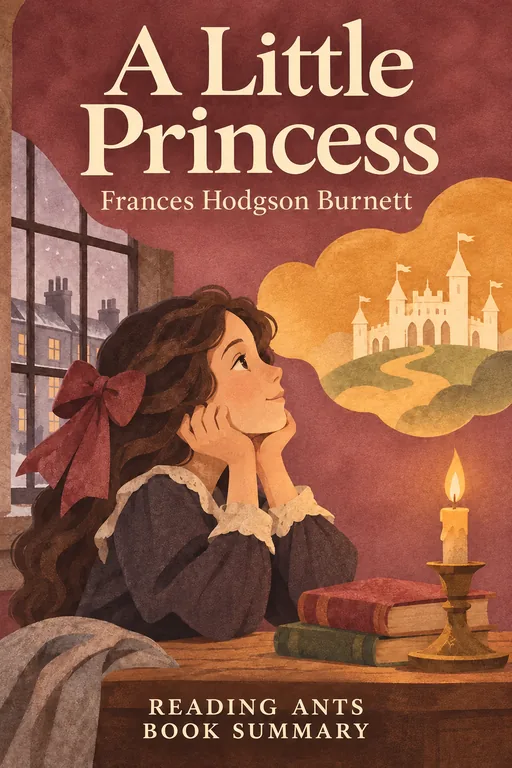
A Little Princess
Frances Hodgson Burnett
When her wealthy father dies and leaves her penniless, a kind, imaginative girl named Sara Crewe is forced to become a servant at her boarding school, but she holds on to her inner dignity, and her kindness is eventually rewarded.
🧸 Children's Books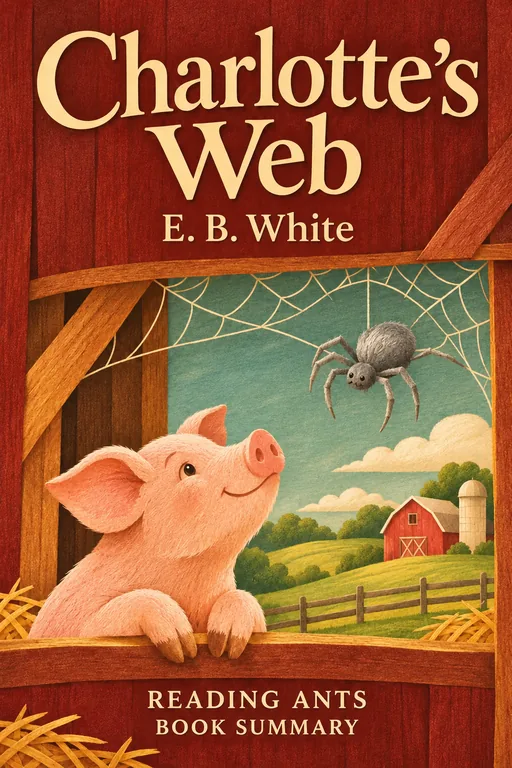
Charlotte's Web
E. B. White
A lonely pig named Wilbur learns he is going to be killed, and his clever friend Charlotte, a spider, comes up with an amazing plan to save his life.
🧸 Children's BooksWant something different?
Pick another topic and we will show you three books to start with.