 Reading Ants
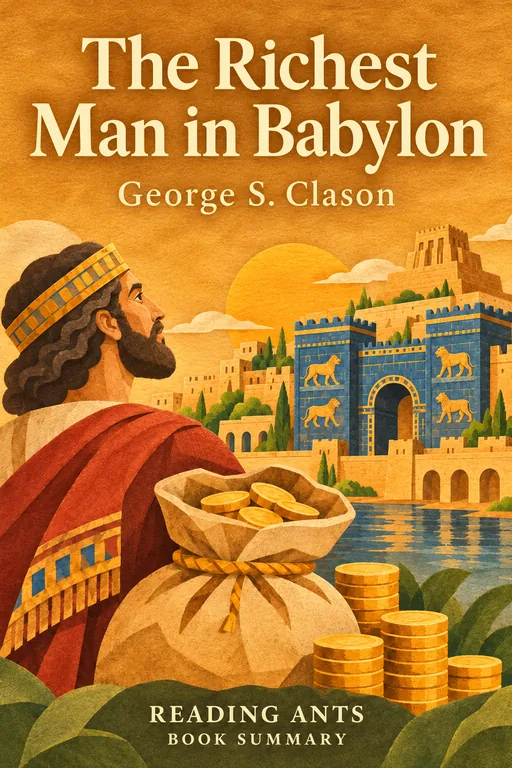
Through simple stories set in ancient Babylon, this short classic teaches that wealth comes from saving part of everything you earn, making that money work for you, and protecting it from loss.
Overview
The Richest Man in Babylon was written by George S. Clason, an American businessman and publisher, and was first published in pieces in the 1920s. Clason distributed pamphlets of the stories through banks and insurance companies, and they were collected into a book. The stories are set in Babylon, the ancient city, which Clason describes as the richest city of its time. Each parable shows a person learning a lesson about earning, saving, spending and investing. The language is deliberately old-fashioned, but the advice is plain: pay yourself first, live on less than you earn, and make your savings grow.
Full Summary
1. A man who wanted gold
The idea: The book opens with two friends, Bansir the chariot builder and Kobbi the musician, who are discouraged. They work hard all day but have no money. They wonder why some people have plenty while they have nothing, and decide to ask their rich old friend Arkad, the richest man in Babylon, how he did it. Arkad explains that he was once as poor as they are, and that he learned seven simple rules, which he calls the cures for a lean purse.
In real life: Many people feel stuck in the same position, working hard but never getting ahead, and wonder what the secret is.
2. Start thy purse to fattening
The idea: The first cure is to save at least one-tenth of everything you earn, and to keep it. Arkad calls this “paying yourself first.” He says that it is not about how much you earn, but about developing the habit of keeping a portion. A small amount saved regularly, he argues, grows into a fortune over time.
In real life: Putting aside one coin out of every ten you receive, such as from an allowance or a first job, teaches the habit.
3. Control thy expenditures
The idea: The second cure is to keep your spending in check. Arkad warns that people tend to adjust their spending to their income, calling all kinds of wants “necessary expenses.” He recommends writing down what you spend and separating what you truly need from what you merely want. He also says that nine-tenths of your earnings should be enough to live on.
In real life: Tracking your spending for a month can surprise you by showing how much goes to things you don’t remember buying.
4. Make thy gold multiply
The idea: The third cure is to put your savings to work, so that they earn more. Arkad describes lending money and investing it in ventures that he understands. He says money that sits idle does not grow, and that gold in the hands of the wise tends to multiply, while gold in the hands of the foolish disappears.
From the book: In one story, a man called Rodan, a spear-maker, asks an experienced lender for advice before deciding whether to lend money, showing the value of seeking advice from those who know.
In real life: Money kept in a drawer does nothing, while money saved in a sensible account or investment can slowly grow.
5. Guard thy treasures from loss
The idea: The fourth cure is to protect your money from risk. Arkad says the first rule of investment is safety of the principal, and that tempting promises of huge returns should be treated with suspicion. He recommends seeking the advice of people who are experienced with the type of investment, before parting with your savings.
In real life: A scheme that guarantees quick riches is more likely to cost you your savings than to double them.
6. A home, security and income
The idea: The fifth cure is to make your home a good investment, since owning a home gives security and can save the cost of rent. The sixth is to insure a future income for your old age and for your family, with savings and protection. The seventh is to increase your ability to earn, by learning more and becoming better at your work, since skill brings higher pay.
In real life: A student who learns a valuable skill increases the income they can earn later in life.
7. The five laws of gold and the lessons of debt
The idea: Another section of the book presents the “five laws of gold”: gold comes to those who save a part of their earnings; it works for those who invest it wisely; it is safe with those who consult experts; it slips away from those who invest in things they do not understand; and it flees from those who chase impossible returns. Other stories warn about debt, including a man who becomes a slave to his creditors and escapes only by discipline and hard work.
In real life: Paying off debts steadily, instead of ignoring them, is the first step toward freedom.
Why It Matters
The Richest Man in Babylon has sold millions of copies and has been read for nearly a century. It is a favorite of many people who say it taught them to save. Because the stories are short and the ideas are plain, it is often given as a first book on money, to young people and new workers.
Many modern personal finance books, from Rich Dad Poor Dad to The Millionaire Next Door, repeat its ideas, and the advice to pay yourself first is still widely taught. The book’s parables also showed a simple way to explain a difficult subject, with stories instead of charts.
Key Takeaways
- Pay yourself first. Save a portion of everything you earn, before you spend.
- Spend less than you earn. Control your expenses.
- Make your money work. Invest it wisely so it grows.
- Protect your savings. Beware of risky promises.
- Keep learning. Better skills lead to better income over a whole working life.
What We Can Learn
The book is a reminder that wealth is usually built through small, steady actions. Saving a little every time you receive money is something almost anyone can do, whether they earn a lot or only a little.
It also teaches caution. The stories show that the biggest losses come from chasing quick profits or trusting people with big promises, and that it pays to ask for advice from someone with experience.
Finally, it encourages us to improve our abilities. Learning a skill or finishing a course is itself an investment that can earn more over a lifetime.
Criticism and Counterpoints
Critics note that the book is very simple. It says little about modern tools such as stocks, index funds, retirement accounts or taxes, and some of its advice, such as lending to traders, doesn’t match how we invest today. Its picture of ancient Babylon is also more of a moral story than a historical record.
Others say that the book places all responsibility on the individual, and that “save ten percent” is easier for people with higher incomes than for those struggling to pay for basics. Some find the old-fashioned language heavy. Even so, many readers find the stories memorable and the core advice sound.
Who Should Read It
This short book suits readers of any age who want a first introduction to saving and investing. Its stories are easy to follow and it can be read in an evening. People looking for modern, detailed financial advice will want to supplement it with other books.
Want the whole book?
A summary is a taste, not the meal. Here is where to find the full book.
You reached the end 🎉
Nicely done. Mark this one as read, and we will suggest what to read next.
Read this next

Rich Dad Poor Dad
Robert T. Kiyosaki
Schools teach people to work for money, but the rich learn to make money work for them by understanding the difference between assets and liabilities and by building businesses and investments.
💰 Money & Economics
The Millionaire Next Door
Thomas J. Stanley and William D. Danko
Most wealthy Americans don't look rich: they live below their means, work steadily and save a lot, while many people who appear wealthy are really spending everything they earn.
💰 Money & Economics
Think and Grow Rich
Napoleon Hill
Napoleon Hill claims that wealth and success begin with a burning desire, firm belief and persistent action, and presents thirteen principles he says were distilled from the habits of successful people.
🌱 Self-Improvement
The Psychology of Money
Morgan Housel
How you behave with money matters more than how much you know about it, and good financial outcomes come from humility, patience and avoiding big mistakes, not from being the smartest person in the room.
💰 Money & Economics
I Will Teach You to Be Rich
Ramit Sethi
Ramit Sethi gives young adults a practical six-week program to set up accounts, automate saving and investing, and spend freely on what they love, without having to track every coffee.
💰 Money & Economics
The Wealth of Nations
Adam Smith
A nation's true wealth is not its stock of gold but the goods and services its people produce, and that wealth grows fastest when people specialize, trade freely and compete, with government providing justice, defense and public goods.
💰 Money & EconomicsWant something different?
Pick another topic and we will show you three books to start with.