 Reading Ants
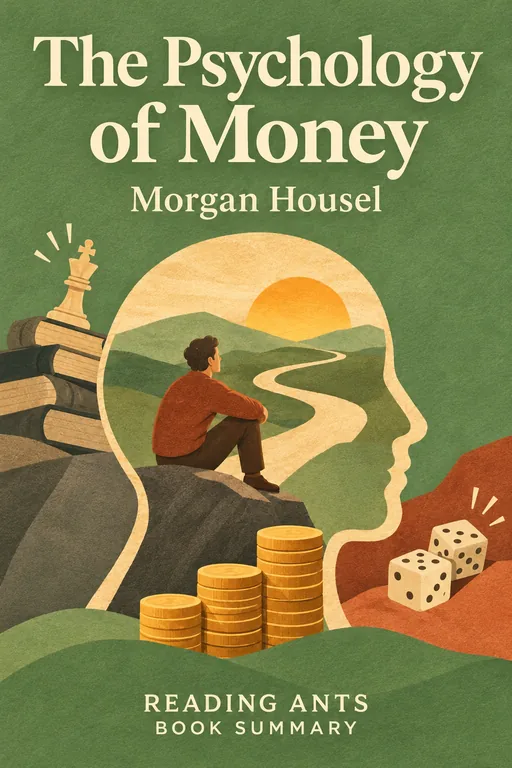
The Psychology of Money
How you behave with money matters more than how much you know about it, and good financial outcomes come from humility, patience and avoiding big mistakes, not from being the smartest person in the room.
Overview
The Psychology of Money was written by Morgan Housel, a former columnist who writes about finance, and published in 2020. The book is made up of short chapters, each telling a story about how people think about money. Housel’s central idea is that success with money is not a matter of intelligence or technical knowledge, but of behavior, which is hard to teach. Instead of formulas and charts, he uses stories from history, from famous investors and from ordinary people to show why smart people make bad decisions and why simple habits often win. It has become one of the most popular personal-finance books in recent years.
Full Summary
1. No one is crazy
The idea: People make financial decisions based on their own experiences, which are different. Someone who grew up during a recession may fear risk for life, while someone who lived through a boom may take bigger risks. Housel argues that these choices aren’t crazy, even when they look odd to others, because each person has a unique story. He says that your own experience represents a tiny slice of what has happened in the world, but it feels like the whole truth.
In real life: A grandparent who stores cash at home may have lived through a bank crisis, and the habit makes sense to them.
2. Luck and risk
The idea: Both luck and risk, Housel says, are forces that no one controls, and they are hard to see from the outside. When people succeed, we credit skill; when they fail, we blame poor choices, but both can be a matter of chance. He urges people to be less quick to idolize the successful or condemn the unlucky, and to focus on patterns that work in many situations, not on one dazzling example.
From the book: He tells how Bill Gates was lucky to attend one of the few high schools in the world with a computer in the late 1960s, which was a big part of his path to Microsoft.
In real life: A student who passes an exam after guessing a few answers should not assume they have mastered the subject.
3. Never enough
The idea: Some of the saddest stories in finance are of rich people who risked everything for more. Housel notes that wanting more than you need, and comparing yourself to others, can cause people to take foolish risks. The only way to avoid this is to decide what “enough” means for you. Things that are really valuable, like your reputation, your family and your freedom, are not worth risking for extra money.
In real life: A person who earns a comfortable income but keeps taking dangerous bets to “catch up” with friends is acting as if enough does not exist.
4. The power of compounding and time
The idea: Compounding means that growth builds on itself, so that results get much bigger over a very long time. Housel stresses that the key is time, not only returns. Many of the world’s best investors are rich because they started early and stayed invested for decades. Interrupting the process by panicking, spending or chasing quick gains destroys the effect.
From the book: He points out that most of Warren Buffett’s fortune came after his sixty-fifth birthday, thanks to the length of time he has been investing and not only to skill.
In real life: Saving a small amount every month starting at age twenty can beat saving a larger amount starting at forty.
5. Getting wealthy versus staying wealthy
The idea: Making money and keeping it require different qualities. Getting wealthy often needs risk, optimism and boldness. Staying wealthy needs frugality, humility and the fear that it could all be taken away. Housel says that the aim should be survival: staying in the game long enough for time to do its work. He recommends planning for the worst, with savings and low debt, so that bad luck doesn’t knock you out.
In real life: A student who saves part of every payment from a part-time job builds a cushion that can cover surprises.
6. Wealth is what you don’t see
The idea: Housel distinguishes wealth from riches. Being rich is a matter of current income, which shows up in visible things like expensive cars, big houses and flashy clothes. Wealth is what you have not spent: savings and assets that give you options. Because wealth is invisible, we cannot tell how rich someone really is by looking at what they buy. Many people who look rich are only spending a lot, while many who look ordinary are quietly very secure.
From the book: He contrasts a janitor, Ronald Read, who lived frugally and left millions to charity after he died, with a wealthy executive who lost his fortune despite impressive credentials.
In real life: A friend with a new phone and a fancy car may have far less in savings than a neighbor with an old car.
7. Freedom, reasonableness and room for error
The idea: The greatest value of money, Housel argues, is control over your time: the ability to say “no” and do what you want, when you want, with the people you like. He recommends choosing what is reasonable rather than perfectly rational, since a plan you can stick to beats a perfect one you’ll abandon. And he recommends leaving a margin of safety in your plans, because the future will surprise you.
In real life: Keeping some money set aside for emergencies gives you the freedom to choose, without panic.
Why It Matters
The Psychology of Money became an international bestseller, selling millions of copies and appearing in dozens of languages. It is often recommended as the first book to read about personal finance, because it is accessible and does not require technical knowledge. Many investors and teachers have praised it as a reminder that behavior matters more than math.
The book belongs to a growing movement in behavioral finance, which studies how emotions and biases shape financial decisions. Its stories and short chapters have made it popular with readers who find other money books dull or intimidating, including teenagers.
Key Takeaways
- Behavior beats knowledge. How you act matters more than what you know.
- Time is the secret of compounding. Start early and stay invested.
- Know your “enough.” Wanting more can lead to foolish risk.
- Wealth is hidden. What you save matters more than what you display.
- Money buys freedom. Control of your time is its highest use.
What We Can Learn
The book teaches us to look at our own money habits with curiosity, not shame. Understanding why you feel the way you do about spending, saving and risk is the first step to making better choices.
It also encourages simple, steady habits: save regularly, avoid debt where you can, keep some cash for emergencies and give your savings time to grow. These are not exciting, but they work.
Finally, the book reminds us not to compare ourselves with others. Everyone’s situation, luck and goals are different, and happiness depends less on matching someone else’s lifestyle than on deciding what is enough for you.
Criticism and Counterpoints
Some critics say the book is long on stories and short on specific, practical advice, and that readers who want a plan, such as how much to save or how to invest, will need other books. Others feel that Housel’s examples, drawn from rich investors and successful companies, ignore the reality of people with low incomes, for whom habits and mindset are not the main obstacles.
The book’s tidy lessons also come from selected stories, and some of the anecdotes are retold secondhand, so they are hard to verify. Some economists note that the focus on individual behavior downplays the effects of inequality and policy. Many readers, however, find its tone humane and its advice reasonable.
Who Should Read It
This book suits teenagers and adults, especially those who feel intimidated by money talk. Its short chapters can be read in any order. Readers who want detailed investment strategies will need a more technical book.
Want the whole book?
A summary is a taste, not the meal. Here is where to find the full book.
You reached the end 🎉
Nicely done. Mark this one as read, and we will suggest what to read next.
Read this next
The Intelligent Investor
Benjamin Graham
Successful investing is less about being clever than about being disciplined: buy sound businesses at a price that leaves a margin of safety, and don't let the mood of the market push you around.
💰 Money & Economics
Thinking, Fast and Slow
Daniel Kahneman
Our minds run on two systems, a fast, intuitive one and a slow, careful one, and understanding how the fast system fools us can help us make better decisions about money, risk, work and happiness.
🧩 Mind & Psychology
The Millionaire Next Door
Thomas J. Stanley and William D. Danko
Most wealthy Americans don't look rich: they live below their means, work steadily and save a lot, while many people who appear wealthy are really spending everything they earn.
💰 Money & Economics
The Richest Man in Babylon
George S. Clason
Through simple stories set in ancient Babylon, this short classic teaches that wealth comes from saving part of everything you earn, making that money work for you, and protecting it from loss.
💰 Money & Economics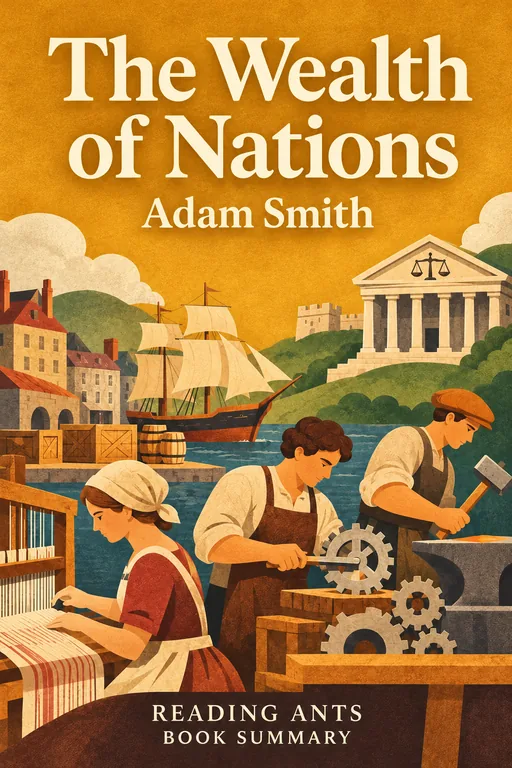
The Wealth of Nations
Adam Smith
A nation's true wealth is not its stock of gold but the goods and services its people produce, and that wealth grows fastest when people specialize, trade freely and compete, with government providing justice, defense and public goods.
💰 Money & Economics
Rich Dad Poor Dad
Robert T. Kiyosaki
Schools teach people to work for money, but the rich learn to make money work for them by understanding the difference between assets and liabilities and by building businesses and investments.
💰 Money & EconomicsWant something different?
Pick another topic and we will show you three books to start with.