 Reading Ants
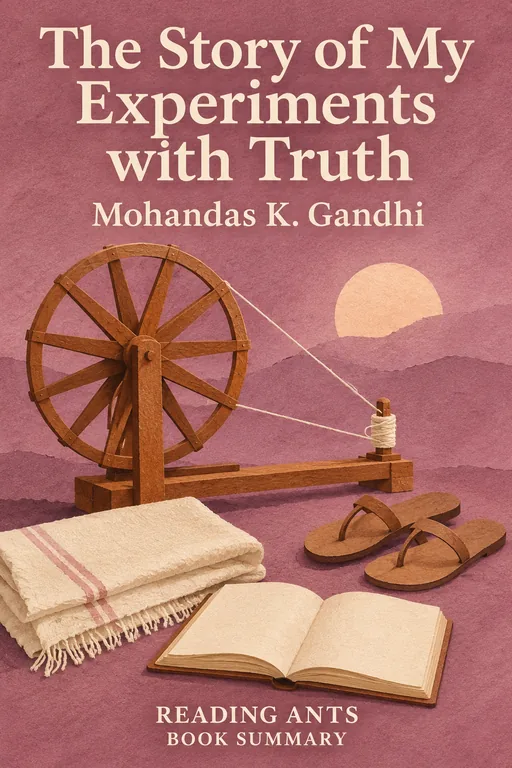
The Story of My Experiments with Truth
Original title: સત્યના પ્રયોગો અથવા આત્મકથા
Mohandas Gandhi recounts his early life and his experiments in honesty, nonviolence and self-discipline, from a shy boy in India to a lawyer in South Africa and the leader of a movement.
Overview
The Story of My Experiments with Truth is the autobiography of Mohandas Karamchand Gandhi, known as Mahatma, who led India’s movement for independence from British rule through nonviolent resistance. He wrote it in his native Gujarati in weekly installments in the 1920s, and it was translated into English by his secretary Mahadev Desai. The English version appeared in two volumes in 1927 and 1929. The book covers his life up to about 1921 and is not a full political history. Gandhi says in the introduction that it is not meant to be a record of achievements but an account of his experiments in seeking truth, and he is frank about his mistakes.
Full Summary
1. A shy boy in Porbandar and Rajkot
The idea: Gandhi was born in 1869 in Porbandar, a coastal town in western India, and grew up in Rajkot, where his father was a government official. He describes himself as a shy and average student, afraid of the dark and of ghosts, who found comfort in a family servant’s advice to repeat a name of God. He recounts his childhood marriage at thirteen to Kasturba, which he later criticized, and honestly admits to youthful mistakes, including stealing and eating meat in secret, which caused him deep shame. He confesses these to his father in a letter, and his father forgives him, a moment he cites as a lesson in the power of love.
In real life: Admitting a wrong directly, rather than hiding it, can build trust and relieve guilt.
2. London and vegetarianism
The idea: Just before his nineteenth birthday, Gandhi travels to London to study law. Before leaving, he promises his mother he will avoid meat, alcohol and women, and he keeps his vow, finding vegetarian restaurants and joining the Vegetarian Society. He tries to become an English gentleman, taking up dancing and violin lessons, but gives these up. He reads religious texts, including the Bhagavad Gita and the Bible, which deepen his interest in spiritual questions. He returns to India as a barrister, but is at first unsuccessful as a lawyer.
In real life: Keeping a promise to a loved one, even far from home, can strengthen a person’s character.
3. South Africa and the awakening
The idea: In 1893, Gandhi goes to South Africa for a legal job and is quickly confronted with racial discrimination. On a train journey, he is thrown off a first-class carriage at Pietermaritzburg because of his color, an event he describes as a turning point. He decides to stay and fight for the rights of Indians. He organizes the Indian community, starts a newspaper and writes petitions, and begins to develop his methods of nonviolent resistance.
From the book: He explains that he came to see that quietly accepting injustice was a form of cowardice, and that refusing to cooperate was a form of courage.
In real life: Experiencing unfairness firsthand can lead people to dedicate their lives to changing it.
4. Satyagraha and community living
The idea: Gandhi develops satyagraha, meaning “holding firmly to truth,” his approach of nonviolent resistance that accepts suffering without hatred. He leads campaigns against discriminatory laws, is jailed several times and runs communal farms, Phoenix Settlement and Tolstoy Farm, where people live simply and share work. He also experiments with diet, health and celibacy, taking a vow of brahmacharya, which he saw as necessary for service. He writes about these experiments in detail, including his failures.
In real life: Peaceful protest, such as strikes and marches, has been used by many movements since then.
5. Return to India and the first campaigns
The idea: In 1915, Gandhi returns to India, and he spends a year traveling the country to understand it. He joins local struggles, such as the farmers’ campaign in Champaran, where he helps peasants forced to grow indigo, and a textile workers’ dispute in Ahmedabad, in which he fasts. These campaigns bring him national attention. He describes his growing role in the Indian National Congress and his belief that spinning cloth by hand could be a symbol of self-reliance.
In real life: Real change often starts with local problems and small victories before it grows into a national movement.
6. Reflection and ending
The idea: The book ends in the early 1920s, as Gandhi leads a nationwide non-cooperation campaign against British rule, and does not cover the later salt march or independence. The ending is quiet, with Gandhi reflecting that his only aim is the vision of truth and that this involves serving others. He says that he is nothing but a seeker, and he asks the reader to examine himself or herself instead of imitating him.
In real life: Gandhi’s refusal to claim perfection invites readers to improve themselves rather than to idolize him.
Why It Matters
Gandhi’s autobiography is one of the most widely read books from India, and it has influenced leaders and thinkers around the world, including Martin Luther King Jr. and Nelson Mandela, who adapted ideas of nonviolent resistance. It is often listed among the most important spiritual books of the twentieth century.
It also stands out for its honesty. Gandhi writes about his flaws, from his temper to his mistakes with his family, and invites readers to consider the connection between private conduct and public life. Many readers return to it not for the politics but for the daily questions it raises about food, anger, money, honesty and service, and how to bring our actions into line with our beliefs.
Key Takeaways
- Truth is a guide. Gandhi made honesty the center of his life.
- Nonviolence takes courage. Refusing to hit back needs strength.
- Small experiments matter. He tested ideas in his daily life.
- Simplicity frees us. He lived with few possessions.
- Self-examination comes first. Change begins with oneself.
What We Can Learn
The book teaches that we can improve ourselves by testing our ideas in practice and learning from mistakes. Gandhi treated life as a set of experiments, which is a useful attitude for anyone trying to grow.
It also shows the strength of principled, peaceful action. When people refuse to cooperate with injustice, without violence, they can draw attention and sympathy to their cause.
Finally, it encourages honesty with ourselves. Gandhi’s willingness to list his faults, in public, is a model of humility that anyone can try to follow.
Criticism and Counterpoints
Gandhi has been criticized for some of his views and actions. Historians point to his early writings about Black Africans in South Africa, which reflected prejudiced attitudes of the time, and to his views on caste, which some Indian leaders, such as B. R. Ambedkar, argued did not go far enough in opposing untouchability. His experiments with diet and celibacy, and some choices in his family life, have been viewed by many as extreme or harmful.
The autobiography itself covers only part of his life and was written with a spiritual aim, so it omits much political detail. Some readers find its tone preachy. Still, it is respected as a candid account of a great and complicated figure.
Who Should Read It
This book suits older teenagers and adults interested in history, ethics and spirituality. It is long and sometimes slow, and the chapters are short, so it can be read in pieces. Readers who want political history will need other books as well.
Want the whole book?
A summary is a taste, not the meal. Here is where to find the full book.
You reached the end 🎉
Nicely done. Mark this one as read, and we will suggest what to read next.
Read this next

Long Walk to Freedom
Nelson Mandela
Nelson Mandela tells his own story, from a village childhood to twenty-seven years in prison to becoming South Africa's first democratically elected president, and shows how patience, courage and forgiveness helped end apartheid.
👤 Real Lives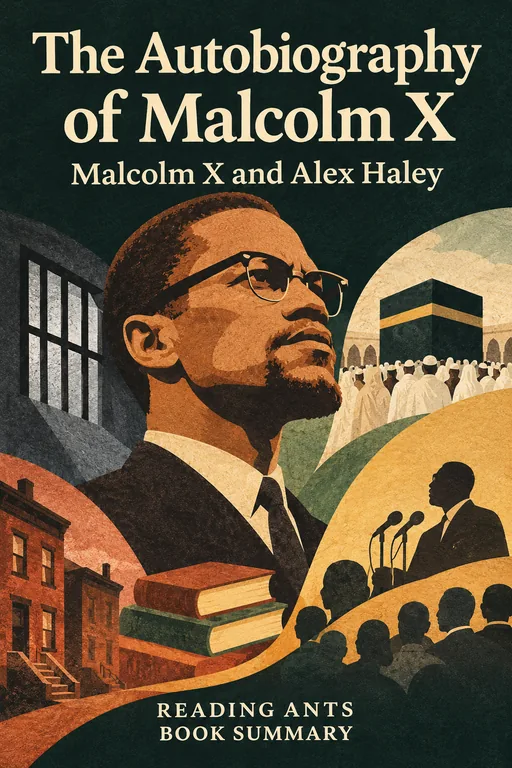
The Autobiography of Malcolm X
Malcolm X and Alex Haley
Malcolm X tells, with the help of the writer Alex Haley, how he moved from a troubled childhood and a life of crime to leadership in the Nation of Islam, and then to a broader view of race and faith before his death.
👤 Real Lives
Letters from a Stoic
Seneca
In friendly letters to a younger friend, the Roman Stoic Seneca offers practical advice on how to use time well, face death, handle wealth and misfortune, and train the mind to find peace.
🕊️ Philosophy & Religion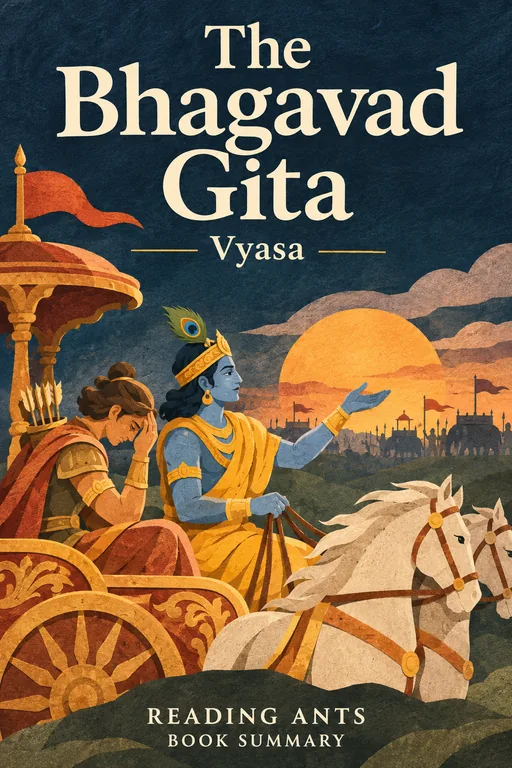
The Bhagavad Gita
Vyasa
On the eve of a great battle, the warrior Arjuna despairs, and the god Krishna, serving as his charioteer, teaches him about duty, the soul, selfless action and devotion.
🕊️ Philosophy & Religion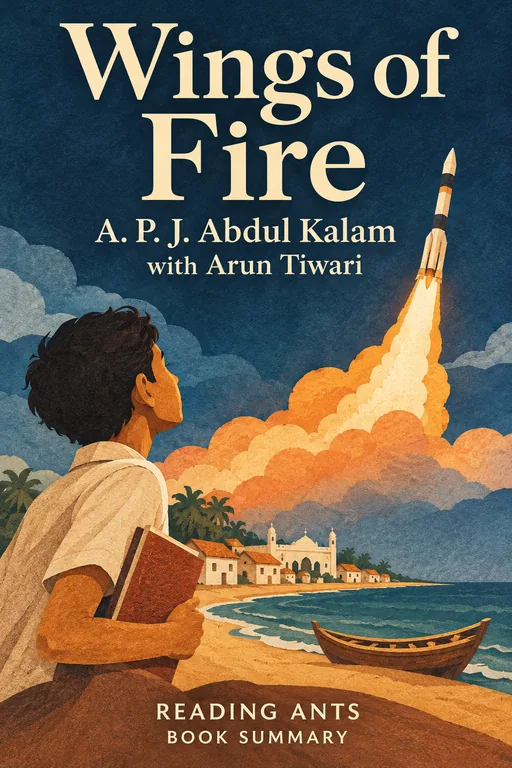
Wings of Fire
A. P. J. Abdul Kalam with Arun Tiwari
A. P. J. Abdul Kalam tells how a boy from a poor family in a small town in southern India became a leading rocket scientist and helped build India's space and missile programs.
👤 Real Lives
Man's Search for Meaning
Viktor E. Frankl
A psychiatrist who survived the Nazi concentration camps explains that even in the worst suffering, people can choose their attitude, and that finding a reason to live is what gives us the strength to endure.
👤 Real LivesWant something different?
Pick another topic and we will show you three books to start with.