 Reading Ants
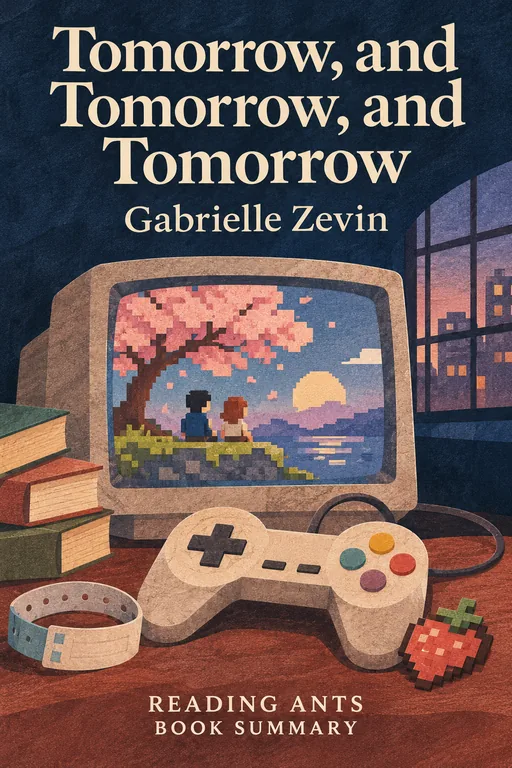
Tomorrow, and Tomorrow, and Tomorrow
Two childhood friends, Sam and Sadie, meet over a video game and spend three decades building games together, loving and hurting each other, in a novel about creativity, friendship and the worlds we make.
Overview
Tomorrow, and Tomorrow, and Tomorrow is a novel by Gabrielle Zevin, published in 2022, and was a bestseller and widely praised. The title comes from a famous speech in Shakespeare’s Macbeth, about the way that days creep by. The book follows Sam Masur and Sadie Green from their meeting in a children’s hospital in 1986 into the 2010s, as they study at Harvard and MIT, found a game studio, and become famous for their game Ichigo. It is about the power of play, and the many forms of love, including friendship and collaboration, that are not romantic.
Main Characters
- Sam Masur: a half-Korean, half-Jewish game designer who has a damaged foot and chronic pain.
- Sadie Green: Sam’s friend and partner, a talented designer with a sharp mind.
- Marx Watanabe: Sam’s roommate and the producer of their games, who is charming and loyal.
- Dov Mizrah: Sadie’s college professor and later lover, who is controlling.
- Anna Lee: Sam’s mother, who dies young.
Full Summary
Sam and Sadie
In 1986, Sadie Green, a young girl, visits her sister in a hospital in Los Angeles, where she meets Sam Masur, a boy who is recovering from a foot injury caused by a car accident, in which his mother was killed. They bond over video games, particularly Super Mario Bros., and play for hours, trading tips and talking about the levels. For Sam, who is in pain and grieving, the game is a place where he is not defined by his injury; for Sadie, the games are a way to forget her own fears about her sister’s illness. After a time, Sam learns that Sadie has been visiting him partly to earn volunteer hours for her bat mitzvah project, and feels betrayed, and the friendship ends. They do not see each other for years.
The Meeting
Years later, when both are nineteen, Sam, now a student at Harvard, and Sadie, a student at MIT, meet again on a train platform in Boston. Sam recognizes her, and calls her name. They talk quickly, remembering their old games, and the immediate connection between them makes a partnership seem natural. They begin to talk about games, and decide to make a game together. The result is Ichigo, and the pair set up a company called Unfair Games.
Success
Ichigo is a hit, and Sam and Sadie become famous. They work with Marx, Sam’s roommate, who becomes their producer and manager, and who is close to both of them. They design more games, including Both Sides, a commercial failure, and Mapleworld, which becomes their greatest success. Their success changes their relationship: they are partners in creativity, but also compete for credit. Sadie’s relationship with Dov, her professor, adds strain.
Conflict
A rift opens between Sam and Sadie, caused in part by things that they hide from each other, and by the way that credit for the games is awarded. Sam, who is shy and often in physical pain, withdraws, while Sadie, who feels that she is not recognized, becomes resentful. They have a serious quarrel, and, for a time, cease to work together. Meanwhile, Sam’s health worsens.
Marx
Marx, who is the glue of the group, is a loyal friend to both, and acts as a peacemaker. But while Sam and Sadie are away on a promotional tour, he is shot and killed at the studio by an armed extremist angry about Mapleworld, who then kills himself. His death is a terrible blow to Sam and Sadie, who realize how much he meant, and the aftermath leaves Sadie estranged, grieving and angry, and the strain between the two friends grows.
Together
After a long estrangement, Sadie learns that Sam secretly built an online game for her, and played in it under other names, as a way for them to heal together after Marx’s death. She forgives him, and they reunite and begin planning the company’s next game; they rediscover their friendship, and recognize that their connection is deeper than any other. The novel closes with the sense that a game is a place where one can try again, and be forgiven.
Why It Matters
Tomorrow, and Tomorrow, and Tomorrow was widely loved by readers, and was named one of the best books of the year by many critics. A film adaptation has been announced. It helped bring video games into the literary mainstream, showing them as a creative art form in the way that earlier novels treated cinema or comics.
The novel is also notable for its portrayal of friendship as a love story, and for its sympathetic picture of chronic pain and disability.
Zevin’s novel was praised by gamers and non-gamers alike, because it explains what games can offer: rules, play and shared worlds, and why creating them is a form of love.
Key Takeaways
- Play is a serious form of creativity. Games express emotion and ideas.
- Friendship can be as deep as romance. Sam and Sadie’s bond is lifelong.
- Credit and ego can strain partnerships. Their conflicts arise from recognition.
- Time is short. Marx’s death shows that we must value what we have.
- Art can be a form of care. The final game honors a friend.
What We Can Learn
The novel invites us to take seriously the things that people love, such as games, and to see them as meaningful. It also encourages us to value friendships that do not fit simple categories.
It shows the cost of failing to communicate with those we care about, and the importance of repairing a rift before it is too late.
Finally, it reminds us that creating something together can be one of life’s great joys.
It also suggests that sharing something we love, even a game, is a way to build lasting bonds, and that forgiving a friend is worth the effort.
Criticism and Counterpoints
Some critics found the novel too long, with a middle section that drags, and its characters sometimes too clever or too perfect. Others say that its portrayal of the video game industry is idealized, and that the plot depends on convenient coincidences and a melodramatic shooting. Some readers feel that the sudden death of Marx is manipulative.
A few object to its handling of race and of Sam’s identity. Still, many find it deeply moving.
Who Should Read It
This book suits mature teenagers and adults. It is long, with some sad and serious moments. It is a good choice for readers who enjoy games, friendship stories and thoughtful fiction.
Want the whole book?
A summary is a taste, not the meal. Here is where to find the full book.
You reached the end 🎉
Nicely done. Mark this one as read, and we will suggest what to read next.
Read this next
Ready Player One
Ernest Cline
In a bleak future where most people escape into a vast virtual world, a poor teenager joins a worldwide hunt for a hidden prize left by the world's creator.
🚀 Sci-Fi & Fantasy
Normal People
Sally Rooney
Marianne and Connell, two teenagers from a small town in the west of Ireland, begin a secret relationship at school, and over the next four years, as they move to Trinity College in Dublin, they drift together and apart.
✨ Modern Fiction
A Little Life
Hanya Yanagihara
Four college friends move to New York and build careers over decades, but the story gradually focuses on Jude St. Francis, a brilliant lawyer whose childhood trauma shapes his life and tests the love of those around him.
✨ Modern Fiction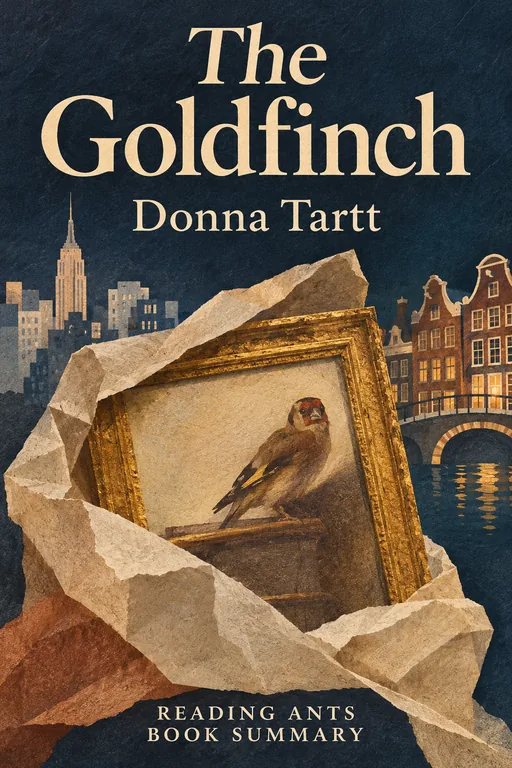
The Goldfinch
Donna Tartt
After surviving a bombing at a New York museum in which his mother dies, a thirteen-year-old named Theo Decker takes a priceless painting, and the secret shapes his life through grief, addiction and crime.
✨ Modern Fiction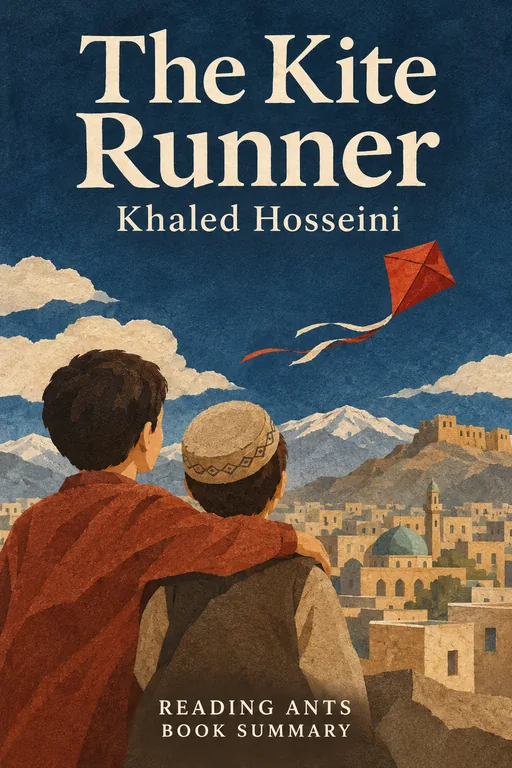
The Kite Runner
Khaled Hosseini
A wealthy boy in Kabul betrays his loyal best friend on the day of a kite tournament, and decades later, after fleeing to America, he returns to a Taliban-ruled Afghanistan to try to make things right.
✨ Modern Fiction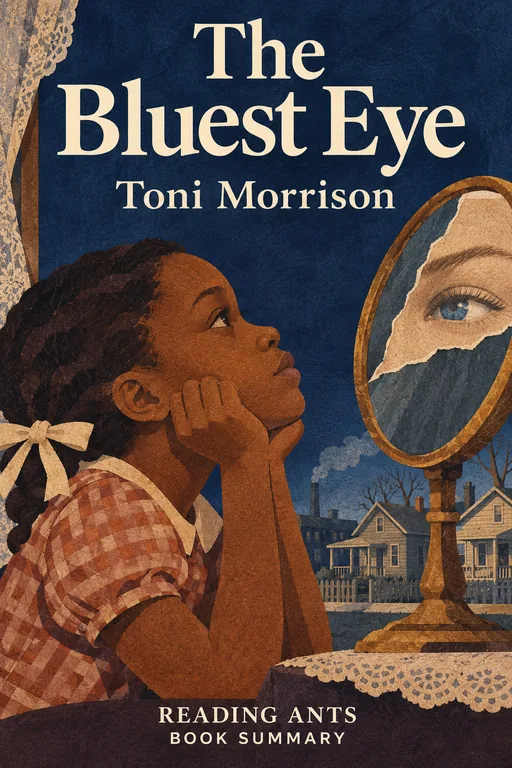
The Bluest Eye
Toni Morrison
In 1940s Ohio, a poor Black girl named Pecola Breedlove, who believes that she is ugly, prays for blue eyes, and the community's failure to protect her leads to tragedy.
✨ Modern FictionWant something different?
Pick another topic and we will show you three books to start with.