 Reading Ants
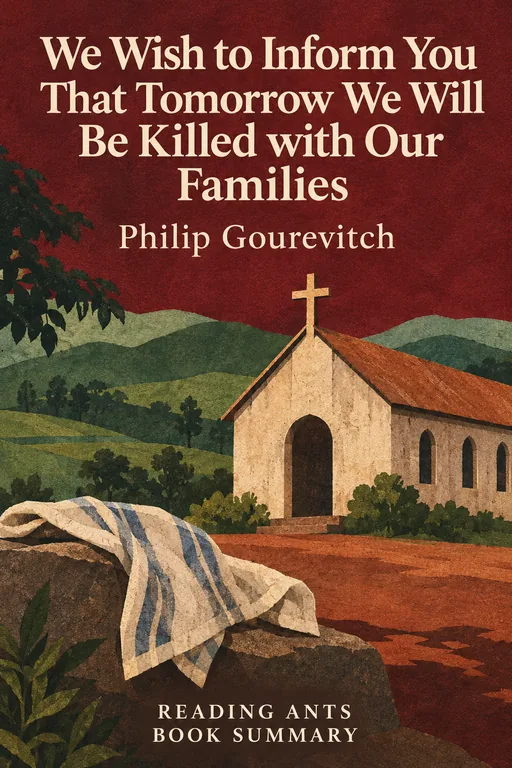
We Wish to Inform You That Tomorrow We Will Be Killed with Our Families
Journalist Philip Gourevitch investigates the 1994 genocide in Rwanda, in which hundreds of thousands of Tutsi and moderate Hutu were murdered in about a hundred days, and asks how it happened and why the world did not stop it.
Overview
We Wish to Inform You That Tomorrow We Will Be Killed with Our Families was published in 1998 by Philip Gourevitch, an American writer who traveled to Rwanda after the genocide and spoke with survivors, killers, officials and aid workers. The title is taken from a letter written in April 1994 by a group of Tutsi pastors who had taken refuge in a church hospital, addressed to the head of their church in the region, asking for help just before they were murdered. The book combines on-the-ground reporting with history and reflection. It is a painful but important account of one of the worst events of the late twentieth century. Gourevitch writes with restraint, and keeps the focus on the human beings involved.
Full Summary
1. Hutu and Tutsi: how a division was made
The idea: Gourevitch begins with the history of Rwanda, a small, densely populated country in central Africa. Before colonial rule, the terms Hutu and Tutsi referred mostly to social positions, though the Tutsi had higher status. Colonial rule, above all under the Belgians, hardened these into fixed racial categories, favoring the Tutsi minority, and identity cards marked each person’s group. A Hutu uprising in the late 1950s overturned the old order, independence followed in 1962, and Hutu-led governments used periodic violence against Tutsi, which drove many into exile.
In real life: Labels created by outsiders can turn into walls that divide neighbors.
2. The road to genocide
The idea: In the early 1990s, a rebel army, the Rwandan Patriotic Front, made up mostly of Tutsi exiles, invaded from Uganda, and a civil war began. Extremists in the Hutu government and military spread hate propaganda on radio and in newspapers, calling the Tutsi cockroaches and traitors, and planned militias. A peace agreement was signed, but did not hold. Gourevitch describes how fear and prejudice were deliberately stirred up.
In real life: Words that dehumanize a group are often the first step toward violence against them.
3. One hundred days
The idea: On April 6, 1994, a plane carrying the Rwandan president was shot down, and within hours, roadblocks went up and killings began. Over the next hundred days, soldiers, militia and ordinary civilians killed hundreds of thousands of people (estimates range from about half a million to around a million), mainly Tutsi, but also moderate Hutu, often with machetes, and often neighbors killing neighbors. People who sought safety in churches and schools were attacked there. Gourevitch tells of individual survivors, and speaks plainly about the terror.
In real life: The tragedy was not only the actions of a few leaders, but the participation of many.
4. The world looks away
The idea: A small United Nations force was in the country, led by a Canadian general, Romeo Dallaire, who had warned of the danger and asked for permission to act and for more troops. Instead, the force was reduced after some peacekeepers were killed, and major powers decided not to intervene. Gourevitch describes how the diplomats and officials avoided the word “genocide,” and how the world stood by. He examines the failure of moral responsibility.
In real life: When everyone assumes someone else will act, no one does.
5. The rebels win, and the refugees flee
The idea: The rebel army gradually took control of the country and the genocide ended in July 1994, but about two million Hutu, including many who had taken part in the killings, fled to neighboring countries, particularly Zaire, now the Democratic Republic of the Congo. They lived in huge camps, which were fed by international aid agencies, and where the former leaders kept control. Gourevitch discusses the moral confusion of helping refugees who included perpetrators.
In real life: Helping people in need can be complicated when the group includes those who have done terrible harm.
6. Justice, memory and a new Rwanda
The idea: The final part of the book considers what happens after the killing. Rwanda had a vast number of people in prison awaiting trial, a shortage of judges and a country full of survivors who lived near those who had killed their families. Gourevitch interviews the new leaders, including Paul Kagame, and reflects on how a country can try to rebuild, and on how hard it is to find justice and forgiveness. He ends with a sense that the questions raised by the genocide remain with us.
In real life: Living side by side with people who have done wrong is one of the hardest tasks after a conflict.
Why It Matters
Gourevitch’s book became one of the most widely read accounts of the Rwandan genocide, and it helped many readers outside Africa to understand an event that they had known little about. It was praised for its clear and humane writing, and won major prizes. It has been used in schools and universities, and informs debate about how the international community should respond to mass atrocities. The phrase “never again” took on new meaning for many after Rwanda. The book is also a tribute to the survivors, whose voices are central to it. It remains important for anyone who wants to learn from the failure to prevent mass killing.
Key Takeaways
- Division can be manufactured. Colonial and political leaders turned social groups into rigid categories.
- Propaganda prepares violence. Dehumanizing language made killing easier.
- Ordinary people took part. The genocide involved neighbors as well as soldiers.
- The world failed to act. International indifference allowed the killing to continue.
- Healing is slow. Justice and reconciliation are hard after genocide.
What We Can Learn
The book teaches us to be alert to language that dehumanizes any group, and to speak out against it early. It shows that indifference has consequences, and that institutions must be ready to protect people in danger. It also urges us to listen to survivors with respect. If you study this history, take care of yourself and talk with someone you trust, because it is heavy. Learn the names and stories of ordinary people, and not only numbers, and consider how you can support efforts to prevent atrocities and to help victims.
Criticism and Counterpoints
Some scholars say that Gourevitch’s account is too favorable to Rwanda’s new government and its leader, and that it pays less attention to later abuses committed by the rebel army and its role in the wars in neighboring Congo. Others say that the book was written soon after events, and that later research has added much detail on the planning of the genocide and on the experience of local communities. Some historians have debated how to understand the roles of colonial history and identity. The book is a powerful, early work of reporting, and should be read along with newer studies.
Who Should Read It
This book is for mature readers who want to understand the Rwandan genocide, and who can handle accounts of mass killing. It is well written and humane, but very painful. Younger readers should read it only with guidance, and anyone seeking a complete scholarly history should add other sources.
Want the whole book?
A summary is a taste, not the meal. Here is where to find the full book.
You reached the end 🎉
Nicely done. Mark this one as read, and we will suggest what to read next.
Read this next
King Leopold's Ghost
Adam Hochschild
Adam Hochschild tells how King Leopold II of Belgium took over the Congo as his personal possession, enriched himself through forced labor and terror, and was finally exposed by a global campaign of ordinary people.
🏛️ History
Night
Elie Wiesel
Elie Wiesel tells, in short and searing pages, how as a teenager he was taken from his hometown of Sighet to Auschwitz and Buchenwald, lost his family and watched his faith and childhood break apart.
👤 Real Lives
If This Is a Man
Primo Levi
Primo Levi, an Italian Jewish chemist, describes with clarity and restraint his eleven months as a prisoner in the Auschwitz camp, and asks what it means to remain human when everything is taken from you.
👤 Real Lives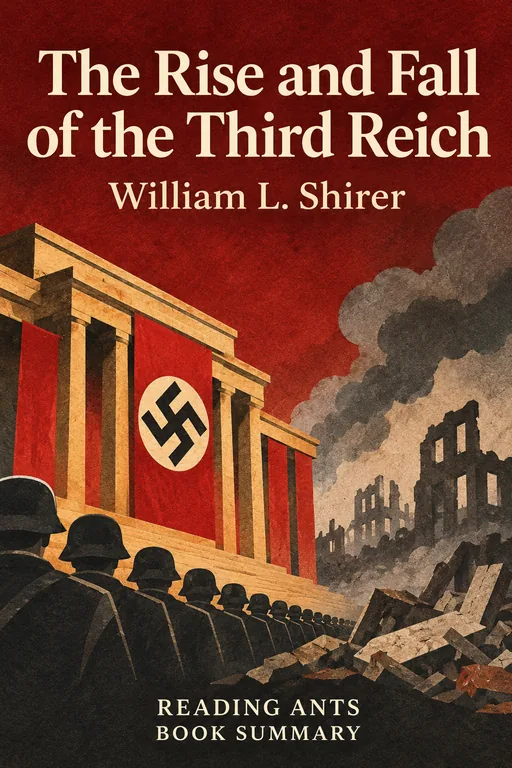
The Rise and Fall of the Third Reich
William L. Shirer
Journalist William Shirer tells the story of how Adolf Hitler came to power in Germany, built a dictatorship, started the Second World War and carried out genocide, until the regime's defeat in 1945.
🏛️ History
Eichmann in Jerusalem
Hannah Arendt
Hannah Arendt reports on the trial of the Nazi official Adolf Eichmann in Jerusalem and argues that he was not a monster but a thoughtless bureaucrat, which led her to the idea of the banality of evil.
🏛️ History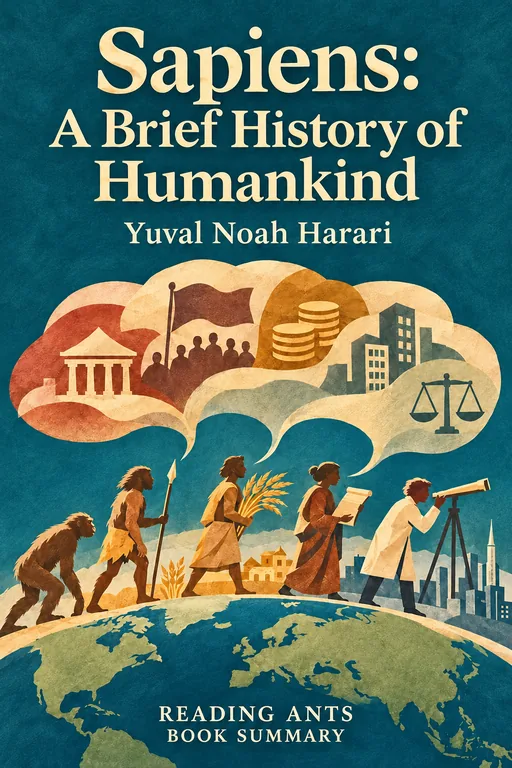
Sapiens: A Brief History of Humankind
Yuval Noah Harari
Humans came to rule the planet not because we are the strongest animals but because we can believe in shared stories (gods, nations, money, companies) that let millions of strangers cooperate.
🏛️ HistoryWant something different?
Pick another topic and we will show you three books to start with.