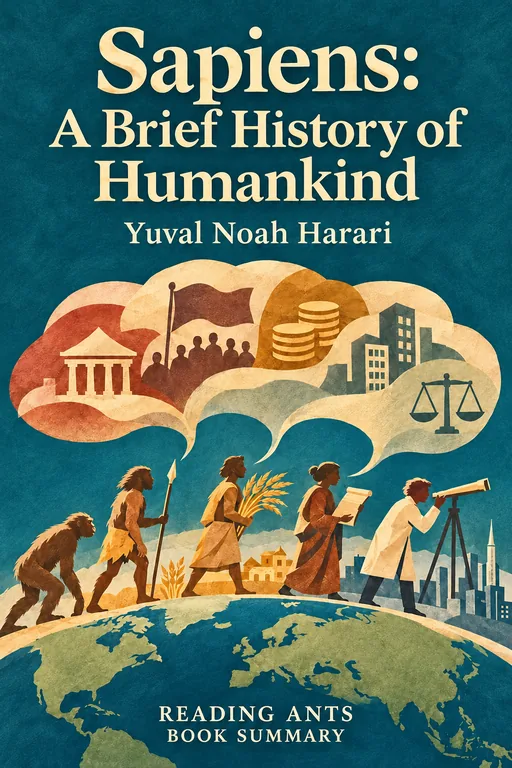
Sapiens: A Brief History of Humankind
Original title: קיצור תולדות האנושות
Humans came to rule the planet not because we are the strongest animals but because we can believe in shared stories (gods, nations, money, companies) that let millions of strangers cooperate.
Overview
Sapiens tells the whole story of our species in one book, from the time we were an unimportant animal in Africa to today, when we hold the power of gods. Israeli historian Yuval Noah Harari organizes this history around three great revolutions: the Cognitive Revolution, when humans began to think and talk in new ways; the Agricultural Revolution, when we became farmers; and the Scientific Revolution, which created the modern world. Along the way he asks big, provocative questions. Why did we become so powerful? Did farming make us happier? Are money and human rights real? Where are we heading next? First published in Hebrew and later translated into dozens of languages, the book became a worldwide bestseller.
Full Summary
1. We were once just one human species among many
The idea: About 100,000 years ago, several kinds of humans walked the earth, including Neanderthals in Europe and other species in Asia. Homo sapiens was only one of them, living in East Africa. Today we are the only humans left. Harari explains that our species spread across the world and that the other humans disappeared, partly through competition and violence, and partly through interbreeding, since many people today carry a little Neanderthal DNA.
In real life: It is strange to imagine, but our situation of being the only human species is historically unusual, a bit like a family where every cousin has vanished and only one branch remains.
2. Our superpower is believing in stories
The idea: Around 70,000 years ago, Harari argues, Sapiens went through a Cognitive Revolution. Our language became flexible enough to gossip, which helped small groups bond, and, crucially, to talk about things that don’t physically exist: spirits, nations, laws. These shared fictions, or “imagined orders,” let huge numbers of strangers cooperate. Chimpanzees can work together in groups of a few dozen; humans can cooperate by the millions because they believe in the same stories.
From the book: Harari uses the car company Peugeot as an example. You can touch its cars and factories, but Peugeot itself is a legal fiction that exists only because people agree it does. If every factory burned down, the company could still exist.
In real life: A banknote is just paper, yet strangers on the other side of the world will accept it, because everyone believes in the same story about its value.
3. Humans have always changed the planet
The idea: Long before cities, humans were already reshaping nature. As Sapiens reached Australia and the Americas, many large animals, such as giant marsupials and mammoths, disappeared soon after. Harari argues that humans were a major cause, making our species one of the deadliest in the history of life.
In real life: Today’s concerns about species going extinct are not new. They continue a pattern that began tens of thousands of years ago, only now it is happening faster and on a global scale.
4. Farming was a trap
The idea: About 12,000 years ago, people began farming. We usually see this as progress, but Harari calls the Agricultural Revolution a trap. Farmers worked longer hours than hunter-gatherers, ate a less varied diet, suffered more disease and faced famine when crops failed. Farming allowed far more people to survive, but did not make the average person’s life better. In a sense, wheat domesticated humans rather than the other way round: we spent our days caring for it.
From the book: Harari describes how each small step toward farming seemed sensible at the time. Once populations grew, there was no going back, because the land could no longer feed everyone by hunting and gathering.
In real life: Many “upgrades” work the same way. A bigger salary can bring longer hours, more expenses and more stress, and once our lifestyle depends on it, it becomes hard to step back.
5. Money, empires and religions unified the world
The idea: Over thousands of years, three forces pulled humans into a single global civilization. Money is the most universal system of trust ever created: people who share no language or religion will still trade. Empires joined different peoples under one rule, often violently, but also spread laws, languages and ideas. Universal religions taught that the same truths apply to everyone, everywhere.
In real life: You can buy a phone designed in one country, made in another and sold in a third, paying with a card. That only works because billions of people trust the same financial stories.
6. Science began when we admitted ignorance
The idea: About 500 years ago, the Scientific Revolution began. Its key new idea was admitting that we don’t know everything, so we must investigate, test and collect new knowledge. This spirit combined with European empires and with capitalism, which relies on credit, trust that the future will be better. Governments and businesses funded science because it promised new power and profit, and this cycle transformed the world.
From the book: Harari points to old world maps, which filled unknown regions with imaginary monsters. Later European maps began to leave blank spaces, openly admitting what was unknown, and that admission invited exploration.
In real life: The best students and scientists are not those who already know everything, but those who are happy to say “I’m not sure, let’s find out.”
7. Are we any happier?
The idea: Despite huge progress, Harari questions whether people today are happier than our ancestors. Happiness seems to depend more on expectations and on body chemistry than on wealth. He also points out the enormous suffering we have caused to farm animals. Finally, he looks ahead: with genetic engineering and artificial intelligence, Sapiens may soon redesign itself and be replaced by something new. The big question becomes not what we can do, but what we want to become.
In real life: When the newest phone arrives, we feel thrilled for a few weeks, then it becomes normal. Our expectations rise to match whatever we have.
Why It Matters
Sapiens is one of the most widely read nonfiction books of the twenty-first century. It has been translated into dozens of languages and recommended by leaders, entrepreneurs and teachers around the world. It made “big history,” the study of the human story on the largest scale, popular with general readers.
Its central idea, that shared stories hold societies together, gave readers a new way to think about money, nations, religions and companies. It encourages people to see the world as something humans built and can therefore change. The book also launched Harari as one of the most influential public thinkers of his time, followed by Homo Deus and 21 Lessons for the 21st Century.
Key Takeaways
- Shared stories make cooperation possible. Nations, money and companies are fictions that work because we believe in them together.
- Progress isn’t always improvement. Farming increased human numbers but often made individual lives harder.
- Humans are a world-changing force. We have reshaped ecosystems since prehistoric times.
- Admitting ignorance drives discovery. Science and modern growth began with the courage to say “we don’t know.”
- The future of our species is open. Technology may let humans redesign themselves.
What We Can Learn
Sapiens invites us to look at familiar things with fresh eyes. Many things we treat as natural or permanent (borders, currencies, social rules) are human inventions. Seeing them as stories doesn’t mean they are fake or worthless, but it does mean they can be questioned and improved.
It also teaches humility about progress. Before welcoming every new technology or lifestyle change, ask whether it will actually make life better, or only bigger and busier.
Finally, the book is a reminder of how much our choices matter. Our ancestors changed the planet without understanding what they were doing. We have the knowledge they lacked, which gives us more responsibility for animals, the environment and future generations.
Criticism and Counterpoints
Many historians and scientists praise Harari’s storytelling but criticize his generalizations. They argue that he presents speculative ideas as established facts, especially about how prehistoric people lived and felt, and that he sometimes ignores evidence that complicates his neat story. Anthropologists dispute the claim that farming was simply a trap, and The Dawn of Everything by David Graeber and David Wengrow offers a very different account of early societies.
Others feel that calling religions, human rights and nations all “fictions” flattens important differences between them. Some readers also note that the book is stronger on big themes than on the details of particular regions or periods. Even critics, however, generally agree that it is a thought-provoking introduction that gets people interested in history.
Who Should Read It
This book is ideal for curious teens and adults who want the big picture of human history in one readable volume. Readers who enjoy debates about society, technology and the future will love it. Those who prefer careful, detailed academic history may find it too sweeping.
Want the whole book?
A summary is a taste, not the meal. Here is where to find the full book.
You reached the end 🎉
Nicely done. Mark this one as read, and we will suggest what to read next.
Read this next
Homo Deus
Yuval Noah Harari
Having largely tamed famine, plague and war, humanity may now aim for immortality, happiness and god-like powers, and new technologies and data-driven beliefs could change what it means to be human.
🏛️ History
Guns, Germs, and Steel
Jared Diamond
Some societies came to conquer others not because their people were smarter or better, but because geography gave them a head start in farming, animals, germs and technology.
🏛️ History
A Short History of Nearly Everything
Bill Bryson
Bill Bryson sets out to understand how we know what we know about the universe, the Earth and life, and tells the story through the odd, brilliant and sometimes unlucky people who figured it out.
🏛️ History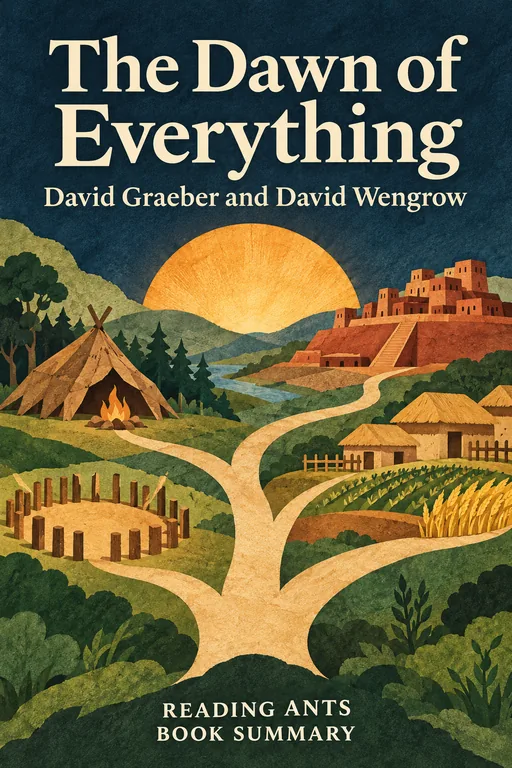
The Dawn of Everything
David Graeber and David Wengrow
Anthropologist David Graeber and archaeologist David Wengrow argue that the standard story of human history, in which small equal bands slowly turned into large unequal states, is wrong, and that early societies experimented with many ways of living.
🏛️ History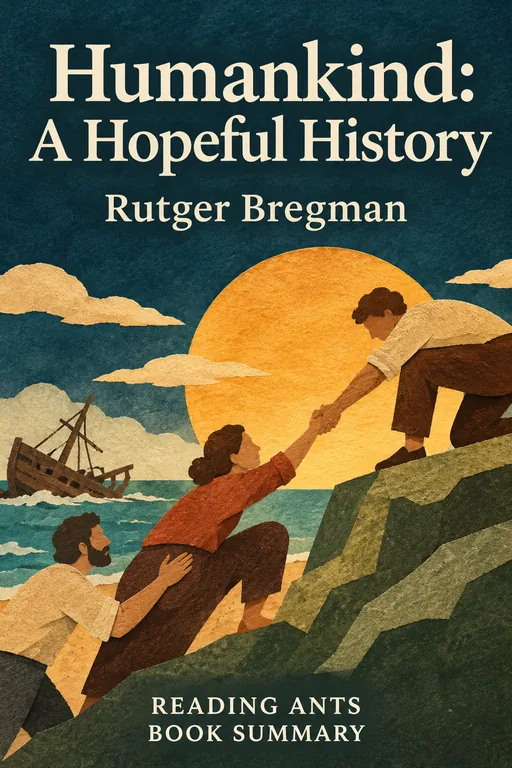
Humankind: A Hopeful History
Rutger Bregman
Rutger Bregman argues that people are, deep down, more decent than cynics believe, and that many famous stories used to prove human selfishness and cruelty are false or misleading.
🏛️ HistoryThe Histories
Herodotus
Herodotus, often called the father of history, tells how the Greeks and the Persians came into conflict and fought the great wars of the early fifth century BCE, with long, colorful detours into the lands, customs and legends of the known world.
🏛️ HistoryWant something different?
Pick another topic and we will show you three books to start with.