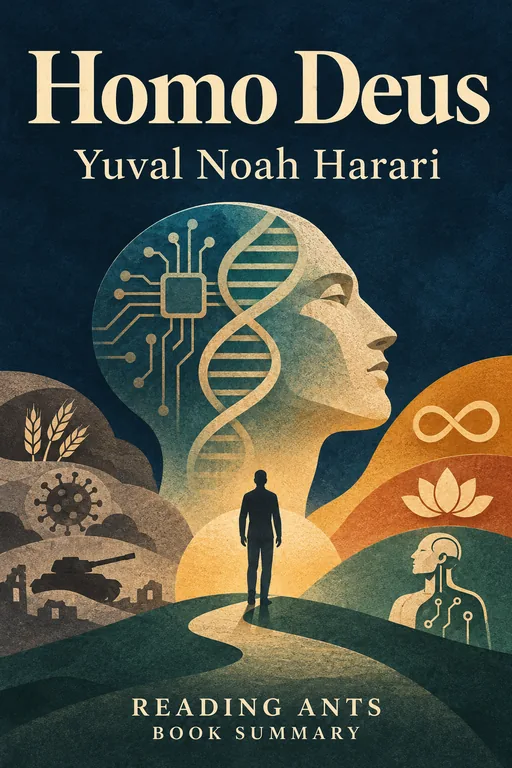
Having largely tamed famine, plague and war, humanity may now aim for immortality, happiness and god-like powers, and new technologies and data-driven beliefs could change what it means to be human.
Overview
Homo Deus is the follow-up to Sapiens by the Israeli historian Yuval Noah Harari. It was first published in Hebrew in 2015 and appeared in English in 2016. While Sapiens looks back at the past of our species, this book looks ahead. Harari argues that for most of history the great enemies of humanity were famine, plague and war, but in recent times these have become problems that we can mostly manage rather than inevitable disasters. So what will we pursue next? He suggests that we will try to overcome death, increase happiness and upgrade ourselves into something like gods, through biotechnology and artificial intelligence.
Full Summary
1. The new human agenda
The idea: Harari begins by pointing out that, for the first time in history, more people die from eating too much than too little, and more from old age than from infectious disease or violence. Famine, plague and war still exist, but they are now largely caused by political failure rather than by forces beyond human control. Having reduced these ancient threats, humanity is turning to new goals: immortality, bliss and divinity, meaning the upgrading of humans into beings with godlike abilities.
In real life: Vaccines, better farming and international agreements have helped shrink the toll of diseases, hunger and wars compared with earlier centuries.
2. How humans took over the world
The idea: Harari revisits the rise of humans, arguing that our power comes from the ability to cooperate in large numbers by believing in shared stories, such as religions, nations and money. Such “intersubjective” realities do not exist in nature but exist because many people believe in them. He also discusses how humans have treated other animals, particularly in industrial farming, raising questions about suffering and our claim to be special.
In real life: A dollar bill has value only because millions of people agree it does.
3. The human spark and the problem of consciousness
The idea: Harari discusses what makes humans different and whether we have a soul or free will. He argues that modern science finds no evidence for an immortal soul and that, as we learn more about the brain, the idea of an independent “self” that makes free choices grows weaker. He draws attention to the fact that science can explain intelligence and behavior but still struggles to explain consciousness, the inner experience of feeling.
In real life: Experiments showing that brain activity can begin before we are aware of a decision make some people doubt how free our choices are.
4. The story of humanism
The idea: In the modern age, Harari says, the dominant belief system has been humanism, which holds that human feelings and experiences are the source of meaning and authority. Voters should choose in elections, in markets the customer is always right, and individuals should “follow their hearts.” This replaced the old religious idea that meaning came from gods or sacred texts. He shows how humanism has shaped politics, economics and art, and has also fueled wars between different humanist visions.
In real life: We are told to “be true to yourself” and “listen to your feelings,” which would have seemed strange in a medieval village.
5. The technological challenge to humanism
The idea: Harari suggests that new technologies could undermine humanism. If algorithms come to know us better than we know ourselves, because they can analyze data about our bodies, habits and choices, then they may make decisions for us, from what to watch to whom to marry. He also warns that automation may create a “useless class” of people whose work is not needed, and that upgrading humans with bioengineering and implants could split humanity into unequal groups.
In real life: Apps that suggest what to read, buy or watch already guide millions of decisions.
6. Dataism: a new religion?
The idea: The final chapters introduce Dataism, a possible emerging belief that the universe is a flow of data and that the highest value is the free flow of information. Under Dataism, humans are simply tiny processors in a vast network, and we may be replaced by more efficient systems. Harari does not say this will happen, and he presents it as a possibility. He ends by raising questions: Are organisms just algorithms? Will intelligence become separate from consciousness? What will happen to society when systems know us better than we know ourselves?
In real life: When we share our location, heartbeat and searches with devices, we feed the data that such a system would use.
Why It Matters
Homo Deus was an international bestseller and helped cement Harari’s reputation as a leading public thinker about the long sweep of history and the future of technology. It spread important debates about artificial intelligence, bioengineering and data privacy to millions of readers outside universities.
The book asks big questions that are still discussed today, including what we want to become, what we should do with powerful technologies and who should control them. Its ideas about data, automation and the limits of human judgment have been quoted in debates about social media, privacy and the effects of artificial intelligence on work, which gives it continuing relevance well beyond the year it was written.
Key Takeaways
- Old plagues are tamed. Famine, disease and war are now mostly manageable.
- New goals arise. Immortality, happiness and upgrades may be next.
- Shared stories hold societies together. Beliefs shape our world.
- Algorithms could rival our judgment. Data may reshape authority.
- The future is open. The choices we make about technology matter.
What We Can Learn
The book encourages us to think about the beliefs we take for granted. Many ideas that feel natural, such as the importance of individual choice, are products of history and could change.
It also gives us a reason to ask hard questions about technology. Before embracing a new tool, we can ask who controls the data, who benefits and what values the system serves.
Finally, it reminds us to keep thinking about the future with both curiosity and caution. Harari presents possibilities rather than predictions, and the outcome depends on what people choose to do.
Criticism and Counterpoints
Critics say that Harari makes sweeping claims with limited evidence and sometimes overstates how close we are to immortality or to algorithms that know us better than we know ourselves. Scientists and historians have also challenged some of his statements as oversimplified, such as those about consciousness, free will and animal behavior.
Others say that his picture of humanism and Dataism is a bit like a thought experiment and that the book mixes fact and speculation. Some readers also find the tone detached from human suffering and the book too pessimistic. Even so, many value it for starting conversations and for its readable, provocative style.
Who Should Read It
This book suits teenagers and adults who enjoy big ideas about history, science and the future. It reads easily, though its claims are bold and worth questioning. Readers new to Harari may want to start with Sapiens, though this book can be read on its own.
Want the whole book?
A summary is a taste, not the meal. Here is where to find the full book.
You reached the end 🎉
Nicely done. Mark this one as read, and we will suggest what to read next.
Read this next
Sapiens: A Brief History of Humankind
Yuval Noah Harari
Humans came to rule the planet not because we are the strongest animals but because we can believe in shared stories (gods, nations, money, companies) that let millions of strangers cooperate.
🏛️ History
21 Lessons for the 21st Century
Yuval Noah Harari
Historian Yuval Noah Harari examines the biggest challenges facing humanity today, from artificial intelligence and fake news to nationalism, religion and meaning, and asks how we can think clearly and stay sane in a fast-changing world.
🏛️ History
Life 3.0
Max Tegmark
Physicist Max Tegmark explores what happens when artificial intelligence matches and then surpasses human intelligence, lays out a range of possible futures, and argues that we should think carefully, now, about which one we want.
🔬 Science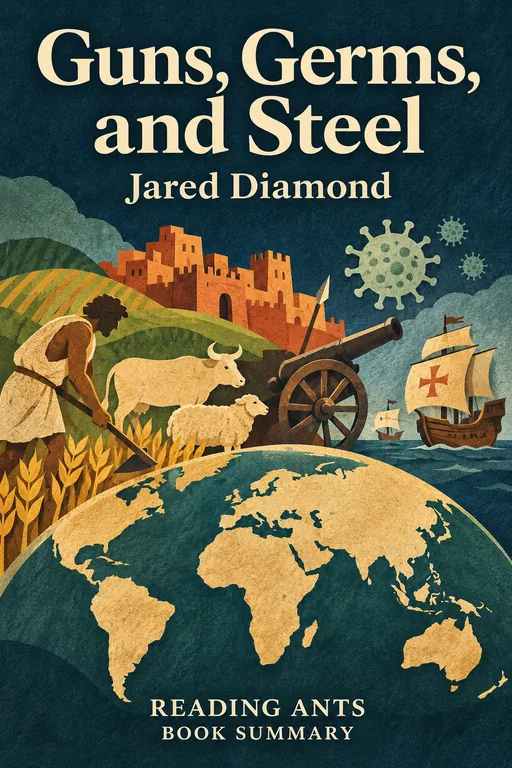
Guns, Germs, and Steel
Jared Diamond
Some societies came to conquer others not because their people were smarter or better, but because geography gave them a head start in farming, animals, germs and technology.
🏛️ History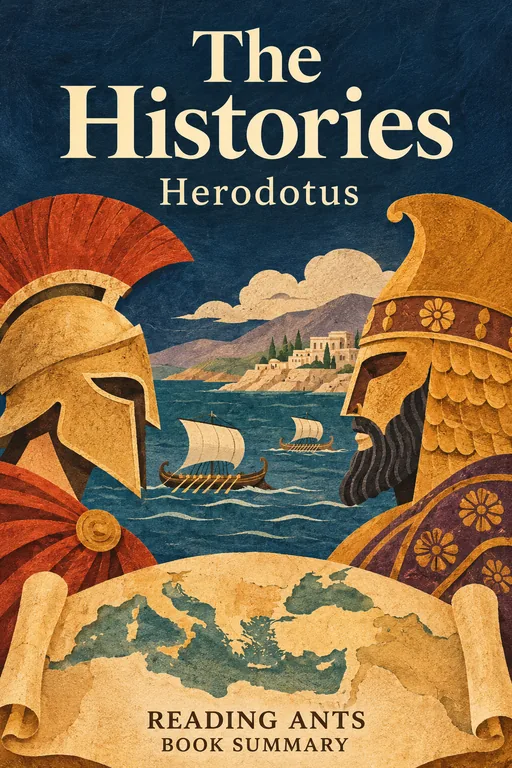
The Histories
Herodotus
Herodotus, often called the father of history, tells how the Greeks and the Persians came into conflict and fought the great wars of the early fifth century BCE, with long, colorful detours into the lands, customs and legends of the known world.
🏛️ History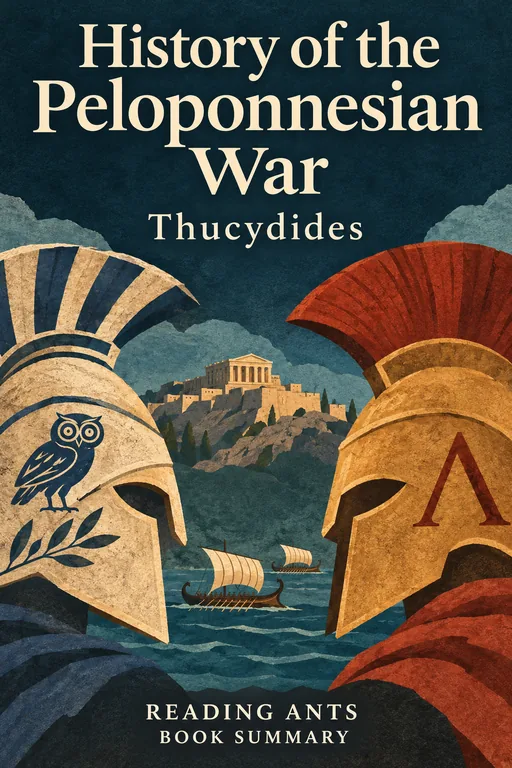
History of the Peloponnesian War
Thucydides
Thucydides, an Athenian general turned historian, records the long war between Athens and Sparta in the fifth century BCE and uses it to study power, fear, politics and how human nature behaves in crisis.
🏛️ HistoryWant something different?
Pick another topic and we will show you three books to start with.