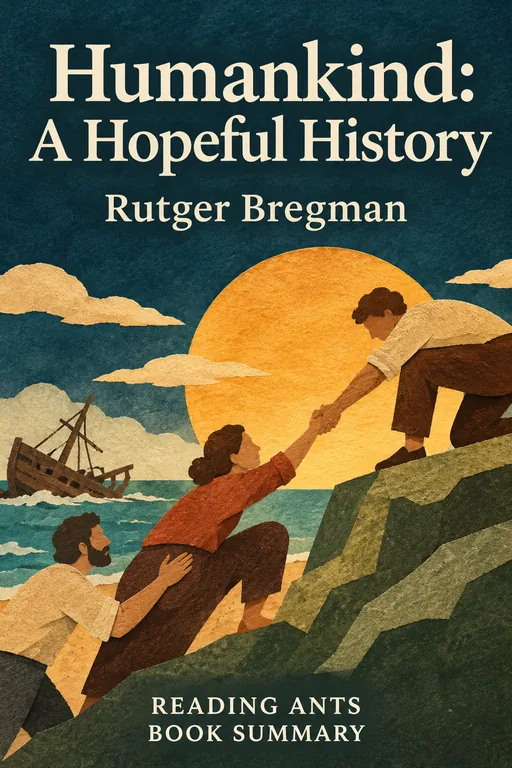
Humankind: A Hopeful History
Original title: De meeste mensen deugen
Rutger Bregman argues that people are, deep down, more decent than cynics believe, and that many famous stories used to prove human selfishness and cruelty are false or misleading.
Overview
Humankind: A Hopeful History was published in 2019 by Rutger Bregman, a Dutch historian and writer, in Dutch, and in English in 2020. Bregman says that a long tradition, in philosophy, science and the news, holds that humans are selfish, and that civilization is only a thin layer which covers a violent nature. He tries to show that this view is wrong. He revisits stories and experiments, such as shipwrecks, psychology studies and wars, and argues that, when we look carefully, people tend to be cooperative and kind. He then suggests how a hopeful view could change institutions.
Full Summary
1. The veneer theory
The idea: Bregman describes the idea, found in the work of thinkers such as Hobbes and in novels such as Lord of the Flies, that people are naturally selfish and that only strong rules keep us in line. He calls this the “veneer theory,” because it says that civilization is a thin coat on top of a savage nature. He argues that this idea is widespread and harmful, since it affects how we design schools, companies and governments.
In real life: If you assume that people will cheat, you might build a system of constant checks that makes honest people feel distrusted.
2. A real island story
The idea: To counter the picture in Lord of the Flies, Bregman tells of a case in 1965, when six boys from Tonga were stranded on a small island, ‘Ata, after a storm. According to the account that he found, they cooperated, divided the work among them, kept a garden and kept a fire going for months, until an Australian fisherman and boat captain, Peter Warner, found them after about fifteen months. He says that this real story is the opposite of the novel.
In real life: When a group works together to meet needs, it often does better than one that fights.
3. Disasters bring out the best
The idea: The author looks at what actually happens in disasters, such as the bombing raids of the Second World War and the evacuation of the World Trade Center on September 11. He says that panic and selfishness are less common than we think, and that people often help each other, and that the stories of chaos often come from exaggerated reports. He suggests that the “good side” of human nature shows in a crisis.
In real life: After a storm, neighbors often check on each other and share food without being asked.
4. Experiments that were not what they seem
The idea: Bregman goes back to some famous psychology studies. He argues that the Stanford prison experiment, which seemed to show that ordinary people become cruel when given power, was shaped by its organizer, who, Bregman says, told the guards how to behave, and he questions the lessons that were taken from it. He also reexamines the story of Kitty Genovese, a woman in New York whose killing was said to have been ignored by dozens of witnesses, and finds that the facts were different from the legend. He also questions how the Milgram obedience experiments are usually read, though this does not mean that obedience never leads to harm.
In real life: A story that is repeated in many textbooks may still have problems, so it is good to ask how well it was checked.
5. Survival of the friendliest
The idea: Why are humans so cooperative? Bregman points to research on how humans evolved, and suggests that being friendly, and able to learn from others, gave us an advantage. He mentions an experiment in which foxes bred for friendliness over generations became more like dogs, with changes in their bodies as well. He argues that we are the “friendliest” apes, and that this trait helped us to spread.
In real life: A group in which members share tools and information often outperforms a group of lone individuals.
6. How to build on trust
The idea: In the final part, Bregman suggests that if we believe that most people are decent, we can design institutions based on trust. He points to examples such as Buurtzorg, a Dutch home care organization with self-managing teams, schools and playgrounds that give children freedom, and Norwegian prisons that treat inmates humanely. He also advises people to be kind, to take the first step in trusting others, and to be careful about the news, which tends to highlight the worst.
In real life: A teacher who trusts students to work on their own often finds that they rise to meet that trust.
Why It Matters
Humankind became an international bestseller and sparked a lively debate. Its main contribution is to challenge a widely held assumption that human beings are fundamentally selfish and dangerous, and to ask what would change if we believed otherwise. The book uses stories and studies that are widely known, which makes its argument accessible. It has been praised for its optimism and for its willingness to question cherished beliefs, and has influenced conversations about education, work and justice. Whether or not readers accept all its claims, it encourages them to think about the effects of our beliefs about human nature.
Key Takeaways
- People are usually decent. Cooperation is more common than we think.
- Cynicism has consequences. What we believe about others shapes our institutions.
- Check famous stories. Some well-known studies and tales are flawed.
- Friendliness helped us survive. Cooperation was an advantage in evolution.
- Trust can be designed in. Schools and workplaces can be built on it.
What We Can Learn
The book invites you to start with trust, and to be curious about the claim that most people are only out for themselves. When you read news, remember that it highlights dramatic events, and that acts of kindness are less often reported. Try to act in ways that bring out the best in others, by showing respect and giving responsibility. At the same time, be careful, since trust does not mean ignoring real dangers or wrongdoing. Ask for evidence, for yourself, about claims regarding human nature.
Criticism and Counterpoints
Some scholars say that Bregman is selective, choosing evidence that supports his view while dismissing studies that show cruelty, and that his reinterpretations of psychological experiments may go too far. Anthropologists and historians have debated his claims about early human societies being peaceful, with some saying that evidence of violence in prehistory is stronger than he allows. Critics also point out that wars and genocides show that people can be extremely cruel when conditions allow. Bregman acknowledges evil, but argues that it is the exception, and he admits that group loyalty and cooperation can themselves help to produce hostility toward outsiders. The book is best treated as a bold argument and an invitation to debate.
Who Should Read It
This book is for readers who like big ideas and surprising stories about people and society, and who are looking for a hopeful view. It is easy to read and thought-provoking. Those who want a balanced review of research on violence and cooperation should also consult other authors.
Want the whole book?
A summary is a taste, not the meal. Here is where to find the full book.
You reached the end 🎉
Nicely done. Mark this one as read, and we will suggest what to read next.
Read this next
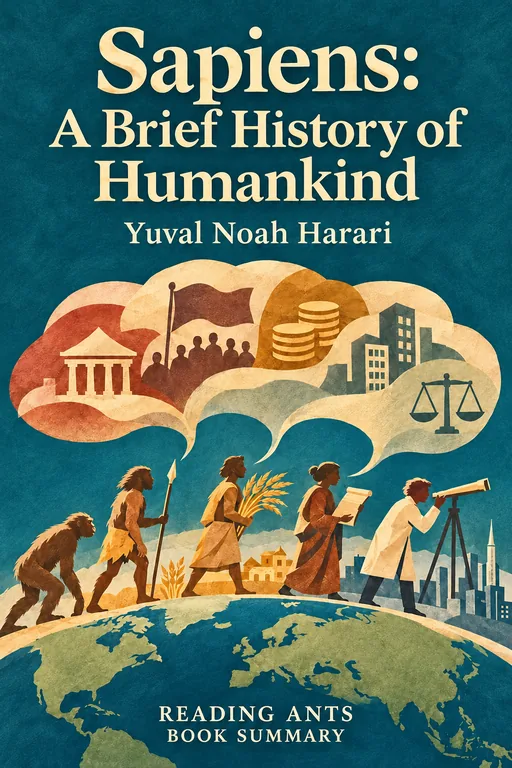
Sapiens: A Brief History of Humankind
Yuval Noah Harari
Humans came to rule the planet not because we are the strongest animals but because we can believe in shared stories (gods, nations, money, companies) that let millions of strangers cooperate.
🏛️ History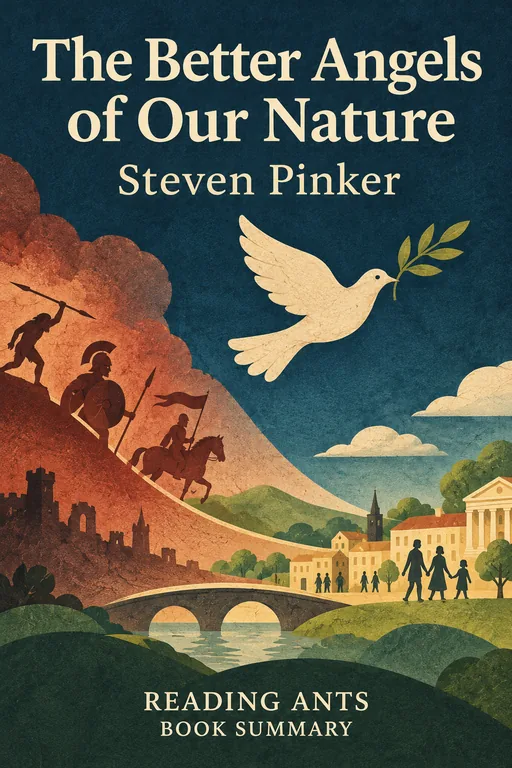
The Better Angels of Our Nature
Steven Pinker
Steven Pinker argues, with a mass of data, that violence has declined over the long course of history, and that this is one of the most important and least appreciated developments, explained by changes in institutions, culture and our better impulses.
🔬 Science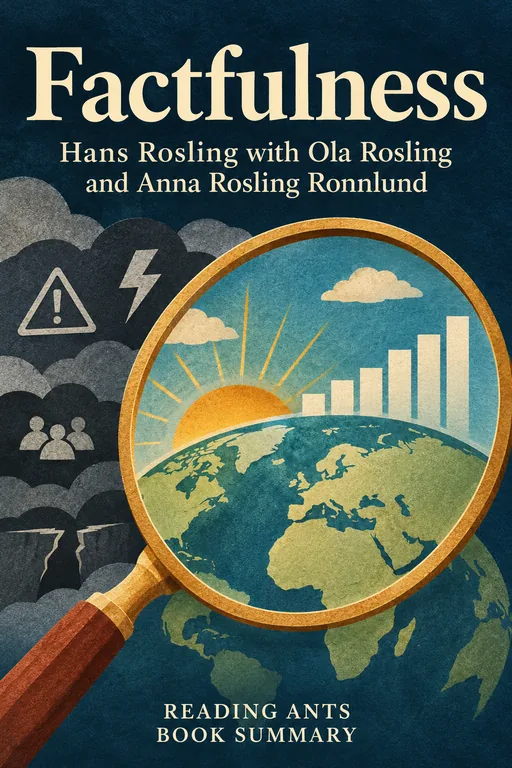
Factfulness
Hans Rosling with Ola Rosling and Anna Rosling Ronnlund
Hans Rosling shows that the world is better than most people think, and that ten built-in instincts, such as fear, blame and the habit of seeing gaps, distort how we see it and can be tamed with a fact-based mindset.
🔬 Science
21 Lessons for the 21st Century
Yuval Noah Harari
Historian Yuval Noah Harari examines the biggest challenges facing humanity today, from artificial intelligence and fake news to nationalism, religion and meaning, and asks how we can think clearly and stay sane in a fast-changing world.
🏛️ History
The Dawn of Everything
David Graeber and David Wengrow
Anthropologist David Graeber and archaeologist David Wengrow argue that the standard story of human history, in which small equal bands slowly turned into large unequal states, is wrong, and that early societies experimented with many ways of living.
🏛️ History
Guns, Germs, and Steel
Jared Diamond
Some societies came to conquer others not because their people were smarter or better, but because geography gave them a head start in farming, animals, germs and technology.
🏛️ HistoryWant something different?
Pick another topic and we will show you three books to start with.