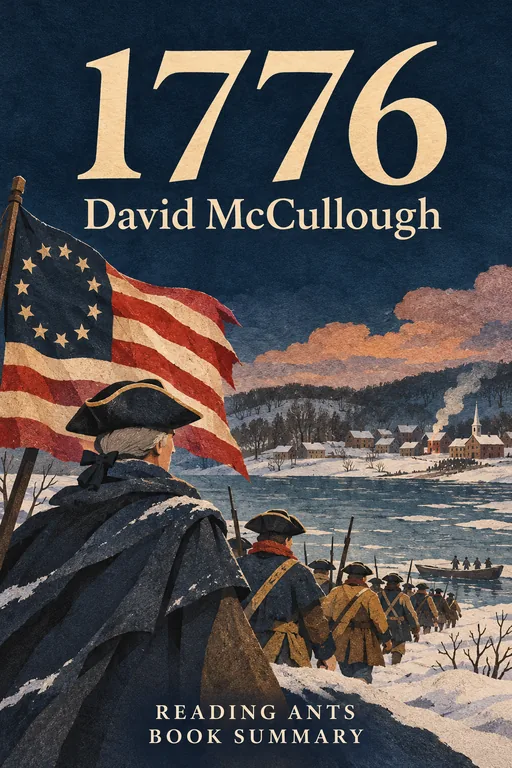
1776
David McCullough tells the story of the pivotal year of the American Revolution, when George Washington's poorly equipped army nearly lost everything and then, in a few winter weeks, won two surprising victories.
Overview
1776 was published in 2005 by David McCullough, a popular American historian. It is not a general history of the Revolution but a close account of the military campaigns of 1776, from the siege of Boston to the battles in New Jersey that ended in early January 1777. The story opens in the autumn of 1775, with King George III addressing Parliament, and with the American army besieging the British in Boston. The Declaration of Independence is adopted in the middle of the story, but political events get less space, because the book is mostly about the war. McCullough draws on letters, diaries and reports of soldiers and officers on both sides, so that the reader gets both the big picture and the human details. He presents George Washington as a flawed man who learned from mistakes.
Full Summary
1. Boston under siege
The idea: The story begins with the American army surrounding the British in Boston, with Washington as the commander. His force is ill-trained and short of gunpowder, and many men are likely to go home when their terms end. The British are confident, with a fleet and a professional army. McCullough shows the difficulties of making an army out of farmers and tradesmen, with little discipline and few supplies.
In real life: A new team leader inherits people who have never worked together, and has to build trust from nothing.
2. The guns on the heights
The idea: Henry Knox, a young bookseller turned artillery officer, brought dozens of heavy cannon from the captured Fort Ticonderoga in northern New York, dragged on sleds through the winter snow. In early March, Washington had the army fortify Dorchester Heights, hills overlooking Boston, with these guns, which made the British position impossible, and the British evacuated the city without a major battle. It is a rare early success, and McCullough emphasizes the work and ingenuity involved.
In real life: A creative solution, together with hard labor, can accomplish what looks impossible.
3. A declaration and a defeat
The idea: Congress adopted the Declaration of Independence in the summer, and the news was read to troops and to crowds. But the British, with a very large force sent from Britain, gathered at New York. In August, at the Battle of Long Island, the American army was outmaneuvered and in danger of being trapped. McCullough describes Washington’s mistakes, and the night when the army was ferried across the East River in the fog, a lucky escape.
In real life: A bold announcement is only the beginning, and what follows may test it harshly.
4. Retreat across New Jersey
The idea: After losing New York, the Americans fell back through New Jersey with the British in pursuit. The army’s strength shrank, as soldiers deserted or their enlistments expired, and the men suffered from cold, hunger and poor clothing. Washington lost Fort Washington, on the Hudson, with many prisoners. Many people thought that the cause was lost. McCullough shows the despair in letters, and the writer Thomas Paine’s pamphlet that said these were times that tried people’s souls.
In real life: When things go badly for a long time, many people stop believing, and a few keep going.
5. Crossing the Delaware
The idea: On Christmas night, Washington led a small force across the icy Delaware River in boats, in a storm, to attack a garrison of German soldiers hired by the British at Trenton. The surprise worked, and the Americans took many prisoners with few losses of their own. A few days later, on January 3, 1777, they defeated British forces at Princeton. McCullough describes the risks and the exhaustion, and the importance of luck and weather.
In real life: A daring plan that depends on surprise can change the mood of a whole campaign.
6. The turning of the year
The idea: The victories at Trenton and Princeton did not win the war, but they restored hope and boosted morale, and Washington’s reputation grew. McCullough shows how close the cause came to failing, and how much depended on a few key people and events, including Washington, Knox and Nathanael Greene. He closes by looking ahead to how the war and the lives of these leaders turned out.
In real life: Sometimes the most important step is simply to avoid giving up while waiting for a chance.
Why It Matters
1776 was a New York Times bestseller and brought the early years of the American Revolution to life for many readers. McCullough’s strength is his clear storytelling and his respect for the experience of ordinary soldiers, which counters the idea that the founding was inevitable. By focusing on a single year, he shows how fragile the American cause was. The book has been read by general readers and was chosen for a military professional reading program. It also gives a picture of Washington as a leader who often hesitated, made mistakes and recovered. The book is a reminder that history could have gone another way, which makes the outcome more remarkable.
Key Takeaways
- The outcome was uncertain. The Revolution could easily have failed in 1776.
- Leaders learn from mistakes. Washington’s army survived defeat and kept fighting.
- Ordinary people matter. Farmers, sailors and boys carried the burden of war.
- Persistence pays. Morale and determination kept the army alive.
- Luck plays a role. Weather and timing helped at key moments.
What We Can Learn
The story shows that big achievements often come after near failures. If you face a setback, think about how Washington’s army held together with little, and look for a small step that restores hope. Learning from mistakes and adapting are signs of strength. Notice also how one creative idea, like bringing cannon from far away, can change a situation. And remember that those who lived through events did not know the outcome, so courage means acting without certainty. Keep that in mind the next time you feel that a situation is hopeless.
Criticism and Counterpoints
The book focuses on Washington and the military campaigns, so it gives less attention to the political, social and economic side of the Revolution, and to the roles of women, enslaved people and Native Americans. It is also a traditional narrative of leaders and battles rather than a debate among historians. McCullough’s admirers answer that his aim was to tell a gripping story of a crucial year, and that he does so with care and skill.
Who Should Read It
This book is for readers who like narrative history, American history and stories of leadership under pressure. It is clear and exciting. Those who want a broad social history of the Revolution, or the viewpoint of loyalists and other groups, will want to supplement it.
Want the whole book?
A summary is a taste, not the meal. Here is where to find the full book.
You reached the end 🎉
Nicely done. Mark this one as read, and we will suggest what to read next.
Read this next
Team of Rivals
Doris Kearns Goodwin
Historian Doris Kearns Goodwin shows how Abraham Lincoln won the Republican nomination in 1860 against more famous rivals, and then brought those same rivals into his cabinet and used their talents to lead the nation through the Civil War.
🏛️ History
The Autobiography of Benjamin Franklin
Benjamin Franklin
Benjamin Franklin tells the story of his rise from a poor Boston boy to a successful printer, inventor and public leader in Philadelphia, and shares his methods of self-improvement.
👤 Real Lives
Common Sense
Thomas Paine
In a short, fiery pamphlet written in plain language, Thomas Paine argued in early 1776 that the American colonies should declare independence from Britain, and that monarchy itself was an unreasonable form of government.
⚖️ Politics & Society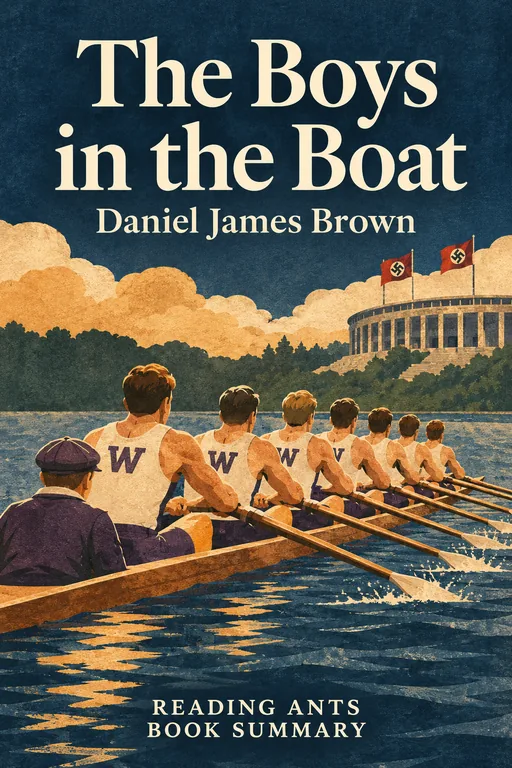
The Boys in the Boat
Daniel James Brown
Daniel James Brown tells how a group of working-class young men from the University of Washington learned to row as one and won the gold medal for the United States at the 1936 Berlin Olympics, with the story of Joe Rantz at its heart.
🏛️ History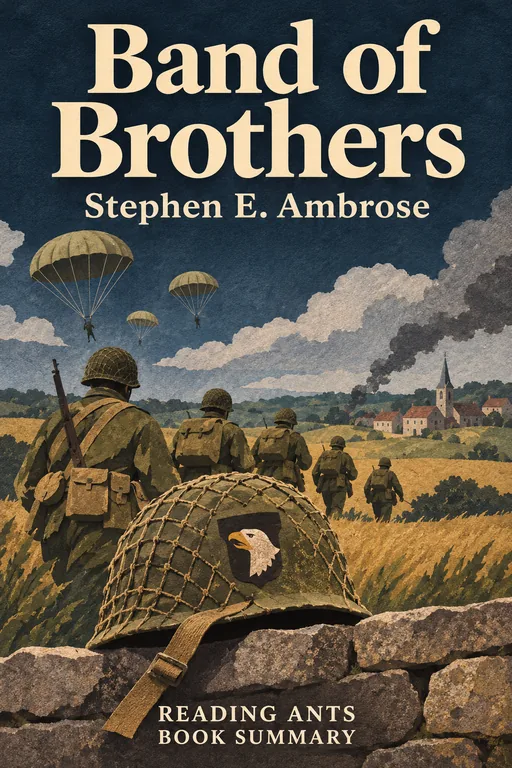
Band of Brothers
Stephen E. Ambrose
Historian Stephen Ambrose follows a single company of American paratroopers, from training in the United States through the fighting in Europe to the end of the Second World War, and shows how the men's bond carried them through.
🏛️ History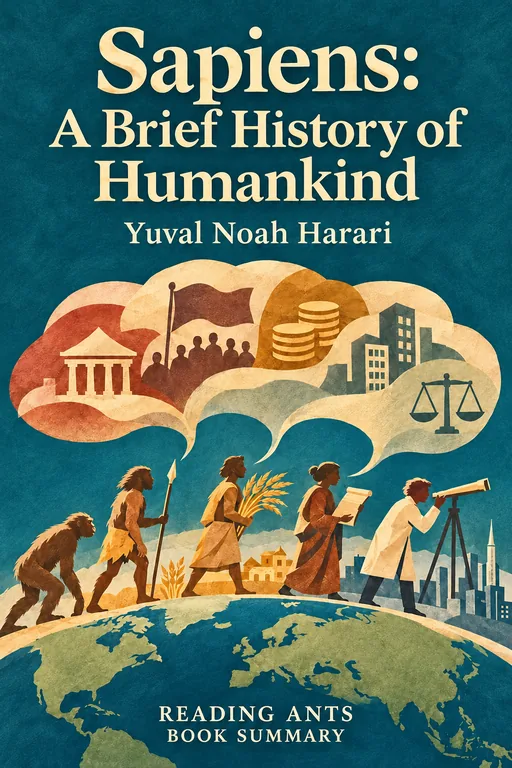
Sapiens: A Brief History of Humankind
Yuval Noah Harari
Humans came to rule the planet not because we are the strongest animals but because we can believe in shared stories (gods, nations, money, companies) that let millions of strangers cooperate.
🏛️ HistoryWant something different?
Pick another topic and we will show you three books to start with.