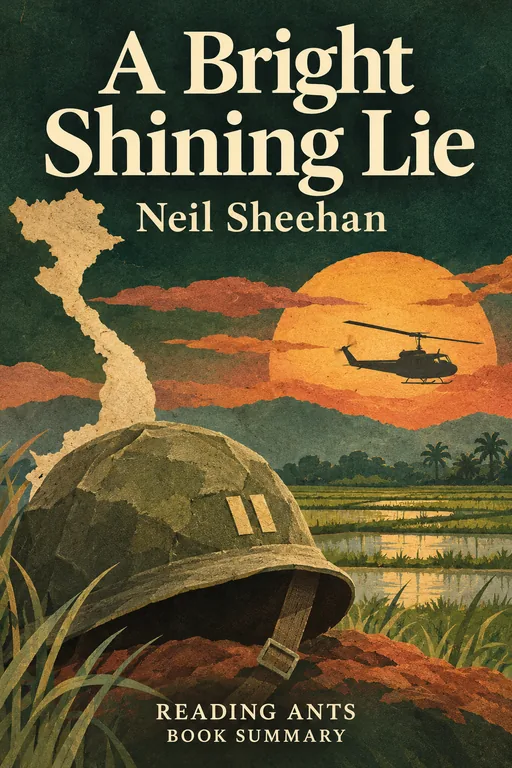
A Bright Shining Lie
Neil Sheehan uses the life of the American officer John Paul Vann to tell how the United States became entangled in the Vietnam War, and how leaders on both sides kept telling a hopeful story that was untrue.
Overview
A Bright Shining Lie: John Paul Vann and America in Vietnam was published in 1988 by Neil Sheehan, a journalist who reported on Vietnam for a news agency and later for a major newspaper, and who later obtained the secret Pentagon Papers for that paper. The book is both a biography and a history. Vann was an American army officer who went to Vietnam as an adviser in 1962, became a vocal critic of the way the war was run and later returned as a civilian official. Sheehan follows his life from a poor childhood to his death in a helicopter crash in 1972, while telling the larger story of the war. It won a Pulitzer Prize and a National Book Award.
Full Summary
1. A hard start in life
The idea: Vann grew up in Virginia in a poor family with a troubled home, and he was driven by a need to prove himself and to rise above his origins. He joined the Army as a teenager, was commissioned as an officer and later served in the infantry. Sheehan describes his ambition, his charm and his drive, and also his weaknesses, including affairs and a serious allegation in the 1950s involving a teenage girl, which damaged his prospects for promotion. These traits make him both admirable and troubling, and Sheehan says that they are part of the story.
In real life: A person who feels they must prove themselves may be capable of great effort, and also of mistakes.
2. The adviser who sees the truth
The idea: In 1962, Vann went to South Vietnam as an adviser to a unit of the South Vietnamese army. He saw that its leaders were more concerned with protecting their own position than with defeating the enemy, that the government in Saigon was unpopular in the countryside and that the American reports were painting an overly rosy picture. He believed that a different approach, with better leadership and a focus on the people, could still win.
In real life: Someone close to a problem may see that the official story does not match what is happening.
3. The battle of Ap Bac
The idea: In January 1963, a large South Vietnamese force with American helicopters and armor attacked a small group of guerrillas at a village called Ap Bac. The guerrillas stood their ground and shot down several helicopters, and the South Vietnamese commanders were hesitant to press the attack. Vann saw the failure first hand. He told reporters, including Sheehan, what had happened, and criticized the way the war was being run. The senior American commander in Saigon, General Harkins, called the battle a success, because the South Vietnamese had taken the village after the guerrillas slipped away.
In real life: Reporting a failure honestly can cost a person their career, even if it is true.
4. The cost of speaking out
The idea: Vann’s criticism made him enemies among the American generals, and he left the Army in 1963 without being able to change the course of the war. His departure had more than one cause: his criticism, disputes with superiors, and the damage that his earlier scandal had done to his career. Sheehan shows that senior leaders, both in Saigon and in Washington, preferred optimistic reports, and punished or ignored those who said the truth. This pattern of self-deception, he says, helped the United States to commit more troops without a realistic plan for success.
In real life: When a team only rewards good news, people soon stop telling the bad news.
5. The escalation and the return
The idea: As the American role grew, with hundreds of thousands of troops by the late 1960s, Vann returned to Vietnam as a civilian official involved in pacification, the effort to win the loyalty of rural people. He rose to roles of great responsibility and worked tirelessly, and Sheehan notes that he came to lead more American troops in direct combat than any other civilian in U.S. history. Sheehan describes the war’s brutal methods, such as bombing and forced removal of villagers, and the tragedies that they brought.
In real life: Doing a job very well does not guarantee that the plan you are serving is a good one.
6. The last years and the lesson
The idea: Vann died in a helicopter crash in 1972, during the Easter Offensive, after helping to organize the defense of Kontum against a major North Vietnamese attack. In that fight he relied heavily on air power, which shows how he too had come to depend on the approach that he had once questioned. Sheehan reflects on the contradictions of his subject, a brave and brilliant man who was also seriously flawed in his personal life and not always honest, and he treats Vann as a symbol of the American effort: capable and energetic, but flawed by self-deception. The title comes from a remark by Vann, and the book uses it for the hopeful picture of the war that officials presented, which was not true.
In real life: A strong, well-meaning effort can still fail if it is based on false beliefs.
Why It Matters
A Bright Shining Lie is regarded as one of the best books on the Vietnam War, and was praised for its research and its writing. By placing a single person at the center, it brought the war to life, and showed how decisions made in distant offices affected soldiers and villagers. It became a key text on the dangers of self-deception in government and the military, and on the role of dissent. Its lessons have been cited in later debates about other wars. Sheehan spent well over a decade on the book, which came out in 1988, drawing on interviews and documents. It remains a major work for those who want to understand how and why the war went wrong.
Key Takeaways
- Bad news must be heard. Systems that punish honesty are headed for failure.
- Good intentions are not enough. Energy and courage cannot replace a sound plan.
- People are complicated. Heroes can have serious faults.
- The war was fought among civilians. Its effects on ordinary Vietnamese were enormous.
- Self-deception is costly. Leaders who believe their own reports risk disaster.
What We Can Learn
Whenever you are involved in a project, ask whether you are hearing the whole truth, and encourage people to tell you when something is going wrong. Value those who speak up with evidence, even if it is uncomfortable. Be careful about measures of success that may not reflect reality. Recognize that good people can make bad decisions, and that a single person’s failings do not erase their achievements, or the other way around. And read about history from different viewpoints, including those of the people who lived through it.
Criticism and Counterpoints
Some historians say that the book makes Vann too central, and that it presents him as more of a lone voice than he was, since other officers and officials also criticized the war. Others say that the account of his private life, including his sexual conduct, takes up too much space, or that Sheehan was too harsh or too forgiving in certain judgments. Some argue that the book underplays the strategic and political situation of the North Vietnamese and their motives. Veterans and scholars disagree about whether the war could ever have been won. Despite the debates, the book is recognized for its depth.
Who Should Read It
This book is for mature readers interested in the Vietnam War and in leadership, honesty and the use of power. It is long and dense, with many names, and it contains descriptions of violence. Those who prefer a shorter introduction may start with a general history of the war, and then turn to this work for a close study.
Want the whole book?
A summary is a taste, not the meal. Here is where to find the full book.
You reached the end 🎉
Nicely done. Mark this one as read, and we will suggest what to read next.
Read this next
Vietnam: A History
Stanley Karnow
Journalist Stanley Karnow gives a broad account of Vietnam's long struggle with outside powers and of how the United States became involved, fought and lost a war that divided America and devastated Vietnam.
🏛️ History
The Making of the Atomic Bomb
Richard Rhodes
Richard Rhodes tells the full story of nuclear weapons, from the physics discoveries of the late nineteenth century to the secret wartime project that built the first bombs and the explosions over Hiroshima and Nagasaki in 1945.
🏛️ History
The Guns of August
Barbara W. Tuchman
Barbara Tuchman gives a gripping account of the first month of the First World War in 1914, showing how plans, pride and misjudgment led the great powers into a conflict that none was able to stop.
🏛️ History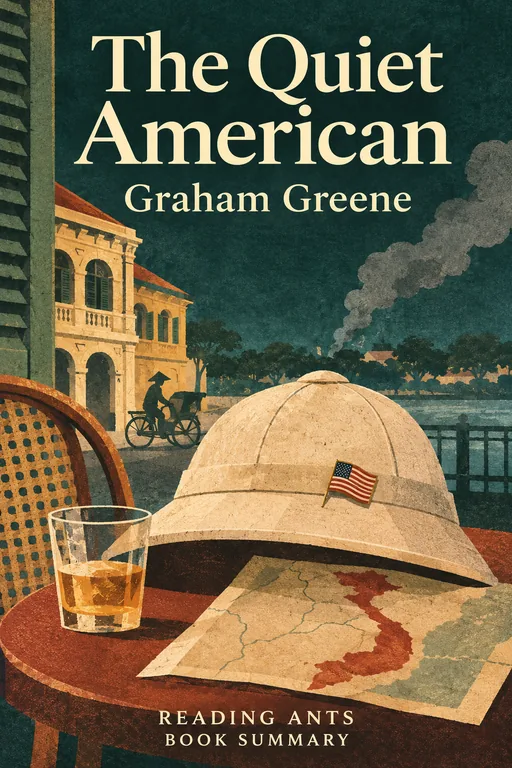
The Quiet American
Graham Greene
In French colonial Vietnam in the early 1950s, a jaded British journalist, Thomas Fowler, watches an idealistic young American, Alden Pyle, cause harm with his good intentions, and must decide whether to betray him.
📜 Classics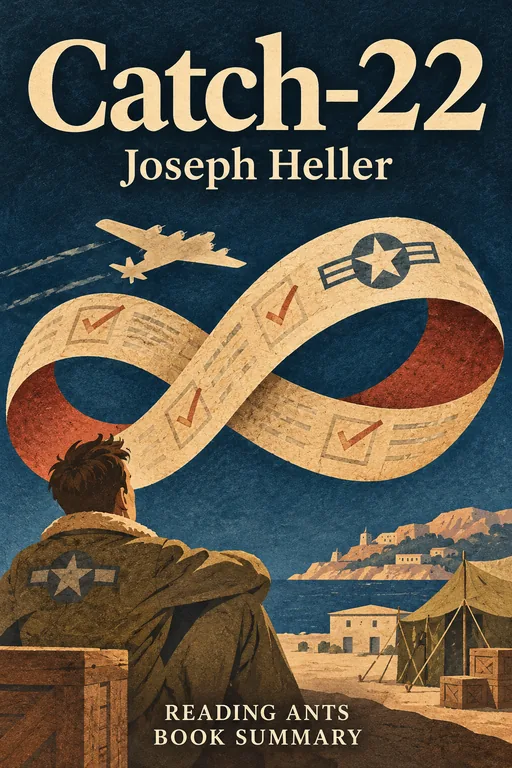
Catch-22
Joseph Heller
A bombardier named Yossarian tries to survive World War II by pretending to be crazy, but he is trapped by a military rule, Catch-22, that makes every escape impossible.
📜 Classics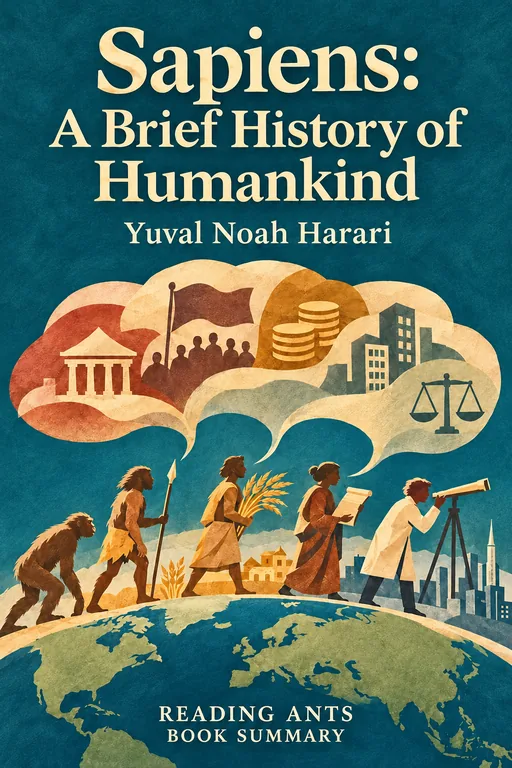
Sapiens: A Brief History of Humankind
Yuval Noah Harari
Humans came to rule the planet not because we are the strongest animals but because we can believe in shared stories (gods, nations, money, companies) that let millions of strangers cooperate.
🏛️ HistoryWant something different?
Pick another topic and we will show you three books to start with.