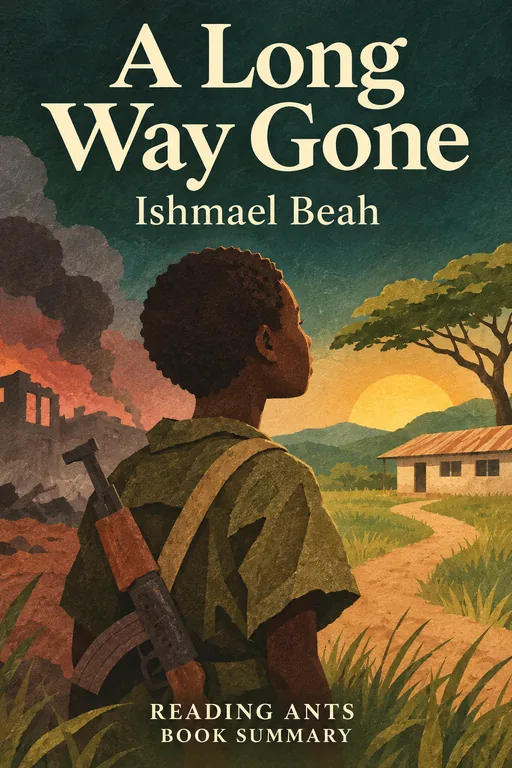
A Long Way Gone
Ishmael Beah describes how, as a boy of twelve in Sierra Leone, he was driven from his home by civil war, forced to become a child soldier at about thirteen, and then slowly brought back to life through rehabilitation and care.
Overview
A Long Way Gone: Memoirs of a Boy Soldier was published in 2007 by Ishmael Beah, who was born in Sierra Leone, West Africa. In the 1990s, the country was torn by a civil war between rebel forces and the government, in which many children were forced to fight. Beah was one of them. The book is written in plain, spare language, and many readers say that its simplicity makes the violence more shocking. It is both a record of what children can be made to do in war, and a story of recovery. Some details have been questioned by journalists, but the central story of the war’s effect on children is widely accepted.
Full Summary
A Boy and His Music
The book opens with Ishmael as a boy who loves rap music and dancing, living in a small town with his family. With his older brother, Junior, and a friend, he plans to take part in a talent show in a nearby town. While they are away, rebels attack the area, and he cannot return. He loses his family to the war. What had been a normal childhood ends in a day, and he begins a long period of wandering.
On the Run
Ishmael and a small band of boys travel from village to village, trying to stay alive, with little food and constant fear. They meet other refugees and see signs of the war everywhere, such as burned houses and people in flight. Often they are turned away, because villagers are afraid that boys might be rebels. During a rebel attack, Ishmael is separated from his brother and some of his friends, and the group grows smaller. He feels lonely and angry, and he begins to lose hope that his family is safe.
Recruited as a Soldier
At about thirteen, Ishmael and the other boys arrive at a village protected by government soldiers, where rebels are expected to attack. The army needs fighters, and the boys are ordered to join, with the idea that this is their chance to take revenge for the rebels’ crimes. They receive weapons and training, and they are given drugs, which dull their fear and their feelings. Ishmael quickly becomes skilled at fighting. He is told that the killing is a duty, and he comes to feel nothing.
The Years of War
For about the next two years, Ishmael lives as a soldier and rises to the rank of junior lieutenant. He fights in attacks and ambushes, and he and the other boys are also shown violent action films that encourage them to be more aggressive. The memoir itself describes the killing in graphic and disturbing detail. This summary leaves that out, but it shows the numbness that grows inside him. He and the other boys depend on one another, and their commander gives them a feeling of belonging. He is no longer a child in any ordinary sense.
Taken Away
When Ishmael is still a teenager, workers from UNICEF come to take some of the child soldiers away from the army. The army’s commanding officer sends the boys away, and many of them resist, because the war is the only life they know. Leaving the army means giving up the only group and structure that he has known for years. Ishmael is taken to a rehabilitation center, where he is angry and violent, and goes through withdrawal from the drugs. At first, he is hostile to the staff, who refuse to give up on him.
A Slow Return
Through the patience of a nurse named Esther, who reminds him of his love of rap music, and the care of others at the center, Ishmael slowly begins to heal. He is haunted by nightmares and memories, and has to learn to feel again. He is taken in by an uncle in the capital, Freetown, and he starts to hope. He is chosen to travel to New York to speak at the United Nations about children in war, where he meets Laura Simms, who later helps him to find a new home. He returns to Sierra Leone, but in 1997 the war reaches the capital, when rebels and rebellious soldiers invade Freetown, and he has to flee again, escaping to Guinea and eventually reaching the United States. The book ends with that escape and a reflection on the long road he had traveled.
Why It Matters
A Long Way Gone became a bestseller and is one of the best-known accounts of the experience of a child soldier. It brought attention to the use of children in conflicts around the world, and the challenges of helping them to return to civilian life. The book has been used in schools and in human rights discussions, and the author became an advocate for children affected by war, including as a speaker at the United Nations. Its message that former child soldiers can recover with care and patience is a hopeful one. It also helped to shape international conversations about the rehabilitation of children after conflict.
Key Takeaways
- War robs children of childhood. Beah was taken from school and family at a young age.
- Children can be forced to do terrible things. They are victims as well as fighters.
- Drugs and propaganda were used. Adults used them to control the boys.
- Recovery is possible. Patient care helped him to heal.
- Telling the story matters. Beah’s testimony informs the world.
What We Can Learn
The book helps us to understand that people who have done terrible things in war may have been victims themselves, and that kindness and time can help. It invites us to be informed about conflicts in other parts of the world, and to support organizations that protect and rehabilitate children. It also teaches the importance of listening, without judgment, to those who have gone through trauma. If you find this subject distressing, talk with a trusted adult, and remember that care and patience are powerful forces.
Criticism and Counterpoints
After publication, some journalists questioned the dates and details of Beah’s account, arguing that the timeline did not fit with the known history of the war in Sierra Leone. The author denied the claims, and his publisher stood by the book’s accuracy. One report argued that his village was attacked in 1995 rather than 1993, which would shorten his time as a soldier. Others have noted that books about child soldiers can present a limited view of African conflicts, and that readers should also learn about the politics behind them. Despite these disputes, the book remains widely read.
Who Should Read It
This book is for mature readers who want to understand the human cost of war. It is short and simple in style, but deals with killing, drug use and trauma, and is not for younger children. Those who want the political history of Sierra Leone should read other sources as well.
Want the whole book?
A summary is a taste, not the meal. Here is where to find the full book.
You reached the end 🎉
Nicely done. Mark this one as read, and we will suggest what to read next.
Read this next
First They Killed My Father
Loung Ung
Loung Ung tells how, at the age of five, she was torn from her comfortable life in Phnom Penh by the Khmer Rouge, lost much of her family to execution and starvation, and survived as a child in a country gone mad.
👤 Real Lives
Night
Elie Wiesel
Elie Wiesel tells, in short and searing pages, how as a teenager he was taken from his hometown of Sighet to Auschwitz and Buchenwald, lost his family and watched his faith and childhood break apart.
👤 Real Lives
The Kite Runner
Khaled Hosseini
A wealthy boy in Kabul betrays his loyal best friend on the day of a kite tournament, and decades later, after fleeing to America, he returns to a Taliban-ruled Afghanistan to try to make things right.
✨ Modern Fiction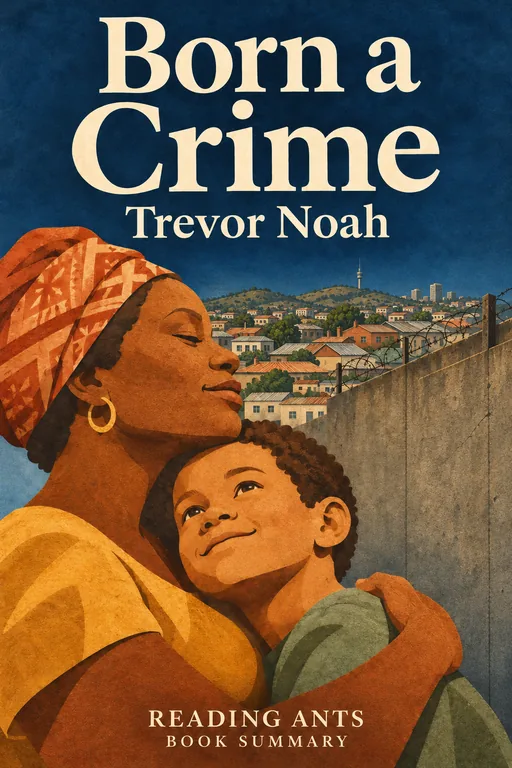
Born a Crime
Trevor Noah
Trevor Noah, the comedian, recounts growing up in South Africa as the child of a Black mother and a white father at a time when their relationship was a crime, and pays tribute to the mother who raised him.
👤 Real Lives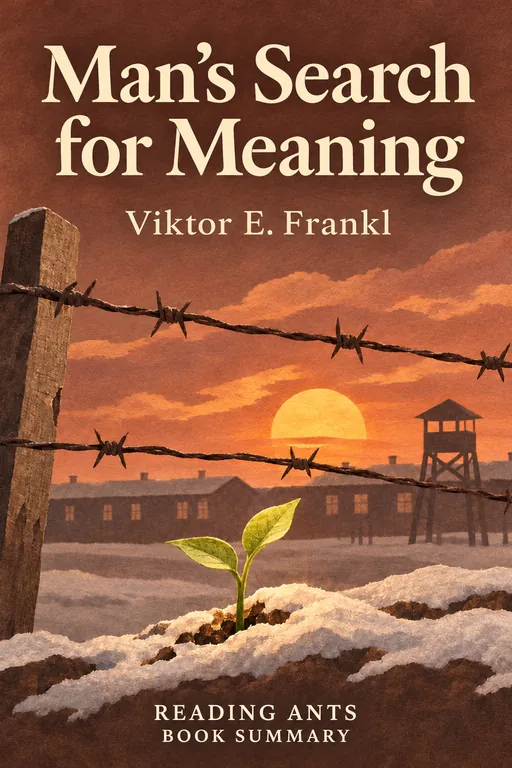
Man's Search for Meaning
Viktor E. Frankl
A psychiatrist who survived the Nazi concentration camps explains that even in the worst suffering, people can choose their attitude, and that finding a reason to live is what gives us the strength to endure.
👤 Real Lives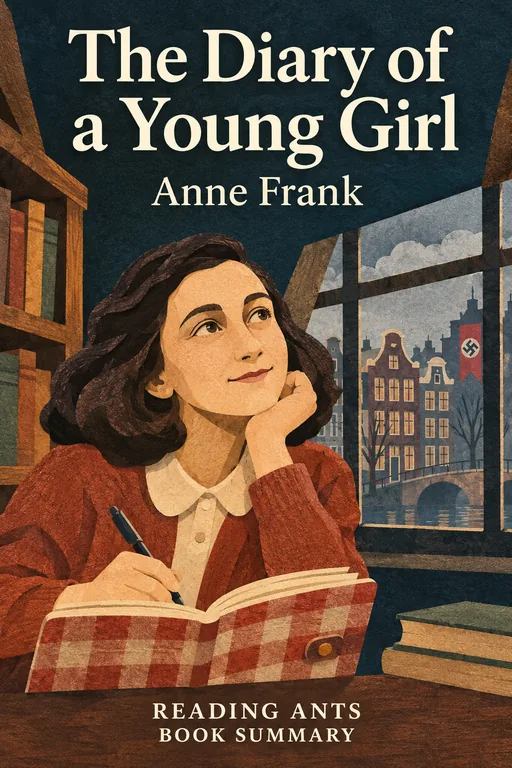
The Diary of a Young Girl
Anne Frank
A Jewish teenage girl hiding from the Nazis in a secret apartment in Amsterdam records two years of fear, family quarrels, first love and big dreams in a diary that became one of the most famous books in the world.
👤 Real LivesWant something different?
Pick another topic and we will show you three books to start with.