 Reading Ants
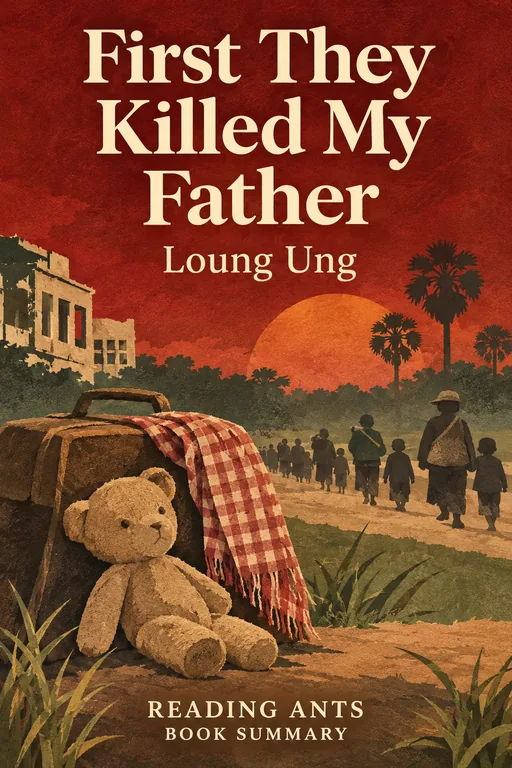
First They Killed My Father
Loung Ung tells how, at the age of five, she was torn from her comfortable life in Phnom Penh by the Khmer Rouge, lost much of her family to execution and starvation, and survived as a child in a country gone mad.
Overview
First They Killed My Father: A Daughter of Cambodia Remembers is a memoir by Loung Ung, published in 2000. She was born in Cambodia in 1970 and was a small child of a comfortable family when the Khmer Rouge, a communist movement, took power in 1975. In the following four years, a government led by Pol Pot killed or let die of hunger and disease an estimated one to two million people, possibly as much as a quarter of the country. Ung tells her story in the present tense and from the viewpoint of the child she was. She now lives in the United States and is an advocate for survivors.
Full Summary
A Happy Home
Loung begins by describing life in Phnom Penh in the early 1970s, as the sixth of seven children (the others are Meng, Khouy, Keav, Kim, Chou and the youngest, Geak). Her father, whom she calls Pa, is a military police captain in the government of General Lon Nol, a kind and hard-working man who once served in the royal secret service and who was raised in the countryside. Her mother, Ma, was born in China and has Chinese roots. The family lives in an apartment in the city, with a maid, a car, a truck and plenty to eat. But around them a war is going on, and the capital is filling with refugees. Loung is a sharp, stubborn child. She knows little of politics, but she senses her parents’ worry, and she learns that someone once tried to kill Pa with a bomb in the family’s trash can.
The Fall of the City
On 17 April 1975, Khmer Rouge soldiers enter Phnom Penh, and crowds in the streets cheer, because it seems that the war is over. Pa is not fooled; he tells Loung that these men are destroyers. Soon the soldiers order everyone to leave the city at once, shouting that the Americans will bomb it and that people can return in three days. The family leaves in a hurry, in their pickup truck, with whatever they can pack, in a vast crowd of people moving down the roads. When the truck runs out of fuel, they go on foot. Soldiers take their watches and shoot into the air to frighten the crowd. On the fourth day, at a Khmer Rouge checkpoint, Pa tells the family to claim to be peasants, and he and Ma give false jobs when they are questioned. After eight days they reach the village of Krang Truop, where Ma’s brothers live, and Pa tells the children that they can never go home and must hide who they are.
Hunger and Hiding
The family is forced to move several times, first by truck to a new village in the mountains of Pursat province, and later to a settlement called Ro Leap, and to work in the fields. They hide their former identity, since the Khmer Rouge execute those who were soldiers, officials or educated people. Food is scarce, with a small ration of thin rice soup, and Loung and her siblings are always hungry. Her older brothers Meng and Khouy are sent to a labor camp, and her sister Keav is sent to a camp for teenagers. In August 1976, Keav, who is fourteen, falls ill with dysentery and dies in a hospital before her parents can reach her, and her body is never found. Months later, in December 1976, two soldiers come to the family’s hut in the evening and say that they need Pa’s help with an ox cart stuck in the mud. He says goodbye to his children and goes with them, and he never returns. Loung comes to believe that he was executed.
A Family Divided
Pa has already told the family that the soldiers are taking people away and that the children may need to be sent off to live as orphans. After Pa’s disappearance, in the spring of 1977, her mother sees that whole families of the men who were taken are vanishing overnight, and she decides that the family can no longer stay together. She tells Kim, Chou and Loung that they must leave in different directions, change their names, and say that they are orphans. Geak, who is too young, stays with her. Ma sends them away roughly, which hurts Loung deeply. Kim goes his own way, and Loung and Chou stay together and are taken into a children’s work camp. The author describes how each child must hide their grief, since showing sorrow can attract the attention of cadres.
A Child Soldier
After about three months, Loung is chosen by the camp supervisor, whom the children call Met Bong, and sent to another camp for stronger children, where she is trained as a soldier, while Chou stays behind as a cook. She hears propaganda each night, is taught to report even her own parents, learns that tools can be used as weapons, and learns to handle a rifle. She also joins a dance troop. At night, she is afraid and lonely, and she has nightmares, but she does what she is told. She sees how children are used as workers and as soldiers, and how they can be turned into tools of the regime. She visits Ma and Geak at Ro Leap, and in the spring of 1978 she meets most of her family, except Khouy, by chance in an infirmary. In November 1978, she goes to Ro Leap again and finds Ma and Geak gone. A neighbor says soldiers took them the day before, and Loung understands that they were killed. She holds on to a secret determination to live, and to remember her family.
Flight and New Life
When Vietnamese forces invade Cambodia, her camp is shelled in January 1979, and the Khmer Rouge regime collapses amid a chaotic period in which many people flee. Loung is reunited with her brother Kim and her sister Chou, and they travel with the crowds to a refugee camp at Pursat City, and later Kim finds their oldest brother Meng, who takes the younger ones in; Khouy is also found. Meng, with his wife Eang, takes Loung out of Cambodia by boat in 1980, to a refugee camp on the coast of Thailand. Loung, Meng and Eang are then sponsored by American church groups to go to the United States, and she arrives in Vermont, where she begins to build a new life, as a child who carries a lifetime of loss.
Why It Matters
First They Killed My Father became one of the best-known memoirs by a survivor of the Cambodian genocide in the West. It gave a human face to a tragedy that had been little understood, and helped to keep the memory alive. In 2017, it was made into a film directed by Angelina Jolie, who wrote the screenplay with Ung, and it was released by Netflix. It is also notable for the way it uses a child’s point of view to show the dehumanizing effects of ideology. Ung later became an activist, notably as a spokesperson in the campaign against landmines, and went on to write other books.
Key Takeaways
- Ideology can destroy families. The Khmer Rouge broke the bonds of kinship.
- Children suffer in war. Hunger, fear and forced labor marked a generation.
- Survival requires courage and luck. Loung survived through determination and the help of others.
- Hiding one’s identity can save lives. Many survivors hid their past.
- Memory is a form of justice. Telling the story honors those who died.
What We Can Learn
The book teaches us to take seriously the testimony of those who survive atrocities, and to ask how such horrors can be prevented. It shows that dehumanizing language and extreme ideologies can lead to terrible acts. It invites us to be grateful for safety and to help refugees and survivors. If you read about these events, take time to talk with someone, and consider supporting organizations that assist people affected by war. Remember also that behind every large number is a family like Loung’s.
Criticism and Counterpoints
Because it is a memoir told from a child’s perspective, some details of events and dates are given from memory, and the story shows one family’s experience, which differed from that of others. Some readers find the present-tense narration, with long conversations recreated, to be a literary device rather than a literal record. Others point out that the book gives only a brief, child-level account of the political history of the Khmer Rouge (mostly through Pa’s explanations to the family), so readers who want context should consult other sources. Sody Lay of the Khmer Institute argued that some childhood details were filled in with later memories, that the book made the pre-war period look calmer than it was, that it understated the family’s privilege, and that parts of it show prejudice toward ethnic Khmer people. Ung acknowledged that her view as a child was limited and that some passages reflect it. Others, such as the writer Bunkong Tuon, defend the book as emotionally true even where it is not a precise historical record.
Who Should Read It
This book is for mature readers who want to understand the Cambodian genocide through a personal story. It is clearly written but extremely sad, with descriptions of hunger, killing and loss. It is best for older teenagers and adults, and readers should be ready for difficult scenes.
Want the whole book?
A summary is a taste, not the meal. Here is where to find the full book.
You reached the end 🎉
Nicely done. Mark this one as read, and we will suggest what to read next.
Read this next
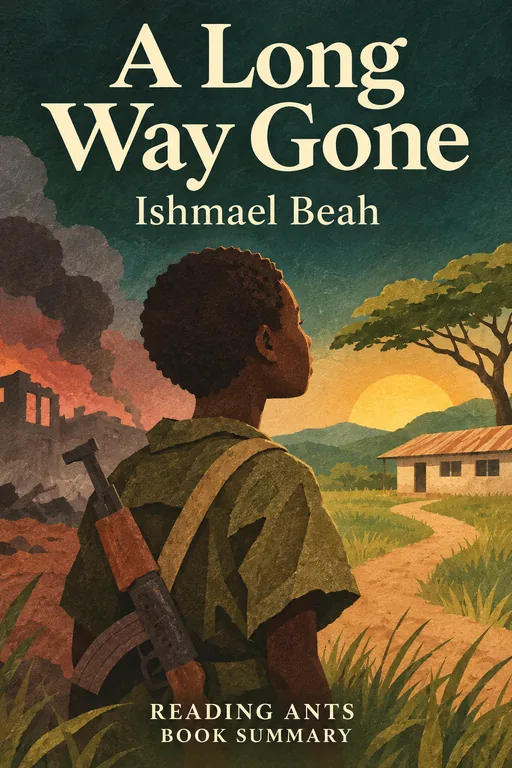
A Long Way Gone
Ishmael Beah
Ishmael Beah describes how, as a boy of twelve in Sierra Leone, he was driven from his home by civil war, forced to become a child soldier at about thirteen, and then slowly brought back to life through rehabilitation and care.
👤 Real Lives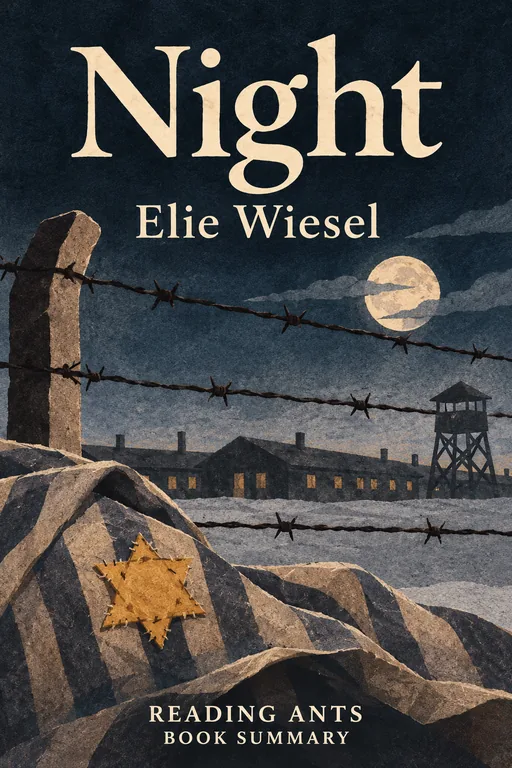
Night
Elie Wiesel
Elie Wiesel tells, in short and searing pages, how as a teenager he was taken from his hometown of Sighet to Auschwitz and Buchenwald, lost his family and watched his faith and childhood break apart.
👤 Real Lives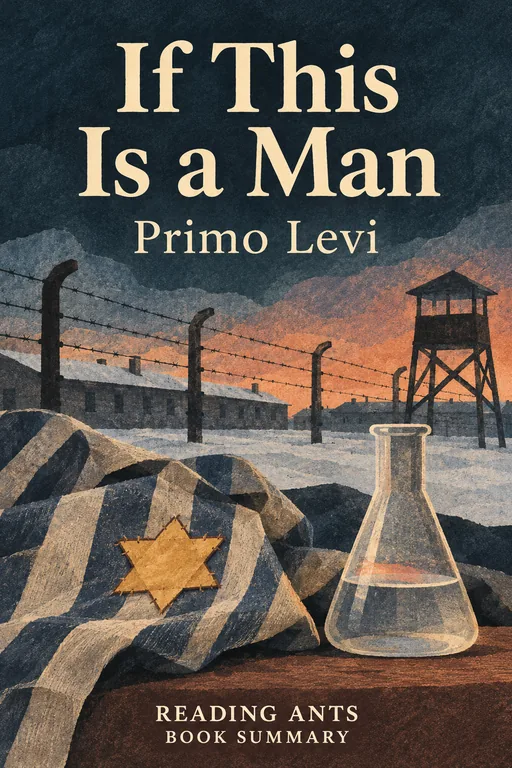
If This Is a Man
Primo Levi
Primo Levi, an Italian Jewish chemist, describes with clarity and restraint his eleven months as a prisoner in the Auschwitz camp, and asks what it means to remain human when everything is taken from you.
👤 Real Lives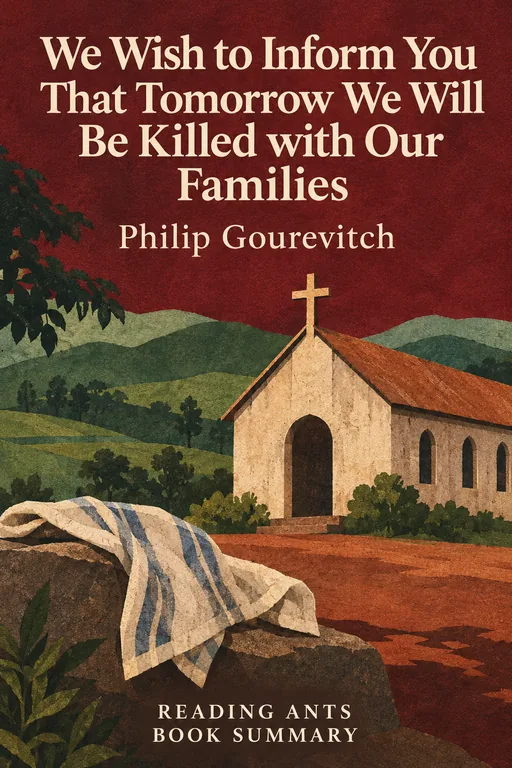
We Wish to Inform You That Tomorrow We Will Be Killed with Our Families
Philip Gourevitch
Journalist Philip Gourevitch investigates the 1994 genocide in Rwanda, in which hundreds of thousands of Tutsi and moderate Hutu were murdered in about a hundred days, and asks how it happened and why the world did not stop it.
🏛️ History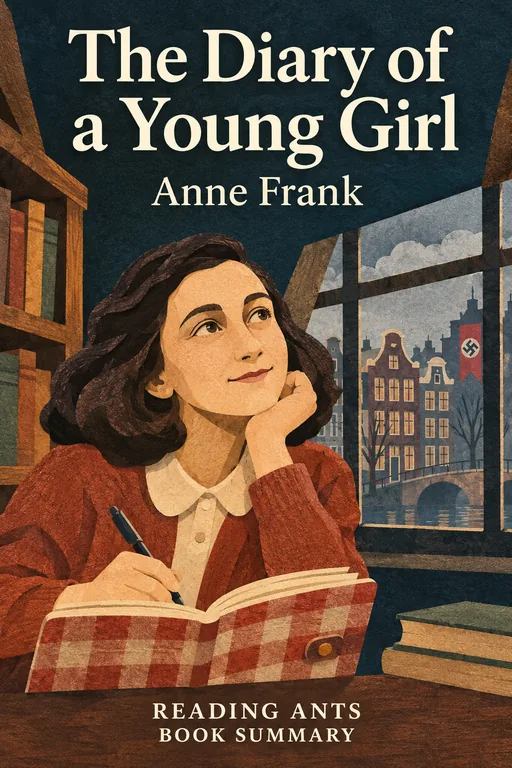
The Diary of a Young Girl
Anne Frank
A Jewish teenage girl hiding from the Nazis in a secret apartment in Amsterdam records two years of fear, family quarrels, first love and big dreams in a diary that became one of the most famous books in the world.
👤 Real Lives
Man's Search for Meaning
Viktor E. Frankl
A psychiatrist who survived the Nazi concentration camps explains that even in the worst suffering, people can choose their attitude, and that finding a reason to live is what gives us the strength to endure.
👤 Real LivesWant something different?
Pick another topic and we will show you three books to start with.